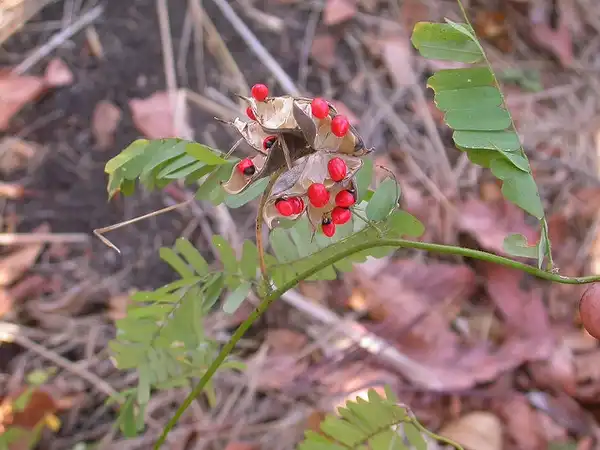
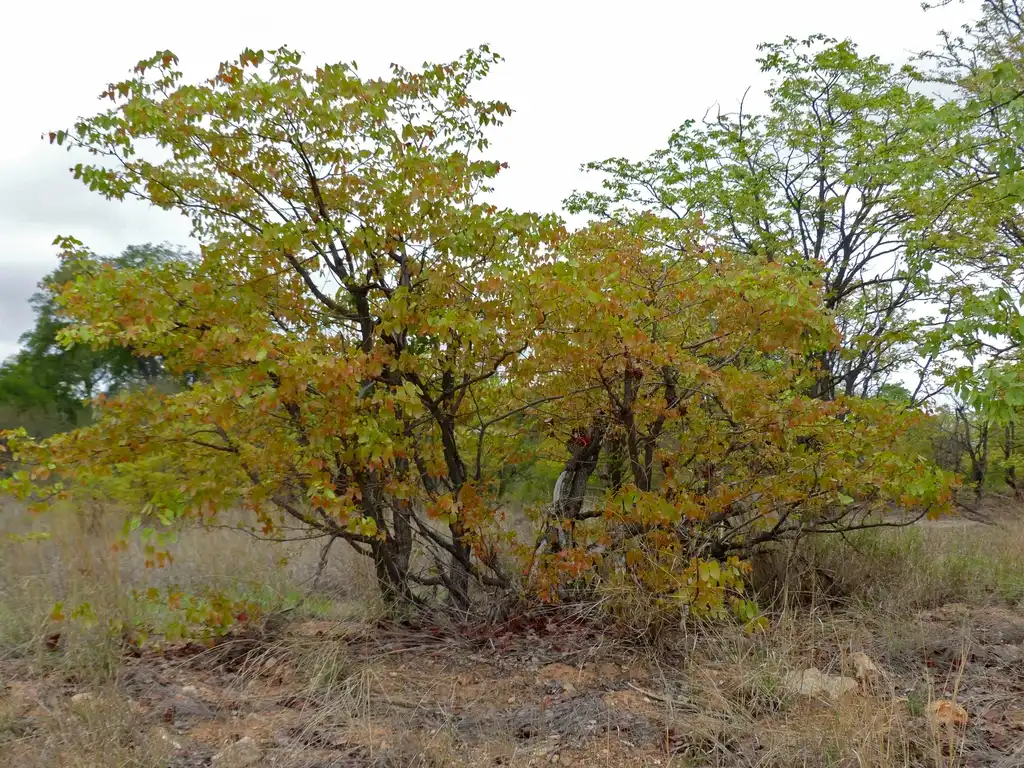
• Photo of Abrus precatorius (Abrus precatoriuss)

Plant Profile: Abrus precatorius

Taxonomy: Abrus precatorius

Names

Buddhist Rosary Bead, Crab's Eyes, Indian Bead, Indian Licorice, Jequirity Bean, Love Bean, Lucky Bean, Prayer Bean, Precatory Bean, Rosary Pea, Seminole Bead, Weather Plant

  • Photo of Abrus precatorius (Abrus precatoriuss)

Phonetic Spelling:AH-broos prek-ah-TOR-ee-us

Genus:Abrus

Species:precatorius

Family:Fabaceae

Seeds that are highly toxic when crushed are often utilized in the creation of rosary necklaces. This plant originates from tropical regions and has become invasive, with its seeds dispersed by birds. While it is not frequently cultivated in North Carolina, it has proliferated in Florida, particularly in pinelands, where it has established itself as a troublesome weed. The plant's deep root system poses significant challenges for removal.

Abrus precatorius Feature Summary

Abrus precatorius Image Gallery

Tags

#evergreen
#deciduous
#poisonous
#full sun tolerant
#weedy
#legume
#toxic
#vines
#twining
#beads
#glossy leaves
#red fruits
#exotic looking
#problem for cats
#problem for dogs
#problem for horses
#tropical feel

Similar Plants

Abrus precatorius Feature Summary

Attributes
Seeds are used as standards of weight and measurement in jewelry as beads or in percussion instruments
Imported to USA
Fruit
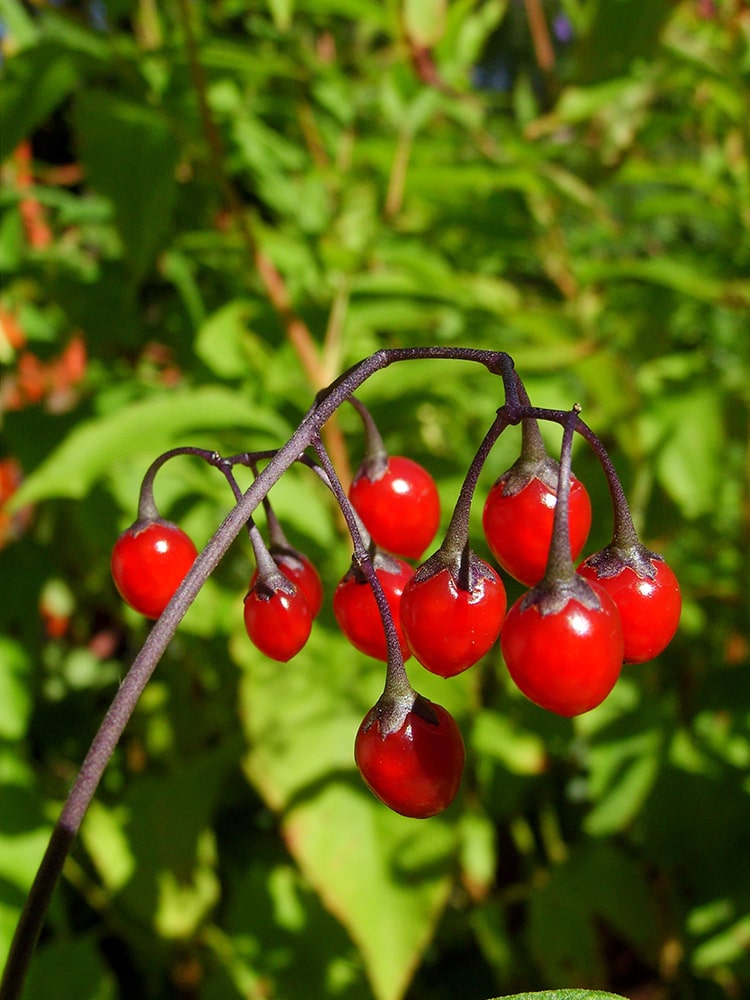
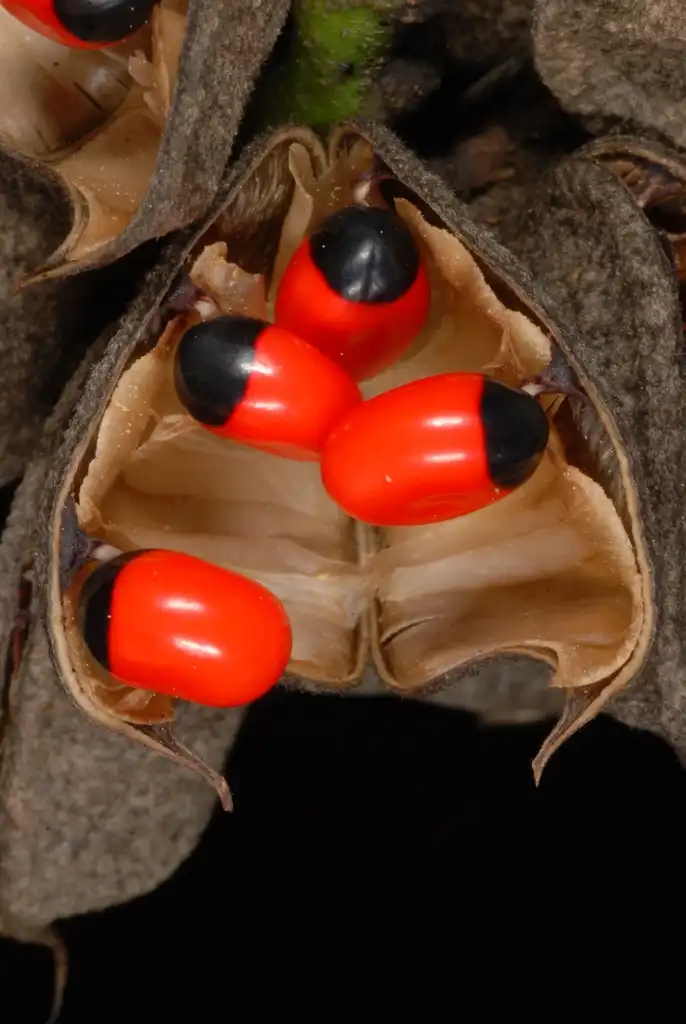
The seeds, from a pea-shaped oblong flat truncate pod, 1 1/2"-2" long curls back when opening to reveal 3 to 8 hard-coated, glossy, two-toned: brilliant scarlet-red over 2/3 of the length and black over the narrow 1/3. The seeds give its common name of crab's eyes.
Red/Burgundy
Black
1-3 inches
Flowers
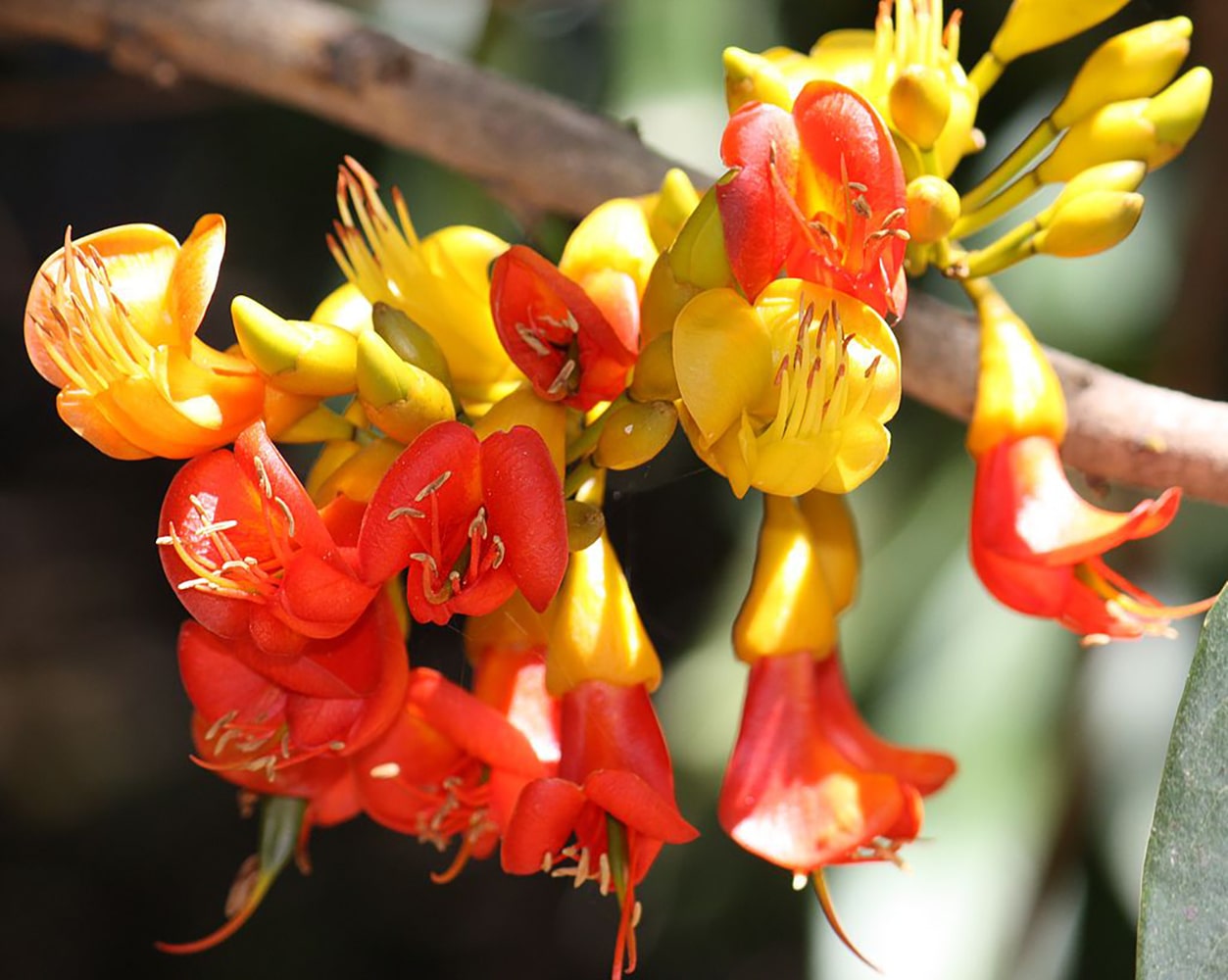
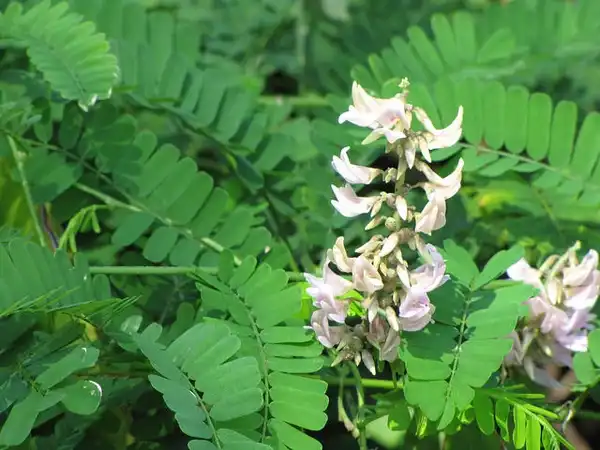
Small, white to violet-pink, clustered in the axils of leaves.
Pink
Purple/Lavender
White
Leaves
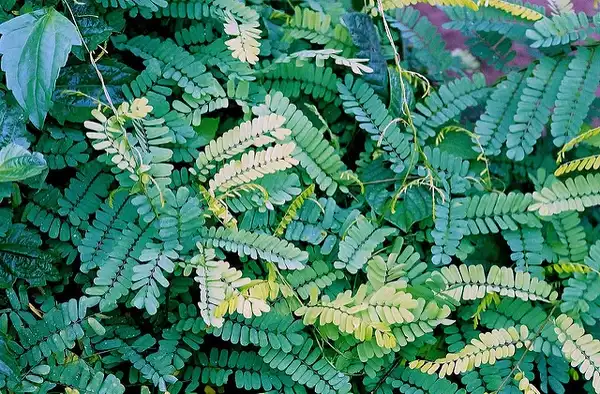
Pinnately compound leaves alternate, petioled, and 2-5 inches long, with 5 to 15 pairs of oval to oblong leaflets less than 1″ long
Deciduous
Broadleaf Evergreen
Compound (Pinnately , Bipinnately, Palmately)
Ovate
Oblong
3-6 inches
Poisonous to Humans
HIGHLY TOXIC MAY BE FATAL IF EATEN! If chewed seeds are ingested, then after a delay of hours or days: nausea, vomiting, severe abdominal pain and diarrhea, tremors, high heart rate, fever, shock, burning in throat; later ulcerative lesions of mouth and esophagus; can be fatal.
Abrin, a protein
Whole Plant Traits
Poisonous
Vine
Deciduous
Broadleaf Evergreen
Spreading
Cultural Conditions
Full sun (6 or more hours of direct sunlight a day)
Landscape
Poisonous to Humans
Problem for Cats
Problem for Dogs
Problem for Horses
Weedy

Abrus precatorius Attributes

Abrus precatorius: Uses (Ethnobotany)

Seeds are used as standards of weight and measurement in jewelry as beads or in percussion instruments

Abrus precatorius: Country Or Region Of Origin

Tropical

Abrus precatorius: Distribution

Imported to USA

Abrus precatorius: Life Cycle

Annual
Biennial
Bulb
Perennial
Woody

Abrus precatorius: Climbing Method

Clinging
Scrambler
Tendrils
Twining

Abrus precatorius Fruit

Abrus precatorius: Fruit Description

The seeds, from a pea-shaped oblong flat truncate pod, 1 1/2"-2" long curls back when opening to reveal 3 to 8 hard-coated, glossy, two-toned: brilliant scarlet-red over 2/3 of the length and black over the narrow 1/3. The seeds give its common name of crab's eyes.

Abrus precatorius: Fruit Type

Achene
Aggregate
Berry
Capsule
Caryopsis
Drupe
Follicle
Legume
Nut
Pome
Samara
Schizocarp
Siliqua

Abrus precatorius: Fruit Color

grass
Black
grass
Red/Burgundy

Abrus precatorius: Fruit Value To Gardener

Edible
Fragrant
Good Cut
Good Dried
Long Bloom Season
Long-lasting
Showy

Abrus precatorius: Fruit Length

< 1 inch
1-3 inches
> 3 inches

Abrus precatorius Flowers

Abrus precatorius: Flower Description

Small, white to violet-pink, clustered in the axils of leaves.

Abrus precatorius: Flower Color

filter_vintage
Pink
filter_vintage
Purple/Lavender
filter_vintage
White

Abrus precatorius Leaves

Abrus precatorius: Leaf Description

Pinnately compound leaves alternate, petioled, and 2-5 inches long, with 5 to 15 pairs of oval to oblong leaflets less than 1″ long

Abrus precatorius: Woody Plant Leaf Characteristics

Broadleaf Evergreen
Deciduous
Needled Evergreen
Semi-evergreen

Abrus precatorius: Leaf Color

spa
Green

Abrus precatorius: Leaf Type

Compound (Pinnately , Bipinnately, Palmately)
Fronds
Needles
Sheath
Simple

Abrus precatorius: Leaf Arrangement

Alternate
Opposite
Other/more complex
Rosulate
Whorled

Abrus precatorius: Leaf Shape

Acicular
Auriculate
Cordate
Cuneate
Deltoid
Elliptical
Filiform
Lanceolate
Linear
Oblanceolate
Oblong
Obovate
Obtuse
Orbicular
Ovate
Palmasect
Palmatifid
Peltate
Pinnatifid
Pinnatisect
Reniform
Rhomboidal
Spatulate
Subcordate
Subulate

Abrus precatorius: Leaf Margin

Crenate
Crenulate
Dentate
Denticulate
Doubly Crenate
Doubly Dentate
Doubly Serrate
Entire
Lobed
Serrate
Sinuate
Undulate

Abrus precatorius: Hairs Present

No
Yes

Abrus precatorius: Leaf Length

< 1 inch
1-3 inches
3-6 inches
> 6 inches

Abrus precatorius Poisonous to Humans

Abrus precatorius: Poison Symptoms

HIGHLY TOXIC MAY BE FATAL IF EATEN! If chewed seeds are ingested, then after a delay of hours or days: nausea, vomiting, severe abdominal pain and diarrhea, tremors, high heart rate, fever, shock, burning in throat; later ulcerative lesions of mouth and esophagus; can be fatal.

Abrus precatorius: Poison Toxic Principle

Abrin, a protein

Abrus precatorius: Poison Severity

High
Low
Medium

Abrus precatorius: Causes Contact Dermatitis

No
Yes

Abrus precatorius: Poison Part

Bark
Flowers
Fruits
Leaves
Roots
Sap/Juice
Seeds
Stems

Abrus precatorius Whole Plant Traits

Abrus precatorius: Plant Type

Annual
Bulb
Carnivorous
Edible
Epiphyte
Fern
Ground Cover
Herb
Herbaceous Perennial
Houseplant
Mushroom
Native Plant
Ornamental Grasses and Sedges
Perennial
Poisonous
Rose
Shrub
Succulent
Tree
Turfgrass
Vegetable
Vine
Water Plant
Weed
Wildflower

Abrus precatorius: Woody Plant Leaf Characteristics

Broadleaf Evergreen
Deciduous
Needled Evergreen
Semi-evergreen

Abrus precatorius: Habit/Form

Arching
Ascending
Broad
Cascading
Climbing
Clumping
Columnar
Conical
Creeping
Dense
Erect
Horizontal
Irregular
Mounding
Multi-stemmed
Multi-trunked
Open
Oval
Prostrate
Pyramidal
Rounded
Spreading
Vase
Weeping

Abrus precatorius: Growth Rate

Slow
Medium
Rapid

Abrus precatorius: Maintenance

Low
Medium
High

Abrus precatorius: Texture

Fine
Medium
Coarse

Abrus precatorius Cultural Conditions

Abrus precatorius: Light

Dappled Sunlight (Shade through upper canopy all day)
Deep shade (Less than 2 hours to no direct sunlight)
Full sun (6 or more hours of direct sunlight a day)
Partial Shade (Direct sunlight only part of the day, 2-6 hours)

Abrus precatorius: Available Space To Plant

12 inches-3 feet
12-24 feet
24-60 feet
3 feet-6 feet
6-feet-12 feet
Less than 12 inches
more than 60 feet

Abrus precatorius Stem

Abrus precatorius: Stem Is Aromatic

No
Yes

Abrus precatorius Landscape

Abrus precatorius: Problems

Allelopathic
Contact Dermatitis
Frequent Disease Problems
Frequent Insect Problems
Invasive Species
Malodorous
Messy
Poisonous to Humans
Problem for Cats
Problem for Children
Problem for Dogs
Problem for Horses
Short-lived
Spines/Thorns
Weak Wood
Weedy