Plant Profile: Alsobia dianthiflora

Taxonomy: Alsobia dianthiflora

Names

Chocolate Soldier, Episcia, Lace Flower, Lace Flower Vine, Lace-Flower Vine

  • Photo of Alsobia dianthiflora (Alsobia dianthifloras)

Phonetic Spelling:al-SO-bee-a die-AN-thuh-flor-uh

Genus:Alsobia

Species:dianthiflora

Family:Gesneriaceae

Alsobia dianthiflora, commonly referred to as the Lace Flower, is one of the two species within the Alsobia genus. This tender perennial succulent hails from regions including Mexico, Guatemala, Costa Rica, and various parts of Central and South America. Its distinctive fringe-edged petals contribute to its appeal as a houseplant, and its trailing growth habit makes it particularly suitable for hanging baskets.

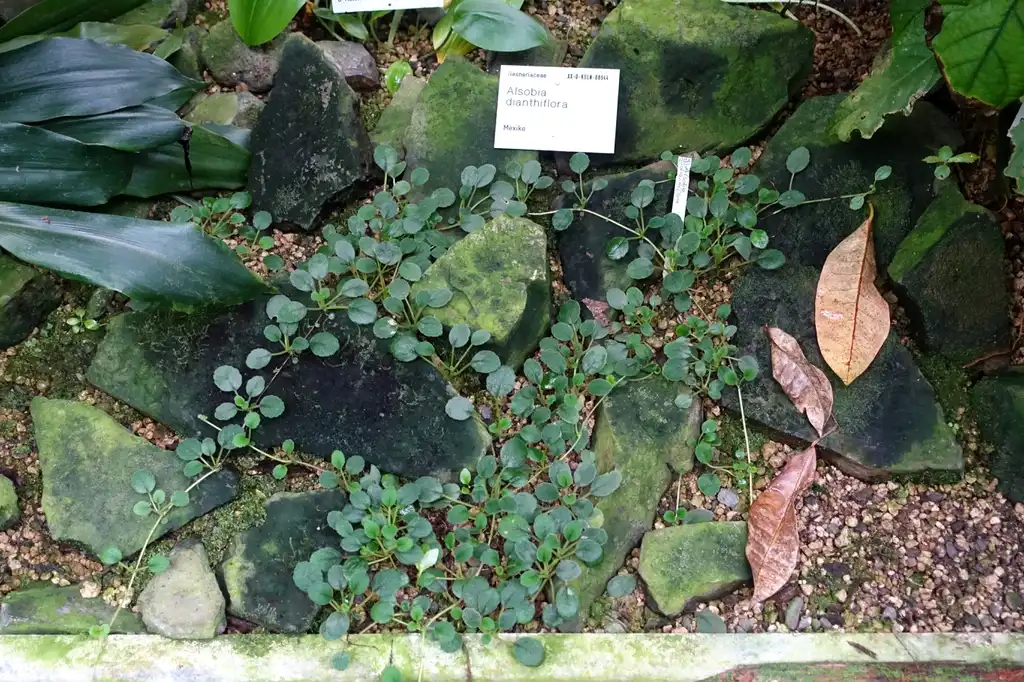
The plant exhibits a stoloniferous growth pattern, producing rapidly extending stems from the leaf axils. At the ends of these stems, small plantlets form that easily take root. If left undisturbed, these can create a dense mat of plants, all potentially originating from a single parent. Specifically, Alsobia dianthiflora is characterized by its compact size and small leaves, adorned with large, frilled white flowers and numerous stolons.

As a houseplant, Alsobia thrives in warm and humid conditions, performing well under artificial lighting or on a sunny windowsill. It prefers soil that is well-draining yet retains some moisture, such as typical African Violet soil mixes.

Regarding health concerns, there are currently no known issues with diseases or pests affecting this plant.

Alsobia dianthiflora Feature Summary

Alsobia dianthiflora Image Gallery

Tags

#houseplant
#succulent
#tropical perennial
#tender perennial
#flowering
#non-toxic for horses
#non-toxic for dogs
#non-toxic for cats
#container plants

Similar Plants

Alsobia dianthiflora Feature Summary

Attributes
Mexico to Northwest Colombia
Parts of Central America, Venezuela, and Bolivia
Perennial
low flammability
Flowers
Petal margins are deeply fringed.
4-5 petals/rays
< 1 inch
Leaves
Bright green, furry, leaves form a mat beneath and around the flower stalks.
< 1 inch
Whole Plant Traits
Herbaceous Perennial
Houseplant
Succulent
Dense
Spreading
Clumping
Cultural Conditions
Full sun (6 or more hours of direct sunlight a day)
Good Drainage
Moist
High Organic Matter
Landscape
Accent
Specimen
Container
Houseplants
Hanging Baskets

Alsobia dianthiflora Attributes

Alsobia dianthiflora: Country Or Region Of Origin

Mexico to Northwest Colombia
Alsobia dianthiflora: Distribution

Parts of Central America, Venezuela, and Bolivia

Alsobia dianthiflora: Life Cycle

Annual
Biennial
Bulb
Perennial
Woody

Alsobia dianthiflora: Recommended Propagation Strategy

Division
Grafting
Layering
Leaf Cutting
Root Cutting
Seed
Stem Cutting

Alsobia dianthiflora: Fire Risk Rating

extreme flammability
high flammability
low flammability
medium flammability

Alsobia dianthiflora Flowers

Alsobia dianthiflora: Flower Description

Petal margins are deeply fringed.

Alsobia dianthiflora: Flower Color

filter_vintage
White

Alsobia dianthiflora: Flower Value To Gardener

Edible
Fragrant
Good Cut
Good Dried
Long Bloom Season
Long-lasting
Showy

Alsobia dianthiflora: Flower Petals

2-3 rays/petals
4-5 petals/rays
6 petals/rays
7 - 20 petals/rays
asymmetrical petals
Bracts
Colored Sepals
fused petals
more than 20 petals/rays
Tepals

Alsobia dianthiflora: Flower Shape

Bell
Cross
Crown
Cup
Dome
Funnel
Irregular
Lipped
Radial
Saucer
Star
Trumpet
Tubular
Urn
Wheel

Alsobia dianthiflora: Flower Size

1-3 inches
3-6 inches
< 1 inch
> 6 inches

Alsobia dianthiflora Leaves

Alsobia dianthiflora: Leaf Description

Bright green, furry, leaves form a mat beneath and around the flower stalks.

Alsobia dianthiflora: Leaf Color

spa
Green

Alsobia dianthiflora: Leaf Type

Compound (Pinnately , Bipinnately, Palmately)
Fronds
Needles
Sheath
Simple

Alsobia dianthiflora: Leaf Arrangement

Alternate
Opposite
Other/more complex
Rosulate
Whorled

Alsobia dianthiflora: Hairs Present

No
Yes

Alsobia dianthiflora: Leaf Length

< 1 inch
1-3 inches
3-6 inches
> 6 inches

Alsobia dianthiflora Whole Plant Traits

Alsobia dianthiflora: Plant Type

Annual
Bulb
Carnivorous
Edible
Epiphyte
Fern
Ground Cover
Herb
Herbaceous Perennial
Houseplant
Mushroom
Native Plant
Ornamental Grasses and Sedges
Perennial
Poisonous
Rose
Shrub
Succulent
Tree
Turfgrass
Vegetable
Vine
Water Plant
Weed
Wildflower

Alsobia dianthiflora: Habit/Form

Arching
Ascending
Broad
Cascading
Climbing
Clumping
Columnar
Conical
Creeping
Dense
Erect
Horizontal
Irregular
Mounding
Multi-stemmed
Multi-trunked
Open
Oval
Prostrate
Pyramidal
Rounded
Spreading
Vase
Weeping

Alsobia dianthiflora: Maintenance

Low
Medium
High

Alsobia dianthiflora Cultural Conditions

Alsobia dianthiflora: Light

Dappled Sunlight (Shade through upper canopy all day)
Deep shade (Less than 2 hours to no direct sunlight)
Full sun (6 or more hours of direct sunlight a day)
Partial Shade (Direct sunlight only part of the day, 2-6 hours)

Alsobia dianthiflora: Soil Drainage

Frequent Standing Water
Good Drainage
Moist
Occasional Flooding
Occasionally Dry
Occasionally Wet
Very Dry

Alsobia dianthiflora: Soil Texture

Clay
High Organic Matter
Loam (Silt)
Sand
Shallow Rocky

Alsobia dianthiflora Stem

Alsobia dianthiflora: Stem Is Aromatic

No
Yes

Alsobia dianthiflora Landscape

Alsobia dianthiflora: Design Feature

Accent
Barrier
Border
Flowering Tree
Foundation Planting
Hedge
Mass Planting
Screen/Privacy
Security
Shade Tree
Small groups
Small Tree
Specimen
Street Tree
Understory Tree

Alsobia dianthiflora: Landscape Location

Coastal
Container
Hanging Baskets
Houseplants
Lawn
Meadow
Naturalized Area
Near Septic
Patio
Pond
Pool/Hardscape
Recreational Play Area
Riparian
Rock Wall
Slope/Bank
Small Space
Vertical Spaces
Walkways
Woodland