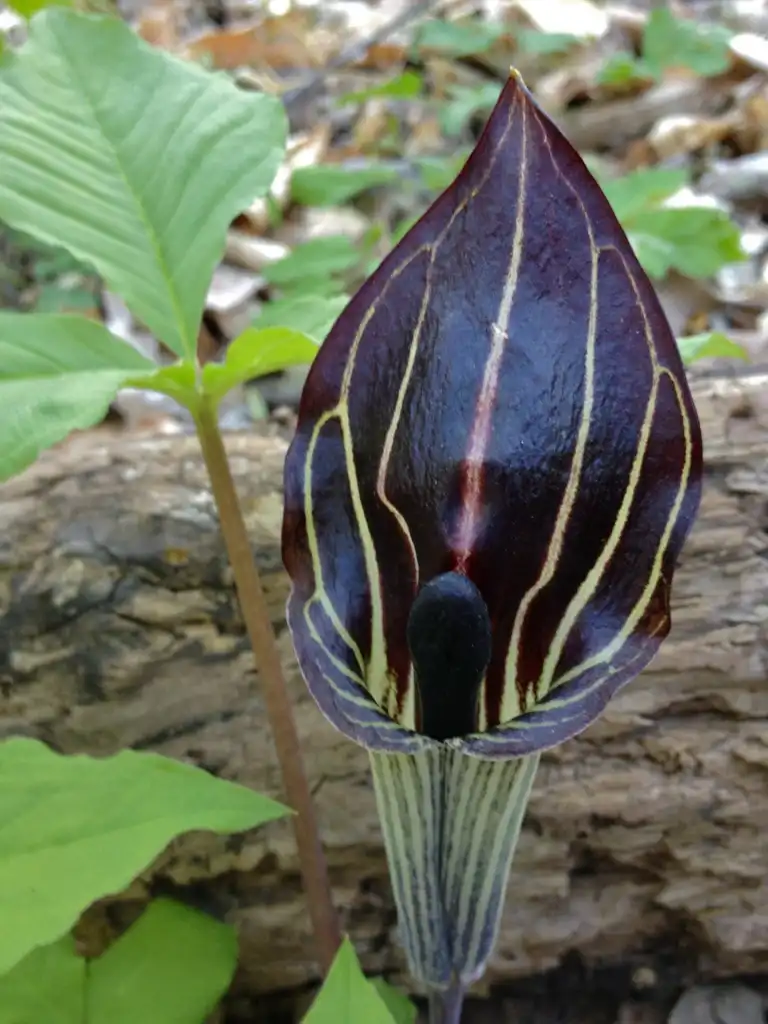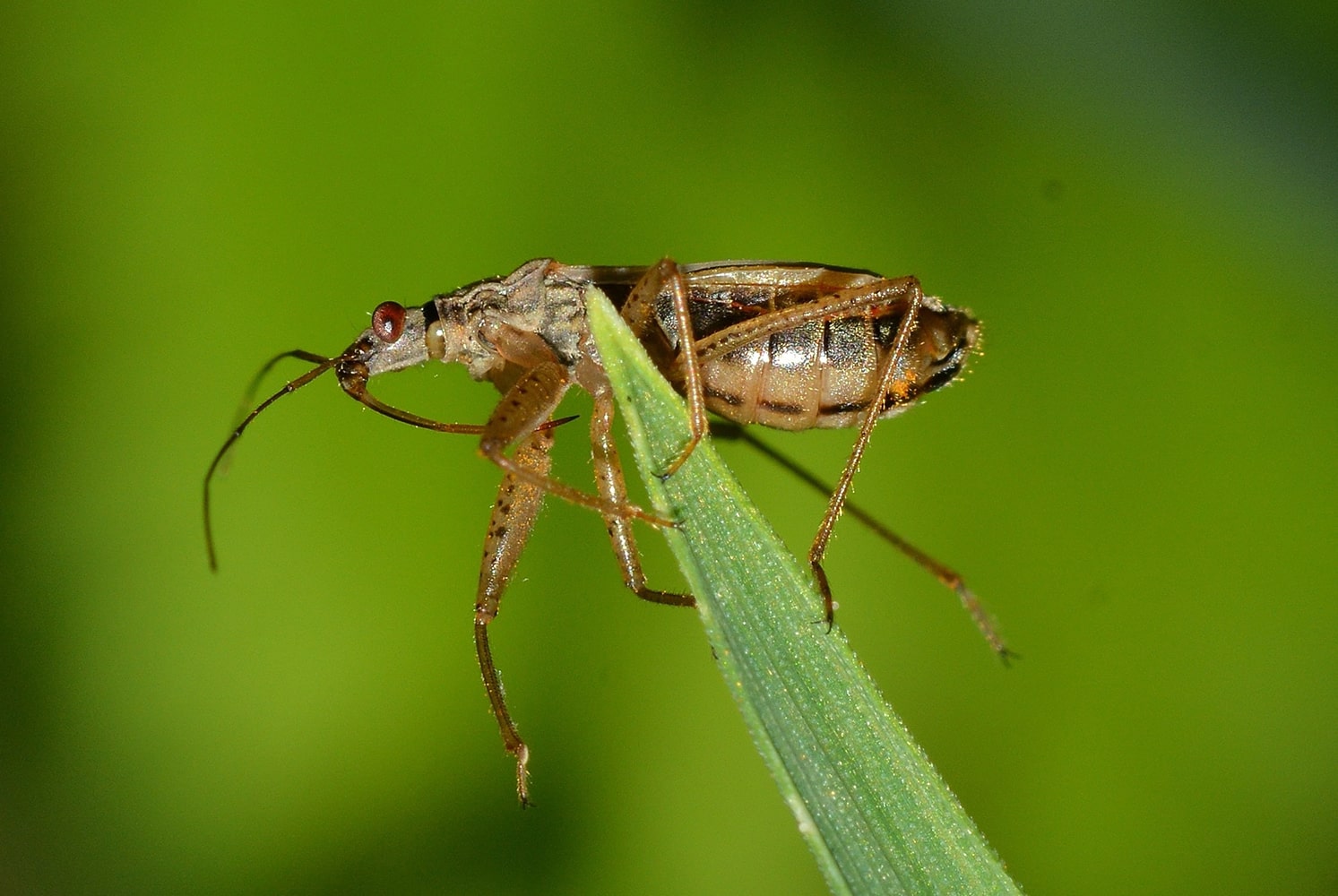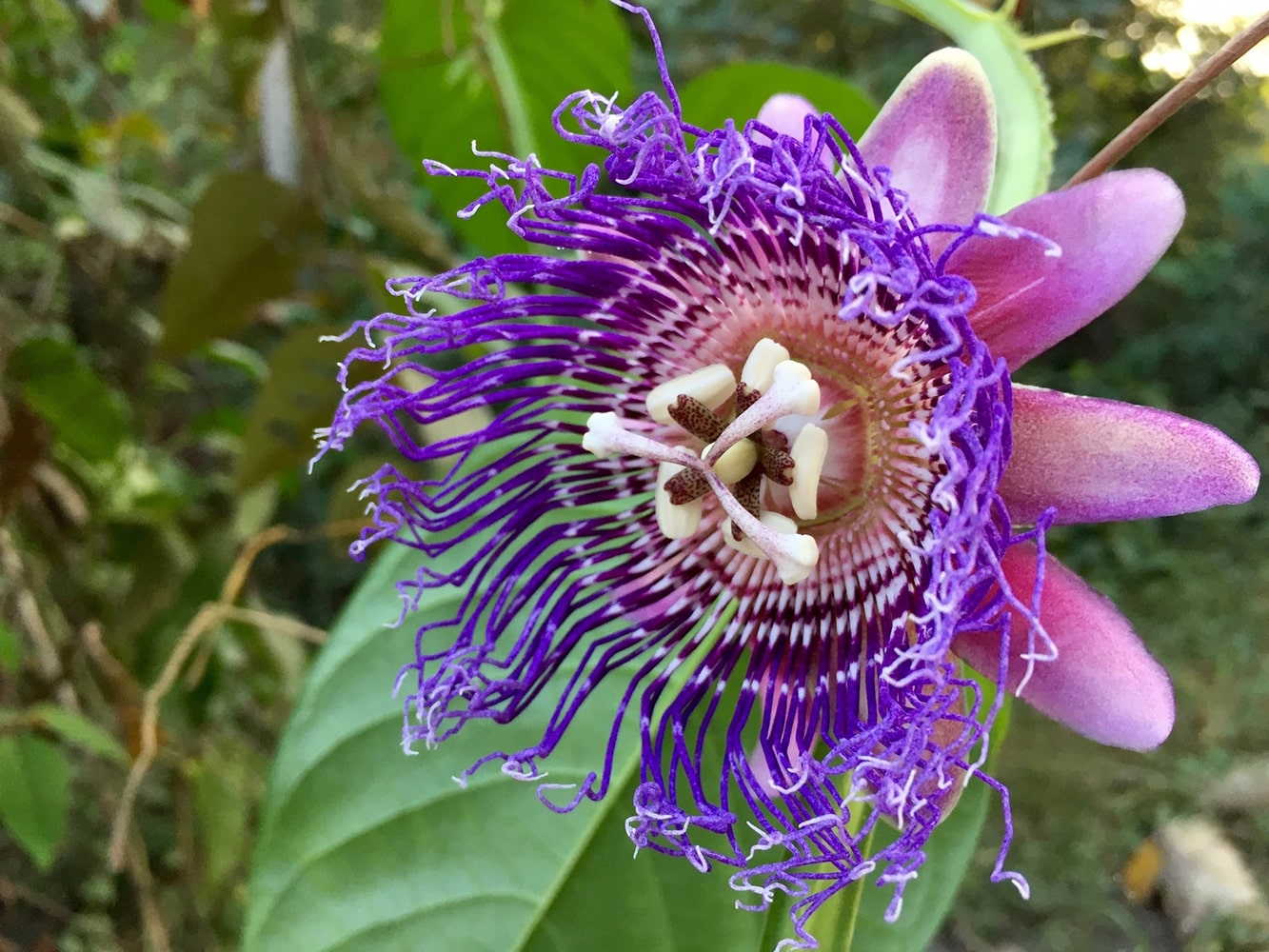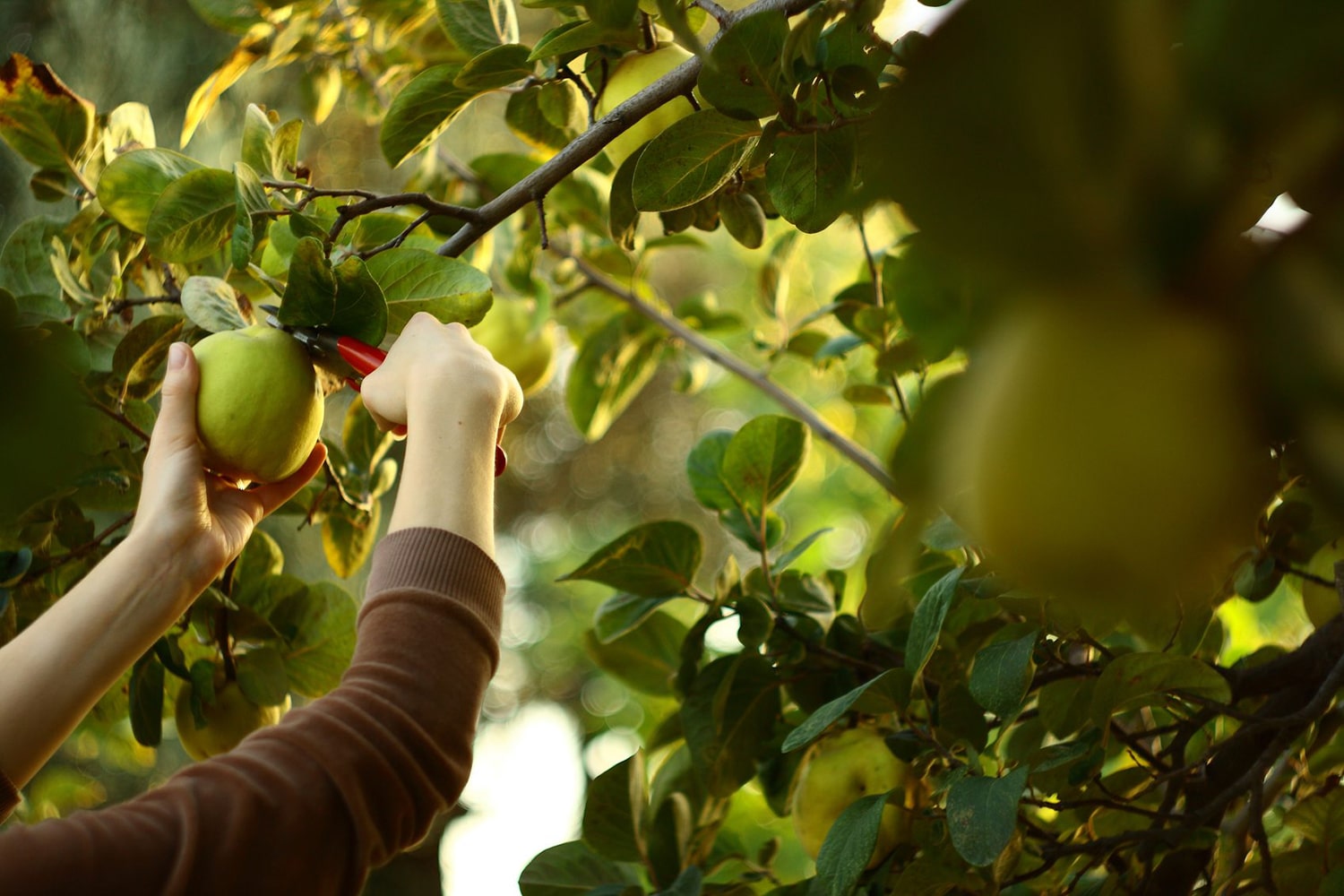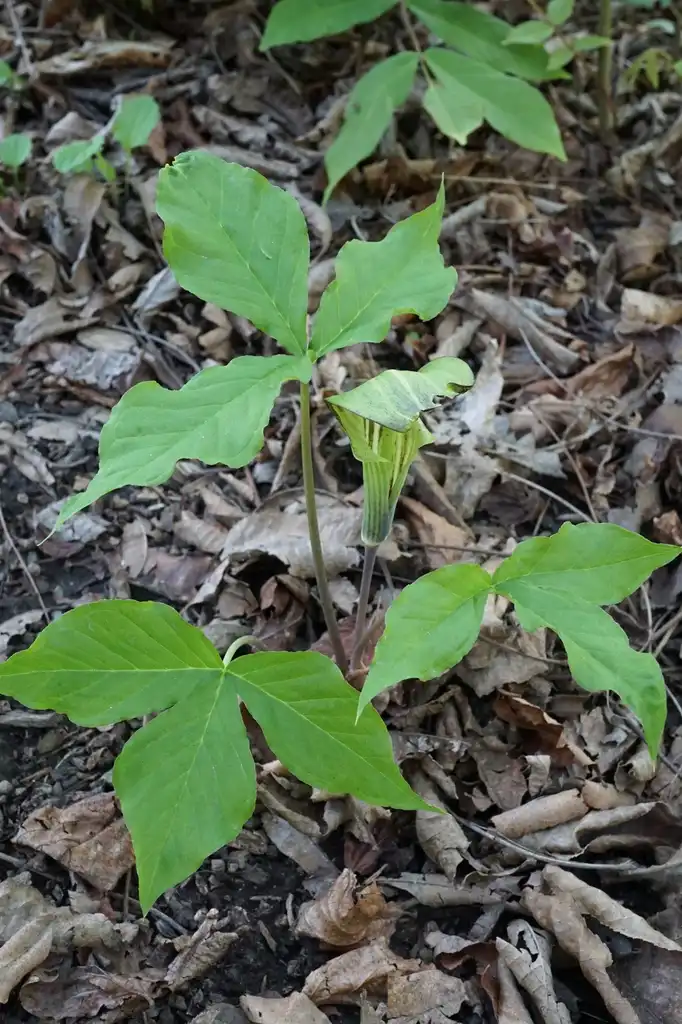
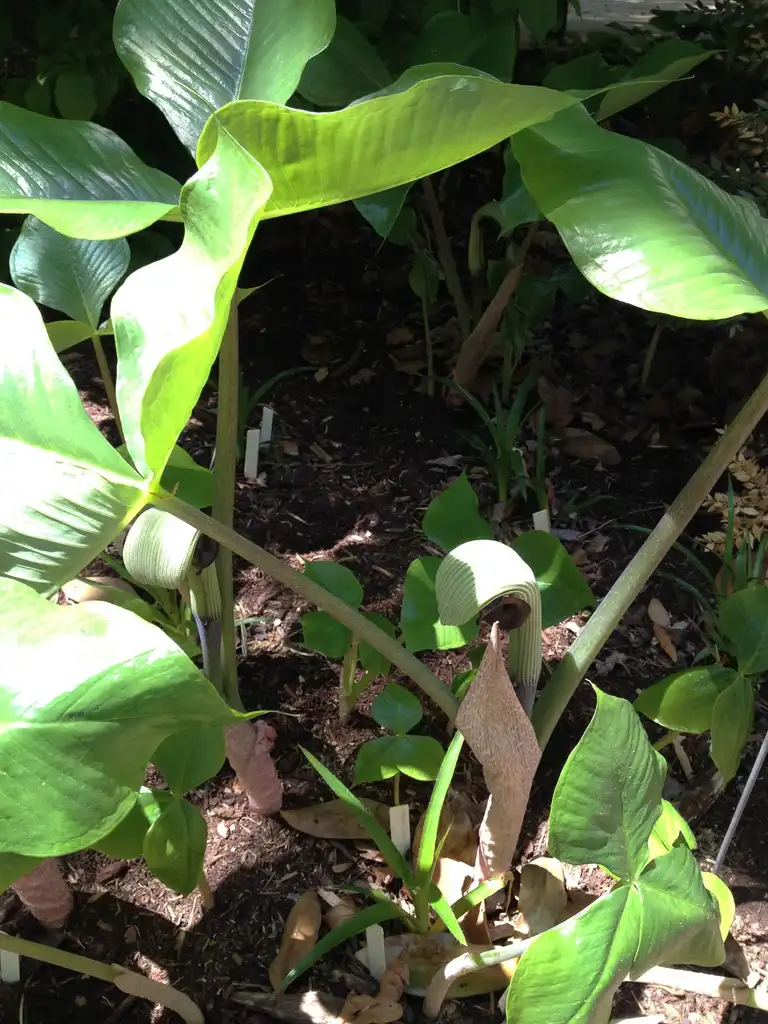
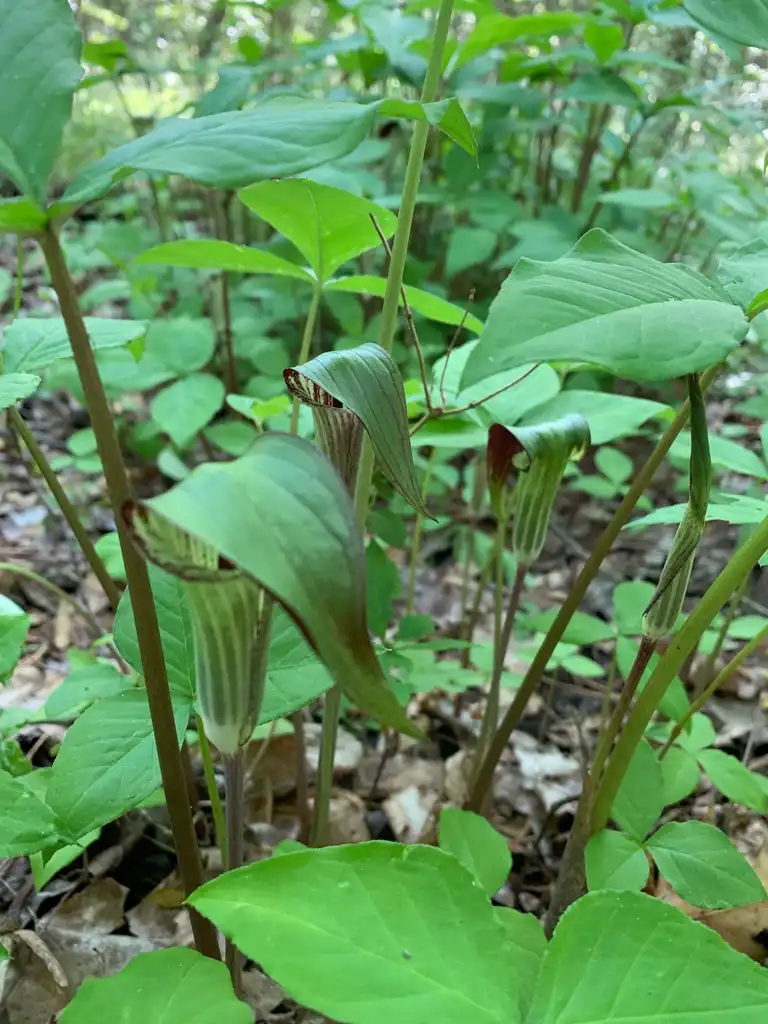
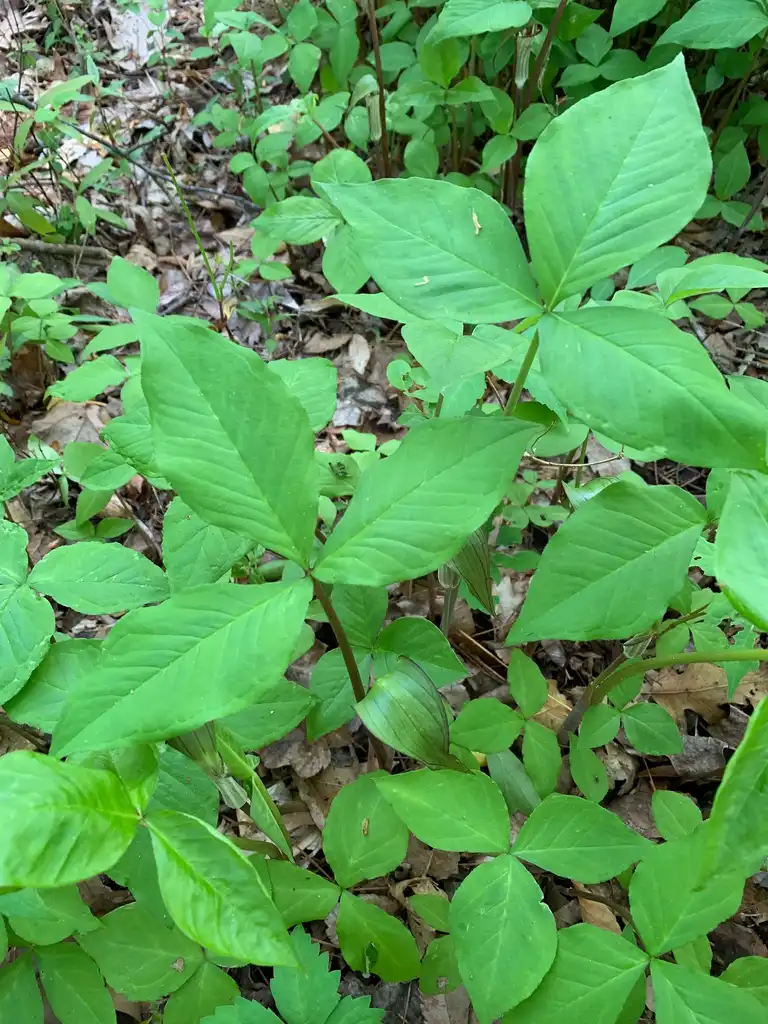
• Photo of Arisaema triphyllum (Arisaema triphyllums)

Plant Profile: Arisaema triphyllum

Taxonomy: Arisaema triphyllum

Names

Bog onion, Brown dragon, Common Jack-in-the-Pulpit, Devil's dear, Dragon root, Jack-in-the-pulpit, Memory root, Pepper turnip, Starch wort, Three-leaved indian turnip, Wake robin, Wild turnip

  • Photo of Arisaema triphyllum (Arisaema triphyllums)

Phonetic Spelling:air-ih-SAY-mah try-FY-lum

Genus:Arisaema

Species:triphyllum

Family:Araceae

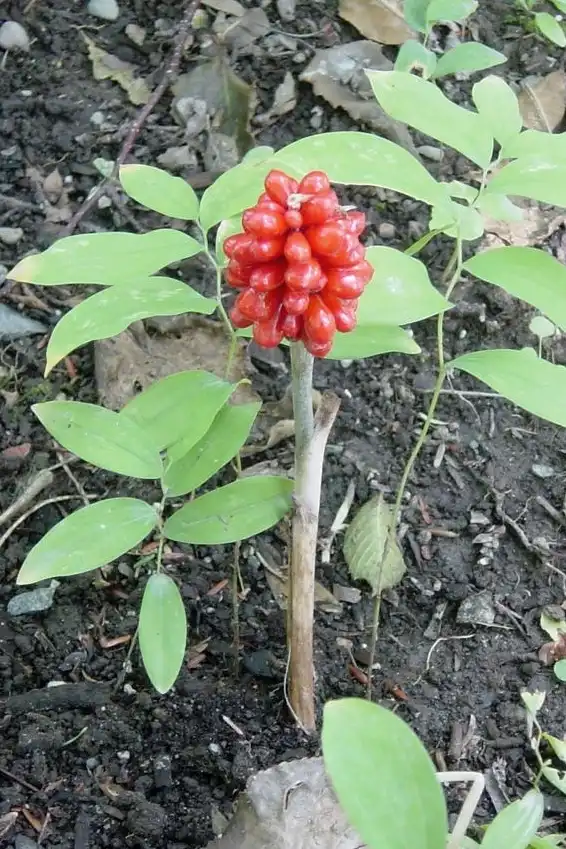
Arisaema triphyllum, commonly known as Jack-in-the-pulpit, is a springtime wildflower that typically reaches heights of 1 to 2 feet. Initially, these plants produce only male flowers, but as they mature, they develop hermaphroditic characteristics, with male flowers located at the top of the spadix and female flowers at the bottom. By mid-summer, most plants in a colony will disappear as they enter dormancy; however, the mature hermaphroditic plants will bear clusters of red berries in late summer, becoming visible as the spathe begins to wilt. The roots of this plant contain calcium oxalate, a toxic compound also found in dumb cane (Diffenbachia).

For optimal growth, Jack-in-the-pulpit thrives in fertile, medium to wet soil and prefers partial to full shade. It requires consistently moist soil enriched with organic matter and does not perform well in heavy clay conditions. While it can be propagated from seed, it takes about five years for the plant to flower. This species is typically found in forested or natural areas, thriving in damp woodlands, along streams, or as a cultivated herbaceous perennial in gardens.

Fire Risk: This plant is rated low in flammability.

Seasons of Interest:
- Blooms: Spring
- Nut/Fruit/Seed: Summer

Arisaema triphyllum Feature Summary

Arisaema triphyllum Image Gallery

Tags

#purple
#white
#deciduous
#poisonous
#perennial
#green
#red berries
#wildlife plant
#shade tolerant
#spring flowers
#berries
#wet sites
#stream banks
#moist soil
#food source
#low flammability
#NC native
#organic soils
#deer resistant
#spadix
#turtles
#stripes
#native garden
#fire resistant
#spring interest
#edible garden
#native wildflower
#wildflower garden
#food source summer
#food source fall
#food source pollen
#Coastal FACW
#Piedmont Mountains FACW
#bird friendly
#food source soft mast fruit
#partial shade tolerant
#HS302
#problem for cats
#problem for dogs
#problem for horses
#tropical feel
#audubon
#woodlands
#heavy shade tolerant

Similar Plants

Arisaema triphyllum is often confused with:

Arisaema triphyllum Feature Summary

Attributes
Central & E. Canada to Central & E. U.S.A
Throughout
The fruits are eaten by songbirds and eastern box turtles.
heavy shade, deer, wet soil, fire in the landscape
Perennial
Wildlife Food Source
low flammability
Fruit
Bright red, berry-like fruit. Displays from June to October.
Red/Burgundy
Flowers
Jack-in-the-pulpit has club-like spadix with tiny flowers at the base, with green or purple hood, often marked with whitish stripes (though it could have purple or brown stripes on a green hood). Blooms from March to April. More specifically, the flower structure consists of the spadix (Jack) which is an erect spike containing numerous, tiny, green to purple flowers and the sheath-like spathe (pulpit) which encases the lower part of the spadix and then opens to form a hood extending over the top of the spadix. The outside of the spathe is usually green or purple, and the inside is usually striped purple and greenish white, though considerable color variations exist.
Purple/Lavender
White
Brown/Copper
Green
Leaves
Jack-in-the-pulpit has one to two leaves, originating at the base of the stem that is divided into three almost equal leaflets. More specifically, two large green, compound, long-petioled leaves (1-1.5' long), divided into three leaflets each, emanate upward from a single stalk and provide umbrella-like shade to the flower. The fleshy stalk and leaves lend an almost tropical aura to the plant.
Compound (Pinnately , Bipinnately, Palmately)
Poisonous to Humans
CAUSES SEVERE PAIN IN THE MOUTH IF EATEN! Poisonous through ingestion. (Poisonous parts: all parts). Symptoms may include: Irritation and swelling of lips, tongue, and throat, excessive drooling, and vomiting (not horses). [For example, the roots contain calcium oxalate (same chemical as in Diffenbachia or dumb cane) and are poisonous.]
Calcium oxalate crystals
Seeds
Leaves
Stems
Flowers
Bark
Fruits
Roots
Whole Plant Traits
Perennial
Herbaceous Perennial
Native Plant
Poisonous
Wildflower
Herb
Cultural Conditions
Partial Shade (Direct sunlight only part of the day, 2-6 hours)
Deep shade (Less than 2 hours to no direct sunlight)
Moist
Occasionally Wet
Coastal
Mountains
Piedmont
4a
4b
5b
5a
6a
6b
7a
7b
8b
8a
9a
9b
High Organic Matter
Landscape
Pollinator Garden
Native Garden
Deer
Wet Soil
Fire
Heavy Shade
Pollinators
Songbirds
Reptiles
Poisonous to Humans
Problem for Cats
Problem for Dogs
Problem for Horses

Arisaema triphyllum Attributes

Arisaema triphyllum: Country Or Region Of Origin

Central & E. Canada to Central & E. U.S.A
Arisaema triphyllum: Distribution

Throughout

Arisaema triphyllum: Wildlife Value

The fruits are eaten by songbirds and eastern box turtles.

Arisaema triphyllum: Particularly Resistant To (Insects/Diseases/Other Problems)

heavy shade, deer, wet soil, fire in the landscape

Arisaema triphyllum: Life Cycle

Annual
Biennial
Bulb
Perennial
Woody

Arisaema triphyllum: Recommended Propagation Strategy

Division
Grafting
Layering
Leaf Cutting
Root Cutting
Seed
Stem Cutting

Arisaema triphyllum: Play Value

Attractive Flowers
Attracts Pollinators
Buffer
Colorful
Defines Paths
Easy to Grow
Edible fruit
Fragrance
Pieces Used in Games
Screening
Shade
Sound
Textural
Wildlife Cover/Habitat
Wildlife Food Source
Wildlife Larval Host
Wildlife Nesting
Wind Break
Wind Shimmer

Arisaema triphyllum: Fire Risk Rating

extreme flammability
high flammability
low flammability
medium flammability

Arisaema triphyllum Fruit

Arisaema triphyllum: Fruit Description

Bright red, berry-like fruit. Displays from June to October.

Arisaema triphyllum: Fruit Color

grass
Red/Burgundy

Arisaema triphyllum: Display/Harvest Time

Fall
Spring
Summer
Winter

Arisaema triphyllum Flowers

Arisaema triphyllum: Flower Description

Jack-in-the-pulpit has club-like spadix with tiny flowers at the base, with green or purple hood, often marked with whitish stripes (though it could have purple or brown stripes on a green hood). Blooms from March to April. More specifically, the flower structure consists of the spadix (Jack) which is an erect spike containing numerous, tiny, green to purple flowers and the sheath-like spathe (pulpit) which encases the lower part of the spadix and then opens to form a hood extending over the top of the spadix. The outside of the spathe is usually green or purple, and the inside is usually striped purple and greenish white, though considerable color variations exist.

Arisaema triphyllum: Flower Color

filter_vintage
Brown/Copper
filter_vintage
Green
filter_vintage
Purple/Lavender
filter_vintage
White

Arisaema triphyllum: Flower Inflorescence

Catkin
Corymb
Cyme
Head
Insignificant
Panicle
Raceme
Solitary
Spadix
Spike
Umbel

Arisaema triphyllum: Flower Bloom Time

Winter
Spring
Summer
Fall

Arisaema triphyllum Leaves

Arisaema triphyllum: Leaf Description

Jack-in-the-pulpit has one to two leaves, originating at the base of the stem that is divided into three almost equal leaflets. More specifically, two large green, compound, long-petioled leaves (1-1.5' long), divided into three leaflets each, emanate upward from a single stalk and provide umbrella-like shade to the flower. The fleshy stalk and leaves lend an almost tropical aura to the plant.

Arisaema triphyllum: Woody Plant Leaf Characteristics

Broadleaf Evergreen
Deciduous
Needled Evergreen
Semi-evergreen

Arisaema triphyllum: Leaf Color

spa
Green

Arisaema triphyllum: Leaf Type

Compound (Pinnately , Bipinnately, Palmately)
Fronds
Needles
Sheath
Simple

Arisaema triphyllum: Hairs Present

No
Yes

Arisaema triphyllum Poisonous to Humans

Arisaema triphyllum: Poison Symptoms

CAUSES SEVERE PAIN IN THE MOUTH IF EATEN! Poisonous through ingestion. (Poisonous parts: all parts). Symptoms may include: Irritation and swelling of lips, tongue, and throat, excessive drooling, and vomiting (not horses). [For example, the roots contain calcium oxalate (same chemical as in Diffenbachia or dumb cane) and are poisonous.]

Arisaema triphyllum: Poison Toxic Principle

Calcium oxalate crystals

Arisaema triphyllum: Poison Severity

High
Low
Medium

Arisaema triphyllum: Causes Contact Dermatitis

No
Yes

Arisaema triphyllum: Poison Part

Bark
Flowers
Fruits
Leaves
Roots
Sap/Juice
Seeds
Stems

Arisaema triphyllum Whole Plant Traits

Arisaema triphyllum: Plant Type

Annual
Bulb
Carnivorous
Edible
Epiphyte
Fern
Ground Cover
Herb
Herbaceous Perennial
Houseplant
Mushroom
Native Plant
Ornamental Grasses and Sedges
Perennial
Poisonous
Rose
Shrub
Succulent
Tree
Turfgrass
Vegetable
Vine
Water Plant
Weed
Wildflower

Arisaema triphyllum: Woody Plant Leaf Characteristics

Broadleaf Evergreen
Deciduous
Needled Evergreen
Semi-evergreen

Arisaema triphyllum Cultural Conditions

Arisaema triphyllum: Light

Dappled Sunlight (Shade through upper canopy all day)
Deep shade (Less than 2 hours to no direct sunlight)
Full sun (6 or more hours of direct sunlight a day)
Partial Shade (Direct sunlight only part of the day, 2-6 hours)

Arisaema triphyllum: Soil Drainage

Frequent Standing Water
Good Drainage
Moist
Occasional Flooding
Occasionally Dry
Occasionally Wet
Very Dry

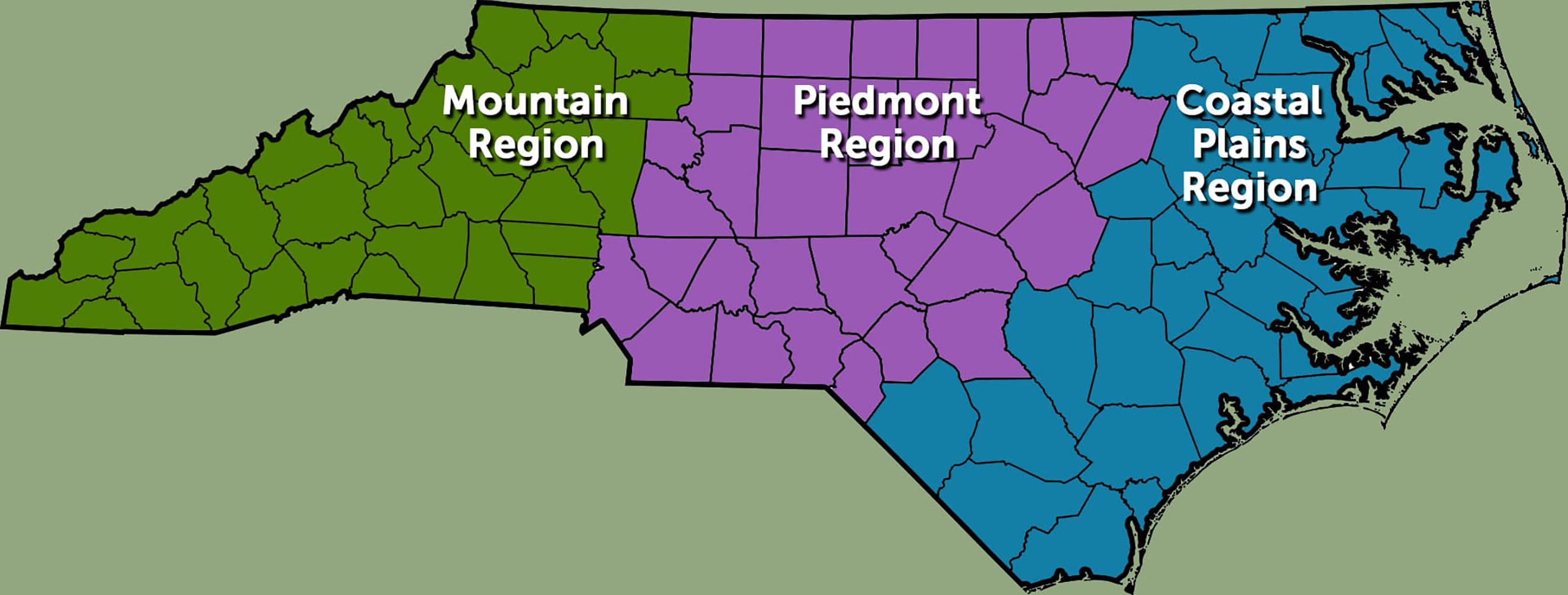
Arisaema triphyllum: NC Region

Coastal
Mountains
Piedmont

Arisaema triphyllum: USDA Plant Hardiness Zone

thermostat
4a
thermostat
4b
thermostat
5a
thermostat
5b
thermostat
6a
thermostat
6b
thermostat
7a
thermostat
7b
thermostat
8a
thermostat
8b
thermostat
9a
thermostat
9b

Arisaema triphyllum: Soil Texture

Clay
High Organic Matter
Loam (Silt)
Sand
Shallow Rocky

Arisaema triphyllum Stem

Arisaema triphyllum: Stem Is Aromatic

No
Yes

Arisaema triphyllum Landscape

Arisaema triphyllum: Landscape Theme

Asian Garden
Butterfly Garden
Children's Garden
Cottage Garden
Cutting Garden
Drought Tolerant Garden
Edible Garden
English Garden
Fairy Garden
Garden for the Blind
Native Garden
Nighttime Garden
Pollinator Garden
Rain Garden
Rock Garden
Shade Garden
Water Garden
Winter Garden

Arisaema triphyllum: Resistance To Challenges

Black Walnut
Compaction
Deer
Diseases
Drought
Dry Soil
Erosion
Fire
Foot Traffic
Heat
Heavy Shade
Humidity
Insect Pests
Pollution
Poor Soil
Rabbits
Salt
Slugs
Squirrels
Storm damage
Urban Conditions
Voles
Wet Soil
Wind

Arisaema triphyllum: Landscape Location

Coastal
Container
Hanging Baskets
Houseplants
Lawn
Meadow
Naturalized Area
Near Septic
Patio
Pond
Pool/Hardscape
Recreational Play Area
Riparian
Rock Wall
Slope/Bank
Small Space
Vertical Spaces
Walkways
Woodland

Arisaema triphyllum: Attracts

Bats
Bees
Butterflies
Frogs
Hummingbirds
Moths
Pollinators
Predatory Insects
Reptiles
Small Mammals
Songbirds
Specialized Bees

Arisaema triphyllum: Problems

Allelopathic
Contact Dermatitis
Frequent Disease Problems
Frequent Insect Problems
Invasive Species
Malodorous
Messy
Poisonous to Humans
Problem for Cats
Problem for Children
Problem for Dogs
Problem for Horses
Short-lived
Spines/Thorns
Weak Wood
Weedy