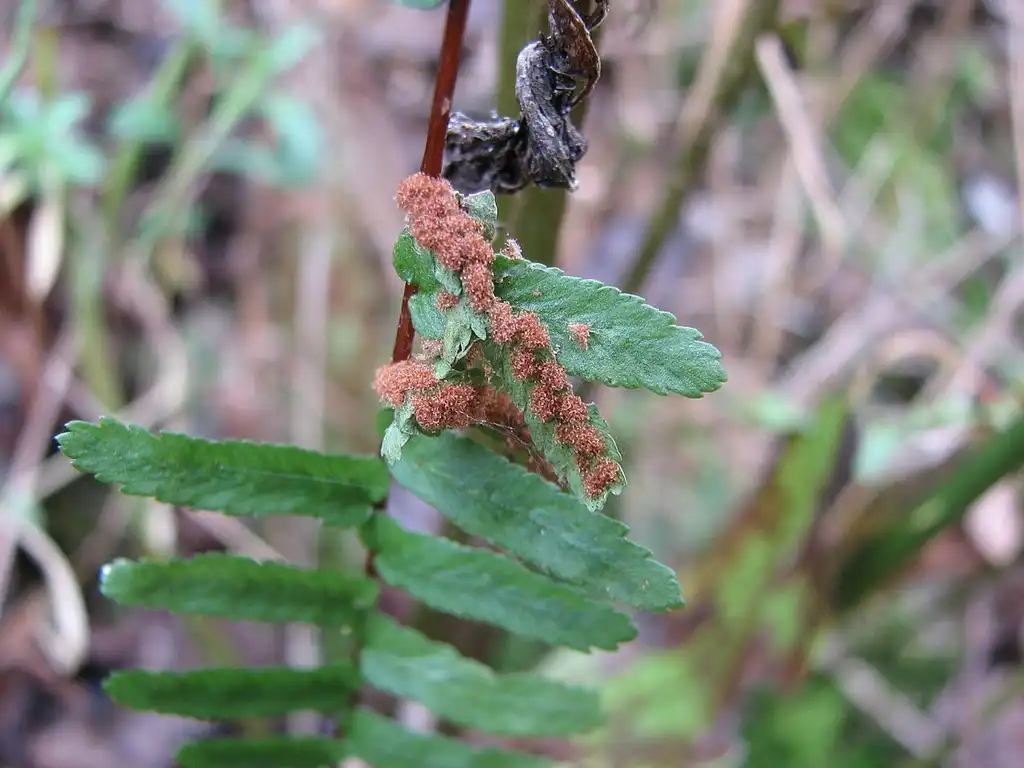
Asplenium platyneuron: Country Or Region Of Origin
North America E. of Rocky Mts., S. Africa
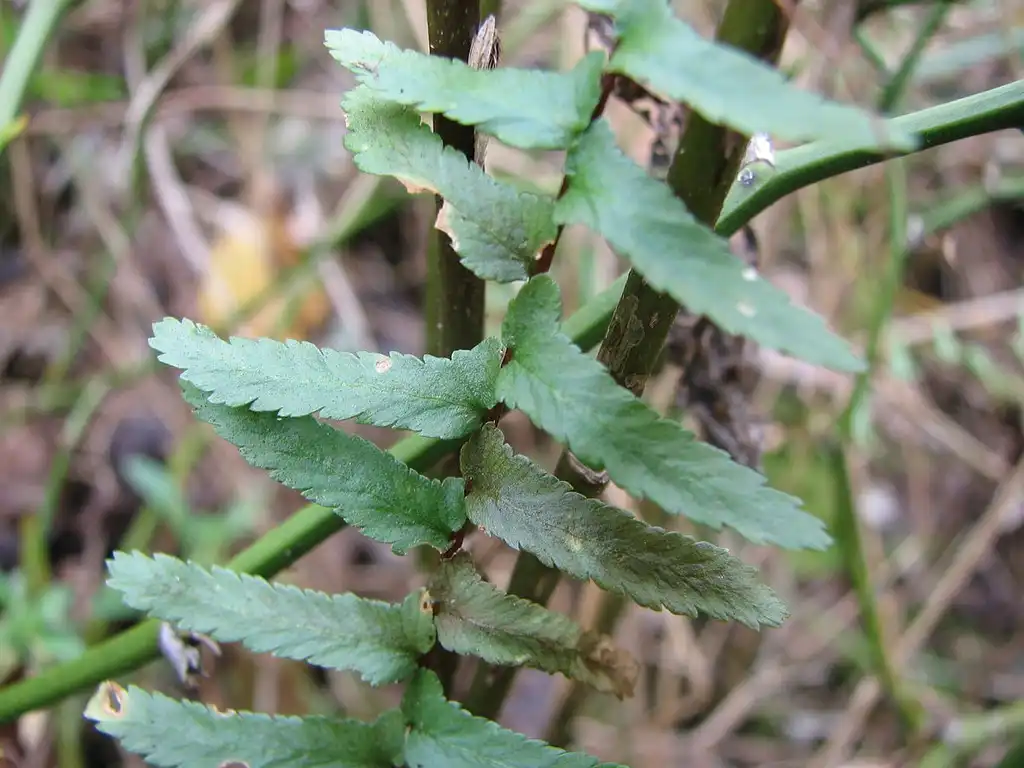
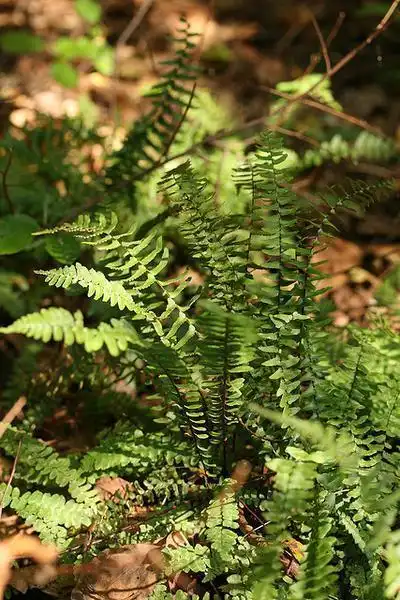
Phonetic Spelling:ah-SPLEE-nee-um pla-tee-NUR-on
Genus:Asplenium
Species:platyneuron
Family:Aspleniaceae
Ebony Spleenwort is indigenous to South Africa and the eastern regions of North America, specifically east of the Rocky Mountains. This small evergreen fern forms a compact clump from its rhizome and is part of the Spleenwort family, a name derived from the historical belief in the medicinal properties of these plants related to the spleen. The common name of this species reflects its distinctive dark, glossy stem. In certain Canadian provinces and U.S. states, it is classified as vulnerable or endangered. In its natural habitat, Ebony Spleenwort thrives in a variety of environments, including rocky banks, disturbed areas, fields, and wooded slopes. It prefers well-drained rocky soils and can grow in shaded to partially sunny locations with dry to moderate moisture levels.
This fern is notable for its dimorphic fronds. The sterile evergreen fronds are a lighter green, glossy, and may arch slightly or lie flat against the ground, while the fertile deciduous fronds are upright, dark green, and die back in winter. The central stem, or stipe, is a dark purple-brown. Spleenworts do not produce flowers or fruits; instead, they primarily reproduce through spores found in sori on the undersides of their leaves. In addition to spore reproduction, Ebony Spleenwort can propagate vegetatively by forming buds at the base of the stem on either type of frond. These pale, button-like buds appear on the upper side of the lowest leaflets. When these buds detach and come into contact with soil or are covered by leaf litter, they can stimulate growth, leading to the emergence of new ferns as the parent plant dies. The upright nature of the fertile fronds aids in effective spore dispersal over considerable distances, and this fern does not propagate through its rhizome. It is also known to hybridize naturally with other species, resulting in sterile offspring.
For landscape or garden applications, Ebony Spleenwort thrives in shaded, gritty, humus-rich, well-drained soils with dry to moderate moisture. While it is not particularly sensitive to pH levels, it prefers acidic conditions, ideally between pH 4.5 and 5. This fern is easy to cultivate and is well-suited for woodland or native plant gardens, especially in dry, rocky, shady niches.
In terms of pests and diseases, this fern is generally resilient, with no significant diseases reported. However, it can be vulnerable to slugs and black fern aphids, and excessive moisture may lead to crown rot.
Asplenium platyneuron Feature Summary
Asplenium platyneuron Image Gallery