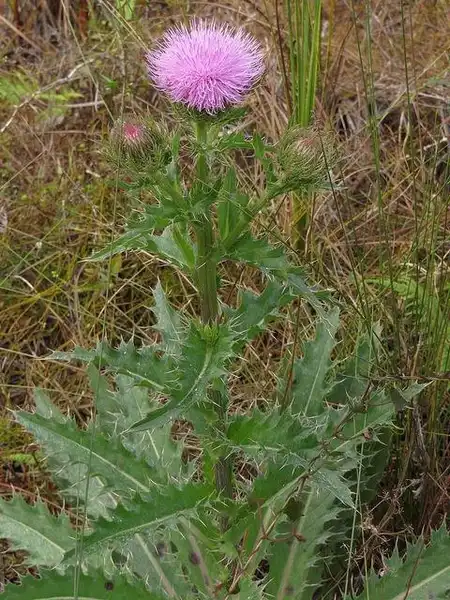
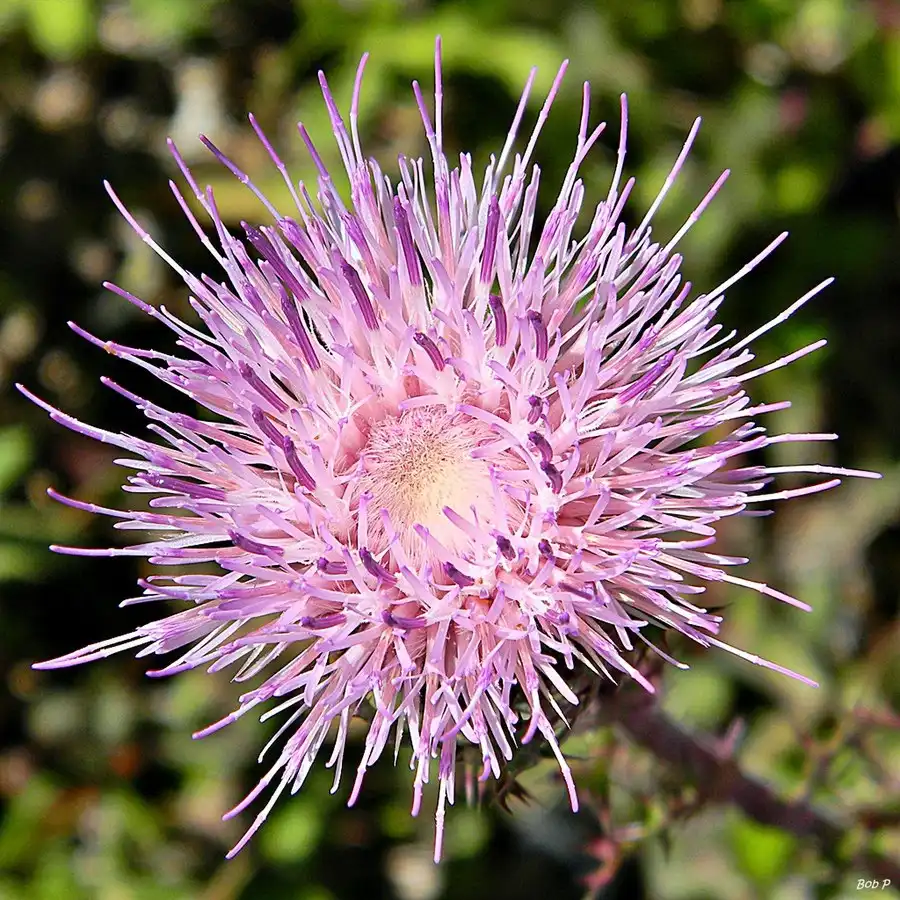
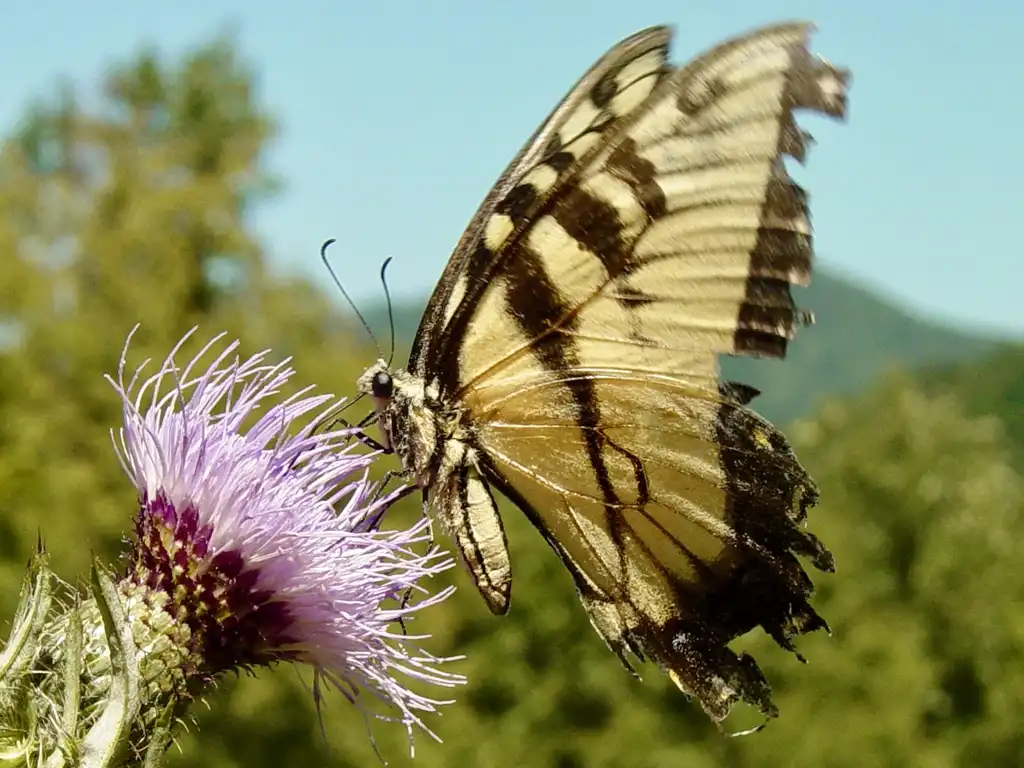
• Photo of Cirsium horridulum (Cirsium horridulums)

Plant Profile: Cirsium horridulum

Taxonomy: Cirsium horridulum

Names

Bristle Thistle, Bull Thistle, Horrid Thistle, Purple Thistle, Spiny Thistle, Yellow Thistle

  • Photo of Cirsium horridulum (Cirsium horridulums)

Phonetic Spelling:SIR-see-um hor-id-YOO-lum

Genus:Cirsium

Species:horridulum

Family:Asteraceae

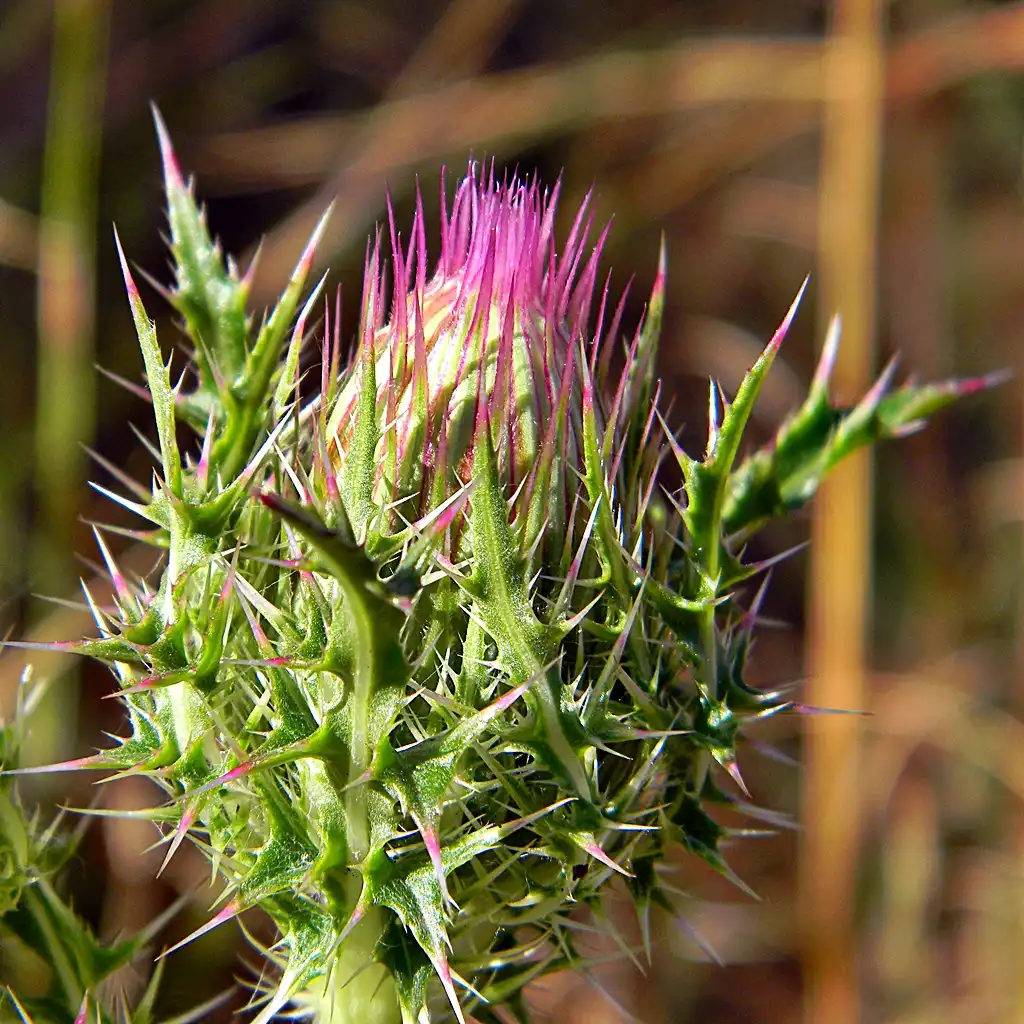
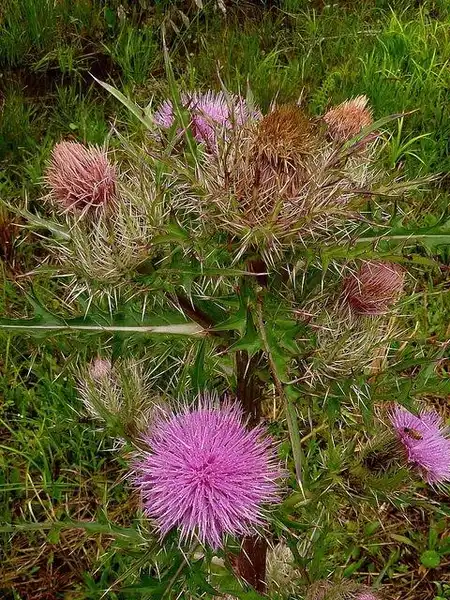
Bull Thistle is a native perennial herb that can reach heights of 2 to 5 feet and is characterized by its spiny structure throughout the plant. Commonly found at the borders of salt marshes, fields, shorelines, savannahs, roadsides, and disturbed areas, it also serves as a weed in southern pastures. This plant thrives particularly well in sandy soils.

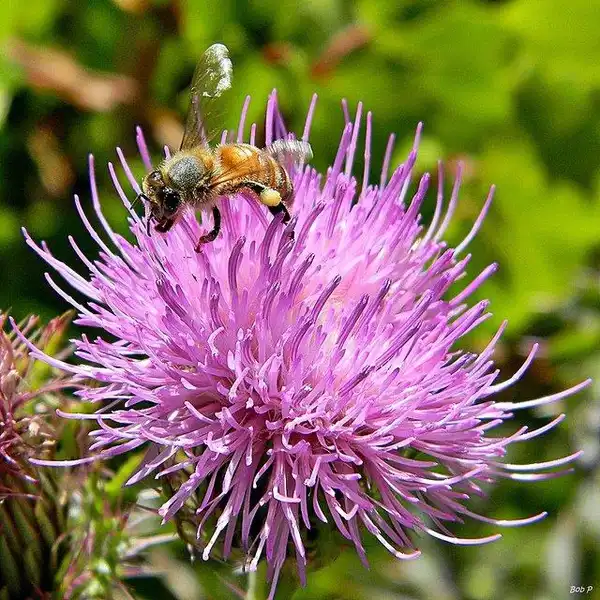
Additionally, Bull Thistle is an important nectar source for bees and butterflies, while its seeds provide food for various bird species.

Cirsium horridulum Feature Summary

Cirsium horridulum Image Gallery

Tags

#hummingbirds
#perennial
#wildlife plant
#nectar plant
#specialized bees
#food source
#NC native
#spines
#spiny leaves
#pollinator plant
#native wildflower
#larval host plant
#food source fall
#bird friendly
#food source hard mast fruit
#butterfly friendly
#pollinator garden
#bee friendly
#little metalmark butterfly
#painted lady butterfly

Similar Plants

Cirsium horridulum Feature Summary

Attributes
Eastern U.S.A. to Honduras and Bahamas
AL , AR , CT , DE , FL , GA , LA , MA , MD , ME , MS , NC , NH , NJ , NV , NY , OK , PA , RI , SC , TN , TX , VA
It is the host plant for the Little Metalmark (Calephelis virginiensis), which has three to five broods from March-October, and Painted Lady Butterflies (Vanessa cardui) which have one to three flights in the east from May-October and three to four flights in south Texas from October-April. Flowers are also attractive to hummingbirds and songbirds eat the seeds. Members of the genus Cirsium support the following specialized bees: Melissodes (Heliomelissodes) desponsus, Osmia (Helicosmia) chalybea and Osmia (Helicosmia) texana.
Perennial
Attracts Pollinators
Flowers
3 inch wide yellow and pink to purple disc flower heads atop multi-branched stems. Its spiny bracts may be purple or white. In the south, the blooms tend to be pinks to purples.
Pink
Gold/Yellow
Red/Burgundy
Cream/Tan
1-3 inches
Leaves
Basal rosette of leaves can grow 8-24 inches long and are deeply incised and very spiny. The stem leaves are alternate and very spiny.
Green
Pink
Alternate
Rosulate
Elliptical
Oblanceolate
> 6 inches
Prickly
1-3 inches
Stem
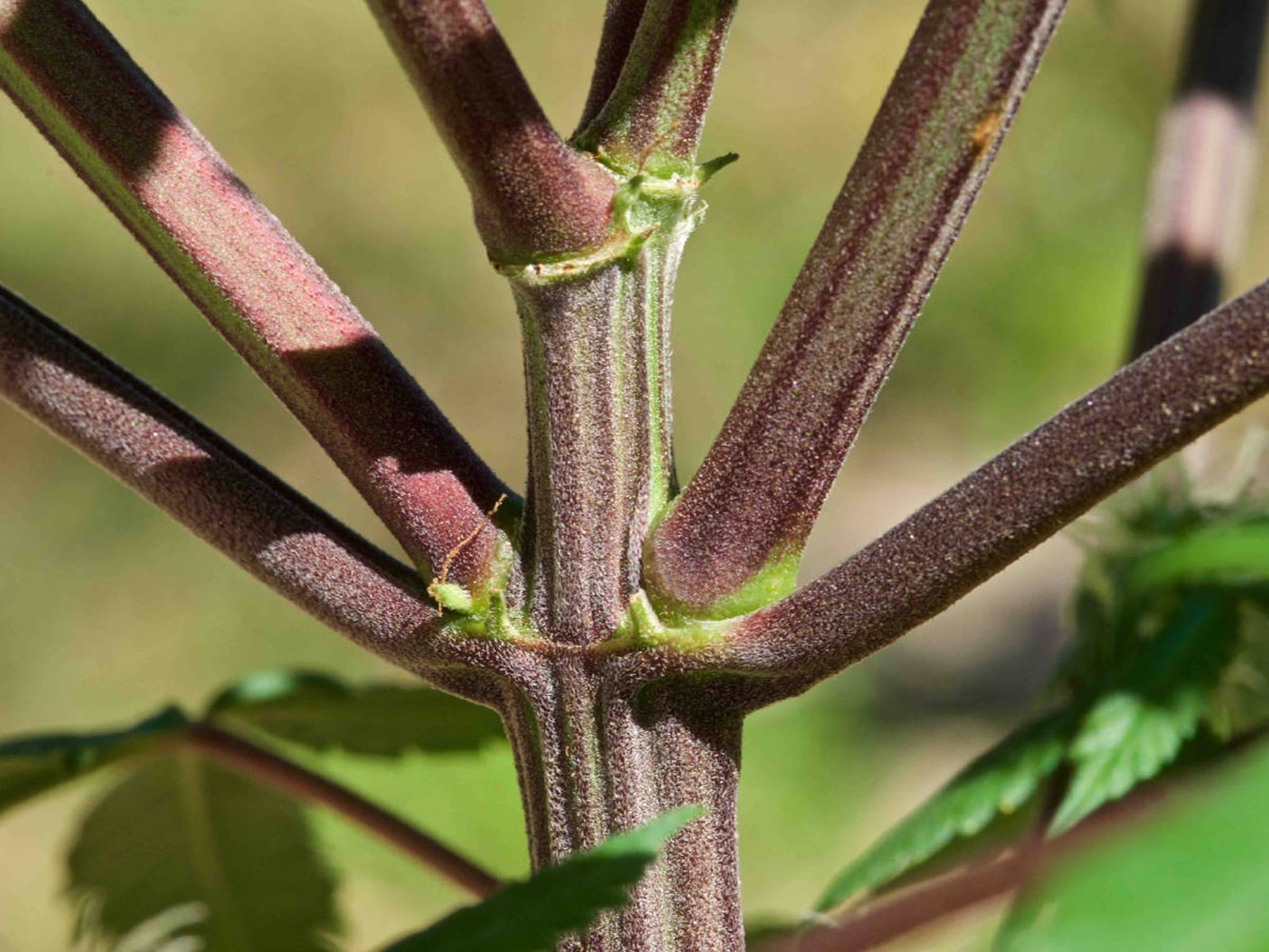
Hairy green stems
Hairy (pubescent)
Whole Plant Traits
Native Plant
Weed
Wildflower
Herb
Coarse
Cultural Conditions
Full sun (6 or more hours of direct sunlight a day)
Good Drainage
Moist
Occasionally Dry
Coastal
Piedmont
Loam (Silt)
Sand
Landscape
Butterfly Garden
Pollinator Garden
Butterflies
Pollinators
Songbirds
Specialized Bees
Hummingbirds
Weedy
Spines/Thorns

Cirsium horridulum Attributes

Cirsium horridulum: Country Or Region Of Origin

Eastern U.S.A. to Honduras and Bahamas
Cirsium horridulum: Distribution

AL , AR , CT , DE , FL , GA , LA , MA , MD , ME , MS , NC , NH , NJ , NV , NY , OK , PA , RI , SC , TN , TX , VA

Cirsium horridulum: Wildlife Value

It is the host plant for the Little Metalmark (Calephelis virginiensis), which has three to five broods from March-October, and Painted Lady Butterflies (Vanessa cardui) which have one to three flights in the east from May-October and three to four flights in south Texas from October-April. Flowers are also attractive to hummingbirds and songbirds eat the seeds. Members of the genus Cirsium support the following specialized bees: Melissodes (Heliomelissodes) desponsus, Osmia (Helicosmia) chalybea and Osmia (Helicosmia) texana.

Cirsium horridulum: Life Cycle

Annual
Biennial
Bulb
Perennial
Woody

Cirsium horridulum: Play Value

Attractive Flowers
Attracts Pollinators
Buffer
Colorful
Defines Paths
Easy to Grow
Edible fruit
Fragrance
Pieces Used in Games
Screening
Shade
Sound
Textural
Wildlife Cover/Habitat
Wildlife Food Source
Wildlife Larval Host
Wildlife Nesting
Wind Break
Wind Shimmer

Cirsium horridulum Flowers

Cirsium horridulum: Flower Description

3 inch wide yellow and pink to purple disc flower heads atop multi-branched stems. Its spiny bracts may be purple or white. In the south, the blooms tend to be pinks to purples.

Cirsium horridulum: Flower Color

filter_vintage
Cream/Tan
filter_vintage
Gold/Yellow
filter_vintage
Pink
filter_vintage
Red/Burgundy

Cirsium horridulum: Flower Inflorescence

Catkin
Corymb
Cyme
Head
Insignificant
Panicle
Raceme
Solitary
Spadix
Spike
Umbel

Cirsium horridulum: Flower Bloom Time

Winter
Spring
Summer
Fall

Cirsium horridulum: Flower Shape

Bell
Cross
Crown
Cup
Dome
Funnel
Irregular
Lipped
Radial
Saucer
Star
Trumpet
Tubular
Urn
Wheel

Cirsium horridulum: Flower Size

1-3 inches
3-6 inches
< 1 inch
> 6 inches

Cirsium horridulum Leaves

Cirsium horridulum: Leaf Description

Basal rosette of leaves can grow 8-24 inches long and are deeply incised and very spiny. The stem leaves are alternate and very spiny.
Cirsium horridulum: Woody Plant Leaf Characteristics

Broadleaf Evergreen
Deciduous
Needled Evergreen
Semi-evergreen

Cirsium horridulum: Leaf Color

spa
Green
spa
Pink

Cirsium horridulum: Leaf Type

Compound (Pinnately , Bipinnately, Palmately)
Fronds
Needles
Sheath
Simple

Cirsium horridulum: Leaf Arrangement

Alternate
Opposite
Other/more complex
Rosulate
Whorled

Cirsium horridulum: Leaf Shape

Acicular
Auriculate
Cordate
Cuneate
Deltoid
Elliptical
Filiform
Lanceolate
Linear
Oblanceolate
Oblong
Obovate
Obtuse
Orbicular
Ovate
Palmasect
Palmatifid
Peltate
Pinnatifid
Pinnatisect
Reniform
Rhomboidal
Spatulate
Subcordate
Subulate

Cirsium horridulum: Leaf Margin

Crenate
Crenulate
Dentate
Denticulate
Doubly Crenate
Doubly Dentate
Doubly Serrate
Entire
Lobed
Serrate
Sinuate
Undulate

Cirsium horridulum: Hairs Present

No
Yes

Cirsium horridulum: Leaf Length

< 1 inch
1-3 inches
3-6 inches
> 6 inches

Cirsium horridulum: Leaf Feel

Fleshy
Glossy
Leathery
Papery
Prickly
Rough
Rubbery
Slippery
Smooth
Soft
Velvety
Waxy

Cirsium horridulum: Leaf Width

< 1 inch
1-3 inches
3-6 inches
> 6 inches

Cirsium horridulum Stem

Cirsium horridulum: Stem Description

Hairy green stems

Cirsium horridulum: Stem Is Aromatic

No
Yes

Cirsium horridulum: Stem Surface

Corky Ridges
Covered with a powdery bloom (glaucous)
Dull
Hairy (pubescent)
Polished
Smooth (glabrous)

Cirsium horridulum Whole Plant Traits

Cirsium horridulum: Plant Type

Annual
Bulb
Carnivorous
Edible
Epiphyte
Fern
Ground Cover
Herb
Herbaceous Perennial
Houseplant
Mushroom
Native Plant
Ornamental Grasses and Sedges
Perennial
Poisonous
Rose
Shrub
Succulent
Tree
Turfgrass
Vegetable
Vine
Water Plant
Weed
Wildflower

Cirsium horridulum: Woody Plant Leaf Characteristics

Broadleaf Evergreen
Deciduous
Needled Evergreen
Semi-evergreen

Cirsium horridulum: Habit/Form

Arching
Ascending
Broad
Cascading
Climbing
Clumping
Columnar
Conical
Creeping
Dense
Erect
Horizontal
Irregular
Mounding
Multi-stemmed
Multi-trunked
Open
Oval
Prostrate
Pyramidal
Rounded
Spreading
Vase
Weeping

Cirsium horridulum: Texture

Fine
Medium
Coarse

Cirsium horridulum Cultural Conditions

Cirsium horridulum: Light

Dappled Sunlight (Shade through upper canopy all day)
Deep shade (Less than 2 hours to no direct sunlight)
Full sun (6 or more hours of direct sunlight a day)
Partial Shade (Direct sunlight only part of the day, 2-6 hours)

Cirsium horridulum: Soil Drainage

Frequent Standing Water
Good Drainage
Moist
Occasional Flooding
Occasionally Dry
Occasionally Wet
Very Dry

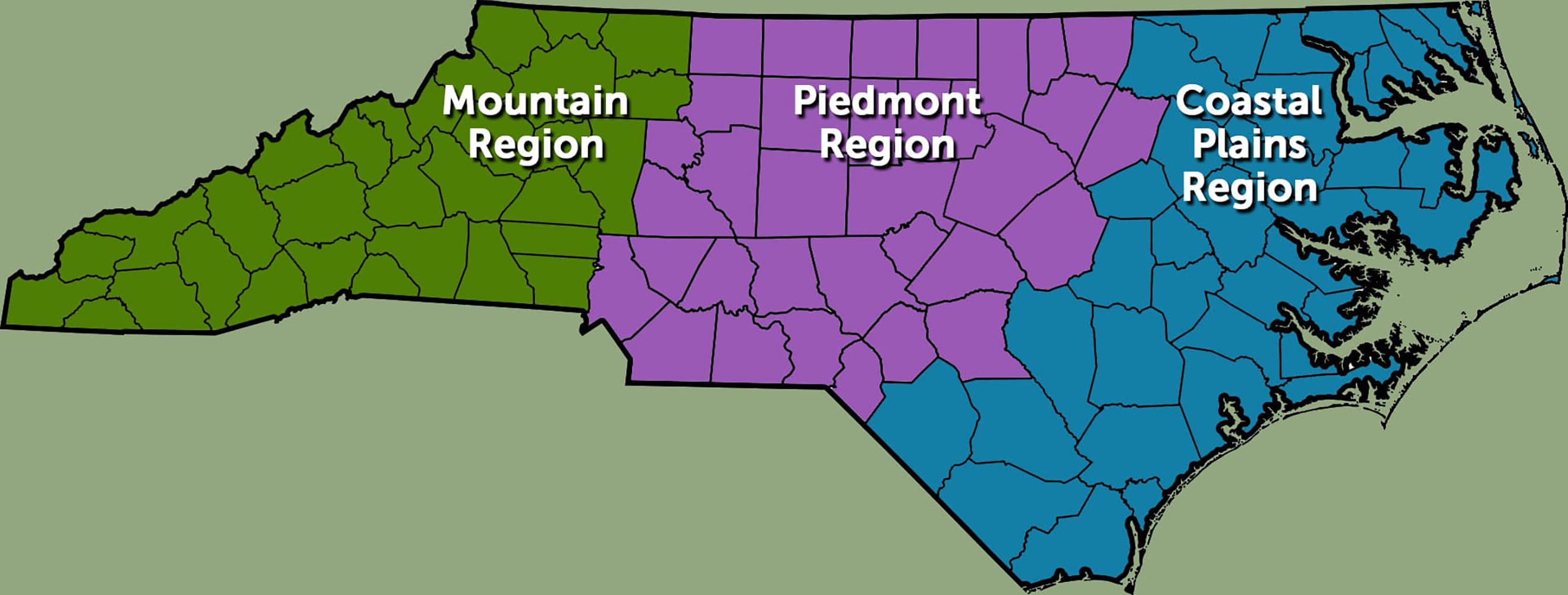
Cirsium horridulum: NC Region

Coastal
Mountains
Piedmont

Cirsium horridulum: Soil Texture

Clay
High Organic Matter
Loam (Silt)
Sand
Shallow Rocky

Cirsium horridulum Fruit

Cirsium horridulum: Display/Harvest Time

Fall
Spring
Summer
Winter

Cirsium horridulum Landscape

Cirsium horridulum: Landscape Theme

Asian Garden
Butterfly Garden
Children's Garden
Cottage Garden
Cutting Garden
Drought Tolerant Garden
Edible Garden
English Garden
Fairy Garden
Garden for the Blind
Native Garden
Nighttime Garden
Pollinator Garden
Rain Garden
Rock Garden
Shade Garden
Water Garden
Winter Garden

Cirsium horridulum: Attracts

Bats
Bees
Butterflies
Frogs
Hummingbirds
Moths
Pollinators
Predatory Insects
Reptiles
Small Mammals
Songbirds
Specialized Bees

Cirsium horridulum: Problems

Allelopathic
Contact Dermatitis
Frequent Disease Problems
Frequent Insect Problems
Invasive Species
Malodorous
Messy
Poisonous to Humans
Problem for Cats
Problem for Children
Problem for Dogs
Problem for Horses
Short-lived
Spines/Thorns
Weak Wood
Weedy