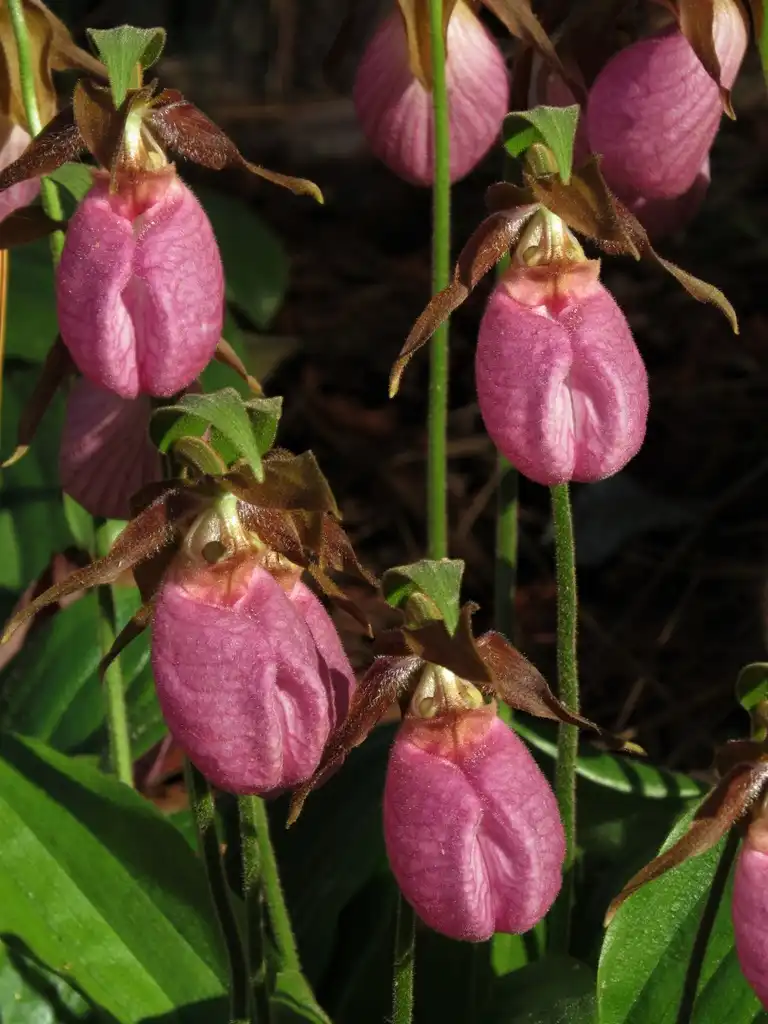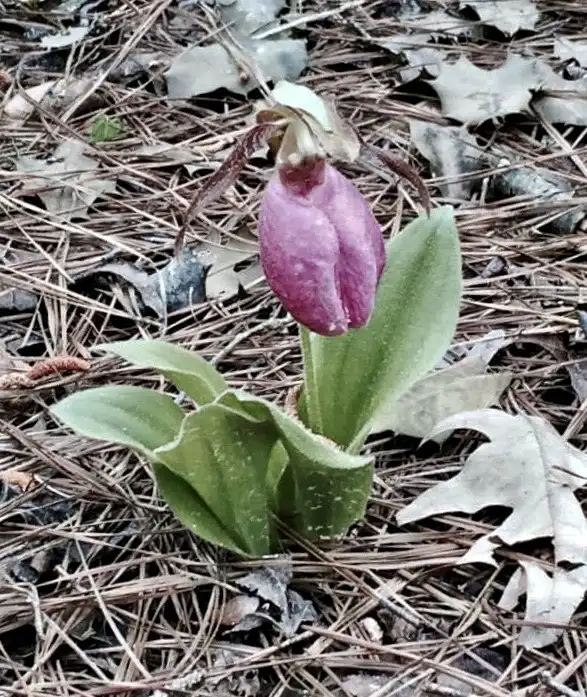
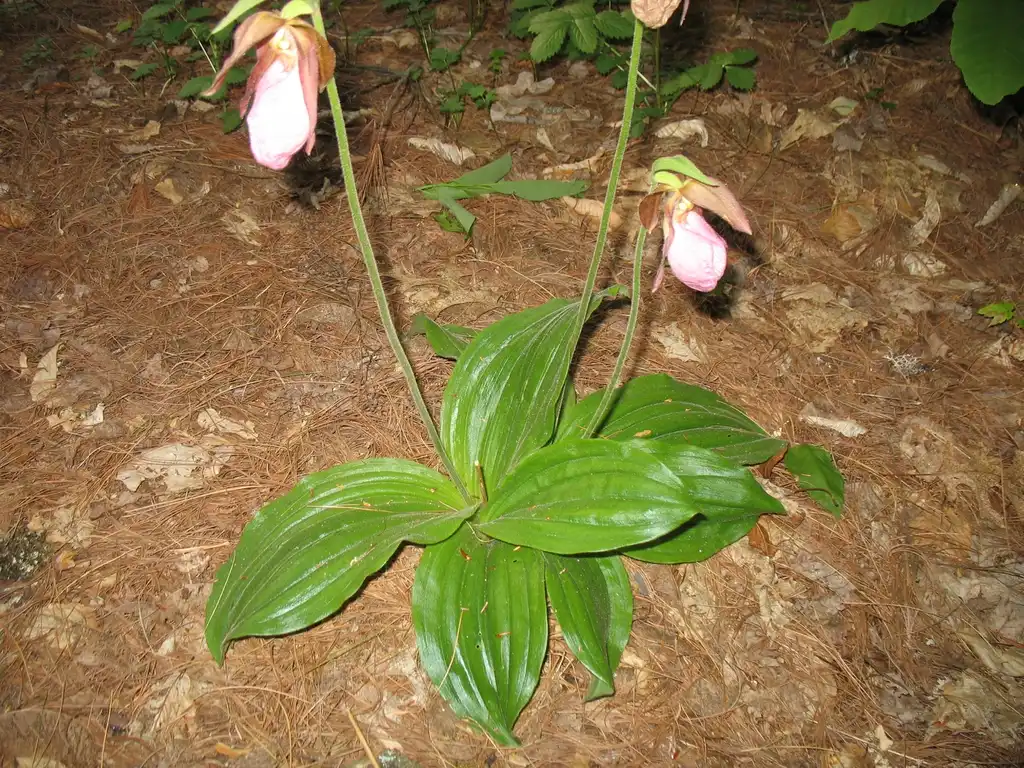
• Photo of Cypripedium acaule (Cypripedium acaules)

Plant Profile: Cypripedium acaule

Taxonomy: Cypripedium acaule

Names

Moccasin-flower, Pink Lady Slipper

  • Photo of Cypripedium acaule (Cypripedium acaules)

Phonetic Spelling:sip-rih-PEE-dee-um a-KAW-lee

Genus:Cypripedium

Species:acaule

Family:Orchidaceae

The Pink Lady Slipper is a native orchid that thrives in highly acidic soils, favoring partial shade and well-drained slopes. Typically found in pine forests, it often grows in large clusters, particularly in the mountainous regions of North Carolina. This plant is notoriously challenging to transplant and cultivate, making it best suited to its natural environment, which consists of dry to mesic, acidic forests and woodlands, frequently located beneath pines, other conifers, and oak trees.

For germination and growth, the seeds depend on a specific type of Rhizoctonia fungus. As the Pink Lady Slipper develops, it forms a symbiotic relationship with this fungus. The plant features two basal leaves with distinct parallel veins, from which a single stalk rises, culminating in a large, typically pink flower resembling an orchid. This flower has a slit designed to lure bees for pollination; however, the bees receive no reward from the plant, leading them to avoid it over time and resulting in low rates of pollination.

Cypripedium acaule Feature Summary

Cypripedium acaule Image Gallery

Tags

#poisonous
#perennial
#bumblebees
#NC native
#food source summer
#food source pollen
#Piedmont Mountains FACU
#Coastal FACU
#bee friendly
#audubon

Similar Plants

Cypripedium acaule is often confused with:

Cypripedium acaule Feature Summary

Attributes
In the past, the root was used as a remedy for nervousness, tooth pain, and muscle spasms.
Central & E. Canada to North Central & Eastern U.S.A
AL , CT , DC , DE , GA , IL , IN , KY , MA , MD , ME , MI , MN , NC , NH , NJ , NY , OH , PA , RI , SC , TN , VA , VT , WI , WV Canada: NB , NL , NS , ON , PE , SK
Attracts bees for pollenation
Perennial
Fruit
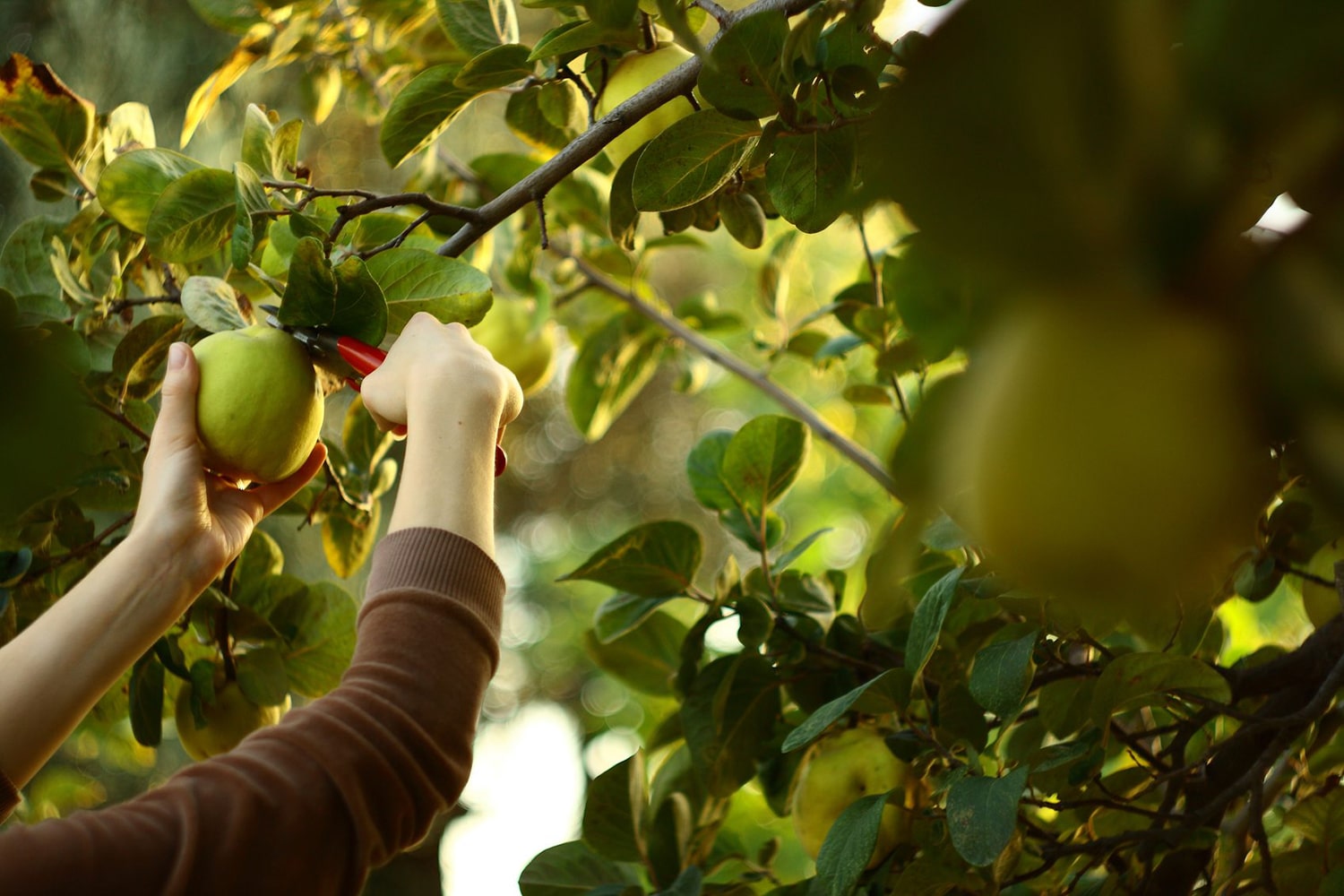
The fruit is an ascending capsule that ripens to brown and contains thousands of tiny seeds. Fruit displays in August.
Brown/Copper
Flowers
Hollow, 2 in. pink pouch with heavy veining and a center groove; other sepals and petals are greenish-brown and lance-shaped. Flowers bloom from April to June
Pink
Brown/Copper
Green
Spring
Summer
1-3 inches
Leaves
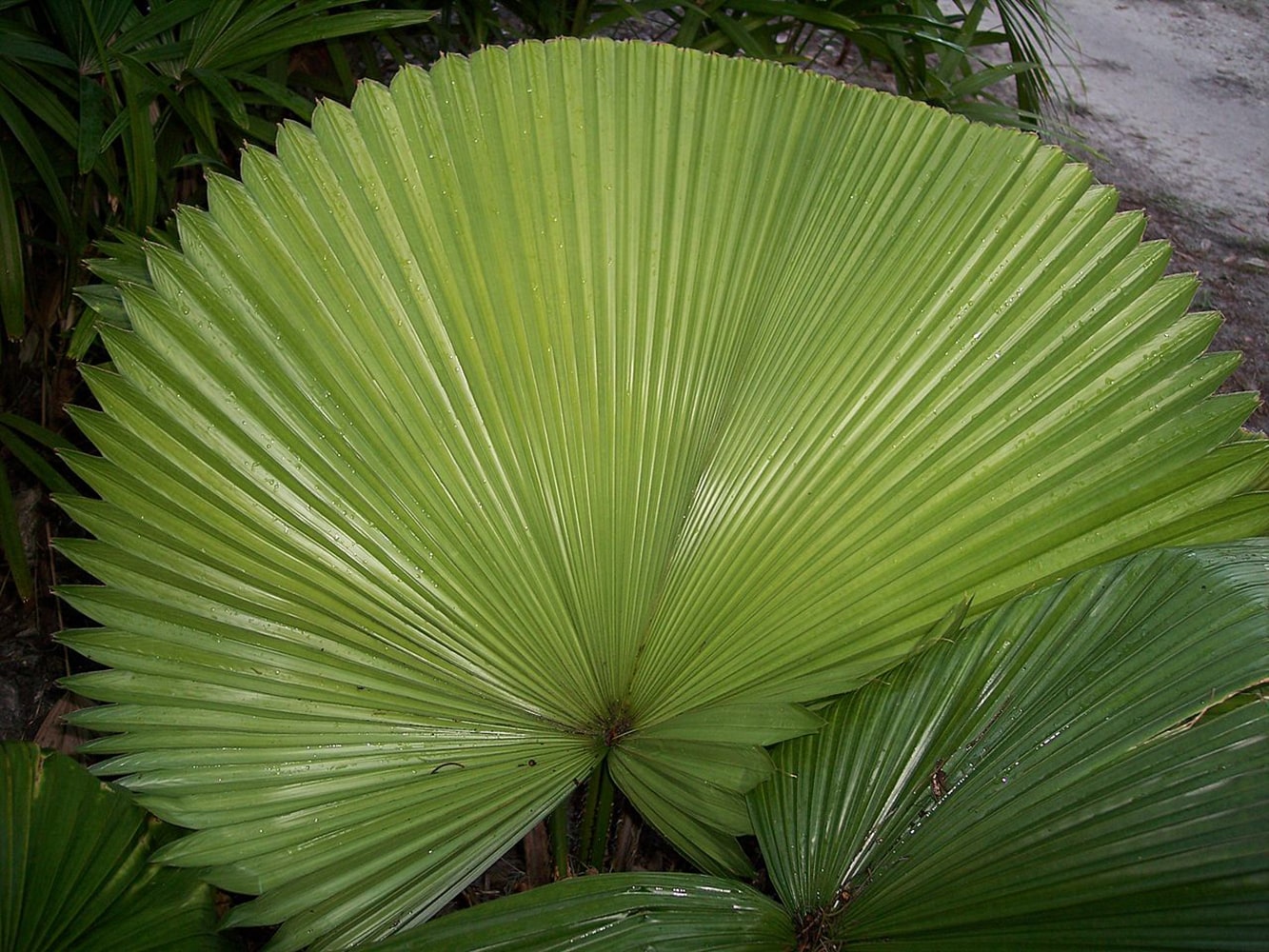
Produces 2 opposite green basal leaves with conspicuous parallel veins that sheath the stem. They are 3½ to 9 inches long, 1 to 3½ inches wide
Elliptical
3-6 inches
1-3 inches
Stem
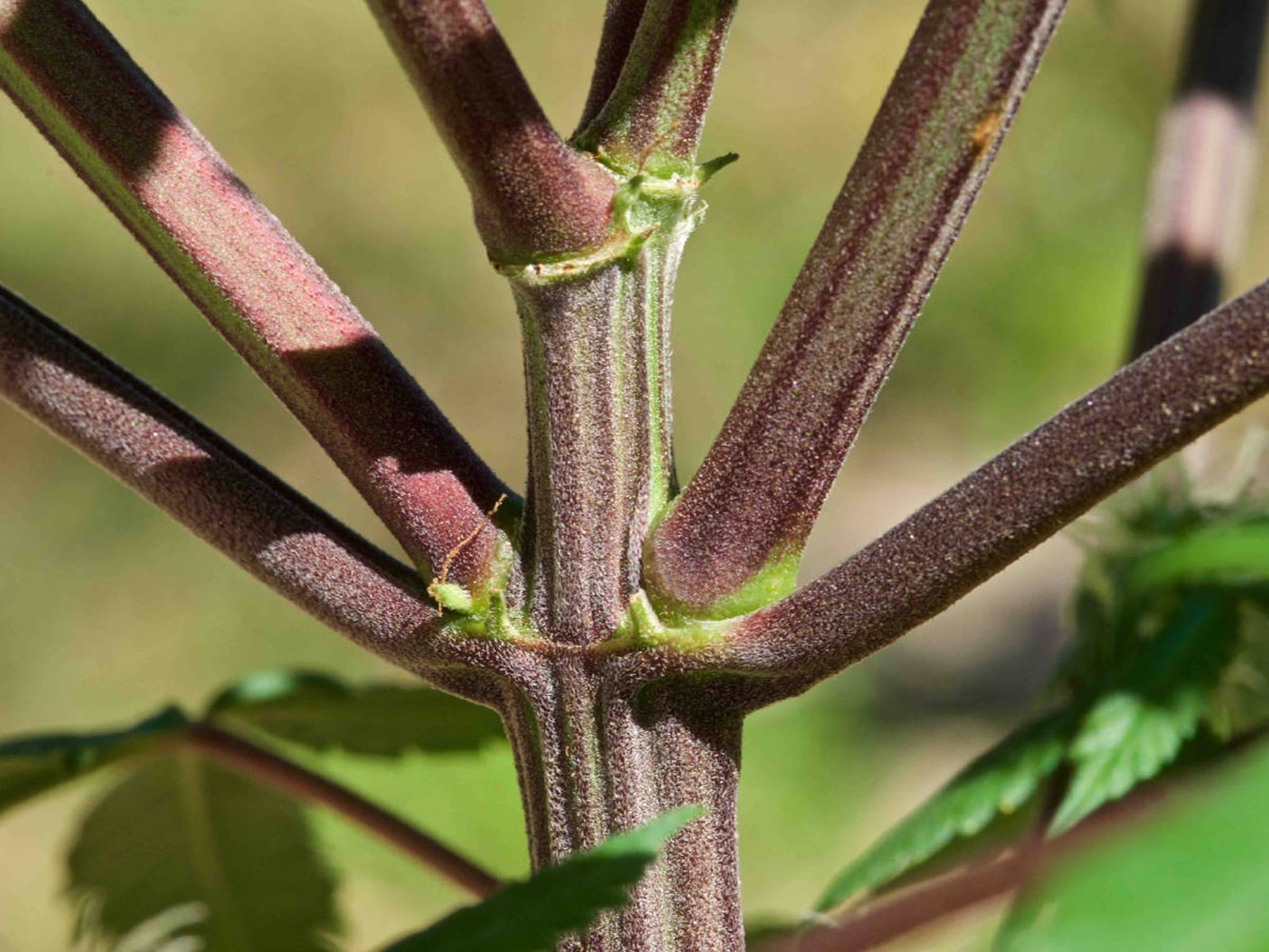
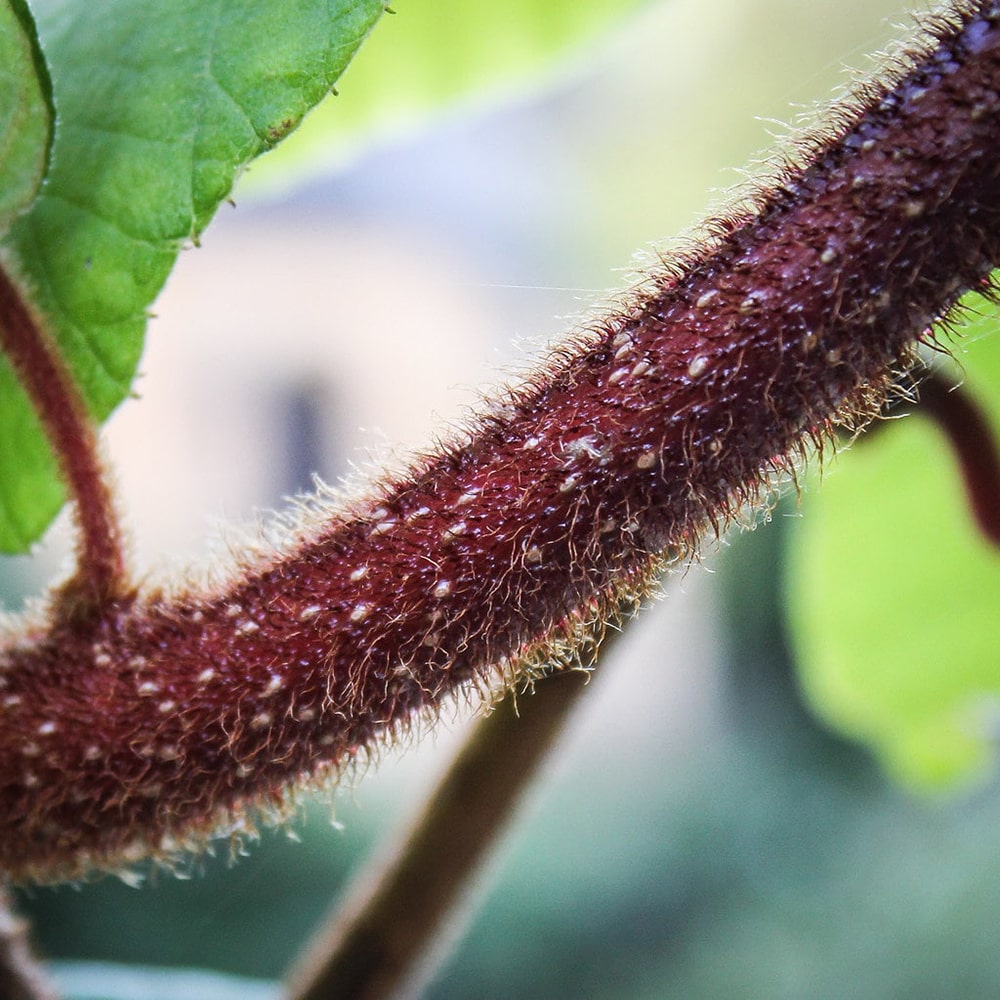
Green leafless bristly hairy stem
Hairy (pubescent)
Poisonous to Humans
Whole Plant Traits
Native Plant
Poisonous
Wildflower
Cultural Conditions
Partial Shade (Direct sunlight only part of the day, 2-6 hours)
Dappled Sunlight (Shade through upper canopy all day)
Acid (<6.0)
Good Drainage
Moist
Occasionally Dry
Mountains
Piedmont
4a
4b
5b
5a
6a
6b
7a
7b
8b
8a
3a
3b
High Organic Matter
Landscape

Cypripedium acaule Attributes

Cypripedium acaule: Uses (Ethnobotany)

In the past, the root was used as a remedy for nervousness, tooth pain, and muscle spasms.
Cypripedium acaule: Country Or Region Of Origin

Central & E. Canada to North Central & Eastern U.S.A

Cypripedium acaule: Distribution

AL , CT , DC , DE , GA , IL , IN , KY , MA , MD , ME , MI , MN , NC , NH , NJ , NY , OH , PA , RI , SC , TN , VA , VT , WI , WV Canada: NB , NL , NS , ON , PE , SK

Cypripedium acaule: Wildlife Value

Attracts bees for pollenation

Cypripedium acaule: Life Cycle

Annual
Biennial
Bulb
Perennial
Woody

Cypripedium acaule: Recommended Propagation Strategy

Division
Grafting
Layering
Leaf Cutting
Root Cutting
Seed
Stem Cutting

Cypripedium acaule Fruit

Cypripedium acaule: Fruit Description

The fruit is an ascending capsule that ripens to brown and contains thousands of tiny seeds. Fruit displays in August.

Cypripedium acaule: Fruit Type

Achene
Aggregate
Berry
Capsule
Caryopsis
Drupe
Follicle
Legume
Nut
Pome
Samara
Schizocarp
Siliqua

Cypripedium acaule: Fruit Color

grass
Brown/Copper

Cypripedium acaule: Display/Harvest Time

Fall
Spring
Summer
Winter

Cypripedium acaule Flowers

Cypripedium acaule: Flower Description

Hollow, 2 in. pink pouch with heavy veining and a center groove; other sepals and petals are greenish-brown and lance-shaped. Flowers bloom from April to June

Cypripedium acaule: Flower Color

filter_vintage
Brown/Copper
filter_vintage
Green
filter_vintage
Pink

Cypripedium acaule: Flower Value To Gardener

Edible
Fragrant
Good Cut
Good Dried
Long Bloom Season
Long-lasting
Showy

Cypripedium acaule: Flower Bloom Time

Winter
Spring
Summer
Fall

Cypripedium acaule: Flower Size

1-3 inches
3-6 inches
< 1 inch
> 6 inches

Cypripedium acaule Leaves

Cypripedium acaule: Leaf Description

Produces 2 opposite green basal leaves with conspicuous parallel veins that sheath the stem. They are 3½ to 9 inches long, 1 to 3½ inches wide

Cypripedium acaule: Leaf Color

spa
Green

Cypripedium acaule: Leaf Type

Compound (Pinnately , Bipinnately, Palmately)
Fronds
Needles
Sheath
Simple

Cypripedium acaule: Leaf Arrangement

Alternate
Opposite
Other/more complex
Rosulate
Whorled

Cypripedium acaule: Leaf Shape

Acicular
Auriculate
Cordate
Cuneate
Deltoid
Elliptical
Filiform
Lanceolate
Linear
Oblanceolate
Oblong
Obovate
Obtuse
Orbicular
Ovate
Palmasect
Palmatifid
Peltate
Pinnatifid
Pinnatisect
Reniform
Rhomboidal
Spatulate
Subcordate
Subulate

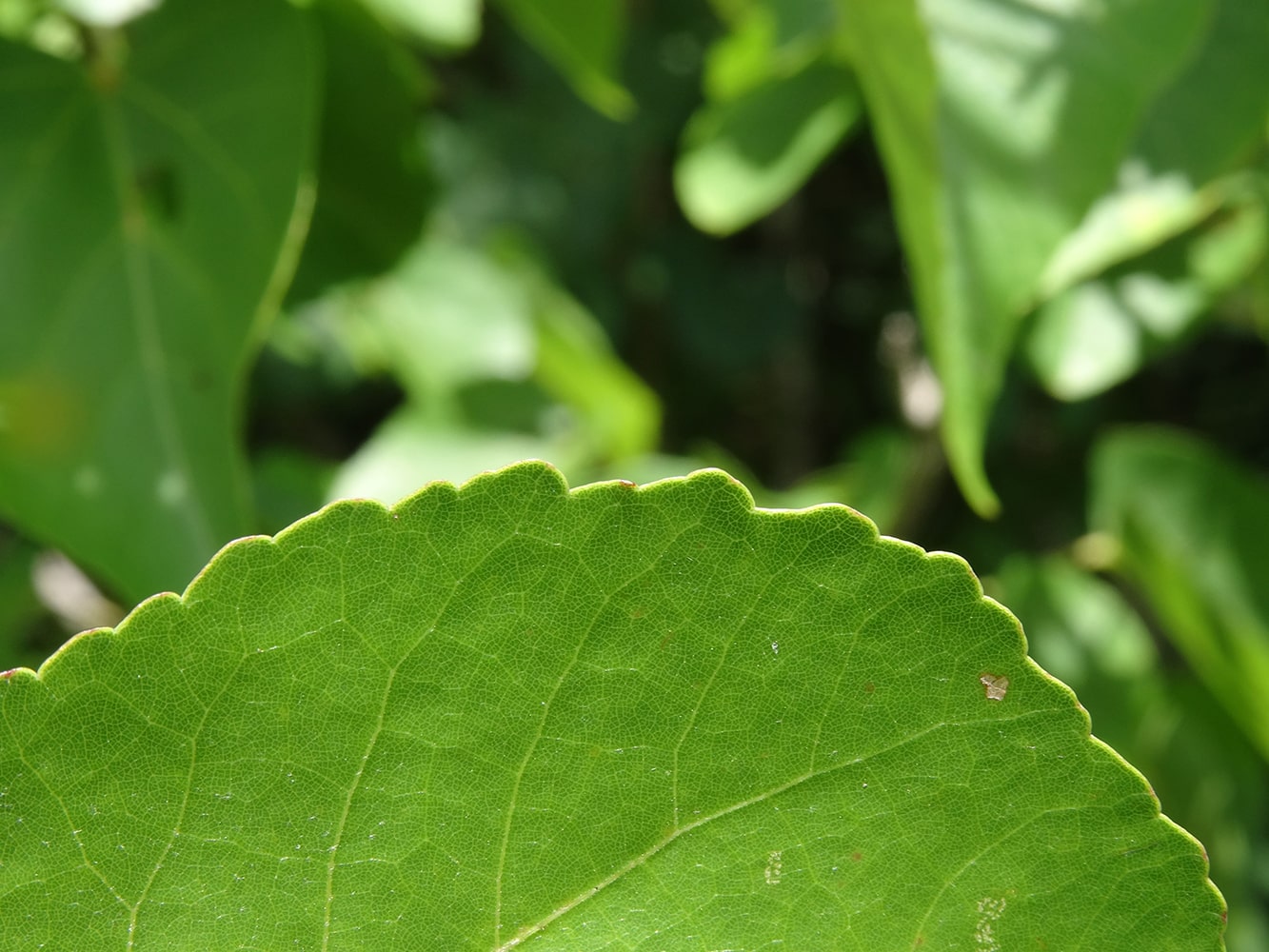
Cypripedium acaule: Leaf Margin

Crenate
Crenulate
Dentate
Denticulate
Doubly Crenate
Doubly Dentate
Doubly Serrate
Entire
Lobed
Serrate
Sinuate
Undulate

Cypripedium acaule: Hairs Present

No
Yes

Cypripedium acaule: Leaf Length

< 1 inch
1-3 inches
3-6 inches
> 6 inches

Cypripedium acaule: Leaf Width

< 1 inch
1-3 inches
3-6 inches
> 6 inches

Cypripedium acaule Stem

Cypripedium acaule: Stem Description

Green leafless bristly hairy stem

Cypripedium acaule: Stem Color

grass
Green

Cypripedium acaule: Stem Is Aromatic

No
Yes

Cypripedium acaule: Stem Surface

Corky Ridges
Covered with a powdery bloom (glaucous)
Dull
Hairy (pubescent)

Polished
Smooth (glabrous)

Cypripedium acaule Poisonous to Humans

Cypripedium acaule: Poison Symptoms

Skin irritation after contact

Cypripedium acaule: Poison Toxic Principle

Unidentified

Cypripedium acaule: Poison Severity
High
Low
Medium

Cypripedium acaule: Causes Contact Dermatitis

No
Yes

Cypripedium acaule: Poison Part

Bark
Flowers
Fruits
Leaves
Roots
Sap/Juice
Seeds
Stems

Cypripedium acaule Whole Plant Traits

Cypripedium acaule: Plant Type

Annual
Bulb
Carnivorous
Edible
Epiphyte
Fern
Ground Cover
Herb
Herbaceous Perennial
Houseplant
Mushroom
Native Plant
Ornamental Grasses and Sedges
Perennial
Poisonous
Rose
Shrub
Succulent
Tree
Turfgrass
Vegetable
Vine
Water Plant
Weed
Wildflower

Cypripedium acaule: Habit/Form

Arching
Ascending
Broad
Cascading
Climbing
Clumping
Columnar
Conical
Creeping
Dense
Erect
Horizontal
Irregular
Mounding
Multi-stemmed
Multi-trunked
Open
Oval
Prostrate
Pyramidal
Rounded
Spreading
Vase
Weeping

Cypripedium acaule Cultural Conditions

Cypripedium acaule: Light

Dappled Sunlight (Shade through upper canopy all day)
Deep shade (Less than 2 hours to no direct sunlight)
Full sun (6 or more hours of direct sunlight a day)
Partial Shade (Direct sunlight only part of the day, 2-6 hours)

Cypripedium acaule: Soil pH

Acid (<6.0)
Alkaline (>8.0)
Neutral (6.0-8.0)

Cypripedium acaule: Soil Drainage

Frequent Standing Water
Good Drainage
Moist
Occasional Flooding
Occasionally Dry
Occasionally Wet
Very Dry

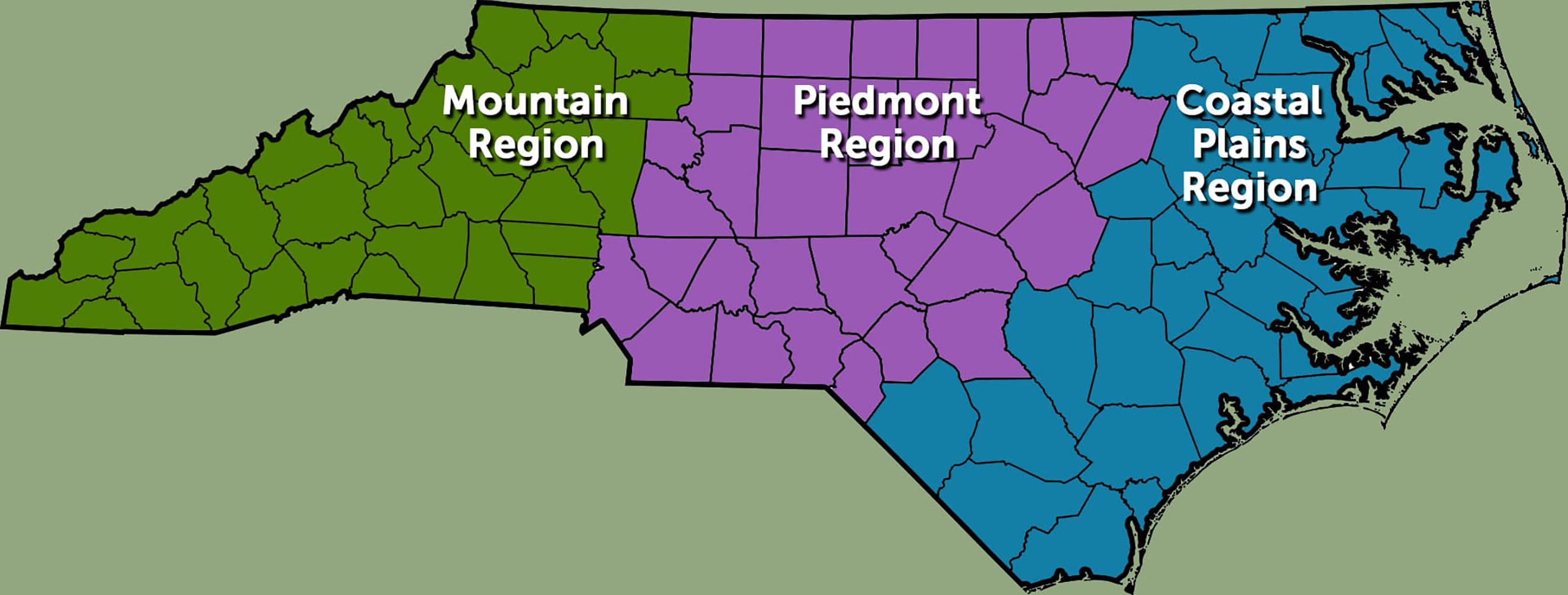
Cypripedium acaule: NC Region

Coastal
Mountains
Piedmont

Cypripedium acaule: USDA Plant Hardiness Zone

thermostat
3a
thermostat
3b
thermostat
4a
thermostat
4b
thermostat
5a
thermostat
5b
thermostat
6a
thermostat
6b
thermostat
7a
thermostat
7b
thermostat
8a
thermostat
8b

Cypripedium acaule: Soil Texture

Clay
High Organic Matter
Loam (Silt)
Sand
Shallow Rocky

Cypripedium acaule Landscape

Cypripedium acaule: Landscape Location

Coastal
Container
Hanging Baskets
Houseplants
Lawn
Meadow
Naturalized Area
Near Septic
Patio
Pond
Pool/Hardscape
Recreational Play Area
Riparian
Rock Wall
Slope/Bank
Small Space
Vertical Spaces
Walkways
Woodland