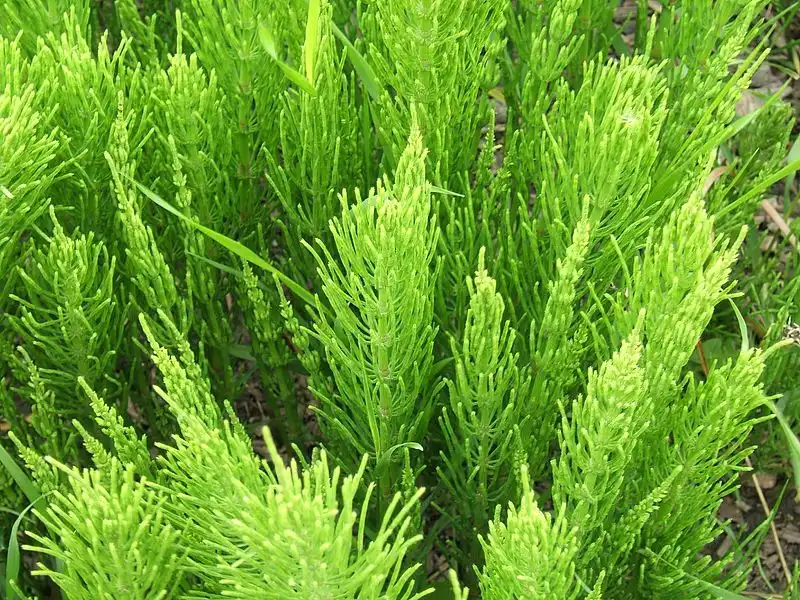
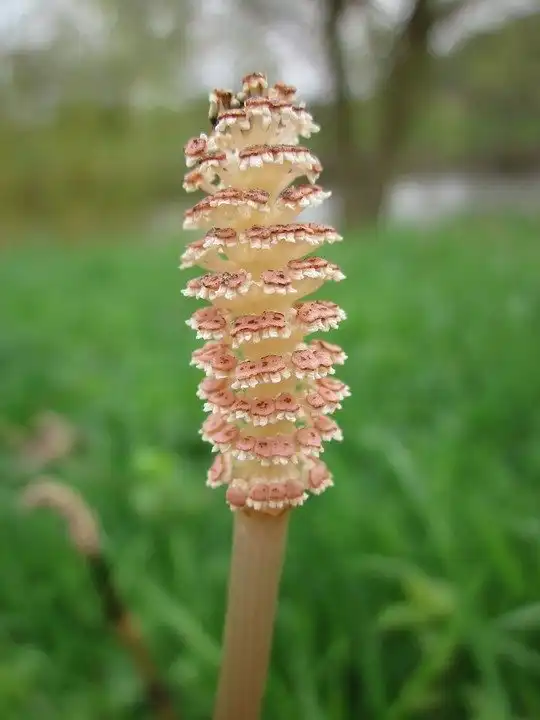
• Photo of Equisetum arvense (Equisetum arvenses)

Plant Profile: Equisetum arvense

Taxonomy: Equisetum arvense

Names

Bottlebrush, Common Horsetail, Field Horsetail, Foxtail, Horse pipes, Horsetail, Jointed rush, Mare's tail, Pinetop, Scouring rush, Snake grass, Western horsetail

  • Photo of Equisetum arvense (Equisetum arvenses)

Phonetic Spelling:ek-wis-SEE-tum ar-VEN-see

Genus:Equisetum

Species:arvense

Family:Equisetaceae

Field Horsetail is an annual plant native to regions along streambanks, roadsides, and other disturbed environments. It features two distinct types of stems: sterile and reproductive. The reproductive stems emerge in the spring, characterized by brown scale-like leaves and a prominent spore cone, but they eventually die off as the sterile stems begin to grow. This plant reproduces through spores located on the reproductive stems.

Historically, Field Horsetail has been utilized as a medicinal remedy by various cultures, including Native Americans, ancient Romans, and Chinese healers. Today, it continues to be employed as an herbal treatment.

In terms of pests and diseases, Common Horsetail poses challenges due to its growth pattern, which involves deep rhizomes that can extend up to 6 feet into the soil, making it difficult to eradicate. In agricultural settings, it is often regarded as a weed, necessitating annual deep plowing to help control the spread of its rhizomes.

Equisetum arvense Feature Summary

Equisetum arvense Image Gallery

Tags

#fern
#stream banks
#NC native
#deer resistant
#disturbed areas
#native annual
#food source spring
#food source herbage
#coastal FAC
#Piedmont Mountains FAC
#mammals
#waterfowl
#insects
#problem for horses
#audubon

Similar Plants

Equisetum arvense Feature Summary

Attributes
Temperate Northern Hemisphere
Food source for waterfowl and mammals such as grizzly bears.
Perennial
Wildlife Food Source
Fruit
No fruits. This plants reproduces via spores.
Flowers
Poisonous to Humans
Thiamine deficiency: weakness, weight loss, staggers, tremors, death
Whole Plant Traits
Cultural Conditions
Full sun (6 or more hours of direct sunlight a day)
Partial Shade (Direct sunlight only part of the day, 2-6 hours)
Deep shade (Less than 2 hours to no direct sunlight)
Moist
Occasionally Wet
Occasionally Dry
Coastal
Mountains
Piedmont
Leaves
Compound (Pinnately , Bipinnately, Palmately)
Fronds
Landscape
Native Garden
Shade Garden
Deer
Wet Soil
Heavy Shade
Small Mammals
Problem for Horses

Equisetum arvense Attributes

Equisetum arvense: Country Or Region Of Origin

Temperate Northern Hemisphere
Equisetum arvense: Wildlife Value

Food source for waterfowl and mammals such as grizzly bears.

Equisetum arvense: Particularly Resistant To (Insects/Diseases/Other Problems)

Heavy shade, Deer

Equisetum arvense: Life Cycle

Annual
Biennial
Bulb
Perennial
Woody

Equisetum arvense: Play Value

Attractive Flowers
Attracts Pollinators
Buffer
Colorful
Defines Paths
Easy to Grow
Edible fruit
Fragrance
Pieces Used in Games
Screening
Shade
Sound
Textural
Wildlife Cover/Habitat
Wildlife Food Source
Wildlife Larval Host
Wildlife Nesting
Wind Break
Wind Shimmer

Equisetum arvense Fruit

Equisetum arvense: Fruit Description

No fruits. This plants reproduces via spores.

Equisetum arvense Flowers

Equisetum arvense: Flower Description

No flowers.

Equisetum arvense Poisonous to Humans

Equisetum arvense: Poison Symptoms

Thiamine deficiency: weakness, weight loss, staggers, tremors, death

Equisetum arvense: Poison Toxic Principle

Thiaminase

Equisetum arvense: Poison Severity

High
Low
Medium

Equisetum arvense: Causes Contact Dermatitis

No
Yes

Equisetum arvense Whole Plant Traits

Equisetum arvense: Plant Type

Annual
Bulb
Carnivorous
Edible
Epiphyte
Fern
Ground Cover
Herb
Herbaceous Perennial
Houseplant
Mushroom
Native Plant
Ornamental Grasses and Sedges
Perennial
Poisonous
Rose
Shrub
Succulent
Tree
Turfgrass
Vegetable
Vine
Water Plant
Weed
Wildflower

Equisetum arvense: Woody Plant Leaf Characteristics

Broadleaf Evergreen
Deciduous
Needled Evergreen
Semi-evergreen

Equisetum arvense Cultural Conditions

Equisetum arvense: Light

Dappled Sunlight (Shade through upper canopy all day)
Deep shade (Less than 2 hours to no direct sunlight)
Full sun (6 or more hours of direct sunlight a day)
Partial Shade (Direct sunlight only part of the day, 2-6 hours)

Equisetum arvense: Soil Drainage

Frequent Standing Water
Good Drainage
Moist
Occasional Flooding
Occasionally Dry
Occasionally Wet
Very Dry

Equisetum arvense: NC Region

Coastal
Mountains
Piedmont

Equisetum arvense Leaves

Equisetum arvense: Woody Plant Leaf Characteristics

Broadleaf Evergreen
Deciduous
Needled Evergreen
Semi-evergreen

Equisetum arvense: Leaf Type

Compound (Pinnately , Bipinnately, Palmately)
Fronds
Needles
Sheath
Simple

Equisetum arvense: Hairs Present

No
Yes

Equisetum arvense Stem

Equisetum arvense: Stem Is Aromatic

No
Yes

Equisetum arvense Landscape

Equisetum arvense: Landscape Theme

Asian Garden
Butterfly Garden
Children's Garden
Cottage Garden
Cutting Garden
Drought Tolerant Garden
Edible Garden
English Garden
Fairy Garden
Garden for the Blind
Native Garden
Nighttime Garden
Pollinator Garden
Rain Garden
Rock Garden
Shade Garden
Water Garden
Winter Garden

Equisetum arvense: Resistance To Challenges

Black Walnut
Compaction
Deer
Diseases
Drought
Dry Soil
Erosion
Fire
Foot Traffic
Heat
Heavy Shade
Humidity
Insect Pests
Pollution
Poor Soil
Rabbits
Salt
Slugs
Squirrels
Storm damage
Urban Conditions
Voles
Wet Soil
Wind

Equisetum arvense: Landscape Location

Coastal
Container
Hanging Baskets
Houseplants
Lawn
Meadow
Naturalized Area
Near Septic
Patio
Pond
Pool/Hardscape
Recreational Play Area
Riparian
Rock Wall
Slope/Bank
Small Space
Vertical Spaces
Walkways
Woodland

Equisetum arvense: Attracts

Bats
Bees
Butterflies
Frogs
Hummingbirds
Moths
Pollinators
Predatory Insects
Reptiles
Small Mammals
Songbirds
Specialized Bees

Equisetum arvense: Problems

Allelopathic
Contact Dermatitis
Frequent Disease Problems
Frequent Insect Problems
Invasive Species
Malodorous
Messy
Poisonous to Humans
Problem for Cats
Problem for Children
Problem for Dogs
Problem for Horses
Short-lived
Spines/Thorns
Weak Wood
Weedy