Eurybia divaricata: Country Or Region Of Origin
Eastern Canada and United States
Phonetic Spelling:yoor-RIB-ee-uh dy-vair-ih-KAY-tus
Genus:Eurybia
Species:divaricata
Family:Asteraceae
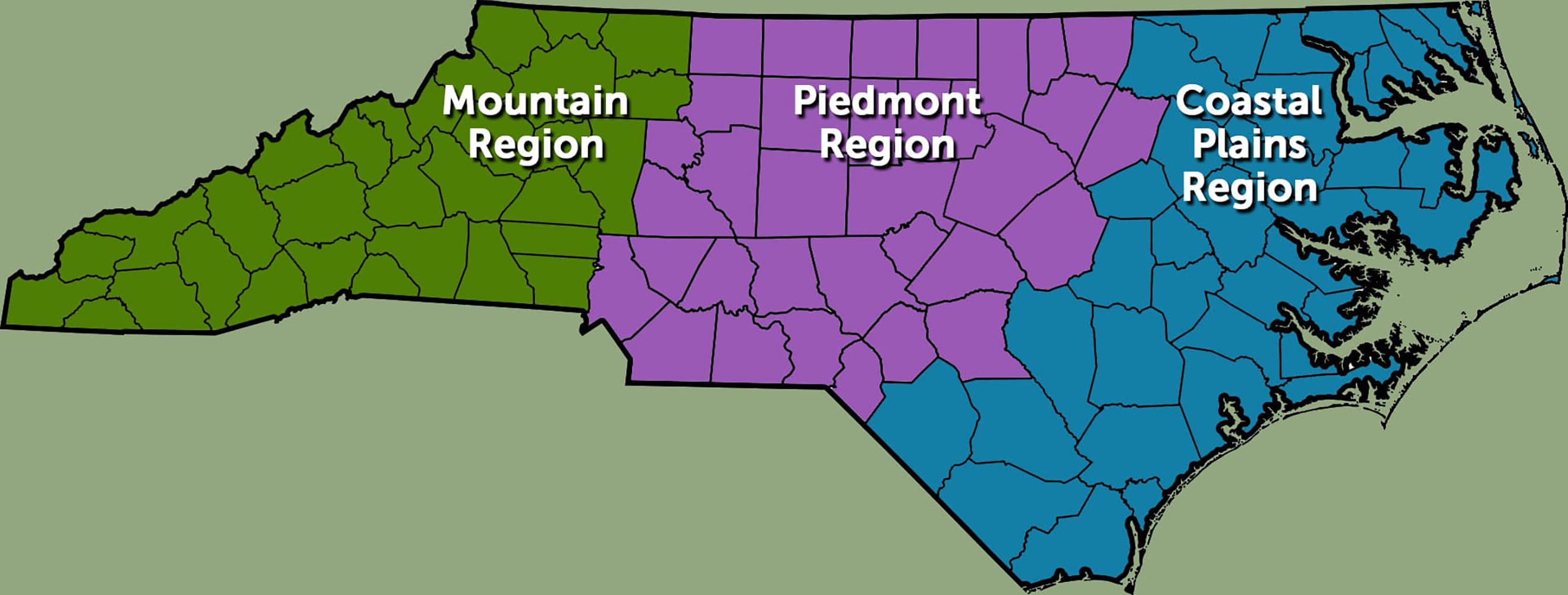
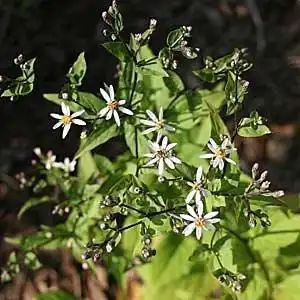
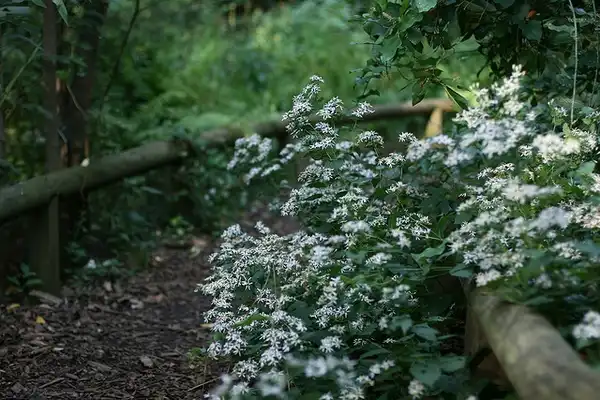
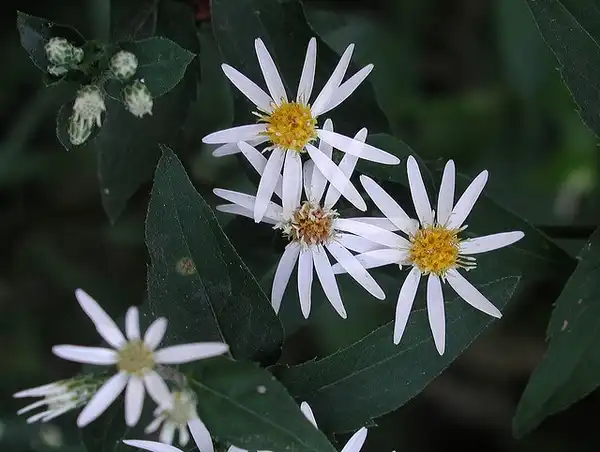
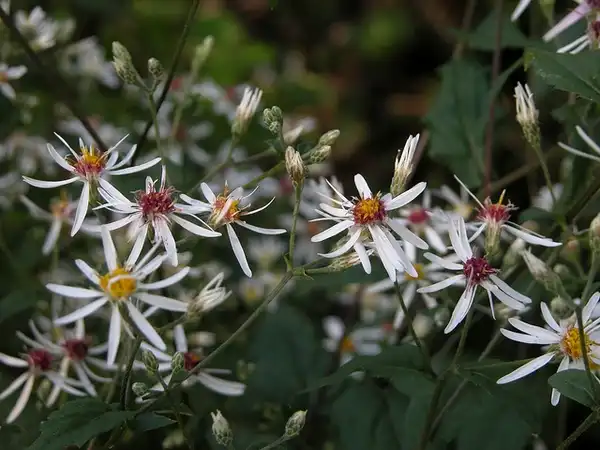
Eurybia divaricata, commonly known as the White Wood Aster, is a perennial herb native to the Eastern United States, thriving in the dry, open woodlands of the Appalachian region. This plant flourishes in partial shade, ideally receiving about 3 to 4 hours of sunlight each day, and prefers medium to dry, well-drained soils. It exhibits resilience against shade, deer, and drought conditions. In late summer to fall, it produces striking clusters of white flowers that attract bees and butterflies, while its seeds serve as a food source for birds and small mammals. White Wood Asters can reach heights of up to 3 feet and spread vigorously through rhizomes. To encourage a more compact growth habit, it is advisable to shear the plant back to 6 inches in early summer.
This hardy native plant is perfect for open shade gardens, woodland settings, and both native and cottage gardens, making it a valuable addition that can be somewhat elusive to find. Propagation can be achieved through division in the spring, and the plant typically reaches its full size within 2 to 5 years.
In 2008, Eurybia divaricata was honored as the NC Wildflower of the Year, a recognition facilitated by the North Carolina Botanical Garden with support from the Garden Club of North Carolina.
Regarding potential issues, this plant may be prone to powdery mildew, so ensuring good air circulation is essential. Additionally, aster wilt can occasionally occur, especially in poorly-drained clay soils.
Eurybia divaricata Feature Summary
Eurybia divaricata Image Gallery