Hydrocotyle umbellata: Uses (Ethnobotany)
Ground cover.
Phonetic Spelling:hi-droh-KOT-ol um-bell-AY-tuh
Genus:Hydrocotyle
Species:umbellata
Family:Araliaceae
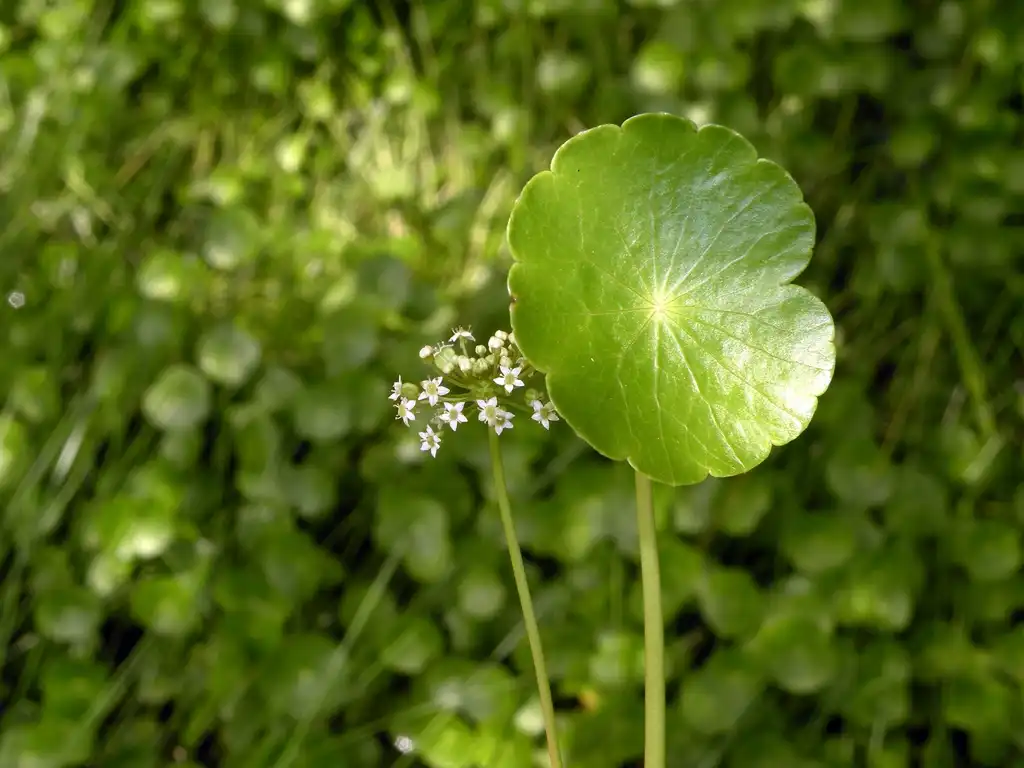
Hydrocotyle umbellata, commonly referred to as Dollarweed, is a perennial herb native to regions with moist, open environments, including roadside ditches and swamps. As an aquatic plant belonging to the carrot family, Dollarweed serves effectively as ground cover, thriving both in terrestrial and aquatic settings. It produces attractive, glossy, round green leaves, reminiscent of silver dollars, which create dense mats in poorly drained to wet soils under sunlight. The plant flowers from late spring through fall and propagates through long, creeping roots as well as seeds that are consumed by waterfowl, with pollination facilitated by butterflies.
Hydrocotyle umbellata is often confused with Hydrocotyle ranunculoides; however, the key distinction lies in the shape of their leaves. The leaves of Hydrocotyle umbellata are perfectly circular, while those of Hydrocotyle ranunculoides are also round but feature notches that extend nearly to the center.
Regarding potential issues, there are no known diseases or insect threats associated with this plant. Although it is not classified as toxic, consuming the leaves may lead to nausea. The effects of any toxins can differ based on an individual's age, weight, health status, and personal sensitivity, with children being particularly at risk. Additionally, the toxicity of the plant can fluctuate depending on the season, the specific parts of the plant, and its growth stage. Furthermore, plants can absorb harmful substances, including herbicides, pesticides, and pollutants from their surrounding environment—air, water, and soil.
Hydrocotyle umbellata Feature Summary
Hydrocotyle umbellata Image Gallery