Rhus glabra: Uses (Ethnobotany)
The leaves of this plant are a source of black ink. Pigment can also be obtained from the wood of this plant and if used in the textile, toy, and paper industry.
Phonetic Spelling:RHOOS GLAY-brah
Genus:Rhus
Species:glabra
Family:Anacardiaceae
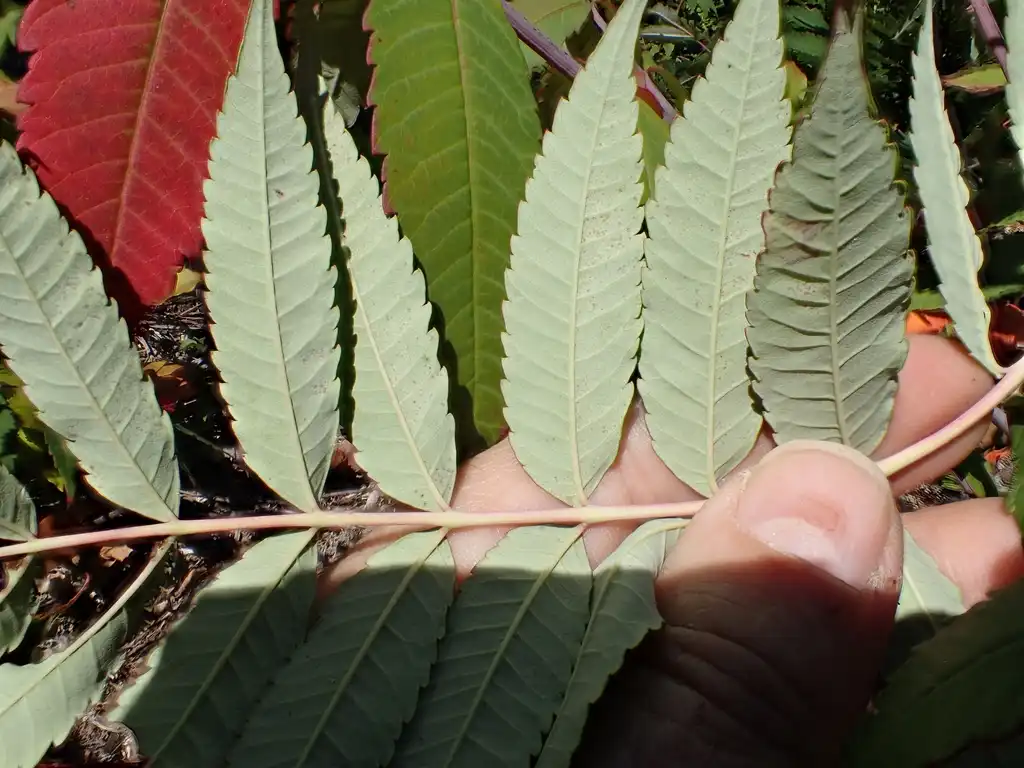
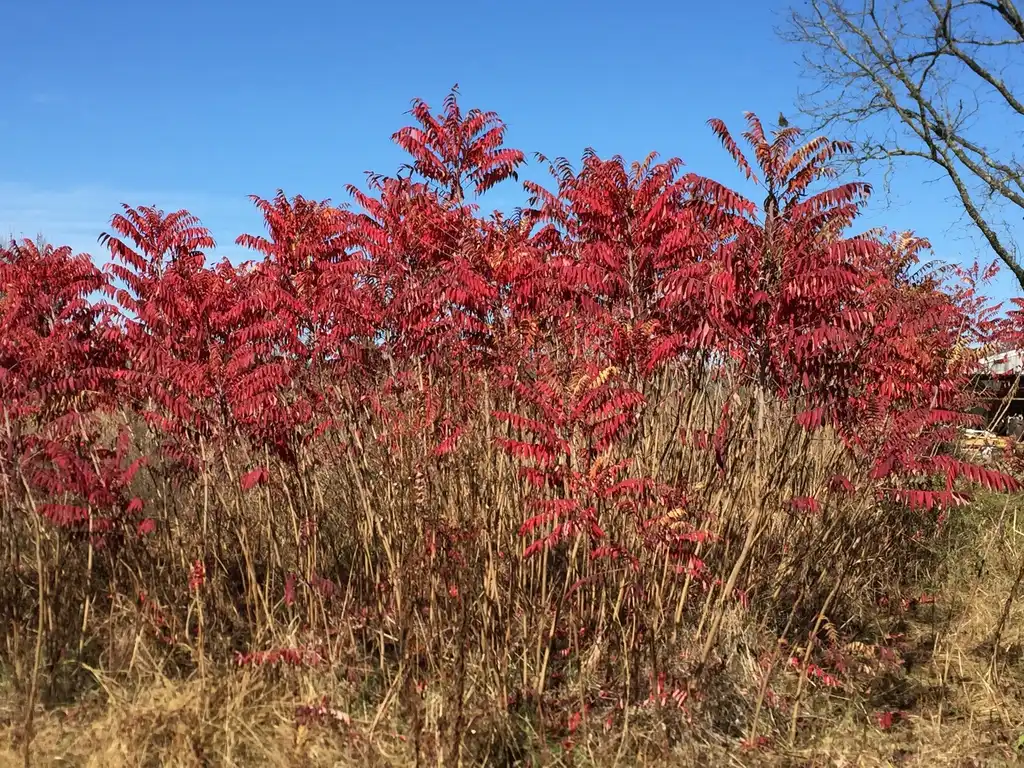
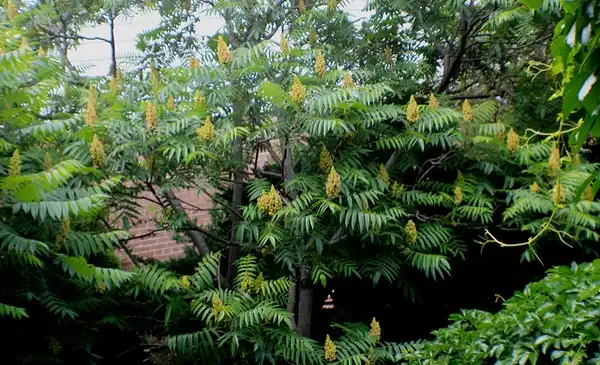
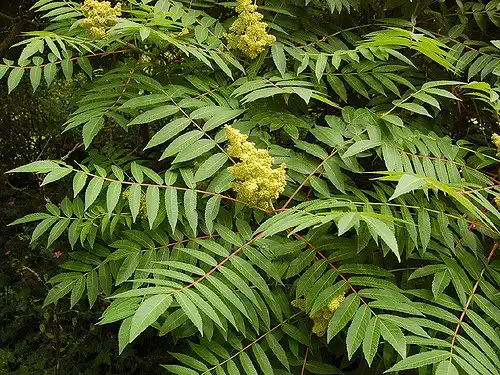
Smooth Sumac is a deciduous shrub native to the United States and parts of Canada, typically growing between 9 to 15 feet in height and width. It thrives in various regions of North Carolina and is highly drought-resistant, often found in disturbed sites, open woodlands, prairies, dry rocky slopes, and canyons. This shrub spreads through suckers, forming dense colonies, and serves as a vital food source for wildlife during the winter months. It features separate male and female plants, both of which are necessary for fruit production.
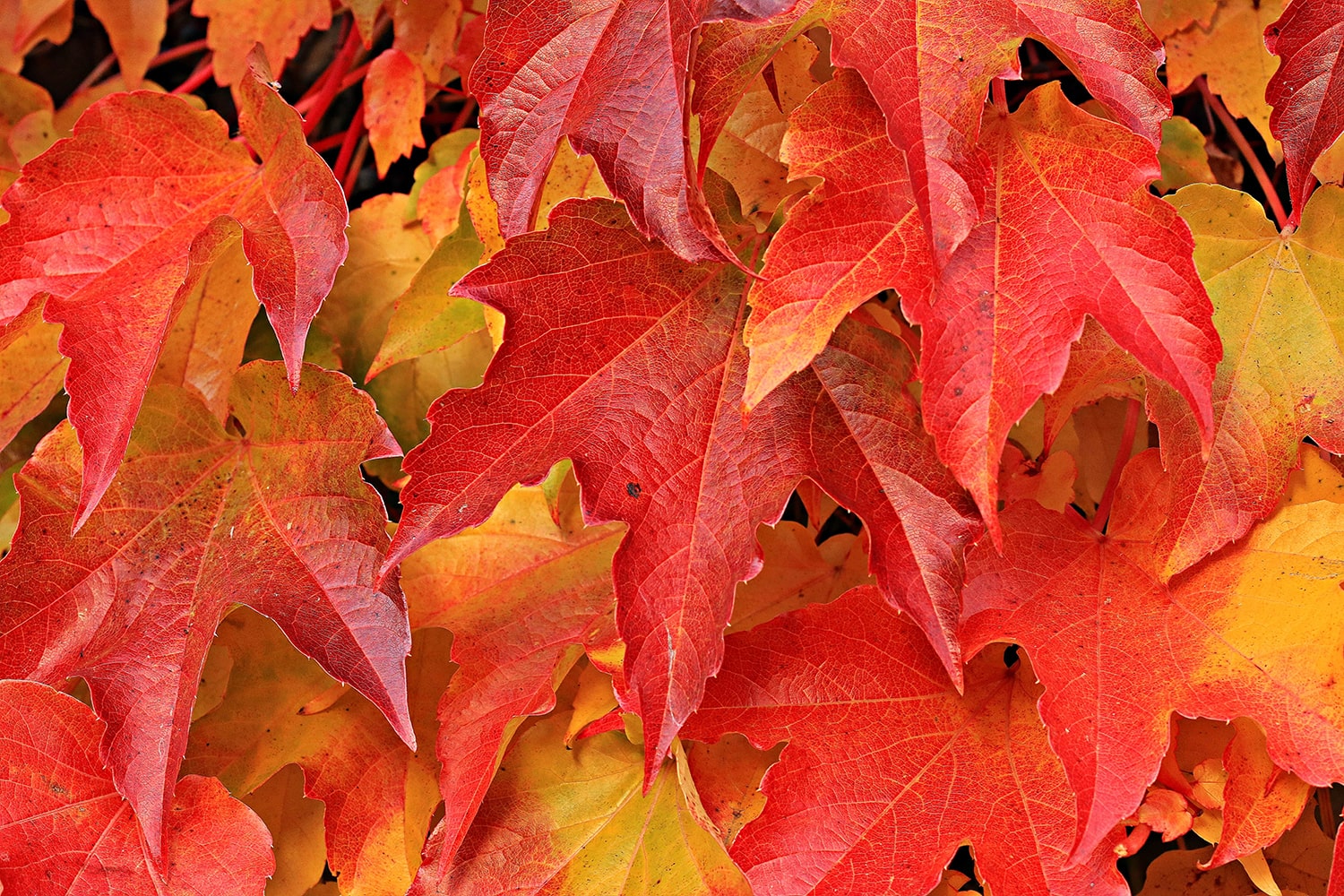
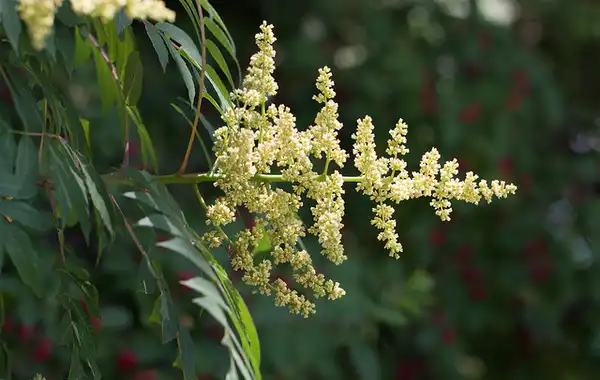
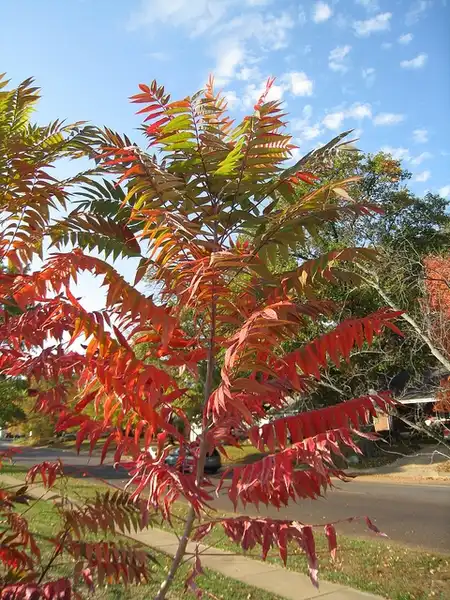
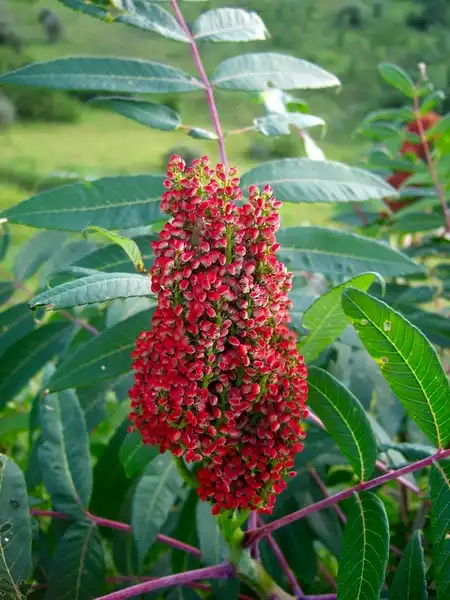
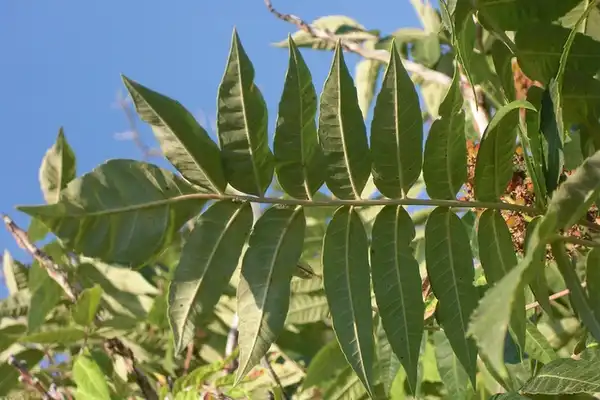
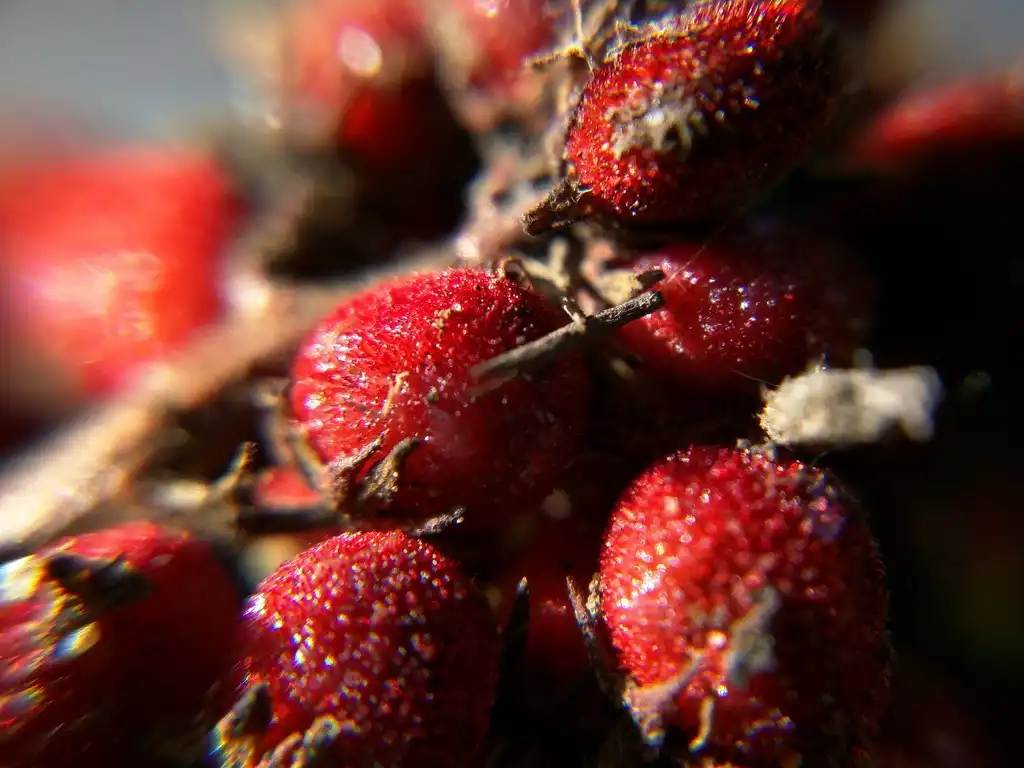
During the summer, Smooth Sumac produces large clusters of small flowers, which give way to vibrant red drupes that remain through the winter. Its large compound leaves display stunning orange to red hues in the fall. The shrub adapts well to a variety of soil types, with the exception of overly wet conditions, and can thrive in full sun to partial shade.
While it may be considered too weedy for typical landscaping, Smooth Sumac is ideal for naturalized areas or slopes where it can help prevent erosion. It can also be used as a hedge in spaces where its spreading nature is permitted. The plant can be rejuvenated by cutting it back to the ground and is moderately resistant to deer damage.
In terms of pests and diseases, Smooth Sumac does not face significant threats. However, it can be susceptible to issues such as leaf spot, rust, scale, aphids, and mites, and it has a tendency to spread aggressively.