Solidago bicolor: Country Or Region Of Origin
Eastern Canada and United States
Phonetic Spelling:so-li-DAY-go BY-kul-ur
Genus:Solidago
Species:bicolor
Family:Asteraceae
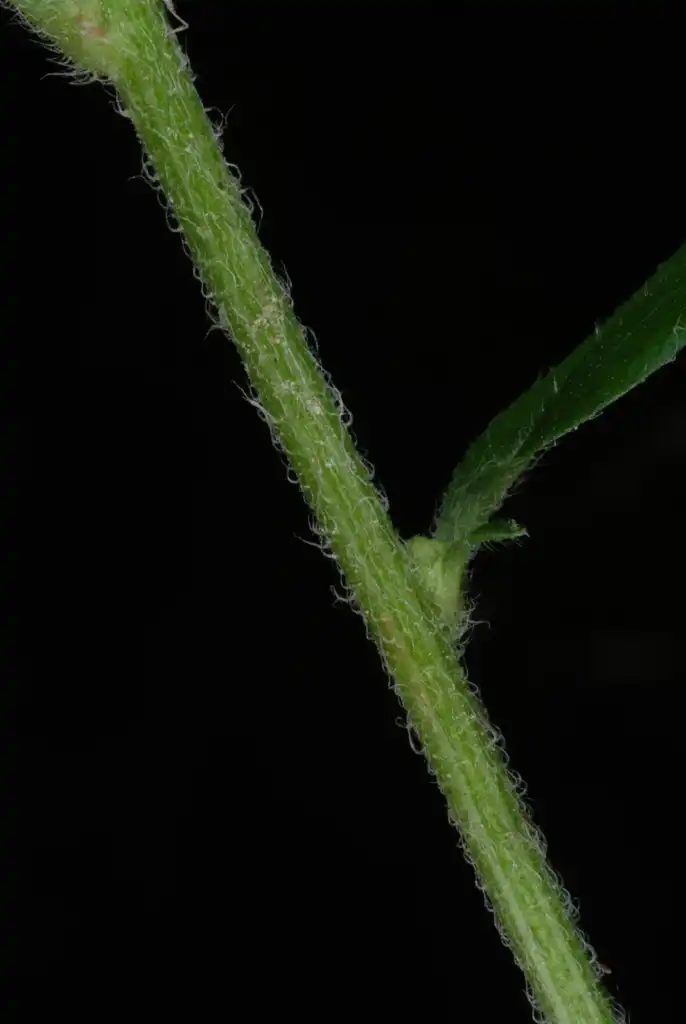
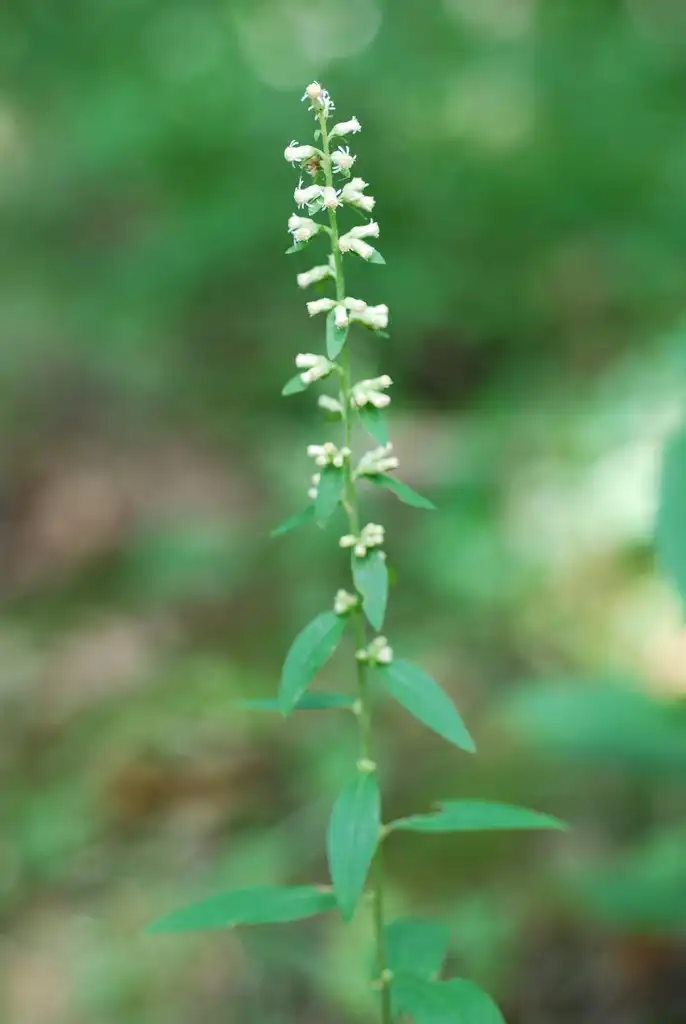
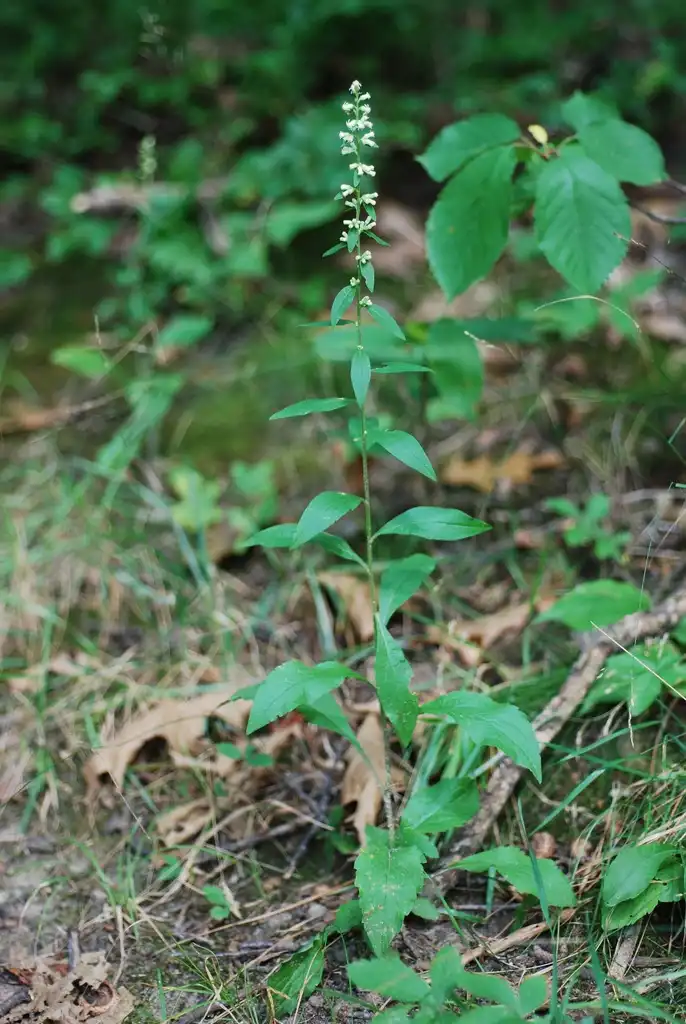
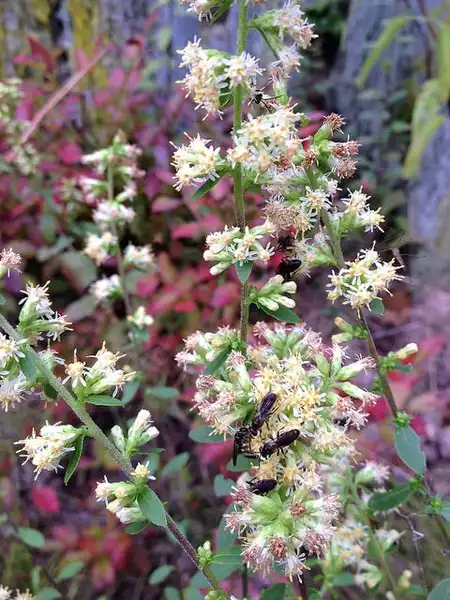
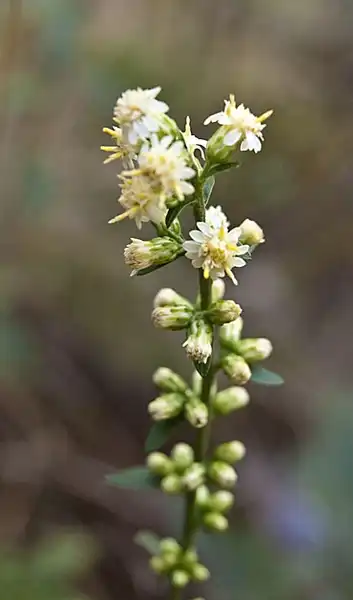
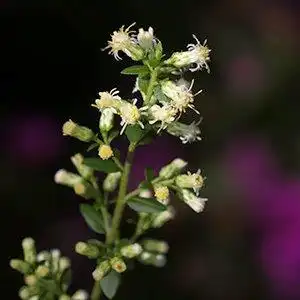
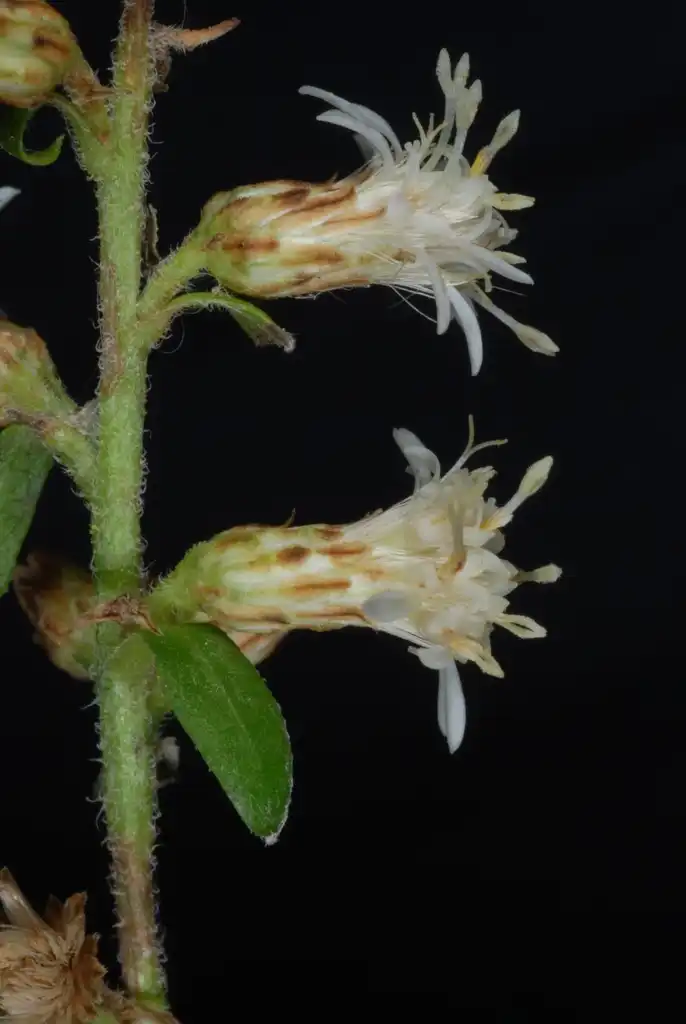
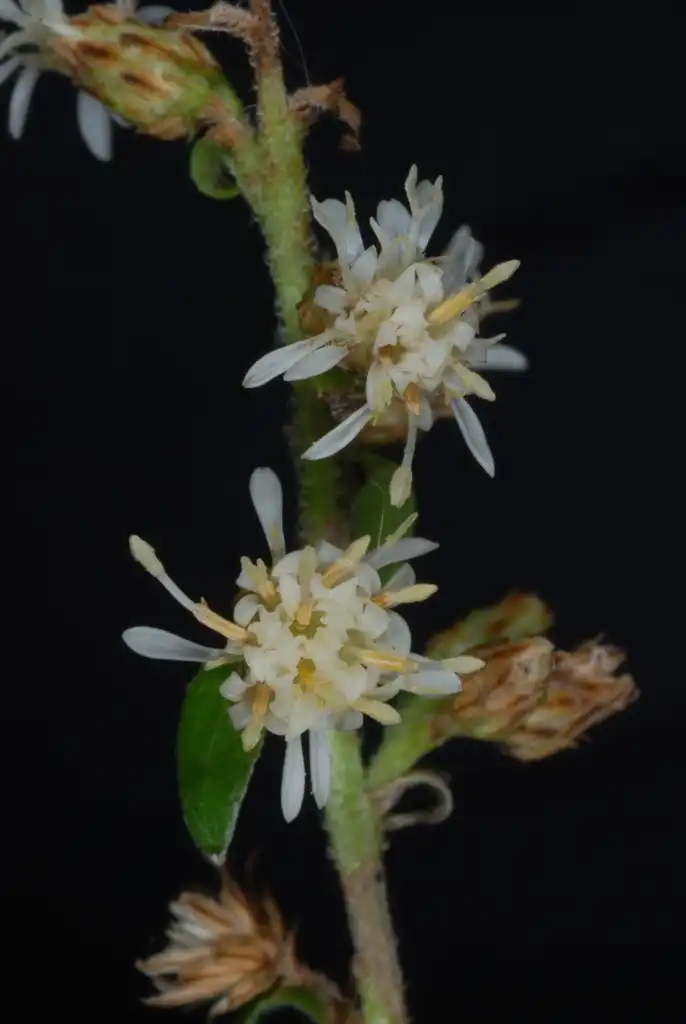
Solidago bicolor, commonly known as White Goldenrod, is a perennial wildflower belonging to the Asteraceae family. It blooms from late summer through fall, showcasing a tall spike adorned with clusters of short-stalked flower heads. These heads feature rays that range from white to yellowish-white, encircling a central yellow disk, all atop a hairy, grayish stem. Notably, this is the only Solidago species with white rays found along the eastern coast.
White Goldenrod thrives in dry, often nutrient-poor soils and prefers full sun to partial shade, particularly favoring heavy clay soils. It is also drought-tolerant. While goldenrod species are frequently blamed for causing hay fever, the actual culprit is ragweed (Ambrosia species), whose airborne pollen coincides with the flowering of goldenrod. Additionally, this plant is resistant to deer.
With up to 120 species in the Solidago genus, most of which bear small yellow flowers, White Goldenrod can easily be mistaken for other Solidago varieties.
In terms of pests and diseases, there are no known issues affecting this plant.
Solidago bicolor Feature Summary
Solidago bicolor Image Gallery