Amorpha canescens: Country Or Region Of Origin
North America
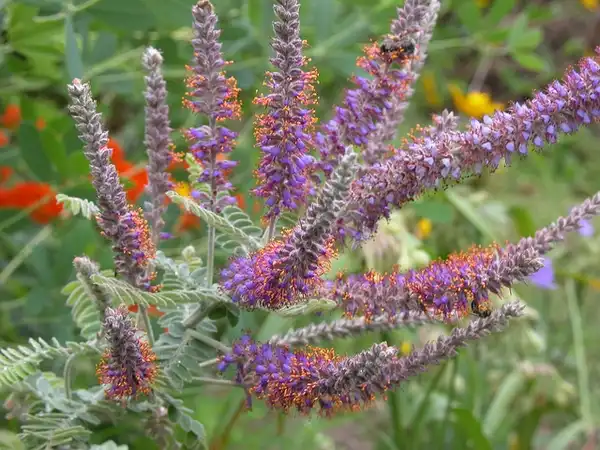
Phonetic Spelling:ah-MOR-fah kan-ESS-senz
Genus:Amorpha
Species:canescens
Family:Fabaceae
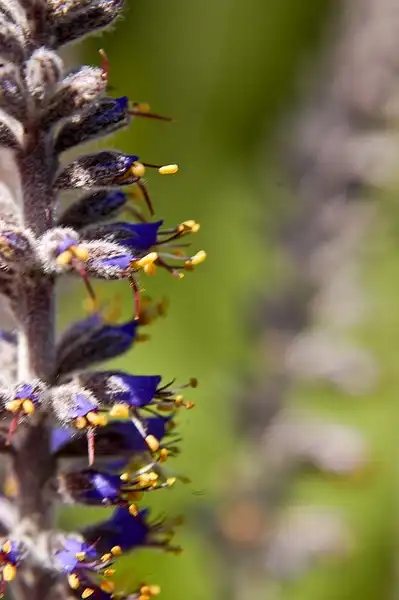
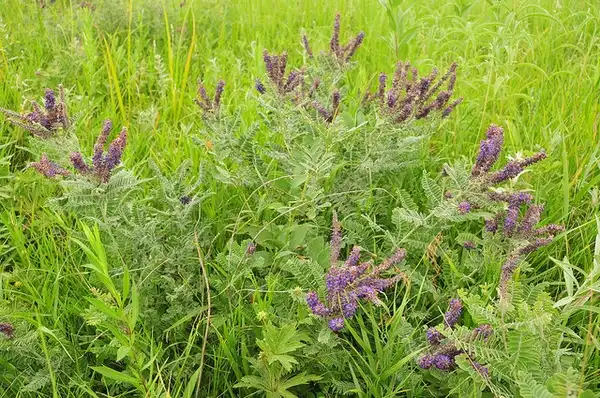
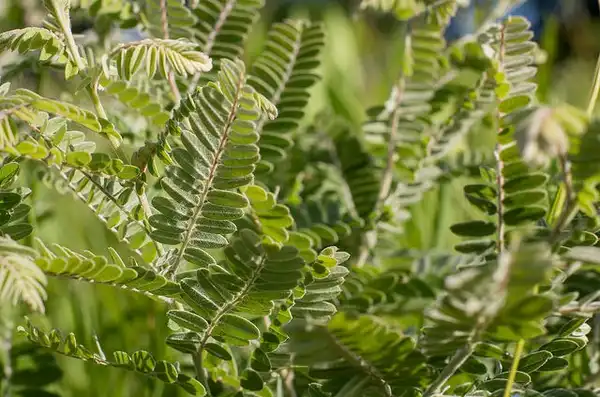
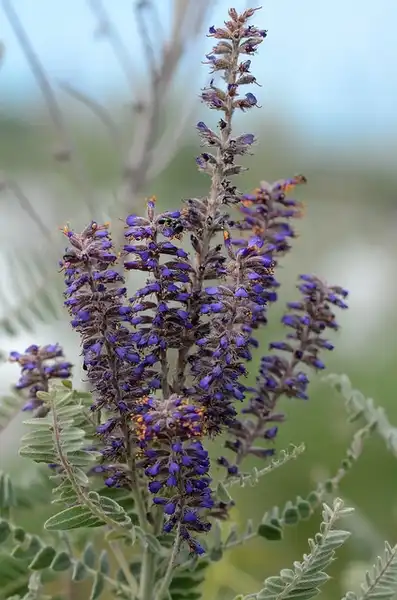
The native leadplant is commonly found thriving in well-drained, open environments such as sandy flats, valleys, hillsides, streambanks, woodlands, glades, and prairies. It flourishes best in sunny areas with sandy or rocky, well-drained soil. When planted in shaded spots, it tends to spread along the ground in search of sunlight. The plant features small purple flowers that cluster in striking terminal spikes, while its leaves are adorned with short, dense hairs, giving them a grayish hue that resembles a dusting of lead—hence its common name.
The roots of the leadplant can extend up to 4 feet deep, and in some cases even deeper. This extensive root system enhances the plant's resilience during wildfires.
In terms of pests and diseases, the leadplant is relatively hardy, facing few serious threats. However, it can be vulnerable to issues like leaf spots, rust, canker, and powdery mildew. Additionally, it requires protection from deer, rabbits, and other herbivores.
Amorpha canescens Feature Summary
Amorpha canescens Image Gallery