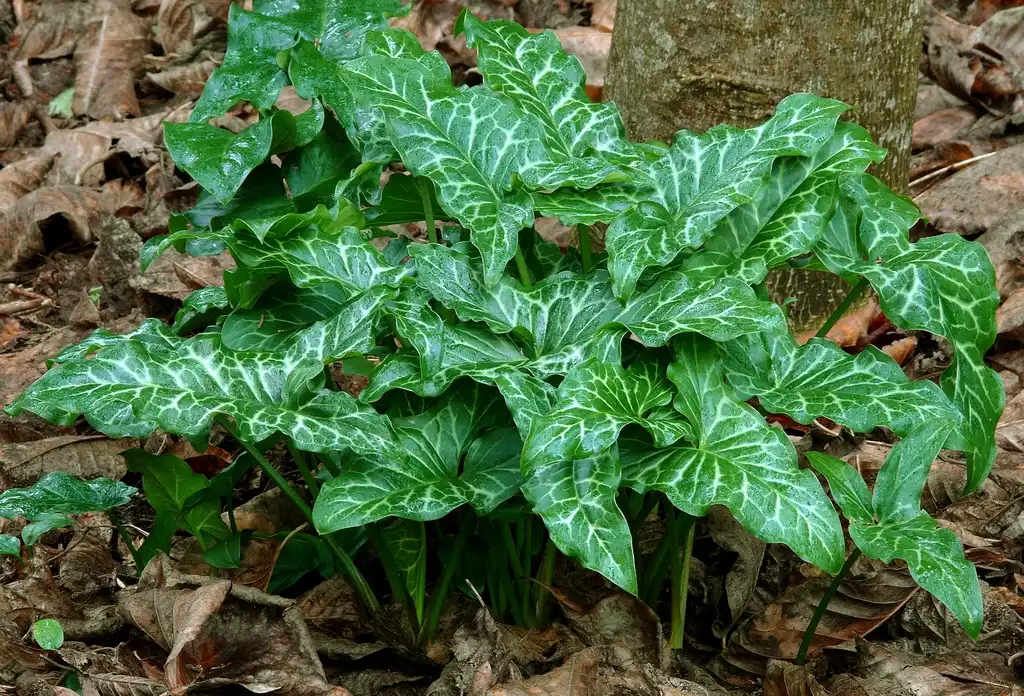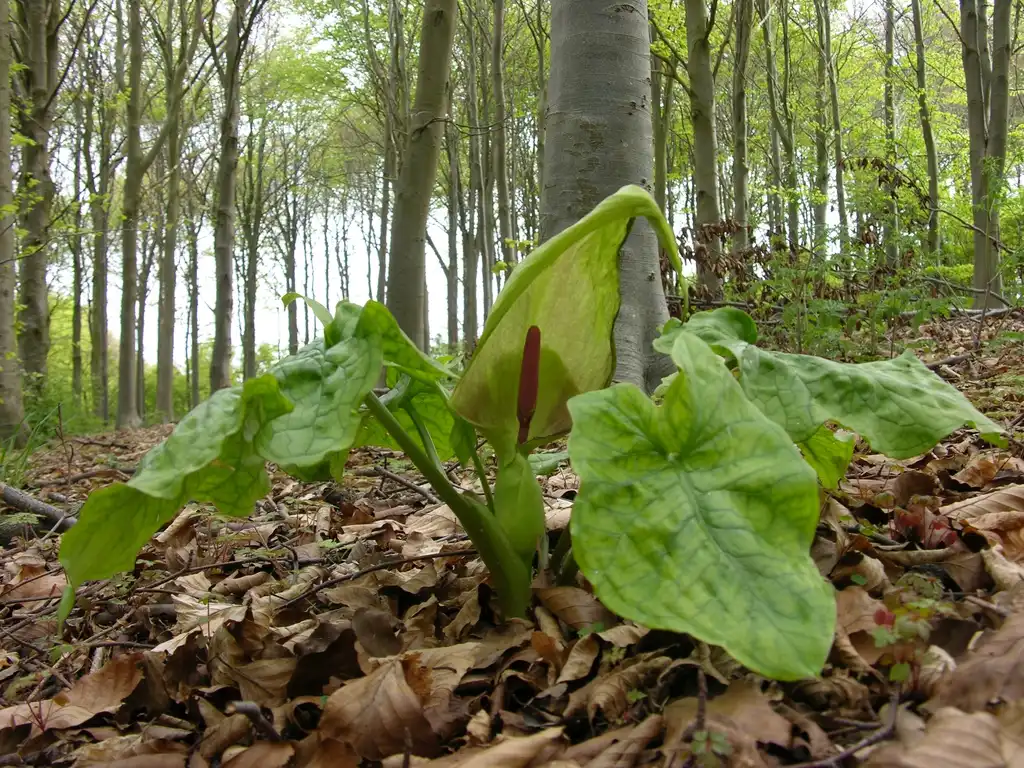
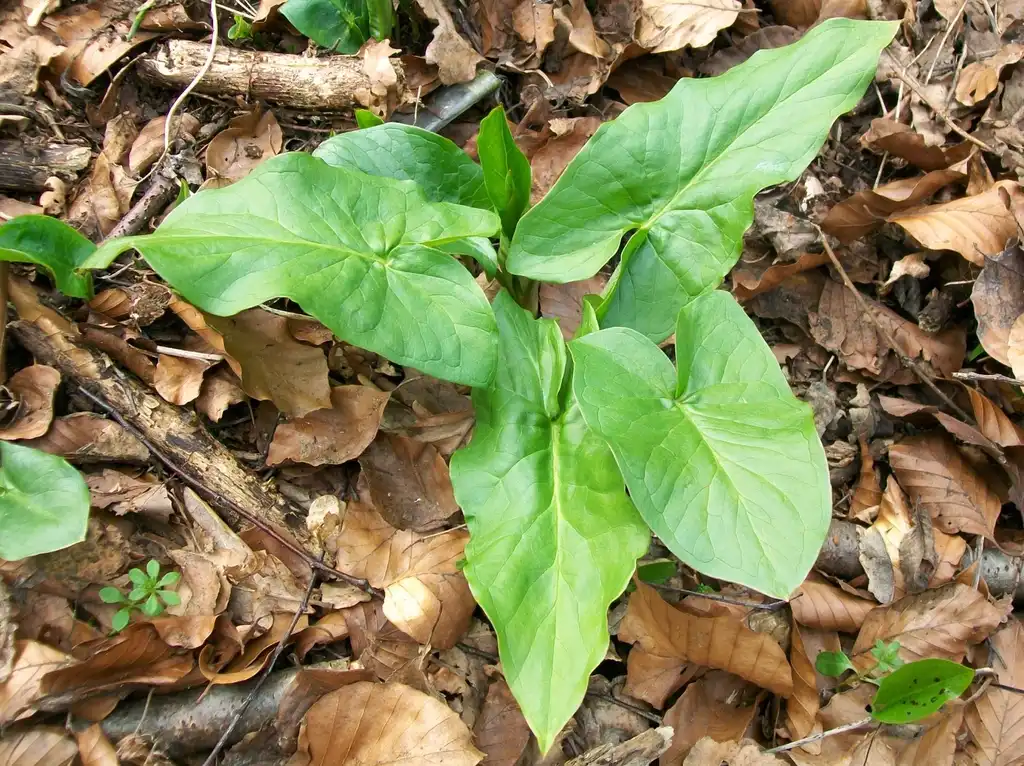
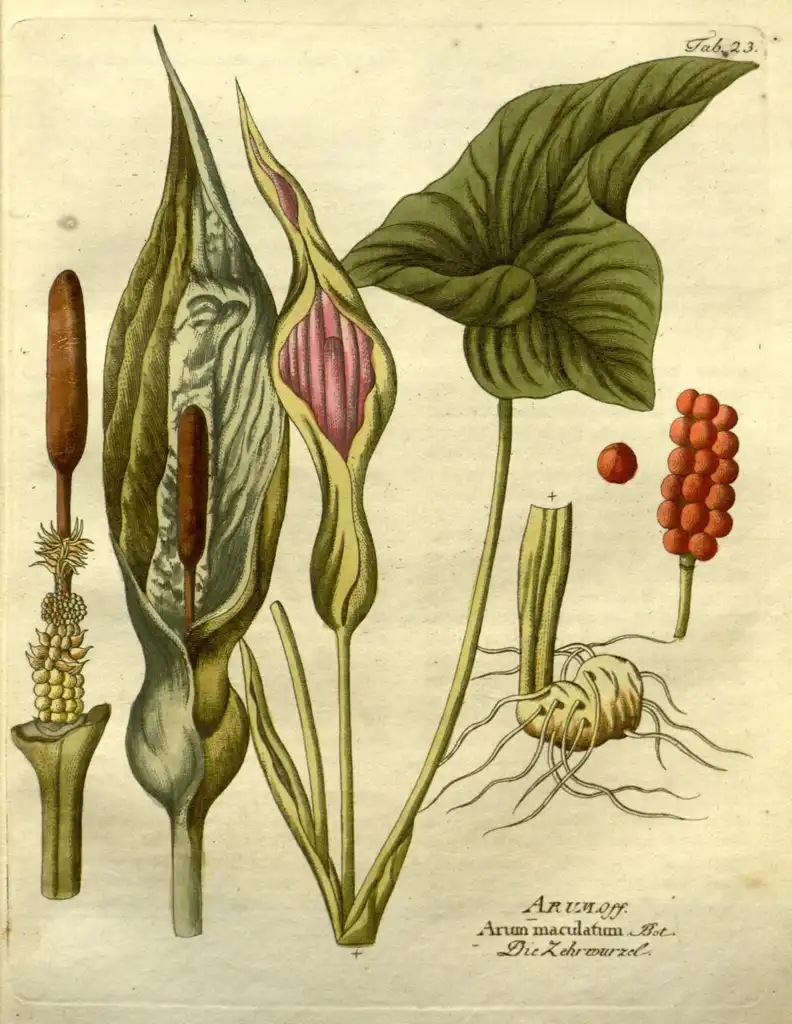
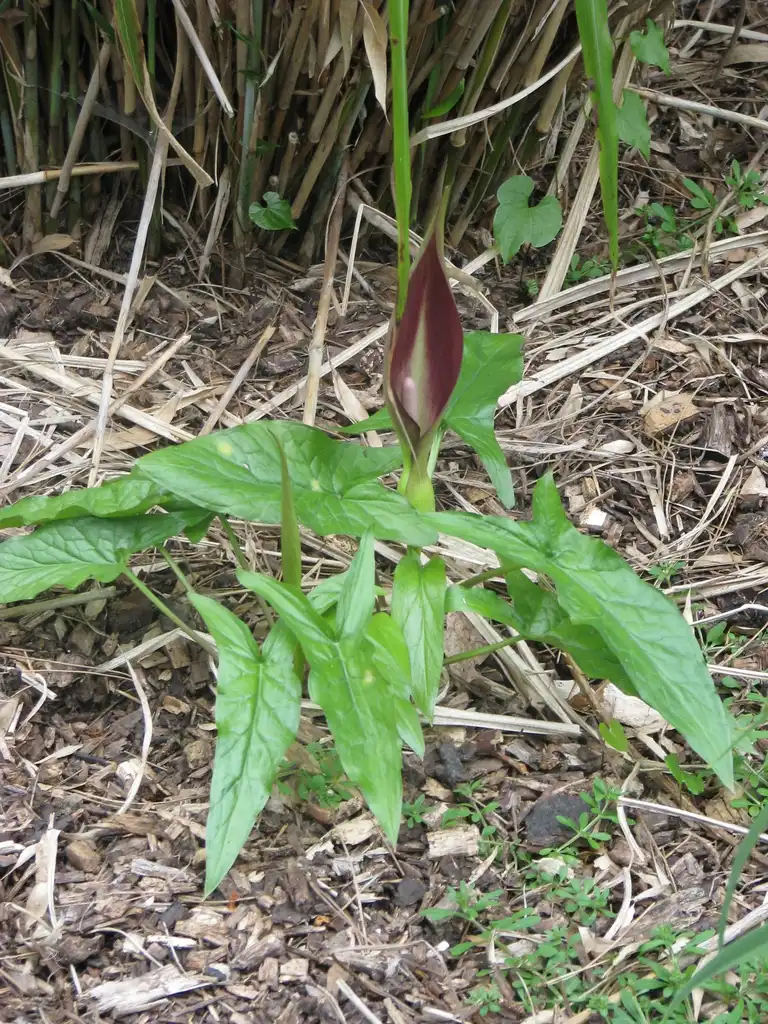
• Photo of Arum maculatum (Arum maculatums)

Plant Profile: Arum maculatum

Taxonomy: Arum maculatum

Names

Adam and Eve, Arum, Bobbins, Cuckoo-Pint, Cuckoo Plant, Lords-and-Ladies, Starch Root, Wake Robin

  • Photo of Arum maculatum (Arum maculatums)

Phonetic Spelling:AIR-um mak-yoo-LAY-tum

Genus:Arum

Species:maculatum

Family:Araceae

A stemless herb featuring tuberous roots and broad, heart-shaped leaves that frequently display dark spots. Its small flowers are arranged on an upright, slender spadix, encased in a pale green spathe adorned with purplish spots and edges.

This plant is commonly used as a houseplant or in interior landscaping, and it can also thrive as a hardy herbaceous perennial in outdoor settings.

Arum maculatum Feature Summary

Arum maculatum Image Gallery

Tags

#poisonous
#spadix
#problem for cats
#problem for dogs
#problem for horses

Similar Plants

Arum maculatum is often confused with:

Arum maculatum Feature Summary

Flowers
Small flowers in an erect, slender spadix surounded by a spathe which is pale green with purplish spots and margins.
Purple/Lavender
White
Green
Leaves
Large, heart-shaped leaves
Poisonous to Humans
Eating small amounts of the raw plant causes mucous membrane irritation, and burning. Consuming larger amounts causes nausea, diarrhea, cramping, excessive drooling, vomiting
Calcium oxalate crystals and soluble oxalates
Seeds
Leaves
Stems
Flowers
Bark
Fruits
Roots
Whole Plant Traits
Herbaceous Perennial
Poisonous
Houseplant
Landscape
Poisonous to Humans
Problem for Cats
Problem for Dogs
Problem for Horses

Arum maculatum Attributes

Arum maculatum: Country Or Region Of Origin

Europe
Arum maculatum: Life Cycle

Annual
Biennial
Bulb
Perennial
Woody

Arum maculatum Flowers

Arum maculatum: Flower Description

Small flowers in an erect, slender spadix surounded by a spathe which is pale green with purplish spots and margins.

Arum maculatum: Flower Color

filter_vintage
Green
filter_vintage
Purple/Lavender
filter_vintage
White

Arum maculatum: Flower Inflorescence

Catkin
Corymb
Cyme
Head
Insignificant
Panicle
Raceme
Solitary
Spadix
Spike
Umbel

Arum maculatum Leaves

Arum maculatum: Leaf Description

Large, heart-shaped leaves

Arum maculatum: Leaf Shape

Acicular
Auriculate
Cordate
Cuneate
Deltoid
Elliptical
Filiform
Lanceolate
Linear
Oblanceolate
Oblong
Obovate
Obtuse
Orbicular
Ovate
Palmasect
Palmatifid
Peltate
Pinnatifid
Pinnatisect
Reniform
Rhomboidal
Spatulate
Subcordate
Subulate

Arum maculatum: Hairs Present

No
Yes

Arum maculatum Poisonous to Humans

Arum maculatum: Poison Symptoms

Eating small amounts of the raw plant causes mucous membrane irritation, and burning. Consuming larger amounts causes nausea, diarrhea, cramping, excessive drooling, vomiting

Arum maculatum: Poison Toxic Principle

Calcium oxalate crystals and soluble oxalates

Arum maculatum: Poison Severity

High
Low
Medium

Arum maculatum: Causes Contact Dermatitis

No
Yes

Arum maculatum: Poison Part

Bark
Flowers
Fruits
Leaves
Roots
Sap/Juice
Seeds
Stems

Arum maculatum Whole Plant Traits

Arum maculatum: Plant Type

Annual
Bulb
Carnivorous
Edible
Epiphyte
Fern
Ground Cover
Herb
Herbaceous Perennial
Houseplant
Mushroom
Native Plant
Ornamental Grasses and Sedges
Perennial
Poisonous
Rose
Shrub
Succulent
Tree
Turfgrass
Vegetable
Vine
Water Plant
Weed
Wildflower

Arum maculatum Stem

Arum maculatum: Stem Is Aromatic

No
Yes

Arum maculatum Landscape

Arum maculatum: Landscape Location

Coastal
Container
Hanging Baskets
Houseplants
Lawn
Meadow
Naturalized Area
Near Septic
Patio
Pond
Pool/Hardscape
Recreational Play Area
Riparian
Rock Wall
Slope/Bank
Small Space
Vertical Spaces
Walkways
Woodland

Arum maculatum: Problems

Allelopathic
Contact Dermatitis
Frequent Disease Problems
Frequent Insect Problems
Invasive Species
Malodorous
Messy
Poisonous to Humans
Problem for Cats
Problem for Children
Problem for Dogs
Problem for Horses
Short-lived
Spines/Thorns
Weak Wood
Weedy