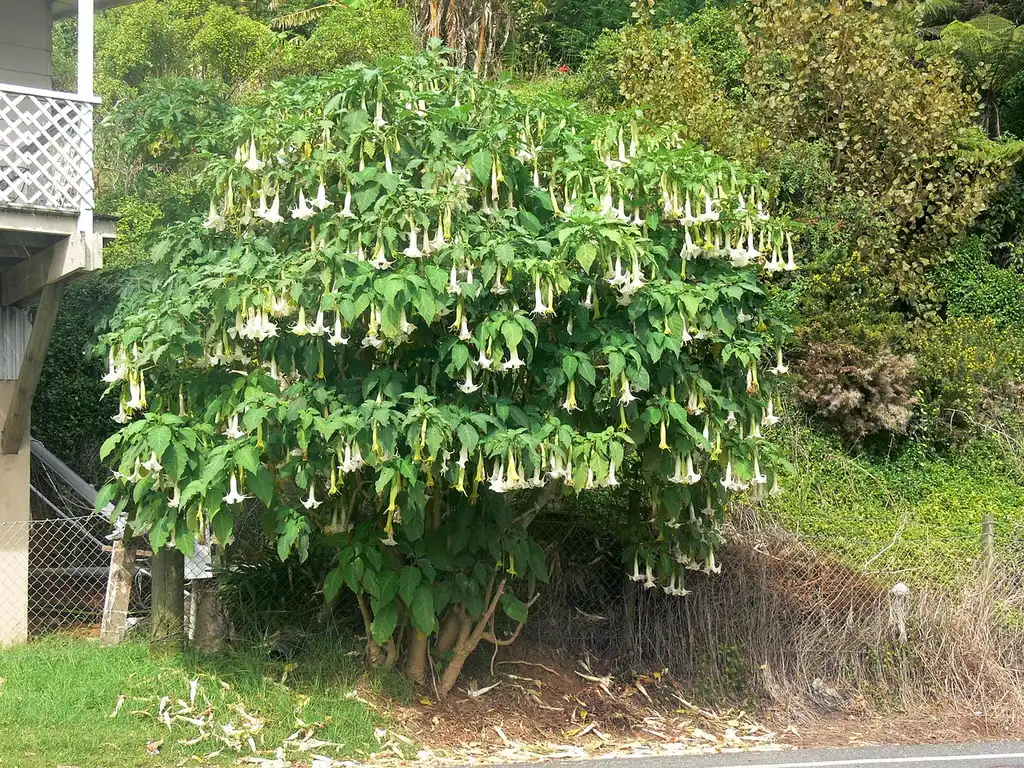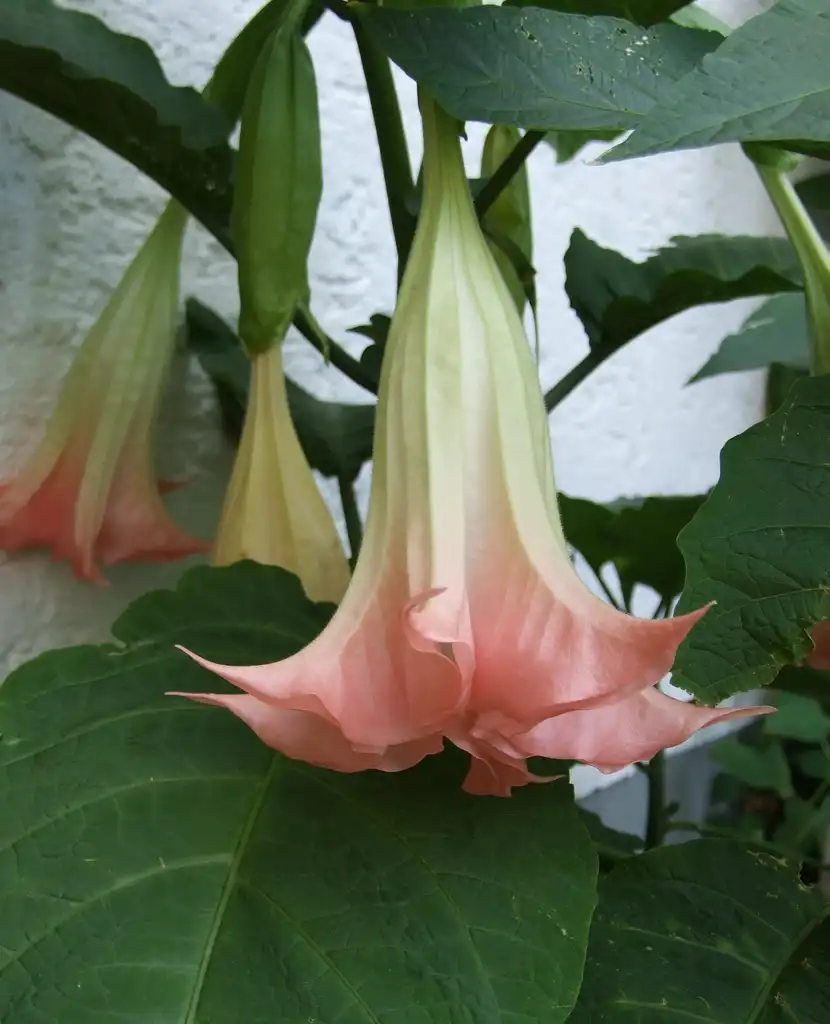
• Photo of Brugmansia (Brugmansias)

Plant Profile: Brugmansia

Taxonomy: Brugmansia

Names

Angel's Trumpet, Floripondios, Moonflowers, Tree Daturas

  • Photo of Brugmansia (Brugmansias)

Phonetic Spelling:broog-MAN-zee-ah

Genus:Brugmansia

Species:

Family:Solanaceae

This plant is a shrub or small tree that can be cultivated as a houseplant or incorporated into landscaping as a woody or herbaceous shrub, depending on hardiness. It typically grows between 6 to 15 feet in containers and can reach up to 35 feet when planted in the ground. Notably, this species is resistant to deer damage and exhibits slight tolerance to salt. It can withstand light frost and periods of drought.

Brugmansia showcases a diverse array of leaf shapes and growth patterns. It blooms continuously throughout the growing season and is capable of self-pollination. However, the plant must mature before it can produce flowers, which may take some time. The flowers themselves vary significantly in size, shape, and color, often changing dramatically based on the growing conditions.

It is important to avoid placing Brugmansia in direct sunlight. The plant thrives best when it has ample space for its roots to expand. Additionally, it prefers water that has been "seasoned"—meaning it should sit in a container for at least 24 hours to allow any chemicals to dissipate—rather than using tap water. If you notice excessive wilting, pale leaves, or signs of stress, consider reducing its sun exposure.

In our region, this tropical plant can survive the winter in most years if it receives some protection, such as a layer of leaves or mulch around its base. While it may die back to the ground during colder months, it typically regrows each spring.

Previously classified under the genus Datura L., Brugmansia is now recognized as a distinct genus in its own right.

Brugmansia Feature Summary

Brugmansia Image Gallery

Tags

#white
#yellow
#small tree
#poisonous
#houseplant
#drought tolerant
#white flowers
#shrub
#pink flowers
#yellow flowers
#salt tolerant
#deer browsing plant
#deer resistant
#large flowers
#frost tolerant
#tropical feel

Similar Plants

Brugmansia Feature Summary

Attributes
resistant to damage by deer and is slightly salt tolerant; tolerates light frost and drought.
Fruit
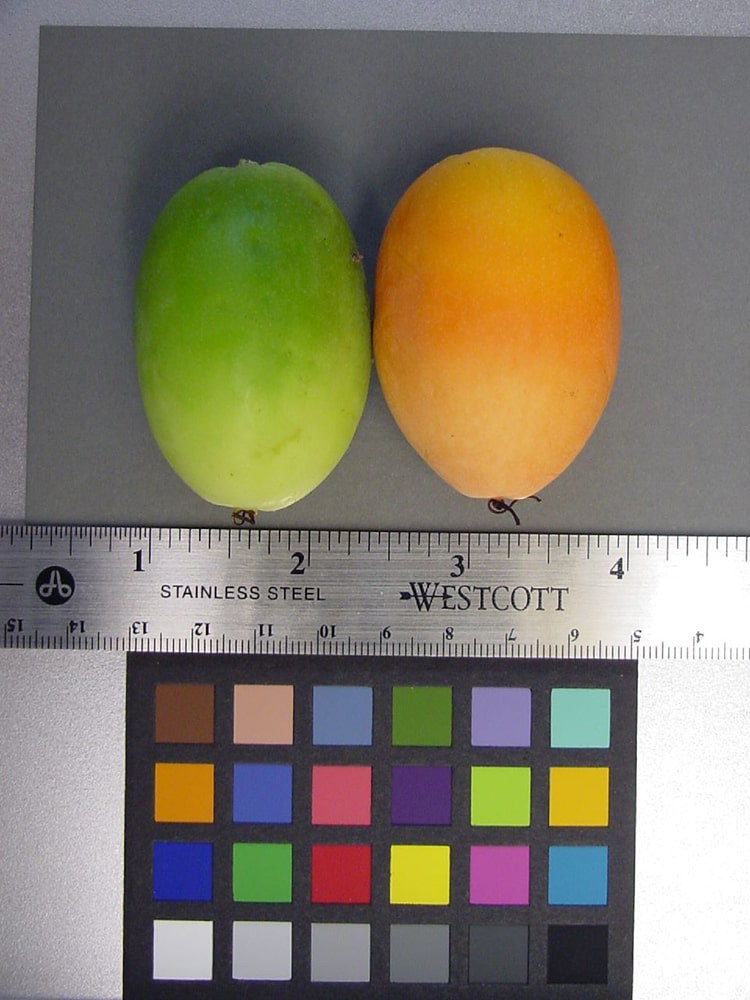
The fruit is 2.5 to 3.5 inches long with a round to egg-shaped appearance and hairs
1-3 inches
Flowers
Its flowers are single, pendent, trumpet-like or funnel-shaped to 1 ft. long and 5-lobed at the tip. They are white, pink or yellow.
Pink
White
Gold/Yellow
Funnel
Trumpet
> 6 inches
Leaves
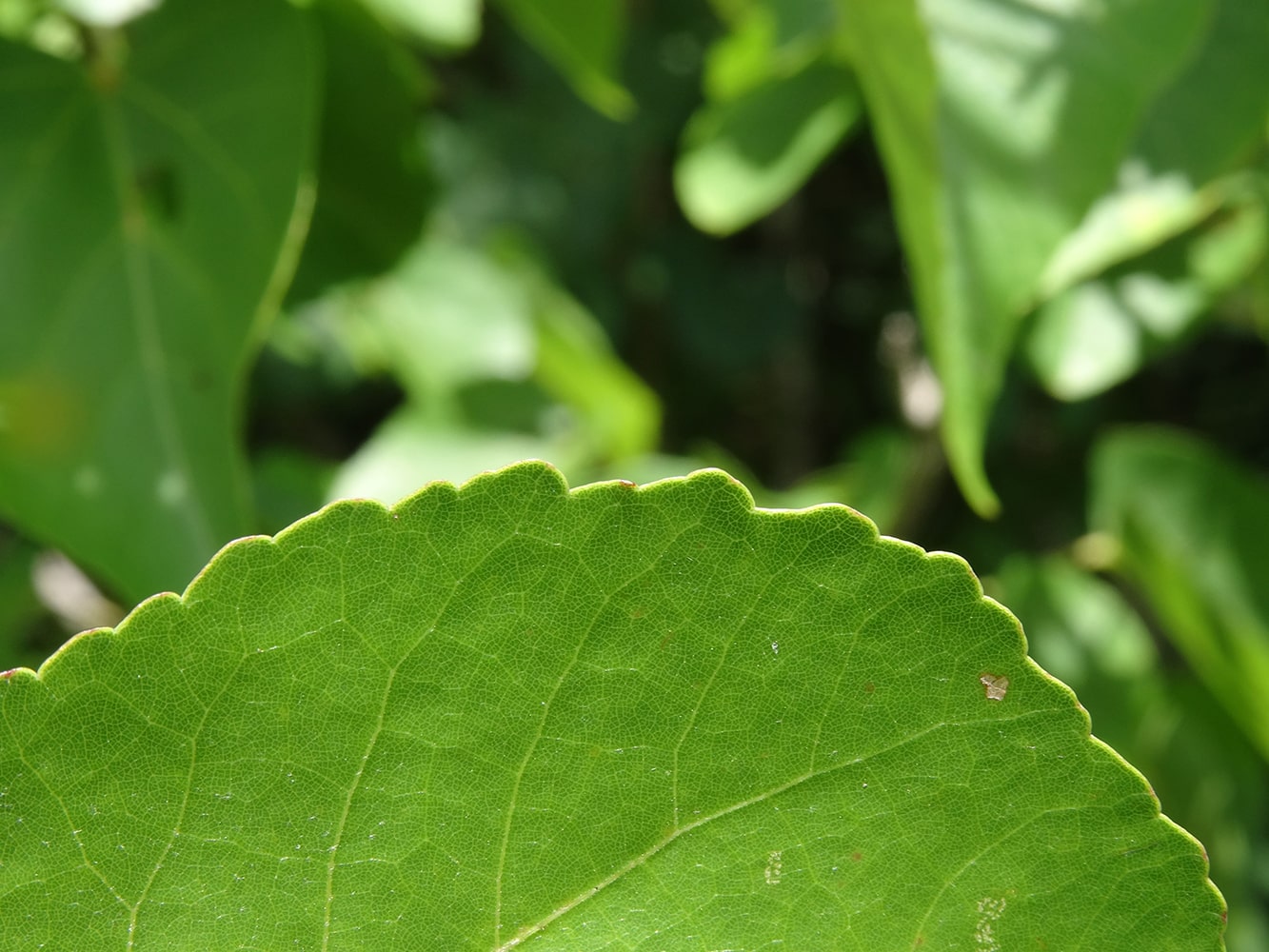
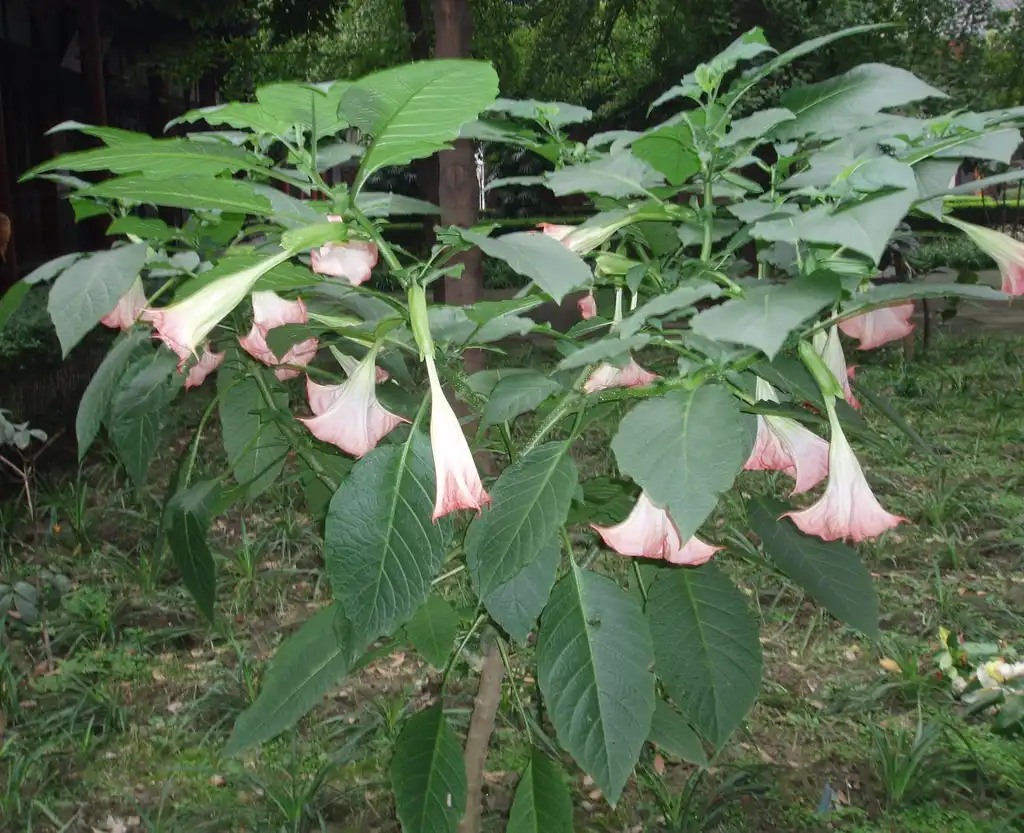
Its leaves are simple and alternate. The leaf is ovate shaped and entire to coarsely toothed. Leaf forms vary.
Entire
Serrate
Stem
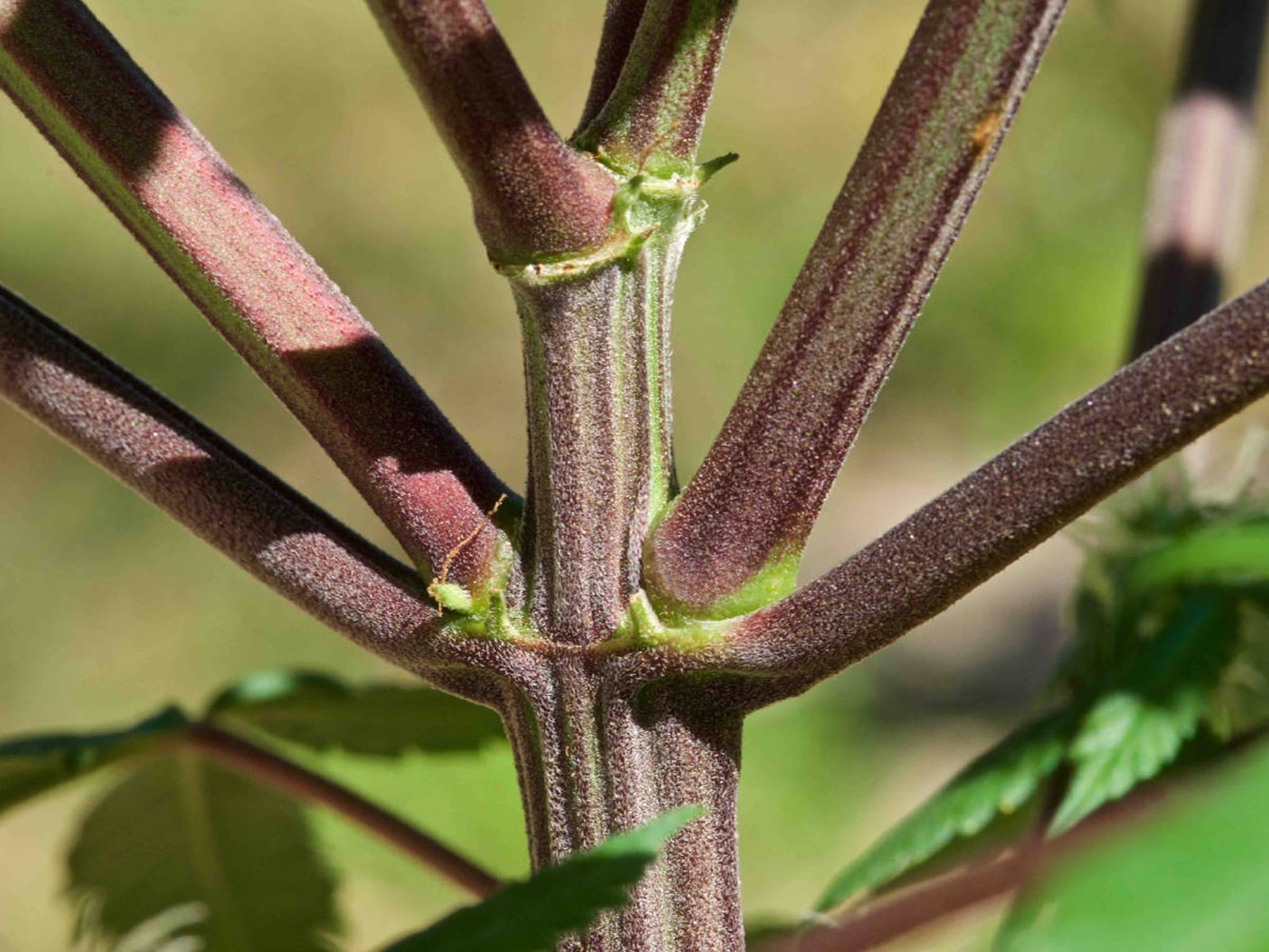
It has softly hairy young stems
Hairy (pubescent)
Poisonous to Humans
TOXIC ONLY IF LARGE QUANTITIES EATEN. This plant is poisonous through ingestion and/or inhalation of flowers. The poisonous parts are the flowers, leaves, and seeds. Poisonous symptoms may include the following: hallucinations, dry mouth, muscle weakness, increased blood pressure and pulse, fever, dilated pupils, paralysis.
Atropine, scopolamine, and hyoscyamine
Seeds
Leaves
Flowers
Whole Plant Traits
Shrub
Tree
Poisonous
Houseplant
Cultural Conditions
Landscape
Drought Tolerant Garden
Poisonous to Humans
Problem for Children

Brugmansia Attributes

Brugmansia: Country Or Region Of Origin

South America
Brugmansia: Particularly Resistant To (Insects/Diseases/Other Problems)

resistant to damage by deer and is slightly salt tolerant; tolerates light frost and drought.

Brugmansia Fruit

Brugmansia: Fruit Description

The fruit is 2.5 to 3.5 inches long with a round to egg-shaped appearance and hairs

Brugmansia: Fruit Width

< 1 inch
1-3 inches
> 3 inches

Brugmansia Flowers

Brugmansia: Flower Description

Its flowers are single, pendent, trumpet-like or funnel-shaped to 1 ft. long and 5-lobed at the tip. They are white, pink or yellow.

Brugmansia: Flower Color

filter_vintage
Gold/Yellow
filter_vintage
Pink
filter_vintage
White

Brugmansia: Flower Value To Gardener

Edible
Fragrant
Good Cut
Good Dried
Long Bloom Season
Long-lasting
Showy

Brugmansia: Flower Bloom Time

Winter
Spring
Summer
Fall

Brugmansia: Flower Shape

Bell
Cross
Crown
Cup
Dome
Funnel
Irregular
Lipped
Radial
Saucer
Star
Trumpet
Tubular
Urn
Wheel

Brugmansia: Flower Size

1-3 inches
3-6 inches
< 1 inch
> 6 inches

Brugmansia Leaves

Brugmansia: Leaf Description

Its leaves are simple and alternate. The leaf is ovate shaped and entire to coarsely toothed. Leaf forms vary.

Brugmansia: Leaf Color

spa
Green

Brugmansia: Leaf Type

Compound (Pinnately , Bipinnately, Palmately)
Fronds
Needles
Sheath
Simple

Brugmansia: Leaf Arrangement

Alternate
Opposite
Other/more complex
Rosulate
Whorled

Brugmansia: Leaf Shape

Acicular
Auriculate
Cordate
Cuneate
Deltoid
Elliptical
Filiform
Lanceolate
Linear
Oblanceolate
Oblong
Obovate
Obtuse
Orbicular
Ovate
Palmasect
Palmatifid
Peltate
Pinnatifid
Pinnatisect
Reniform
Rhomboidal
Spatulate
Subcordate
Subulate

Brugmansia: Leaf Margin

Crenate
Crenulate
Dentate
Denticulate
Doubly Crenate
Doubly Dentate
Doubly Serrate
Entire
Lobed
Serrate
Sinuate
Undulate

Brugmansia: Hairs Present

No
Yes

Brugmansia Stem

Brugmansia: Stem Description

It has softly hairy young stems

Brugmansia: Stem Is Aromatic

No
Yes

Brugmansia: Stem Surface

Corky Ridges
Covered with a powdery bloom (glaucous)
Dull
Hairy (pubescent)
Polished
Smooth (glabrous)

Brugmansia Poisonous to Humans

Brugmansia: Poison Symptoms

TOXIC ONLY IF LARGE QUANTITIES EATEN. This plant is poisonous through ingestion and/or inhalation of flowers. The poisonous parts are the flowers, leaves, and seeds. Poisonous symptoms may include the following: hallucinations, dry mouth, muscle weakness, increased blood pressure and pulse, fever, dilated pupils, paralysis.

Brugmansia: Poison Toxic Principle

Atropine, scopolamine, and hyoscyamine

Brugmansia: Poison Severity

High
Low
Medium

Brugmansia: Causes Contact Dermatitis

No
Yes

Brugmansia: Poison Part

Bark
Flowers
Fruits
Leaves
Roots
Sap/Juice
Seeds
Stems

Brugmansia Whole Plant Traits

Brugmansia: Plant Type

Annual
Bulb
Carnivorous
Edible
Epiphyte
Fern
Ground Cover
Herb
Herbaceous Perennial
Houseplant
Mushroom
Native Plant
Ornamental Grasses and Sedges
Perennial
Poisonous
Rose
Shrub
Succulent
Tree
Turfgrass
Vegetable
Vine
Water Plant
Weed
Wildflower

Brugmansia Cultural Conditions

Brugmansia: USDA Plant Hardiness Zone

thermostat
10a
thermostat
10b
thermostat
7b
thermostat
8a
thermostat
8b
thermostat
9a
thermostat
9b

Brugmansia Landscape

Brugmansia: Landscape Theme

Asian Garden
Butterfly Garden
Children's Garden
Cottage Garden
Cutting Garden
Drought Tolerant Garden
Edible Garden
English Garden
Fairy Garden
Garden for the Blind
Native Garden
Nighttime Garden
Pollinator Garden
Rain Garden
Rock Garden
Shade Garden
Water Garden
Winter Garden

Brugmansia: Resistance To Challenges

Black Walnut
Compaction
Deer
Diseases
Drought
Dry Soil
Erosion
Fire
Foot Traffic
Heat
Heavy Shade
Humidity
Insect Pests
Pollution
Poor Soil
Rabbits
Salt
Slugs
Squirrels
Storm damage
Urban Conditions
Voles
Wet Soil
Wind

Brugmansia: Landscape Location

Coastal
Container
Hanging Baskets
Houseplants
Lawn
Meadow
Naturalized Area
Near Septic
Patio
Pond
Pool/Hardscape
Recreational Play Area
Riparian
Rock Wall
Slope/Bank
Small Space
Vertical Spaces
Walkways
Woodland

Brugmansia: Problems

Allelopathic
Contact Dermatitis
Frequent Disease Problems
Frequent Insect Problems
Invasive Species
Malodorous
Messy
Poisonous to Humans
Problem for Cats
Problem for Children
Problem for Dogs
Problem for Horses
Short-lived
Spines/Thorns
Weak Wood
Weedy