Cedrus deodara 'Karl Fuchs': Country Or Region Of Origin
Germany
Phonetic Spelling:
Genus:Cedrus
Species:deodara
Family:
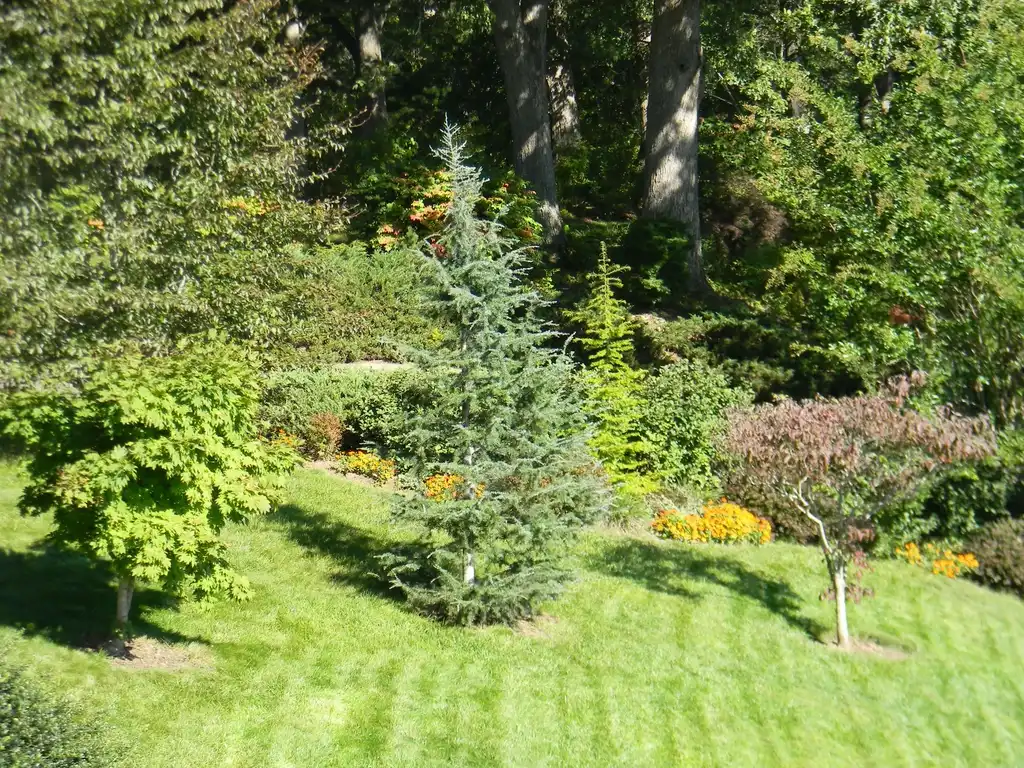
The Karl Fuchs Himalayan Cedar is a sizable evergreen tree characterized by its silvery-blue needles and gracefully drooping branches. It typically takes around a decade to achieve dimensions of 10 feet in height and 6 feet in width, continuing to grow at a rate of approximately 6 to 8 inches annually. This particular variety was first identified in Afghanistan and later cultivated by Karl Fuchs in Scheveningen, Germany, during the mid-1970s.
For optimal growth, plant this tree in full sun to partial shade within moist, well-drained soil. It serves as a stunning specimen or accent in gardens, especially when paired with lighter green foliage plants in the foreground. Its upright pyramidal shape makes it particularly suitable for narrow vertical spaces. Notably, it is more resilient than Cedrus deodara.
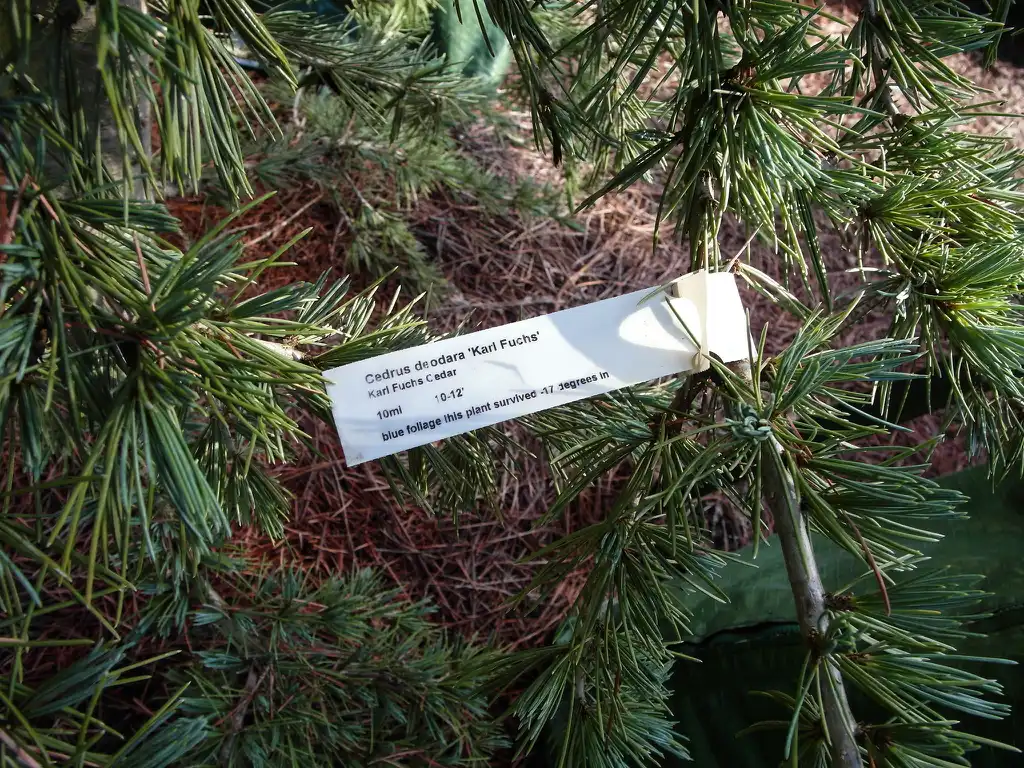
This cedar is versatile, thriving in both moist and dry soils, though it cannot withstand standing water. Unlike other Cedrus deodora cultivars, 'Karl Fuchs' features a trailing leader and a pendulous growth habit, making it easily recognizable. Its softer, more elegant appearance is complemented by longer needles measuring 1.5 inches.
In spring, the new growth showcases a vibrant blue hue that transitions to green, enhancing the visual appeal of this cultivar. Pruning is unnecessary, as the tree maintains its best form when left untrimmed.
Quick Identification:
In terms of pests, diseases, and other issues, poorly drained soils can lead to problems such as tip blight and root rot.
For further details on Cedrus deodara, additional resources are available.
Cedrus deodara 'Karl Fuchs' Feature Summary
Cedrus deodara 'Karl Fuchs' Image Gallery