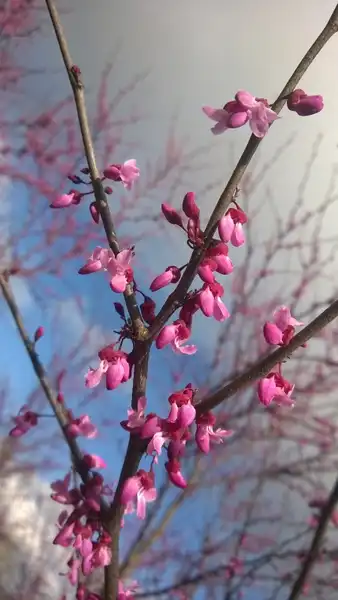
Cercis canadensis, commonly known as the eastern redbud, is a deciduous tree that often features multiple trunks and a rounded crown, typically reaching heights of 20 to 30 feet with a slightly wider spread. This tree is especially celebrated for its breathtaking rose-purple flowers, which resemble peas and bloom abundantly on bare branches in early spring (March-April) before the leaves appear. It is indigenous to eastern and central North America, spanning from Connecticut and New York to southern Ontario, and extending southward to the Great Lakes, Western Texas, and Florida.
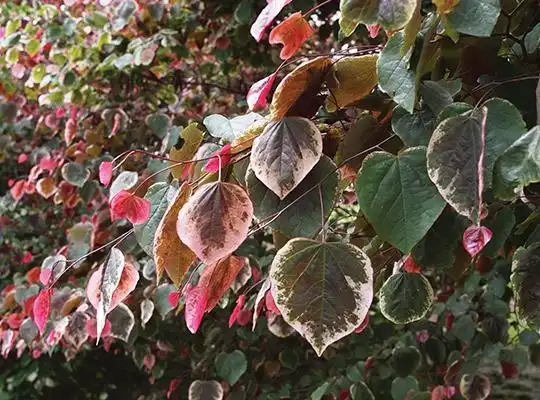
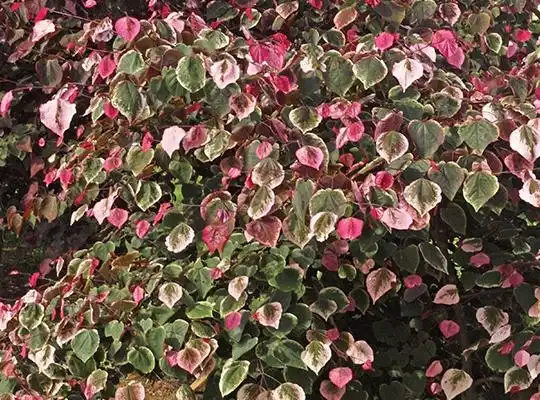
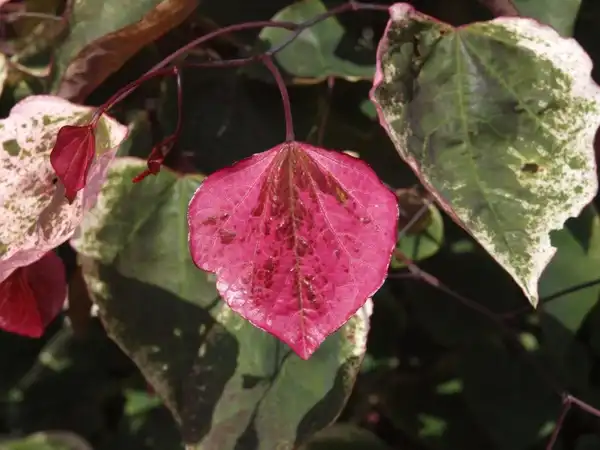
Carolina Sweetheart™ stands out as a unique specimen, showcasing a vibrant display of colors in early summer as its new leaves unfurl. It begins with pink blossoms in spring, followed by the emergence of purple leaves that gradually transform into a mix of white, green, and vivid pink hues, making traditional coleus plants seem dull by comparison. Eventually, the foliage turns green during the summer months. This remarkable variety was developed through a collaboration between NC State University and Star Roses and Plants Nursery.
The eastern redbud thrives in average, medium-moisture, well-drained soils and prefers full sun to partial shade, with part shade being ideal in hotter summer climates. It flourishes best in moderately fertile soils that maintain consistent moisture, so it’s important to avoid overly wet or poorly drained conditions. Due to its sensitivity to transplanting, it is advisable to plant this tree while it is still young and allow it to establish itself without disturbance.
Alongside dogwoods, redbuds flourish at the edges of woodlands, infusing the landscape with vibrant color in early spring, often before other trees have begun to leaf out.
**Seasons of Interest:**
- **Foliage:** Early spring, purple
- **Blooms:** Early spring, spring
- **Fruits:** Late summer, fall
**Insects, Diseases, and Other Issues:**
Common insect pests include Japanese beetles, treehoppers, leafhoppers, caterpillars, borers, webworms, and scale. Canker can pose a significant threat, along with other potential issues such as verticillium wilt, dieback, leaf spots, mildew, and blights. To maintain the tree's health, it is essential to keep it vigorous through regular watering, fertilization, and timely pruning of dead branches. Additionally, whitetail deer may browse on the foliage and can cause damage by eating the bark.
For further details on Cercis canadensis, please refer to additional resources.