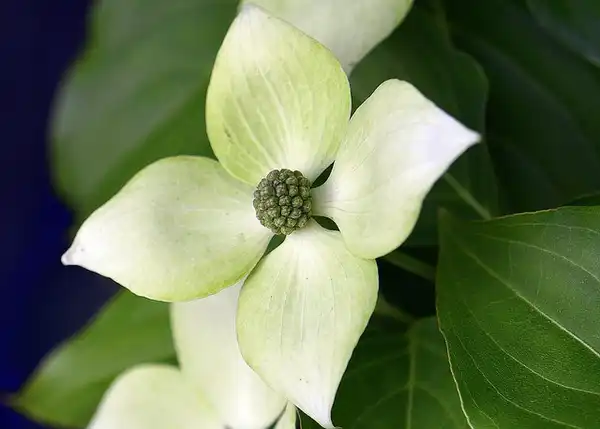
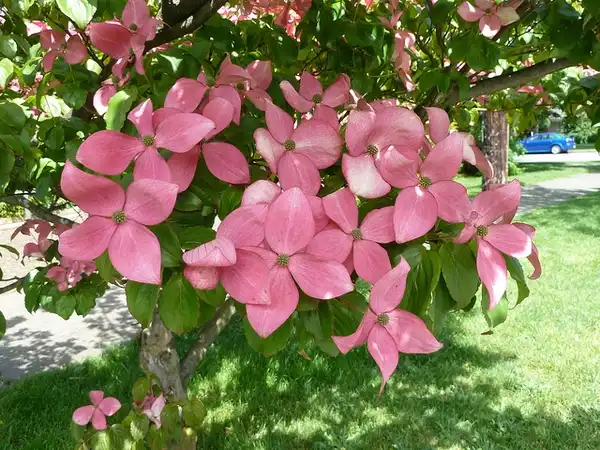
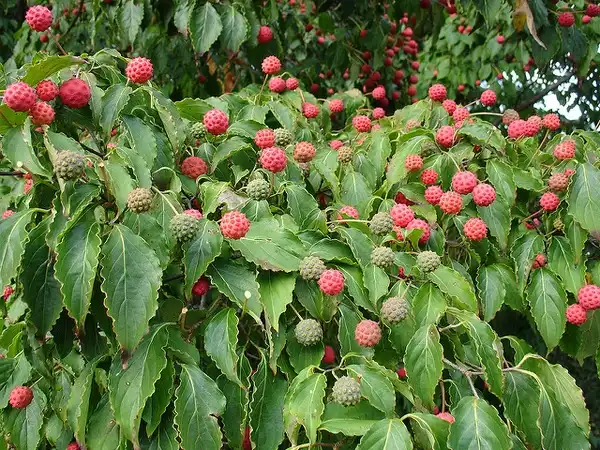
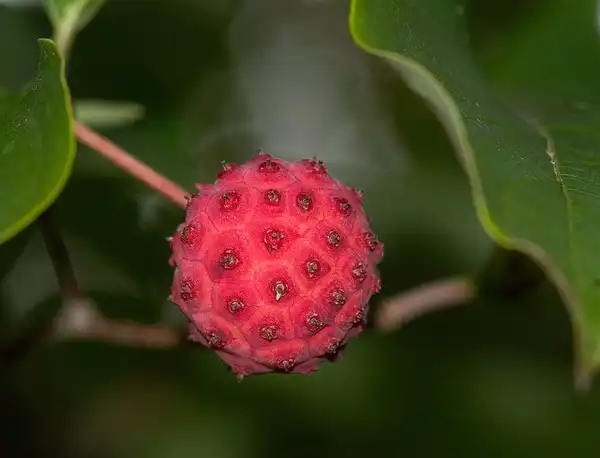
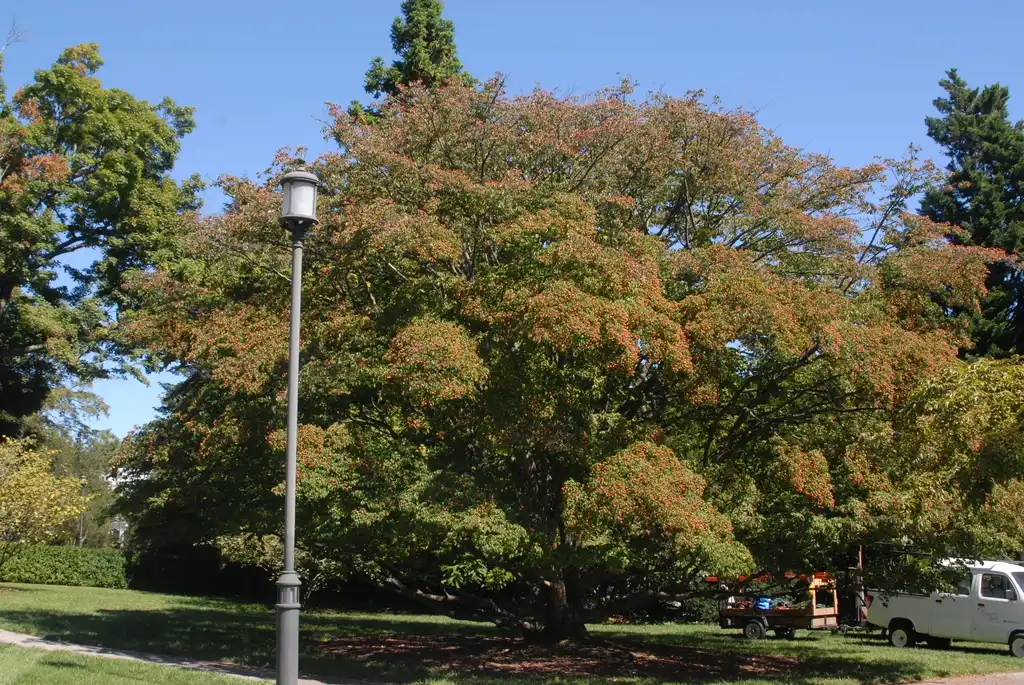
• Photo of Cornus kousa (Cornus kousas)

Plant Profile: Cornus kousa

Taxonomy: Cornus kousa

Names

Chinese Dogwood, Kousa Dogwood

  • Photo of Cornus kousa (Cornus kousas)

Phonetic Spelling:KOR-nus KOO-sa

Genus:Cornus

Species:kousa

Family:Cornaceae

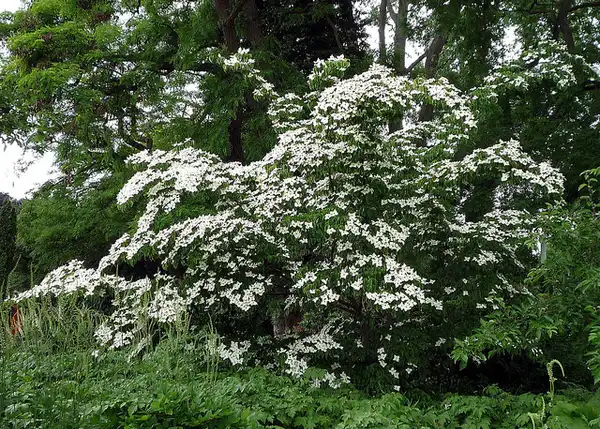
The Kousa dogwood is an attractive tree that typically grows to a height of 30 feet, making it a small to medium-sized option for landscaping. Often called the Chinese dogwood, this species is related to the native flowering dogwood and can serve as a striking specimen plant or be incorporated into shrub borders.

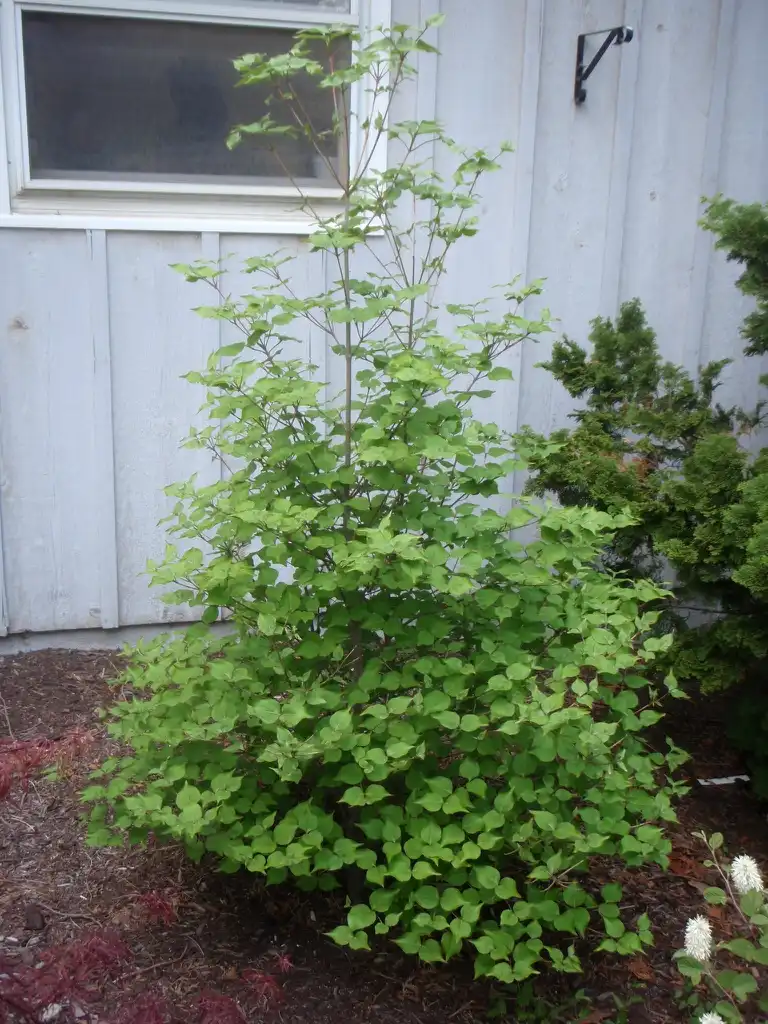
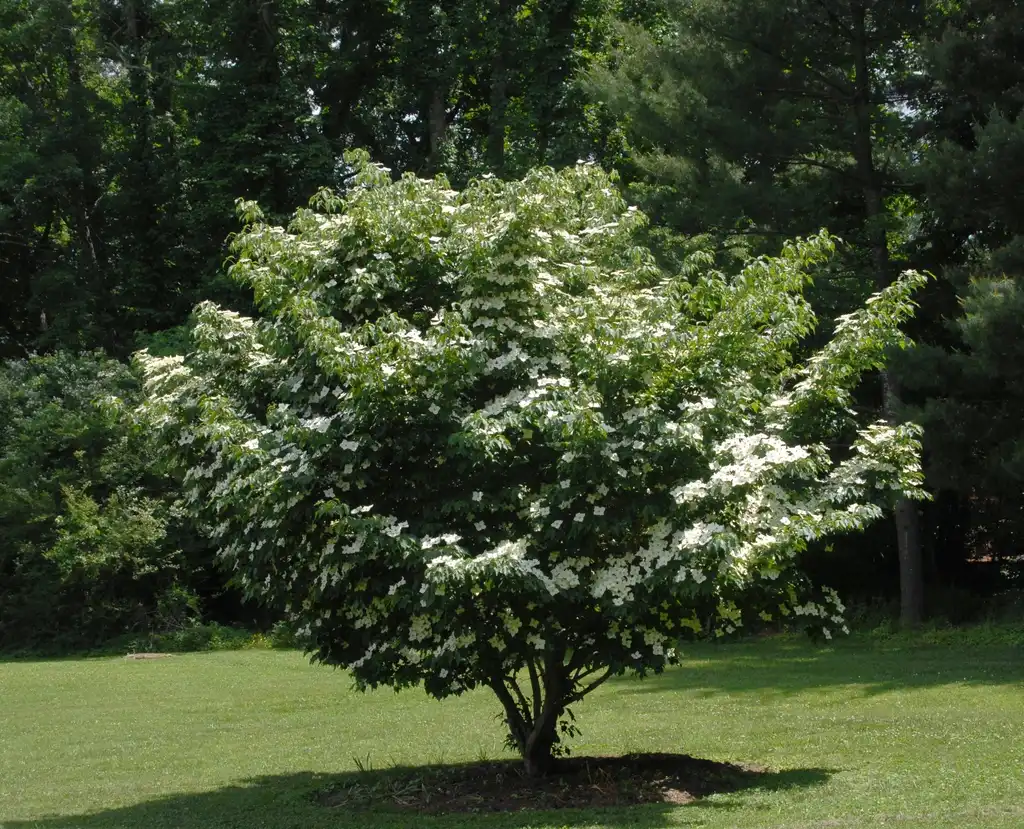
The appearance of Kousa dogwoods changes with age. Young trees exhibit an upright, conical shape, resembling a vase. As they mature, their branches spread out horizontally, resulting in a more rounded and expansive form. These trees thrive in open spaces like lawns, although they prefer some afternoon shade. They flourish in well-drained, acidic soil and can tolerate brief periods of dryness, but they do not fare well in waterlogged conditions. Due to their shallow root systems, Kousa dogwoods are sensitive to transplantation; if relocation is necessary, it’s best to do so in early spring.

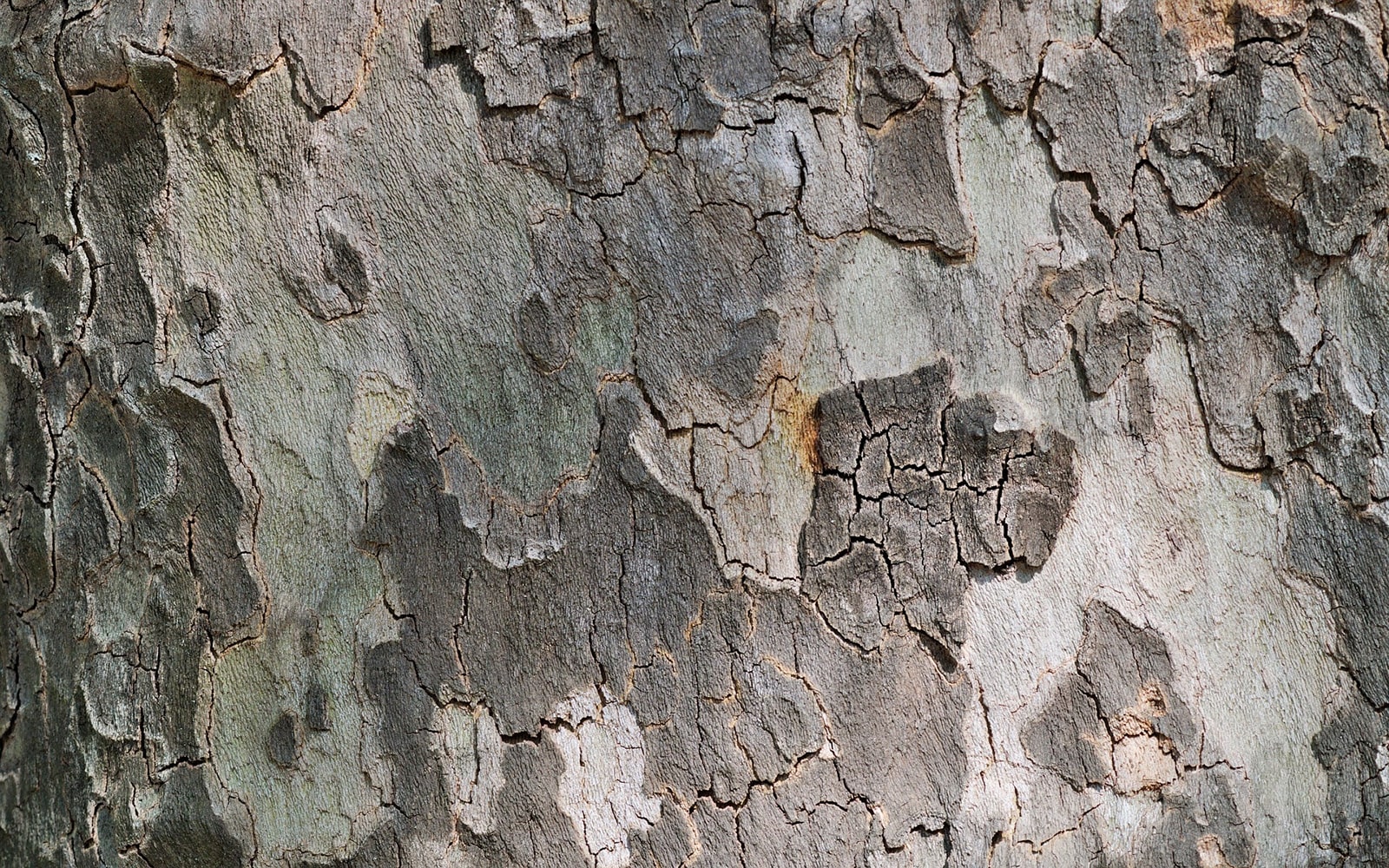
While our native dogwoods bloom in April, Kousa dogwoods flower about a month later. This tree offers year-round appeal, producing raspberry-like berries in the fall and showcasing attractive, peeling bark on its mature trunks.

For optimal growth, the soil should be well-drained yet moist. The Kousa dogwood is resistant to anthracnose and shows some resilience against deer damage, making it a valuable addition to many landscapes in the Carolinas. Don’t miss the chance to plant this stunning tree!

Potential issues include pests such as calico scale, dogwood borer, and leafhoppers, as well as diseases like leaf and flower blight, crown canker, and powdery mildew. Fallen fruits can ferment and attract yellow jackets, and seedlings may sprout prolifically beneath the tree, potentially becoming weedy.

**Quick Identification Tips:**
- A small, deciduous tree that can reach heights and widths of 20-30 feet.
- Blooms in early summer, with fruit appearing in the fall.
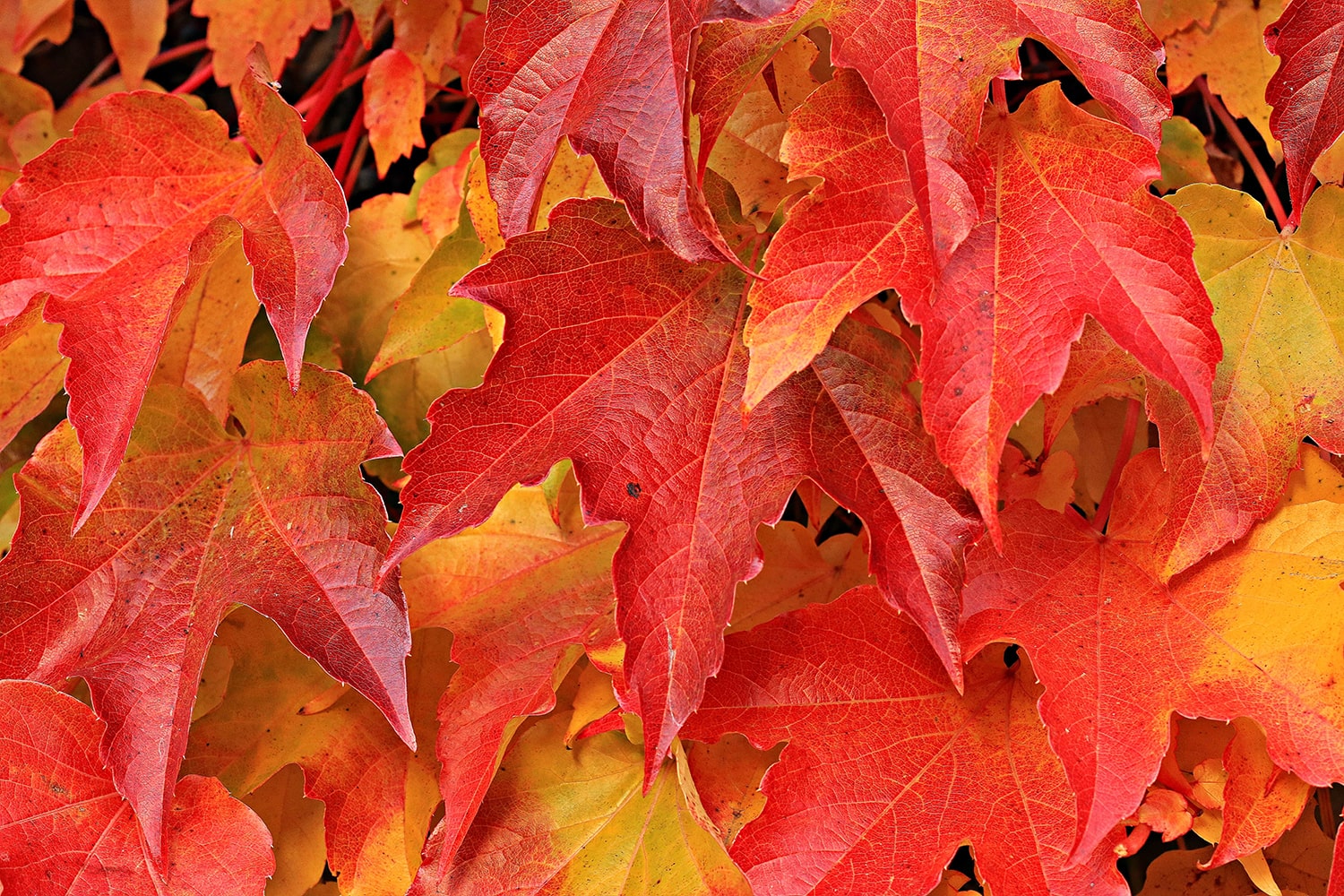
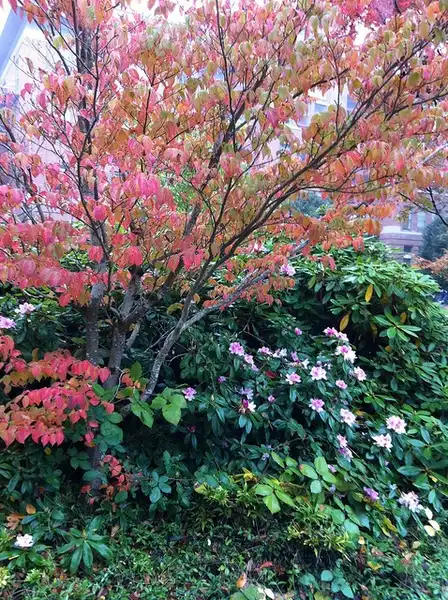
- Fall foliage ranges from reddish-purple to scarlet, lasting 3-5 weeks.
- Generally pest and disease-free, with a slow growth rate.
- Easily transplanted when young.
- Prefers acidic, well-drained soil and a sunny location, but can tolerate moderate shade and is more drought-resistant than C. florida.

Cornus kousa Feature Summary

Cornus kousa Image Gallery

Tags

#white
#deciduous
#fall color
#small tree
#full sun tolerant
#interesting bark
#specimen
#wildlife plant
#pink flowers
#purple leaves
#red leaves
#nectar plant
#cover plant
#fall interest
#flowering tree
#berries
#street tree
#year-round interest
#specialized bees
#disease resistant
#cpp
#deer browsing plant
#scarlet leaves
#showstopper
#borders
#pollinator plant
#fantz
#nesting sites
#exfoliating bark
#bird friendly
#partial shade tolerant
#bee friendly
#shrub borders

Similar Plants

Cornus kousa is often confused with:

Cornus kousa Feature Summary

Attributes
Sikkim, China to Temp. Eastern Asia
Fruits and nesting sites attractive to songbirds. Squirrels eat fruits as well. Members of the genus Cornus support the following specialized bees: Andrena (Gonandrena) fragilis, Andrena (Gonandrena) integra, and Andrena (Gonandrena) platyparia.
Resistant to anthracnose and blights that native dogwoods are susceptible to. Mildly resistant to deer damage
Fruits are technically edible but are usually left for the birds.
Wildlife Food Source
Fruit
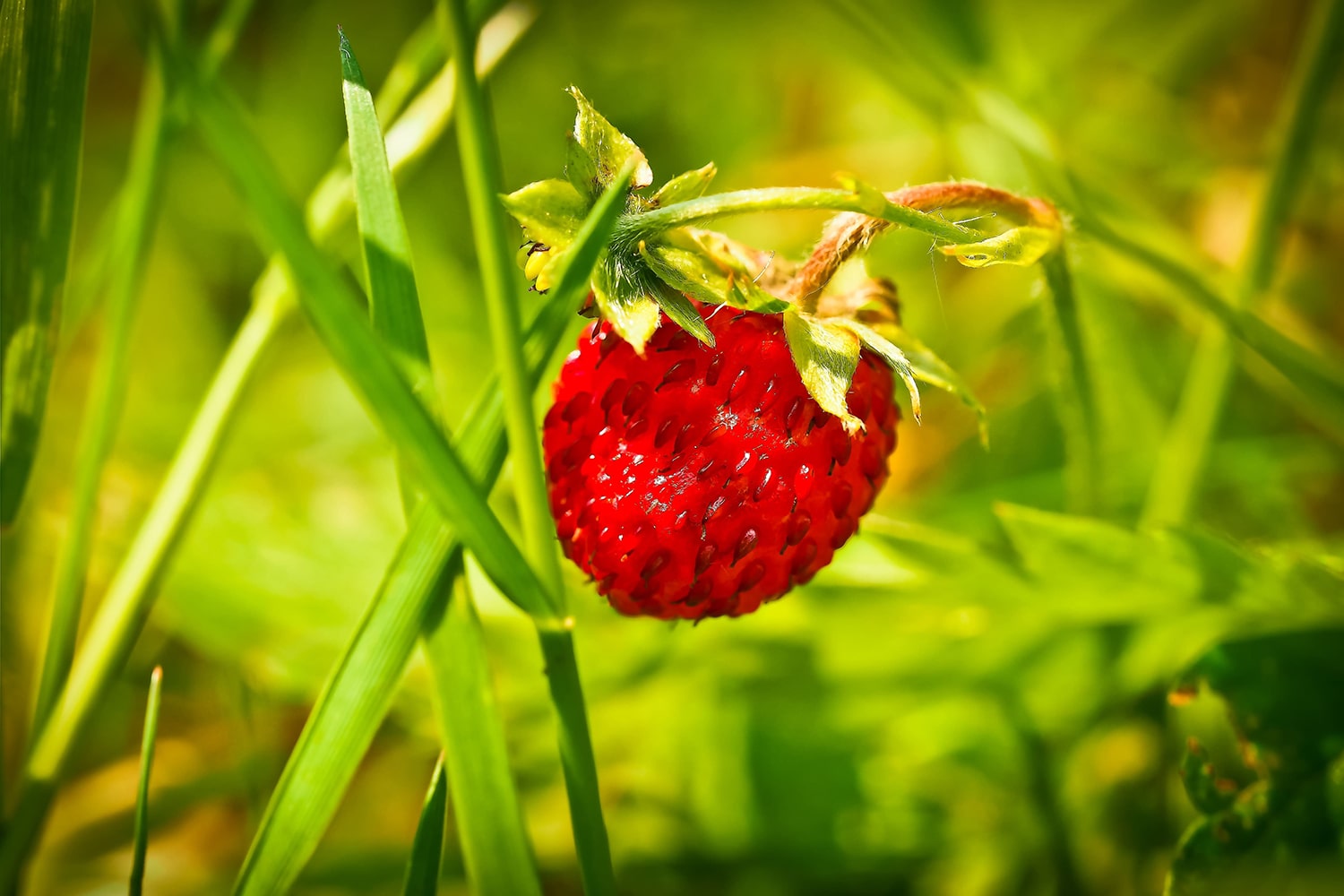
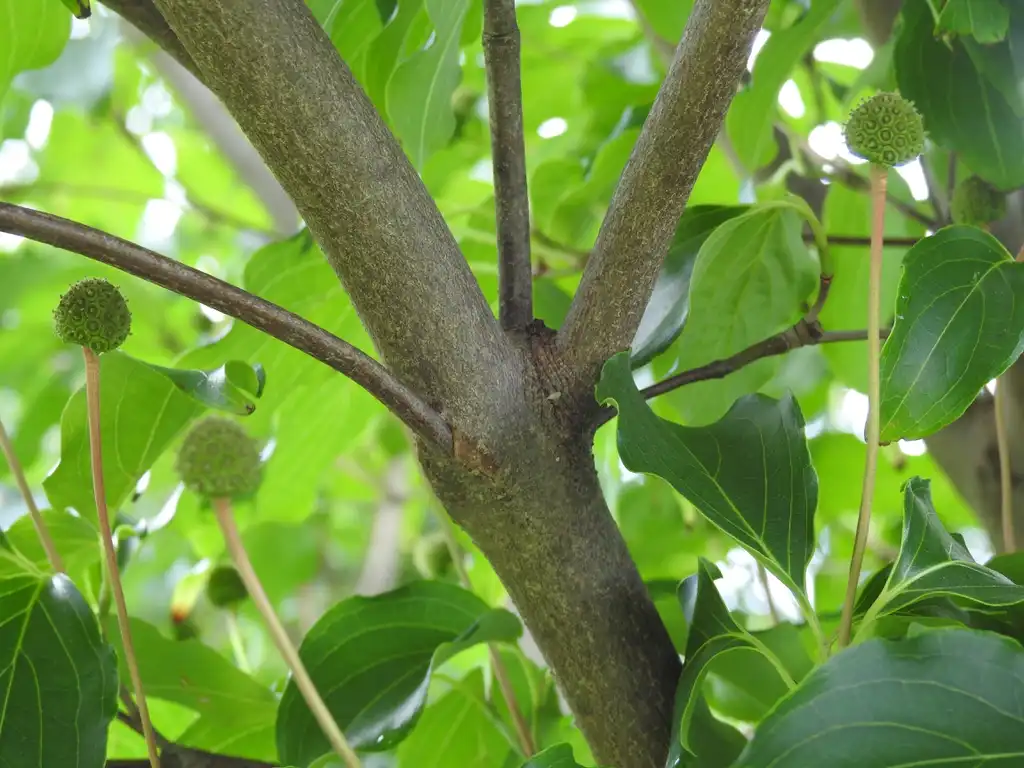
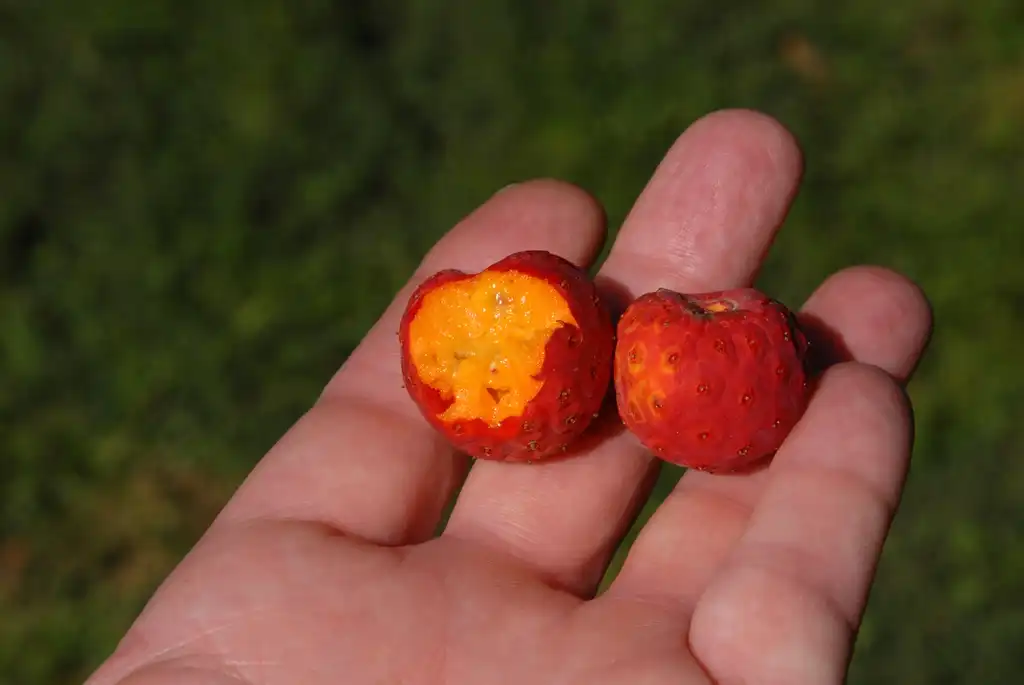
This plant has globular, pinkish-red to red fruit in late summer (though on 'Greensleeves,' fruit can be green at some points and a little pointy). The Kousa dogwood has berries that resemble raspberry fruit in autumn. ½-1" diameter reddish syncarp hanging on a 2" long stalk.
Green
Red/Burgundy
Pink
Flowers
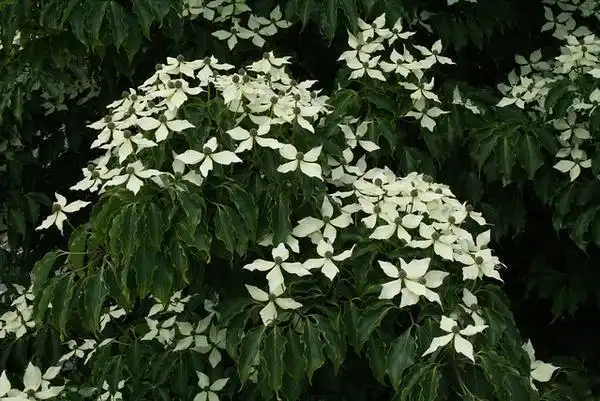
This plant has 2-4 in. white or pink tapered bracts. Flowers appear before leaves and bloom about 2-3 weeks after C. florida. They bloom around May (late spring) and into June. Showy part is 4 creamy, white pointed bracts. Actual flowers are inconspicuous.
Pink
White
1-3 inches
Leaves
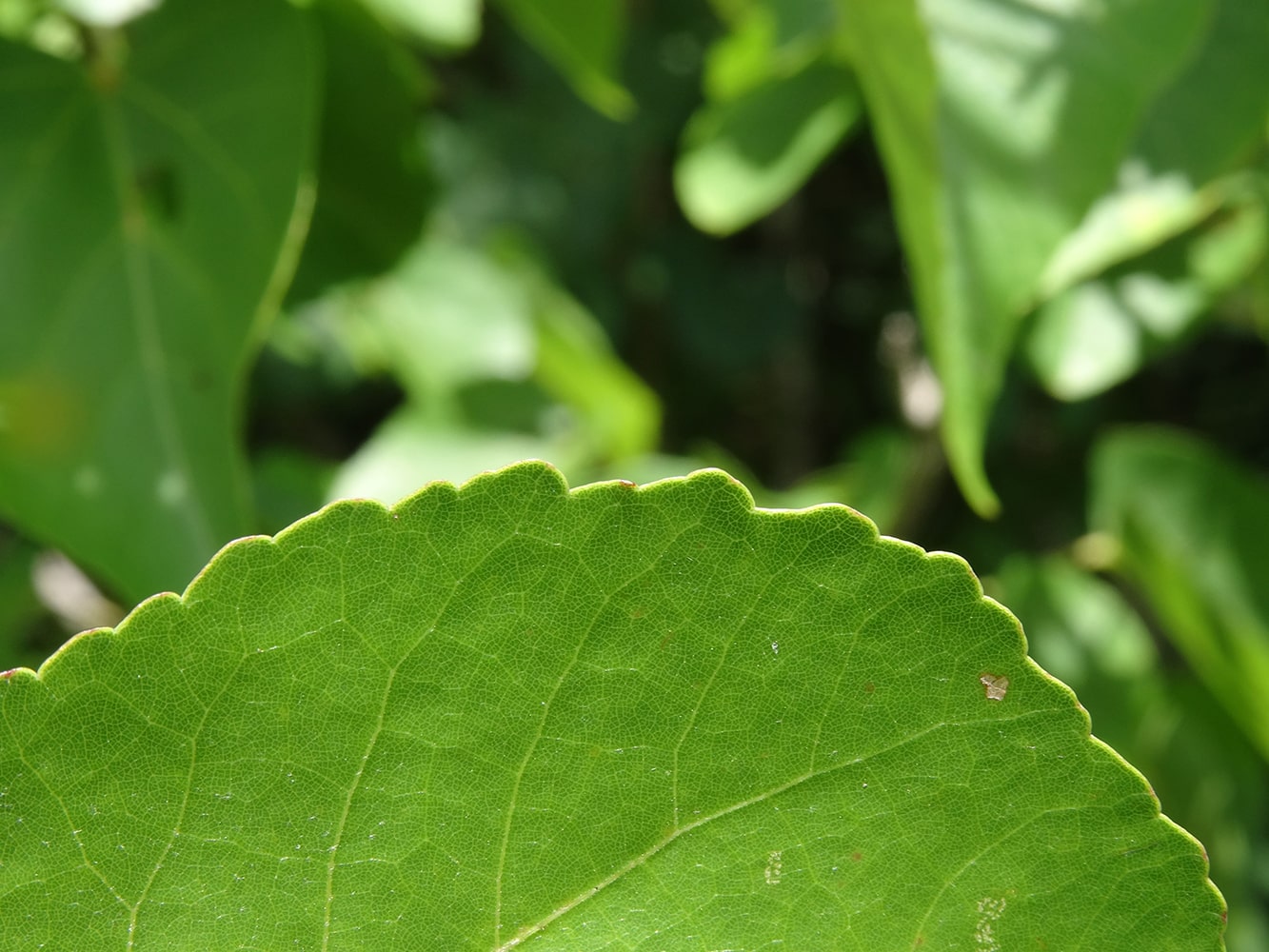
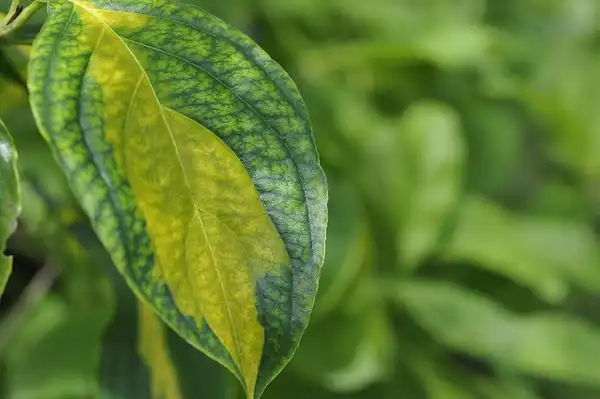
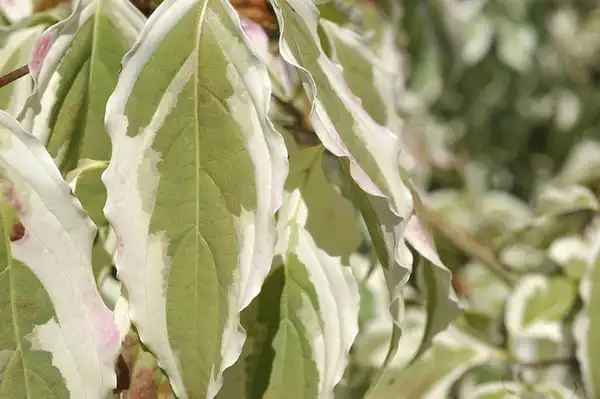
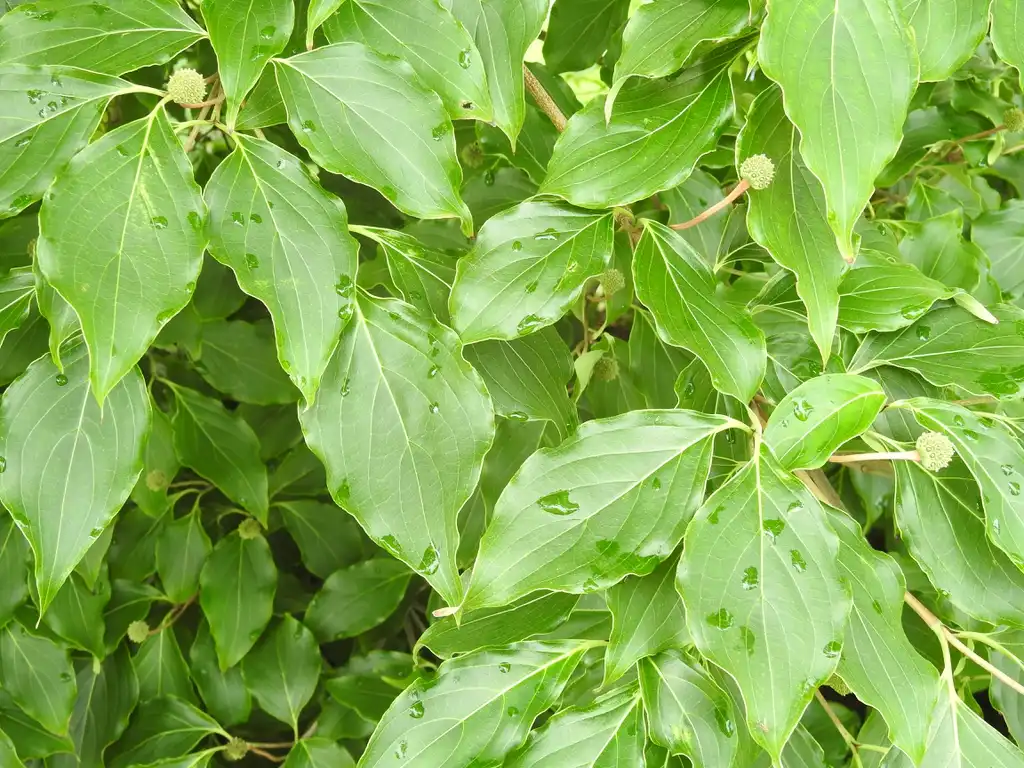
This plant has 2-4 in. long 1/4"-1 3/4" wide, opposite, simple, and dark green leaves that have a reddish-purple to scarlet fall color. Cornus kousa 'Greensleeves has glossy, slightly wavy, green leaves that are pointed at the ends. For Cornus kousa 'Greensleeves, the top of the leaf's venation is a yellowish-green which makes the venation obvious against the glossy green leaf; for Cornus kousa 'Greensleeves, the leaf's underside is a lighter green color than on top and the venation is prominent sticking out slightly and being a pale-green. The margins are entire and the base is cuneate with an acuminate apex. Elliptical/ovate, 2-4" long, 1-2" wide, acuminate, dark green above, glaucous below with yellowish tufts of hair. Distance between veins changes towards apex.
Green
Gold/Yellow
Purple/Lavender
Purple/Lavender
Red/Burgundy
Elliptical
Ovate
1-3 inches
1-3 inches
Bark
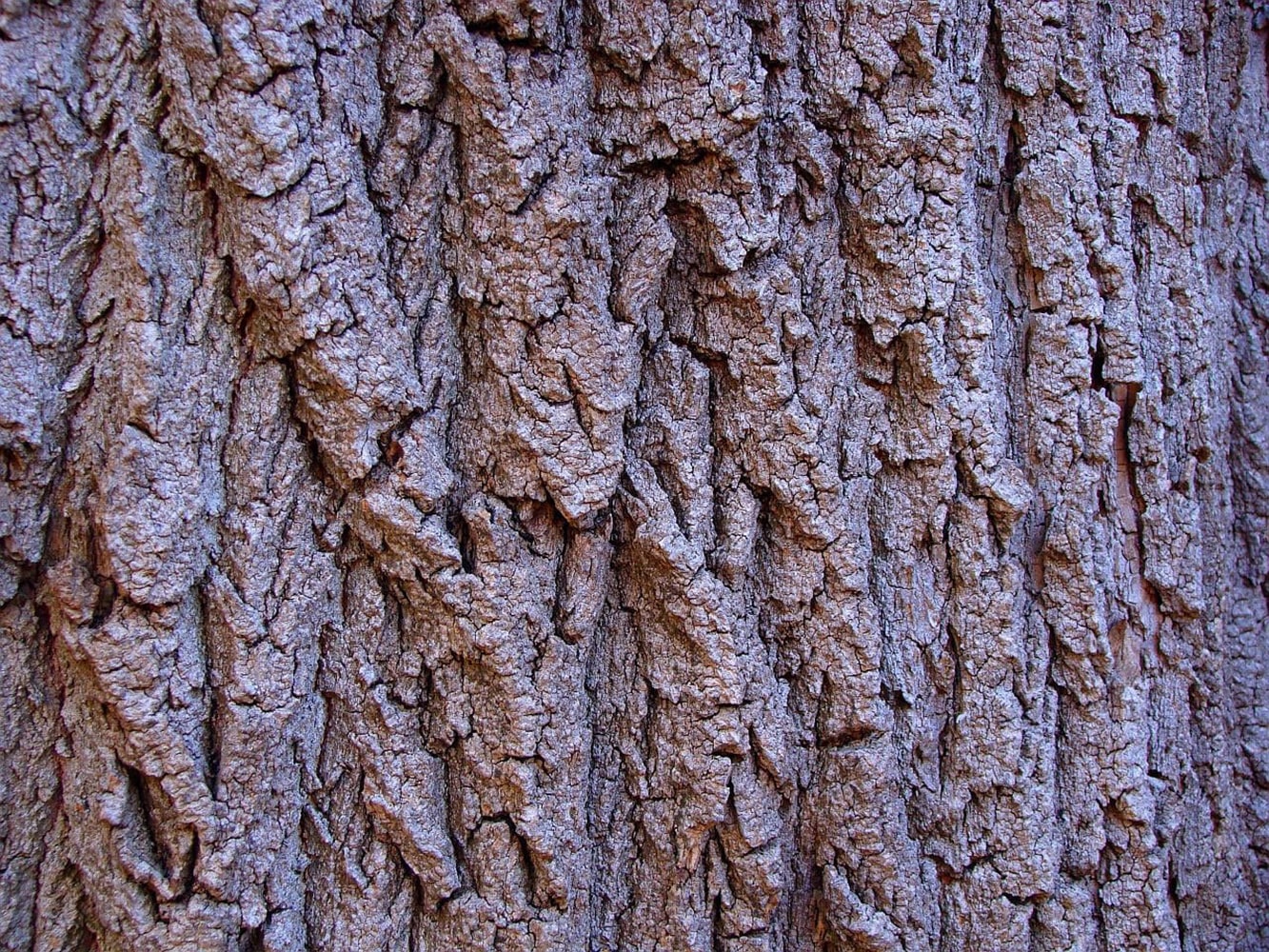
The peeling brown bark on the mature tree trunks gives the bark an attractive mottled appearance. Looks espeically attractive if under light in the evening to take advantage of the exfoliating bark. Exfoliates with age, mottled gray/tan
Dark Brown
Light Brown
Whole Plant Traits
Shrub
Edible
Tree
Rounded
Erect
Spreading
Horizontal
Vase
Medium
Cultural Conditions
Full sun (6 or more hours of direct sunlight a day)
Partial Shade (Direct sunlight only part of the day, 2-6 hours)
Acid (<6.0)
Good Drainage
24-60 feet
12-24 feet
Coastal
Landscape
Butterfly Garden
Pollinator Garden
Children's Garden
Border
Mass Planting
Specimen
Flowering Tree
Street Tree
Pollinators
Songbirds
Bees
Specialized Bees

Cornus kousa Attributes

Cornus kousa: Country Or Region Of Origin

Sikkim, China to Temp. Eastern Asia
Cornus kousa: Wildlife Value

Fruits and nesting sites attractive to songbirds. Squirrels eat fruits as well. Members of the genus Cornus support the following specialized bees: Andrena (Gonandrena) fragilis, Andrena (Gonandrena) integra, and Andrena (Gonandrena) platyparia.

Cornus kousa: Particularly Resistant To (Insects/Diseases/Other Problems)

Resistant to anthracnose and blights that native dogwoods are susceptible to. Mildly resistant to deer damage

Cornus kousa: Edibility

Fruits are technically edible but are usually left for the birds.

Cornus kousa: Play Value

Attractive Flowers
Attracts Pollinators
Buffer
Colorful
Defines Paths
Easy to Grow
Edible fruit
Fragrance
Pieces Used in Games
Screening
Shade
Sound
Textural
Wildlife Cover/Habitat
Wildlife Food Source
Wildlife Larval Host
Wildlife Nesting
Wind Break
Wind Shimmer

Cornus kousa Fruit

Cornus kousa: Fruit Description

This plant has globular, pinkish-red to red fruit in late summer (though on 'Greensleeves,' fruit can be green at some points and a little pointy). The Kousa dogwood has berries that resemble raspberry fruit in autumn. ½-1" diameter reddish syncarp hanging on a 2" long stalk.

Cornus kousa: Fruit Type

Achene
Aggregate
Berry
Capsule
Caryopsis
Drupe
Follicle
Legume
Nut
Pome
Samara
Schizocarp
Siliqua

Cornus kousa: Fruit Color

grass
Green
grass
Pink
grass
Red/Burgundy

Cornus kousa: Fruit Value To Gardener

Edible
Fragrant
Good Cut
Good Dried
Long Bloom Season
Long-lasting
Showy

Cornus kousa: Display/Harvest Time

Fall
Spring
Summer
Winter

Cornus kousa Flowers

Cornus kousa: Flower Description

This plant has 2-4 in. white or pink tapered bracts. Flowers appear before leaves and bloom about 2-3 weeks after C. florida. They bloom around May (late spring) and into June. Showy part is 4 creamy, white pointed bracts. Actual flowers are inconspicuous.
Cornus kousa: Flower Color

filter_vintage
Pink
filter_vintage
White

Cornus kousa: Flower Bloom Time

Winter
Spring
Summer
Fall

Cornus kousa: Flower Shape

Bell
Cross
Crown
Cup
Dome
Funnel
Irregular
Lipped
Radial
Saucer
Star
Trumpet
Tubular
Urn
Wheel

Cornus kousa: Flower Size

1-3 inches
3-6 inches
< 1 inch
> 6 inches

Cornus kousa Leaves

Cornus kousa: Leaf Description

This plant has 2-4 in. long 1/4"-1 3/4" wide, opposite, simple, and dark green leaves that have a reddish-purple to scarlet fall color. Cornus kousa 'Greensleeves has glossy, slightly wavy, green leaves that are pointed at the ends. For Cornus kousa 'Greensleeves, the top of the leaf's venation is a yellowish-green which makes the venation obvious against the glossy green leaf; for Cornus kousa 'Greensleeves, the leaf's underside is a lighter green color than on top and the venation is prominent sticking out slightly and being a pale-green. The margins are entire and the base is cuneate with an acuminate apex. Elliptical/ovate, 2-4" long, 1-2" wide, acuminate, dark green above, glaucous below with yellowish tufts of hair. Distance between veins changes towards apex.

Cornus kousa: Woody Plant Leaf Characteristics

Broadleaf Evergreen
Deciduous
Needled Evergreen
Semi-evergreen

Cornus kousa: Leaf Color

spa
Gold/Yellow
spa
Green
spa
Purple/Lavender

Cornus kousa: Deciduous Leaf Fall Color

spa
Purple/Lavender
spa
Red/Burgundy

Cornus kousa: Leaf Type

Compound (Pinnately , Bipinnately, Palmately)
Fronds
Needles
Sheath
Simple

Cornus kousa: Leaf Arrangement

Alternate
Opposite
Other/more complex
Rosulate
Whorled

Cornus kousa: Leaf Shape

Acicular
Auriculate
Cordate
Cuneate
Deltoid
Elliptical
Filiform
Lanceolate
Linear
Oblanceolate
Oblong
Obovate
Obtuse
Orbicular
Ovate
Palmasect
Palmatifid
Peltate
Pinnatifid
Pinnatisect
Reniform
Rhomboidal
Spatulate
Subcordate
Subulate

Cornus kousa: Leaf Margin

Crenate
Crenulate
Dentate
Denticulate
Doubly Crenate
Doubly Dentate
Doubly Serrate
Entire
Lobed
Serrate
Sinuate
Undulate

Cornus kousa: Hairs Present

No
Yes

Cornus kousa: Leaf Length

< 1 inch
1-3 inches
3-6 inches
> 6 inches

Cornus kousa: Leaf Feel

Fleshy
Glossy
Leathery
Papery
Prickly
Rough
Rubbery
Slippery
Smooth
Soft
Velvety
Waxy

Cornus kousa: Leaf Value To Gardener

Edible
Fragrant
Good Cut
Good Dried
Long-lasting
Showy

Cornus kousa: Leaf Width

< 1 inch
1-3 inches
3-6 inches
> 6 inches

Cornus kousa Bark

Cornus kousa: Bark Description

The peeling brown bark on the mature tree trunks gives the bark an attractive mottled appearance. Looks espeically attractive if under light in the evening to take advantage of the exfoliating bark. Exfoliates with age, mottled gray/tan

Cornus kousa: Bark Color

grass
Dark Brown
grass
Light Brown

Cornus kousa: Surface/Attachment

Bumpy
Exfoliating
Fissured
Furrowed
Lenticels
Papery
Patchy
Peeling
Ridges
Scaly
Shaggy
Shiny
Shredding
Smooth
Spongy

Cornus kousa Whole Plant Traits

Cornus kousa: Plant Type

Annual
Bulb
Carnivorous
Edible
Epiphyte
Fern
Ground Cover
Herb
Herbaceous Perennial
Houseplant
Mushroom
Native Plant
Ornamental Grasses and Sedges
Perennial
Poisonous
Rose
Shrub
Succulent
Tree
Turfgrass
Vegetable
Vine
Water Plant
Weed
Wildflower

Cornus kousa: Woody Plant Leaf Characteristics

Broadleaf Evergreen
Deciduous
Needled Evergreen
Semi-evergreen

Cornus kousa: Habit/Form

Arching
Ascending
Broad
Cascading
Climbing
Clumping
Columnar
Conical
Creeping
Dense
Erect
Horizontal
Irregular
Mounding
Multi-stemmed
Multi-trunked
Open
Oval
Prostrate
Pyramidal
Rounded
Spreading
Vase
Weeping

Cornus kousa: Growth Rate

Slow
Medium
Rapid

Cornus kousa: Maintenance

Low
Medium
High

Cornus kousa: Texture

Fine
Medium
Coarse

Cornus kousa Cultural Conditions

Cornus kousa: Light

Dappled Sunlight (Shade through upper canopy all day)
Deep shade (Less than 2 hours to no direct sunlight)
Full sun (6 or more hours of direct sunlight a day)
Partial Shade (Direct sunlight only part of the day, 2-6 hours)

Cornus kousa: Soil pH

Acid (<6.0)
Alkaline (>8.0)
Neutral (6.0-8.0)

Cornus kousa: Soil Drainage

Frequent Standing Water
Good Drainage
Moist
Occasional Flooding
Occasionally Dry
Occasionally Wet
Very Dry

Cornus kousa: Available Space To Plant

12 inches-3 feet
12-24 feet
24-60 feet
3 feet-6 feet
6-feet-12 feet
Less than 12 inches
more than 60 feet

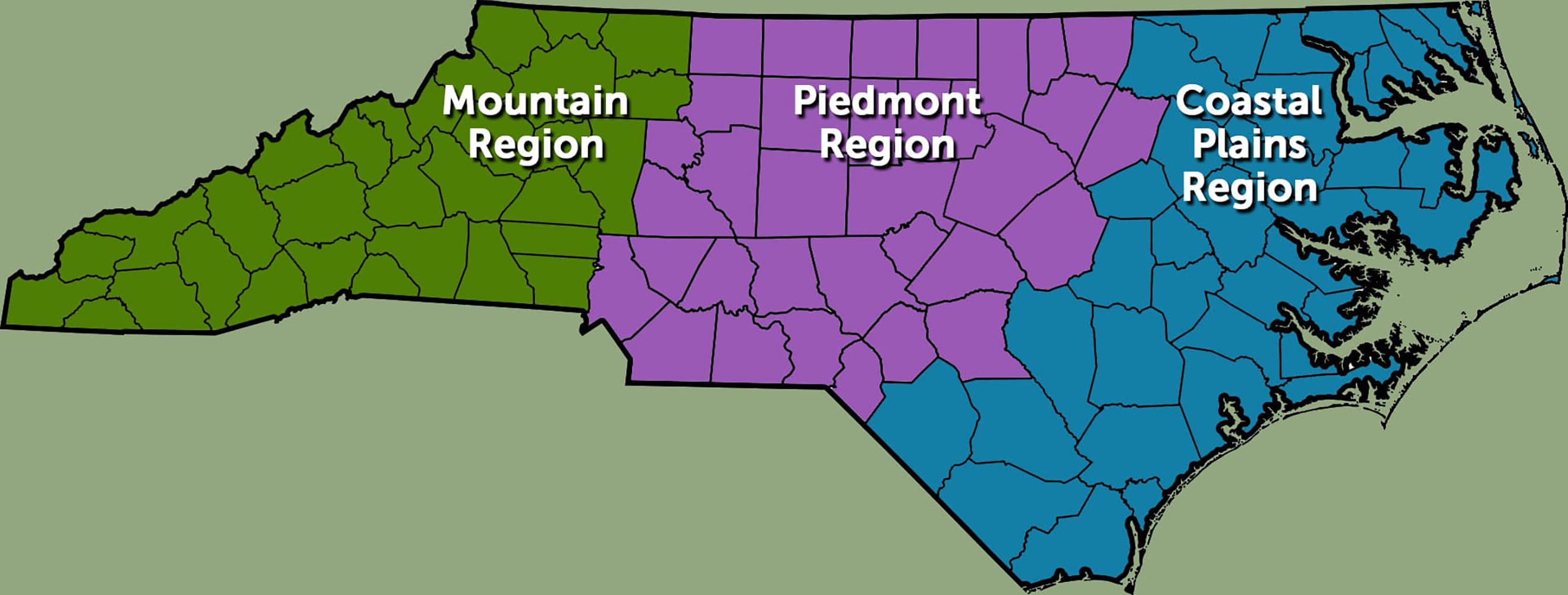
Cornus kousa: NC Region

Coastal
Mountains
Piedmont

Cornus kousa: USDA Plant Hardiness Zone

thermostat
5a
thermostat
5b
thermostat
6a
thermostat
6b
thermostat
7a
thermostat
7b
thermostat
8a
thermostat
8b

Cornus kousa Stem

Cornus kousa: Stem Is Aromatic

No
Yes

Cornus kousa Landscape

Cornus kousa: Landscape Theme

Asian Garden
Butterfly Garden
Children's Garden
Cottage Garden
Cutting Garden
Drought Tolerant Garden
Edible Garden
English Garden
Fairy Garden
Garden for the Blind
Native Garden
Nighttime Garden
Pollinator Garden
Rain Garden
Rock Garden
Shade Garden
Water Garden
Winter Garden

Cornus kousa: Design Feature

Accent
Barrier
Border
Flowering Tree
Foundation Planting
Hedge
Mass Planting
Screen/Privacy
Security
Shade Tree
Small groups
Small Tree
Specimen
Street Tree
Understory Tree

Cornus kousa: Resistance To Challenges

Black Walnut
Compaction
Deer
Diseases
Drought
Dry Soil
Erosion
Fire
Foot Traffic
Heat
Heavy Shade
Humidity
Insect Pests
Pollution
Poor Soil
Rabbits
Salt
Slugs
Squirrels
Storm damage
Urban Conditions
Voles
Wet Soil
Wind

Cornus kousa: Landscape Location

Coastal
Container
Hanging Baskets
Houseplants
Lawn
Meadow
Naturalized Area
Near Septic
Patio
Pond
Pool/Hardscape
Recreational Play Area
Riparian
Rock Wall
Slope/Bank
Small Space
Vertical Spaces
Walkways
Woodland

Cornus kousa: Attracts

Bats
Bees
Butterflies
Frogs
Hummingbirds
Moths
Pollinators
Predatory Insects
Reptiles
Small Mammals
Songbirds
Specialized Bees