Plant Profile: Chlorophyllum molybdites

Names

False Parasol, Green Gill, Green-Spored Parasol

  • Photo of Chlorophyllum molybdites (Chlorophyllum molybditess)

Phonetic Spelling:klor-oh-FY-lum moh-lib-DY-teez

Genus:Chlorophyllum

Species:molybdites

Family:Agaricaceae

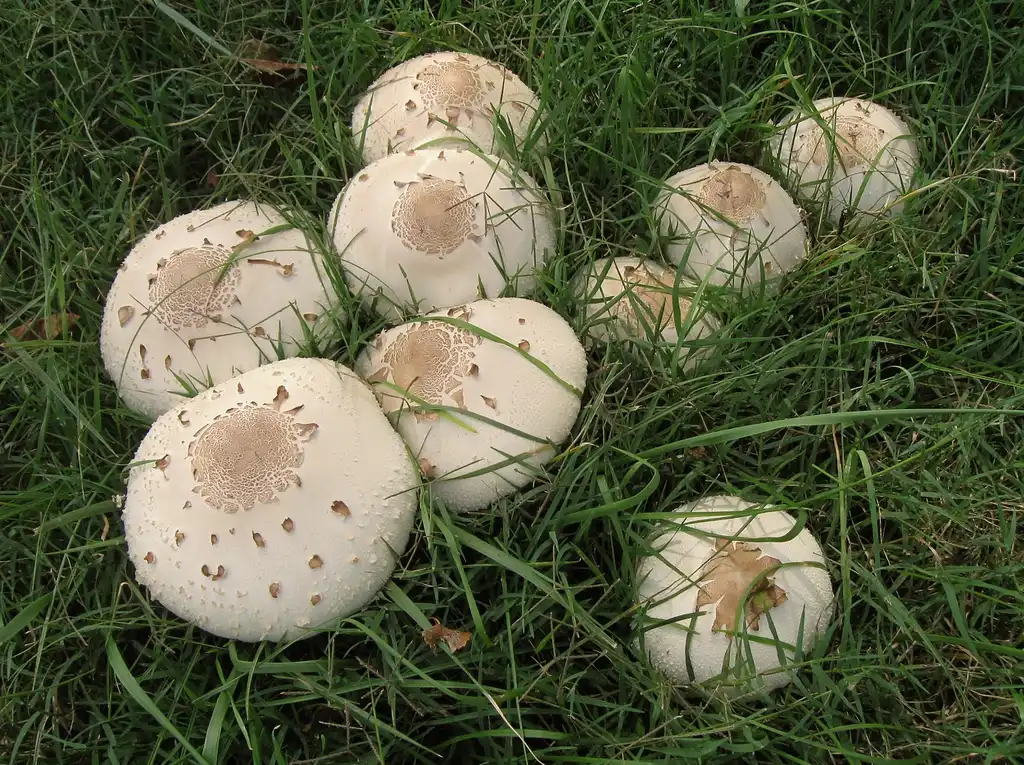
This species thrives in forested regions, natural habitats, and landscaped areas. It often appears in clusters or forms distinctive fairy rings in lawns and grassy spaces. However, despite their enchanting look, these plants can pose significant dangers.

The fruiting bodies can grow up to 12 inches in diameter and reach a height of 6 inches. In their immature phase, they are often confused with the meadow mushroom, which shares a similar environment. Notably, this is the only large mushroom that produces a green spore print.

Initially, the cap is smooth and dry, but it eventually develops light brown patches or scales against a white backdrop. The gills start off white, transitioning to a greenish-gray hue, and are positioned close to the stalk without being attached. The stalk itself is smooth and can be white or whitish-brown. The annulus is prominent and enduring, becoming double-edged, with a white upper side and a brown underside, and is movable, situated near the top of the stalk.

Chlorophyllum molybdites Feature Summary

Chlorophyllum molybdites Image Gallery

Tags

#poisonous
#United States
#grassy areas
#rings
#poisonous mushrooms
#forests
#naturalizes
#mushrooms
#woodlands
#lawns

Similar Plants

Chlorophyllum molybdites Feature Summary

Attributes
North Carolina, United States
Throughout NC but more common in the Piedmont and Coastal Plain
Stem
The stalk is smooth white or whitish-brown
Brown/Copper
White
Poisonous to Humans
HIGHLY TOXIC, MAY BE FATAL IF EATEN! Poisonous if ingested. Poisonous part is the whole mushroom. Symptoms: Occur usually 30 minutes to 2 hours after eating and include vomiting, nausea, diarrhea, stomach cramps, weakness and sweating.
Whole Plant Traits
Poisonous
Mushroom
Landscape
Poisonous to Humans
Problem for Children

Chlorophyllum molybdites Attributes

Chlorophyllum molybdites: Country Or Region Of Origin

North Carolina, United States
Chlorophyllum molybdites: Distribution

Throughout NC but more common in the Piedmont and Coastal Plain

Chlorophyllum molybdites Stem

Chlorophyllum molybdites: Stem Description

The stalk is smooth white or whitish-brown

Chlorophyllum molybdites: Stem Color

grass
Brown/Copper
grass
White

Chlorophyllum molybdites: Stem Is Aromatic

No
Yes

Chlorophyllum molybdites Poisonous to Humans

Chlorophyllum molybdites: Poison Symptoms

HIGHLY TOXIC, MAY BE FATAL IF EATEN! Poisonous if ingested. Poisonous part is the whole mushroom. Symptoms: Occur usually 30 minutes to 2 hours after eating and include vomiting, nausea, diarrhea, stomach cramps, weakness and sweating.

Chlorophyllum molybdites: Poison Toxic Principle

Unknown

Chlorophyllum molybdites: Poison Severity

High
Low
Medium

Chlorophyllum molybdites: Causes Contact Dermatitis

No
Yes

Chlorophyllum molybdites: Poison Part

Bark
Flowers
Fruits
Leaves
Roots
Sap/Juice
Seeds
Stems

Chlorophyllum molybdites Whole Plant Traits

Chlorophyllum molybdites: Plant Type

Annual
Bulb
Carnivorous
Edible
Epiphyte
Fern
Ground Cover
Herb
Herbaceous Perennial
Houseplant
Mushroom
Native Plant
Ornamental Grasses and Sedges
Perennial
Poisonous
Rose
Shrub
Succulent
Tree
Turfgrass
Vegetable
Vine
Water Plant
Weed
Wildflower

Chlorophyllum molybdites Leaves

Chlorophyllum molybdites: Hairs Present

No
Yes

Chlorophyllum molybdites Landscape

Chlorophyllum molybdites: Problems

Allelopathic
Contact Dermatitis
Frequent Disease Problems
Frequent Insect Problems
Invasive Species
Malodorous
Messy
Poisonous to Humans
Problem for Cats
Problem for Children
Problem for Dogs
Problem for Horses
Short-lived
Spines/Thorns
Weak Wood
Weedy