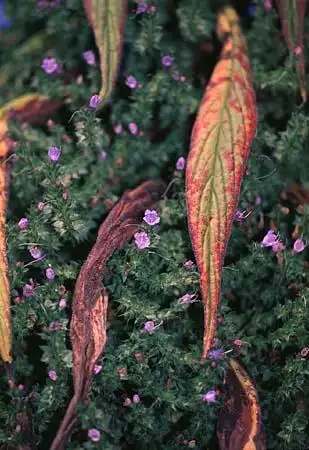
• Photo of Echium (Echiums)

Plant Profile: Echium

Taxonomy: Echium

Names

Blue Devil., Blueweed, Viper's Bugloss

  • Photo of Echium (Echiums)

Phonetic Spelling:EK-ee-um

Genus:Echium

Species:

Family:Boraginaceae

This stunning flower thrives in sunlight, as if its height is striving to embrace the sun. It is truly a treasure bestowed upon us by the Mediterranean. With forty different species, this plant brings joy to everyone who encounters it. Its exotic hues make it a rising star, creating a visual symphony that will enhance the beauty of your garden.

Characterized by coarsely hairy stems and alternate, simple leaves, the flowers form a slender, leafy cluster at the top, each featuring five blue petals.

Commonly found in landscapes as cultivated ornamental herbs, it can also be seen as a weed in disturbed areas where it has become naturalized.

Echium Feature Summary

Echium Image Gallery

Tags

#purple
#white
#poisonous
#full sun tolerant
#blue
#purple flowers
#pink flowers
#blue flowers
#Mediterranean
#tall
#exotic looking
#North Africa
#pollinator plant
#bee friendly

Similar Plants

Echium Feature Summary

Attributes
Macaronesia, Europe to Central Asia, N. Africa
Naturalized in US
Flowers
Slender, leafy, terminal cluster, each 5-parted, blue
Pink
Purple/Lavender
Blue
4-5 petals/rays
Leaves
Coarsely hairy, alternate, simple
Velvety
Poisonous to Humans
CAUSES ONLY LOW TOXICITY IF EATEN. SKIN IRRITATION MINOR, OR LASTING ONLY FOR A FEW MINUTES. CAUSES SEVERE PAIN IN THE MOUTH IF EATEN! Digestive upset and liver damage as well as skin irritation from the coarse hairs.
Pyrrolizidine alkaloids
Seeds
Leaves
Stems
Sap/Juice
Flowers
Bark
Fruits
Roots
Whole Plant Traits
Poisonous
Cultural Conditions
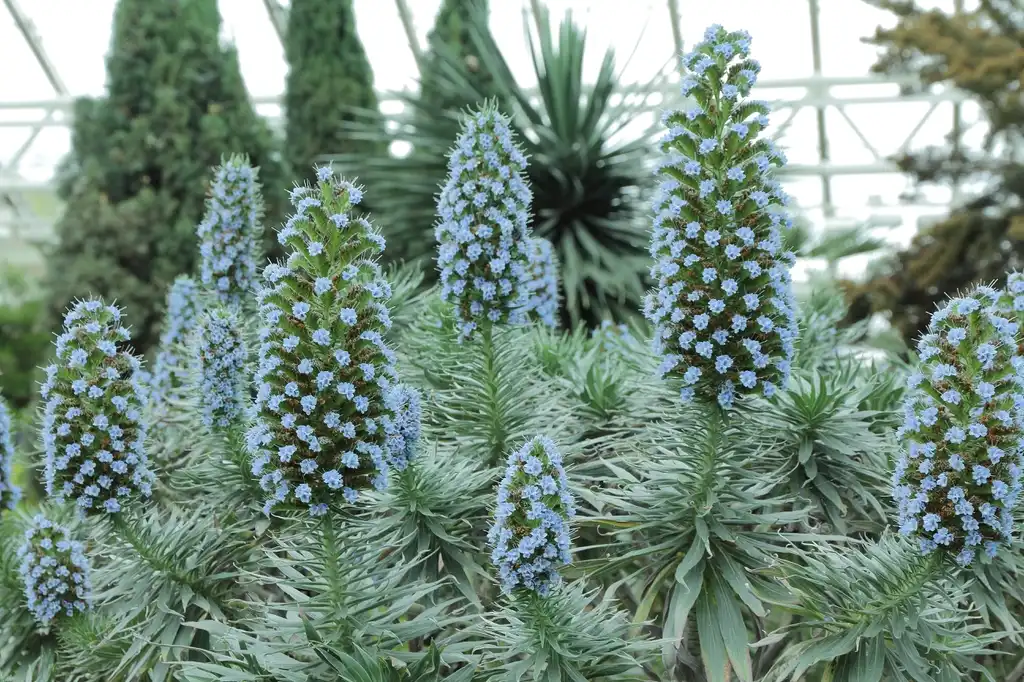
Mountains
Piedmont
Landscape
Naturalized Area
Poisonous to Humans
Weedy
Contact Dermatitis

Echium Attributes

Echium: Country Or Region Of Origin

Macaronesia, Europe to Central Asia, N. Africa
Echium: Distribution

Naturalized in US

Echium Flowers

Echium: Flower Description

Slender, leafy, terminal cluster, each 5-parted, blue

Echium: Flower Color

filter_vintage
Blue
filter_vintage
Pink
filter_vintage
Purple/Lavender

Echium: Flower Value To Gardener

Edible
Fragrant
Good Cut
Good Dried
Long Bloom Season
Long-lasting
Showy

Echium: Flower Petals

2-3 rays/petals
4-5 petals/rays
6 petals/rays
7 - 20 petals/rays
asymmetrical petals
Bracts
Colored Sepals
fused petals
more than 20 petals/rays
Tepals

Echium Leaves

Echium: Leaf Description

Coarsely hairy, alternate, simple

Echium: Leaf Color

spa
Green

Echium: Leaf Type

Compound (Pinnately , Bipinnately, Palmately)
Fronds
Needles
Sheath
Simple

Echium: Leaf Arrangement

Alternate
Opposite
Other/more complex
Rosulate
Whorled

Echium: Hairs Present

No
Yes

Echium: Leaf Feel

Fleshy
Glossy
Leathery
Papery
Prickly
Rough
Rubbery
Slippery
Smooth
Soft
Velvety
Waxy

Echium Poisonous to Humans

Echium: Poison Symptoms

CAUSES ONLY LOW TOXICITY IF EATEN. SKIN IRRITATION MINOR, OR LASTING ONLY FOR A FEW MINUTES. CAUSES SEVERE PAIN IN THE MOUTH IF EATEN! Digestive upset and liver damage as well as skin irritation from the coarse hairs.

Echium: Poison Toxic Principle

Pyrrolizidine alkaloids

Echium: Poison Severity

High
Low
Medium

Echium: Causes Contact Dermatitis

No
Yes

Echium: Poison Part

Bark
Flowers
Fruits
Leaves
Roots
Sap/Juice
Seeds
Stems

Echium Whole Plant Traits

Echium: Plant Type

Annual
Bulb
Carnivorous
Edible
Epiphyte
Fern
Ground Cover
Herb
Herbaceous Perennial
Houseplant
Mushroom
Native Plant
Ornamental Grasses and Sedges
Perennial
Poisonous
Rose
Shrub
Succulent
Tree
Turfgrass
Vegetable
Vine
Water Plant
Weed
Wildflower

Echium Cultural Conditions

Echium: NC Region

Coastal
Mountains
Piedmont

Echium: USDA Plant Hardiness Zone

thermostat
10a
thermostat
10b
thermostat
11a
thermostat
11b
thermostat
9a
thermostat
9b

Echium Stem

Echium: Stem Is Aromatic

No
Yes

Echium Landscape

Echium: Landscape Location

Coastal
Container
Hanging Baskets
Houseplants
Lawn
Meadow
Naturalized Area
Near Septic
Patio
Pond
Pool/Hardscape
Recreational Play Area
Riparian
Rock Wall
Slope/Bank
Small Space
Vertical Spaces
Walkways
Woodland

Echium: Attracts

Bats
Bees
Butterflies
Frogs
Hummingbirds
Moths
Pollinators
Predatory Insects
Reptiles
Small Mammals
Songbirds
Specialized Bees

Echium: Problems

Allelopathic
Contact Dermatitis
Frequent Disease Problems
Frequent Insect Problems
Invasive Species
Malodorous
Messy
Poisonous to Humans
Problem for Cats
Problem for Children
Problem for Dogs
Problem for Horses
Short-lived
Spines/Thorns
Weak Wood
Weedy