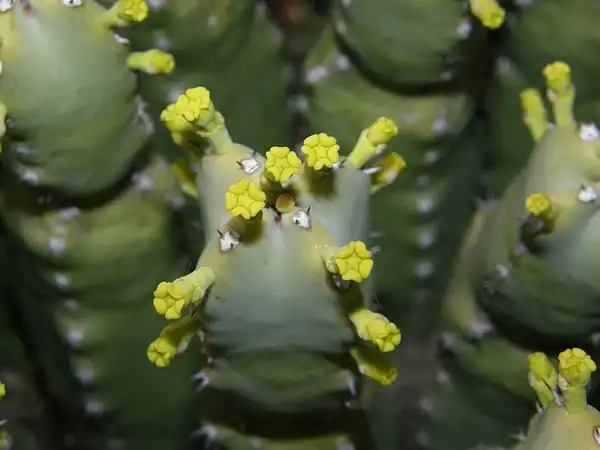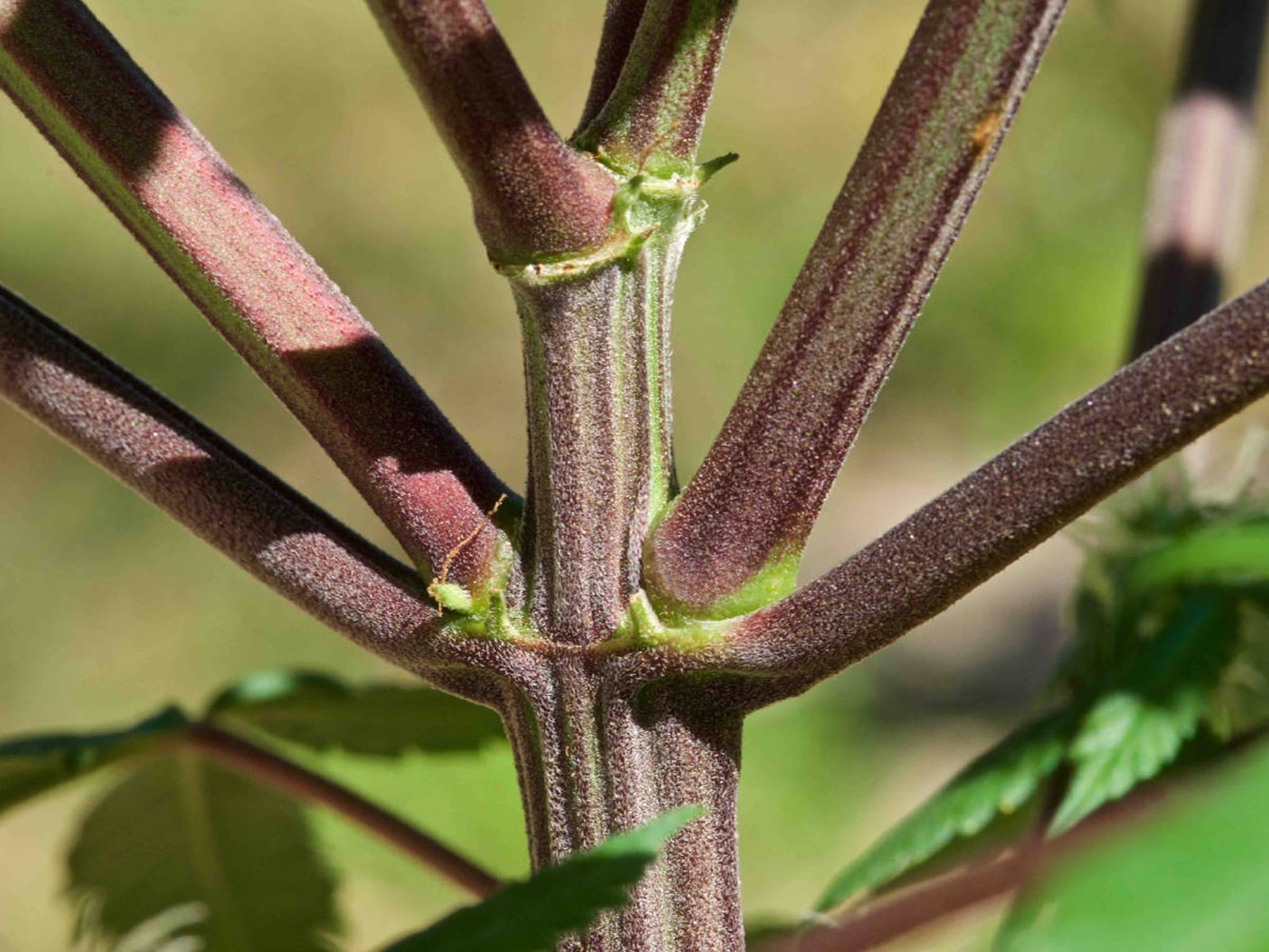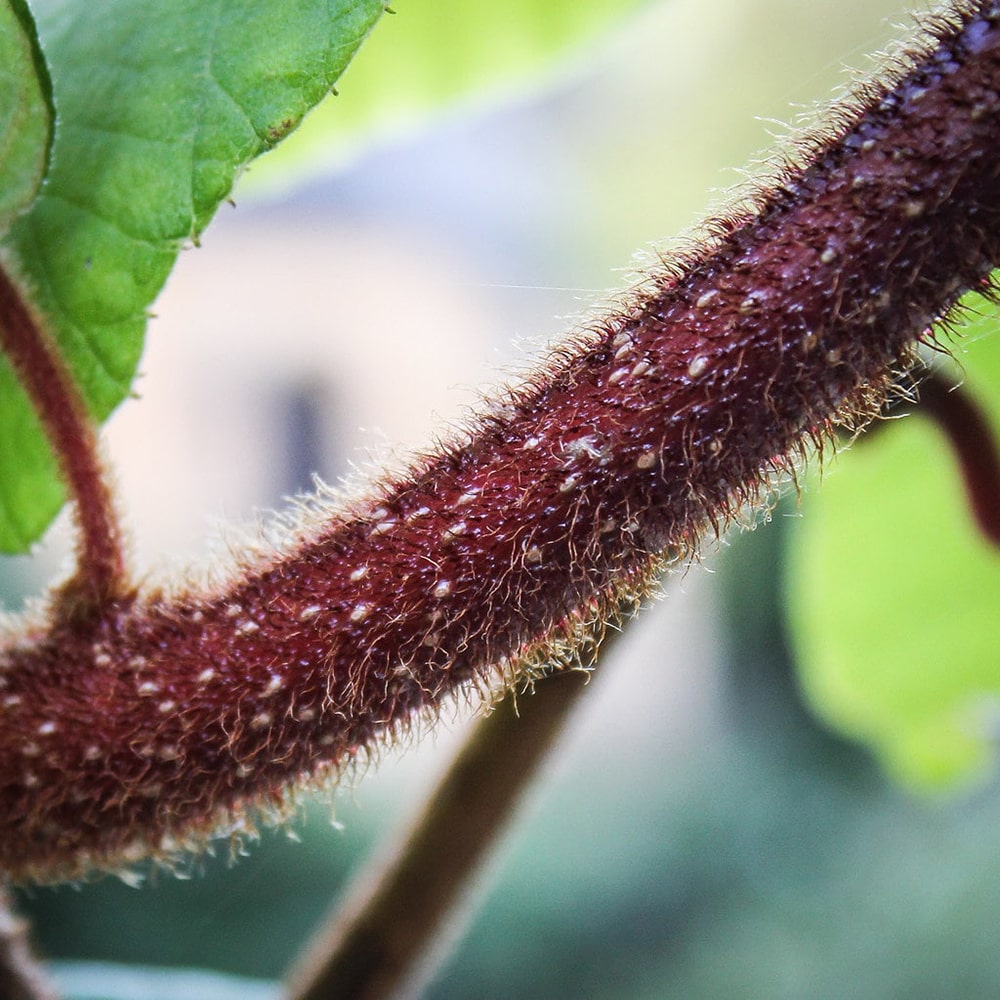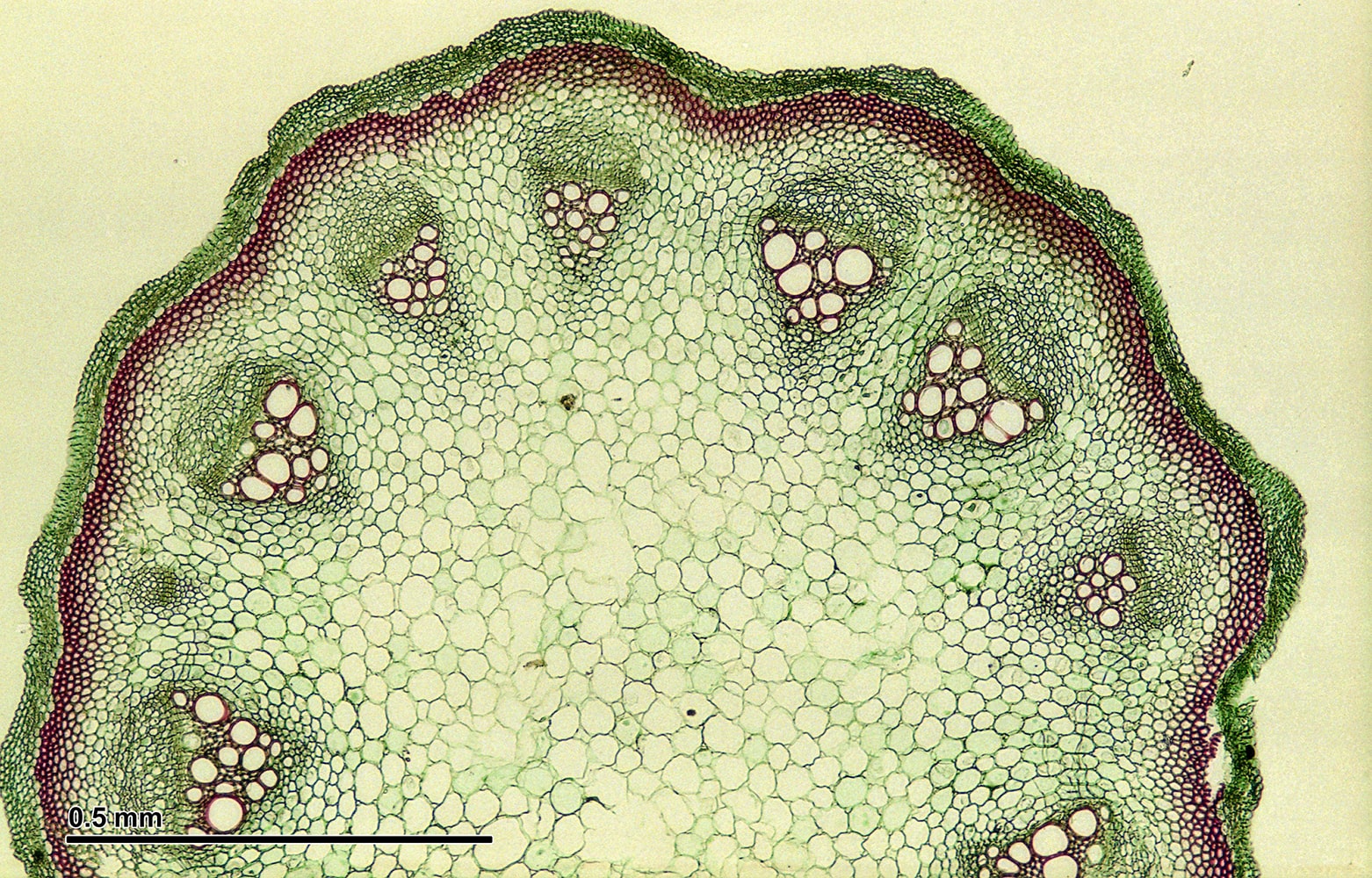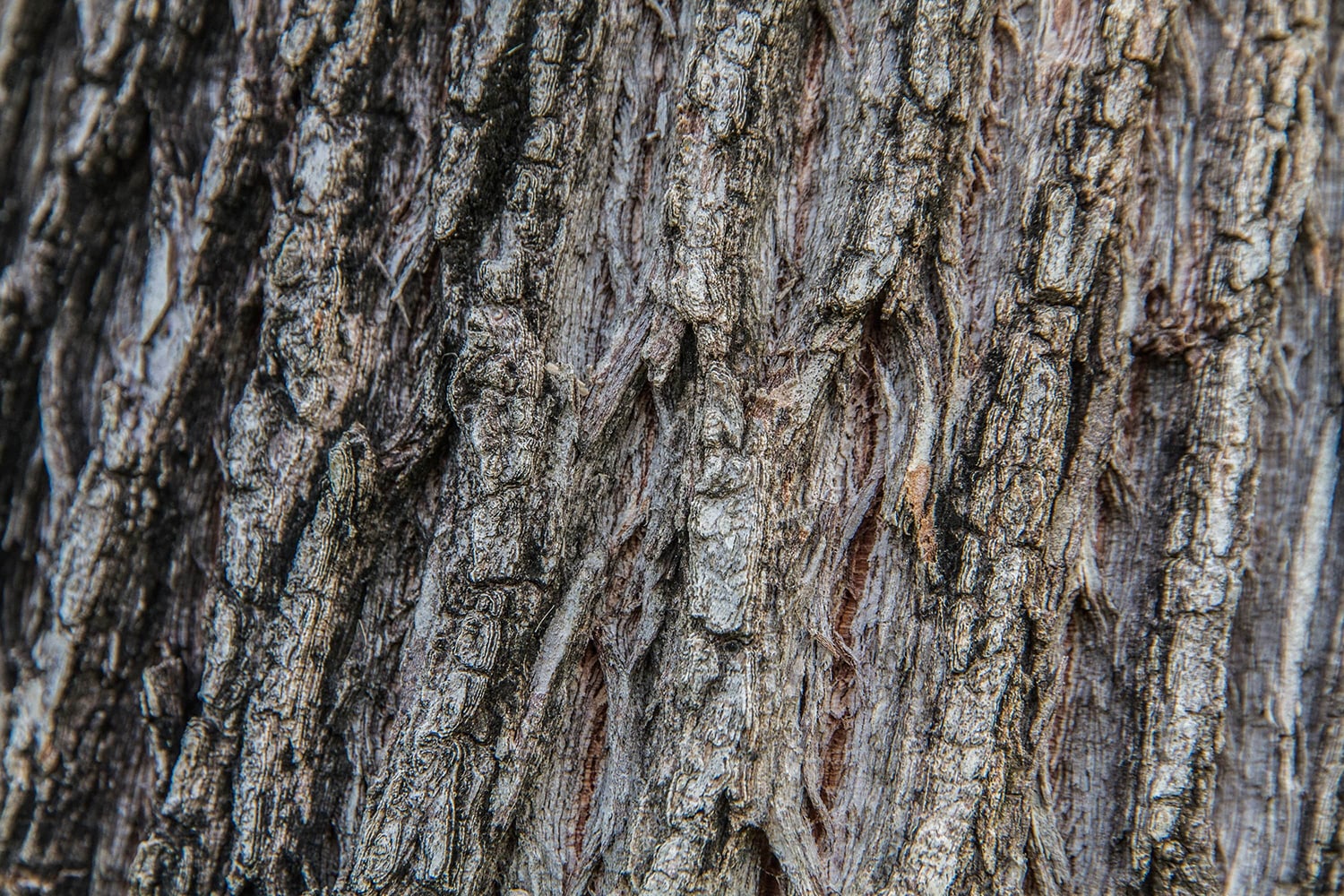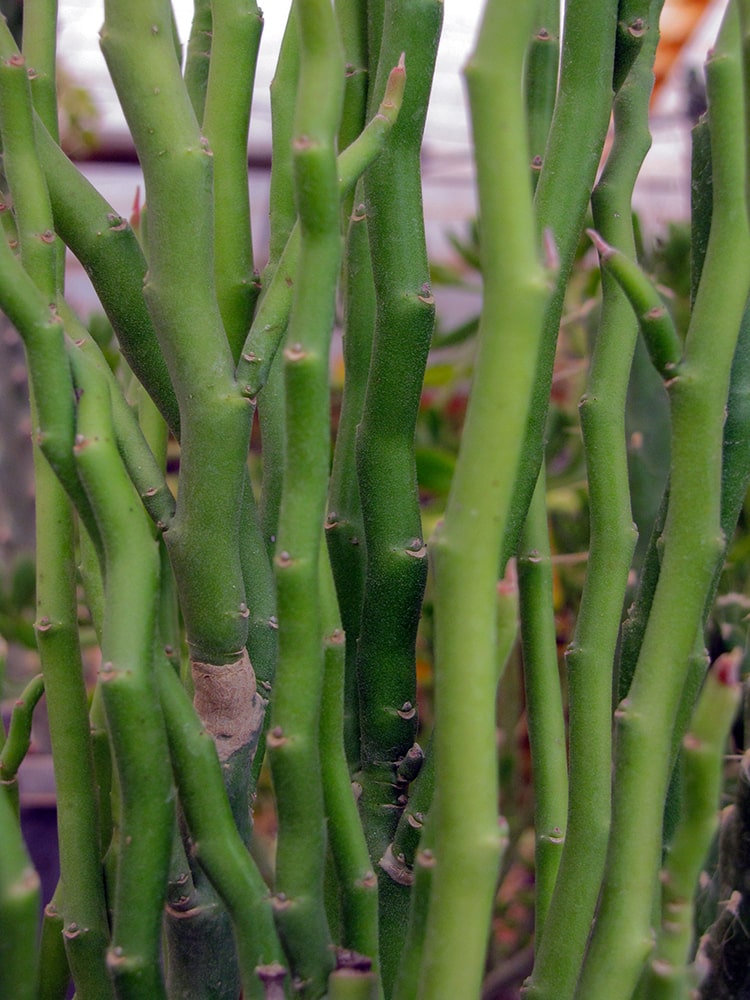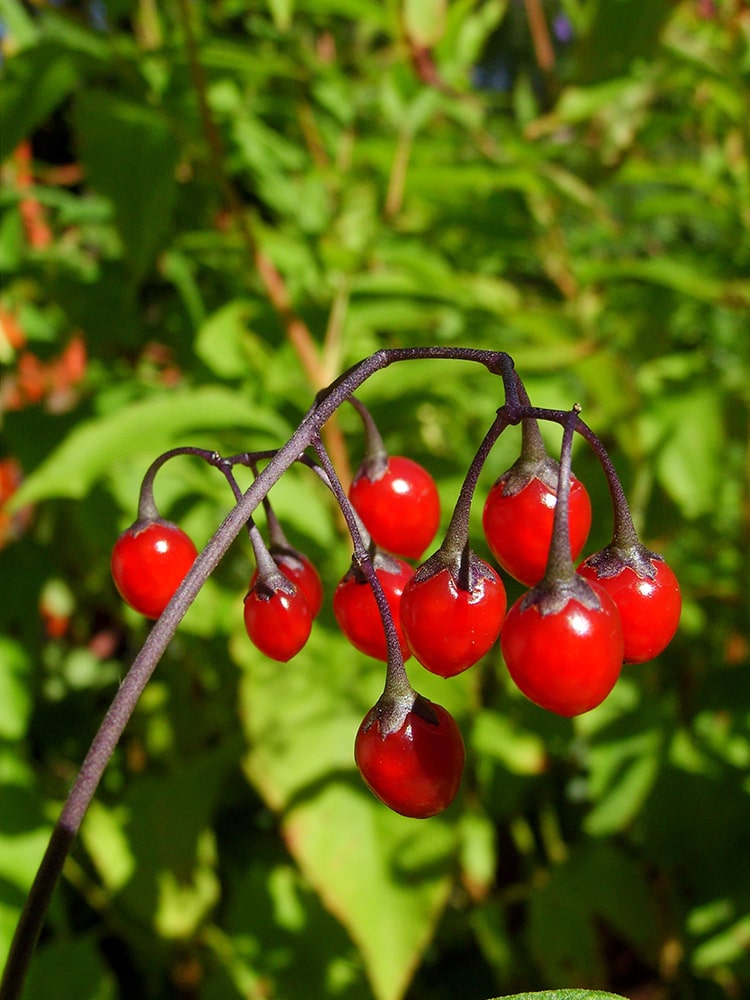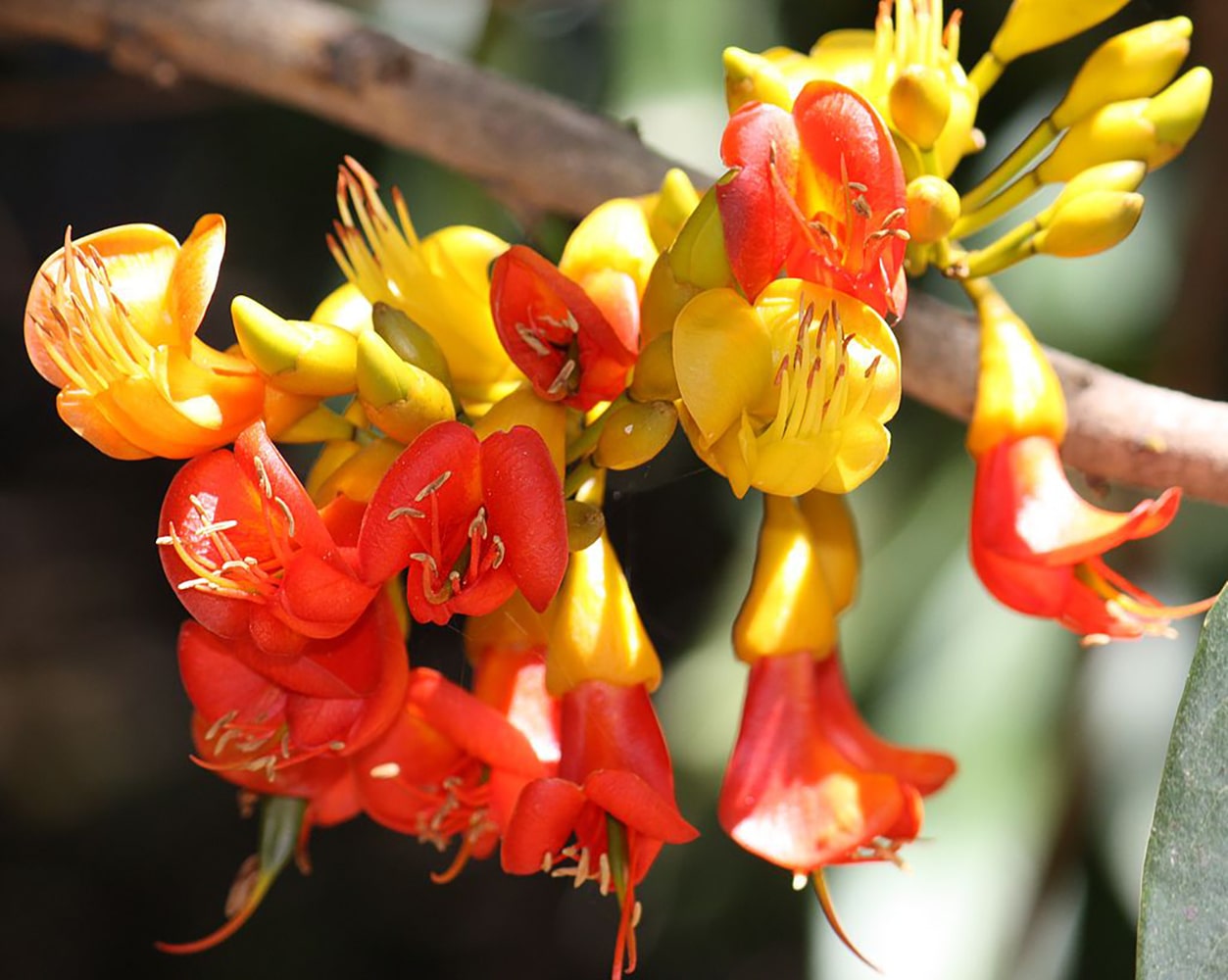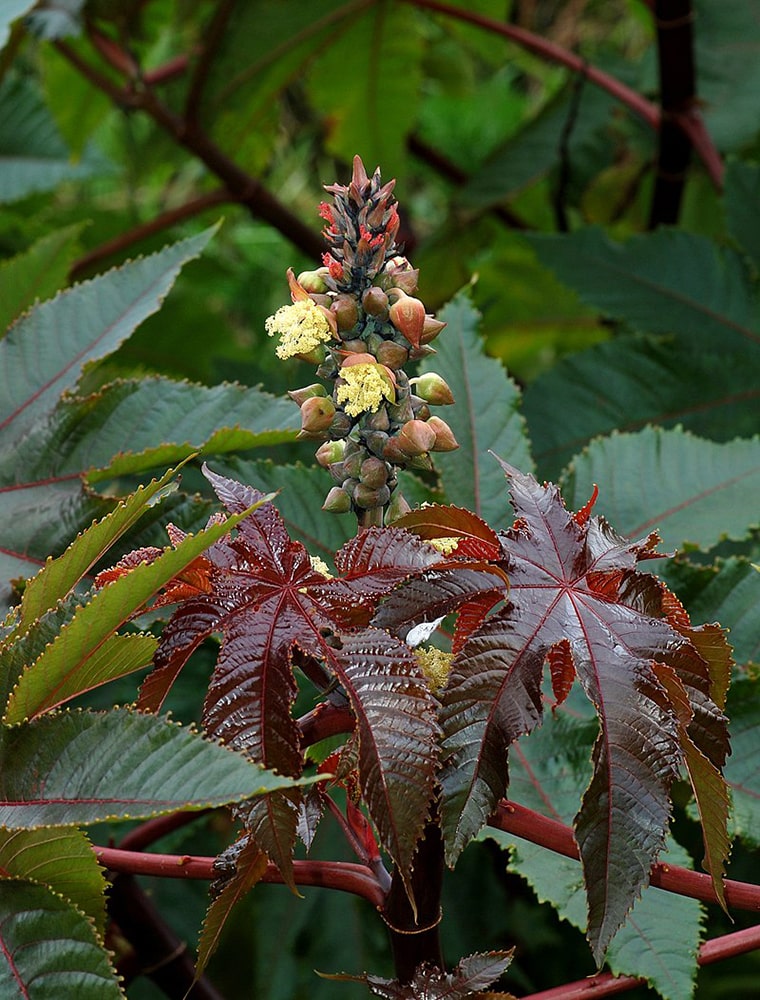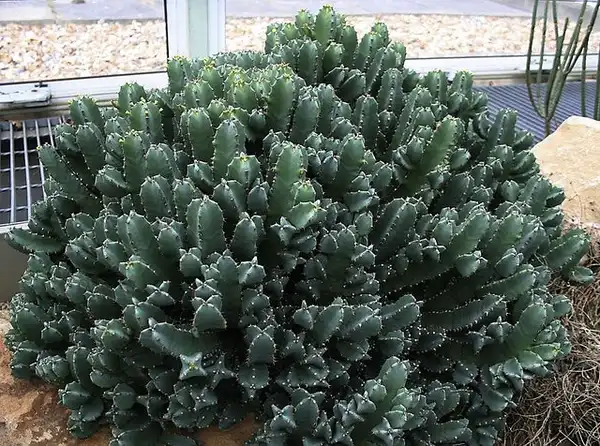
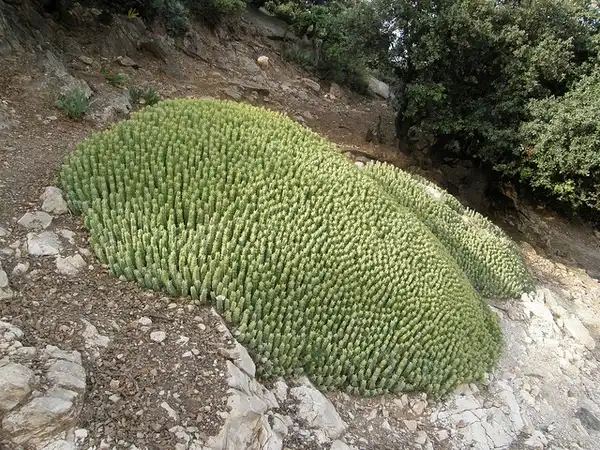
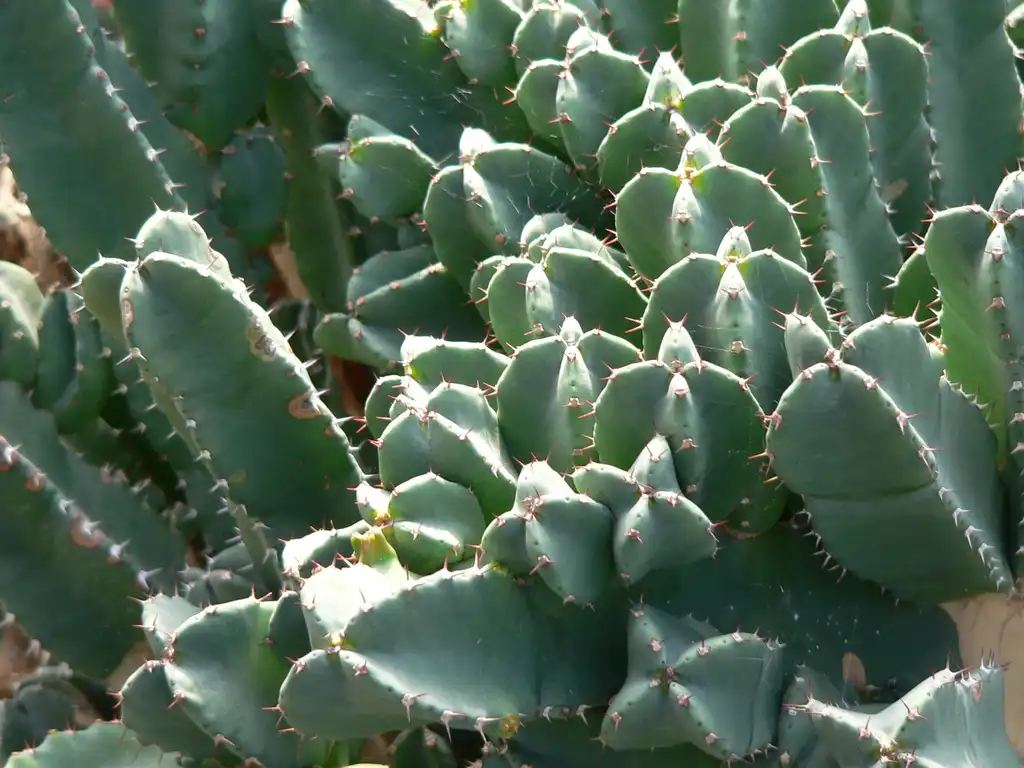
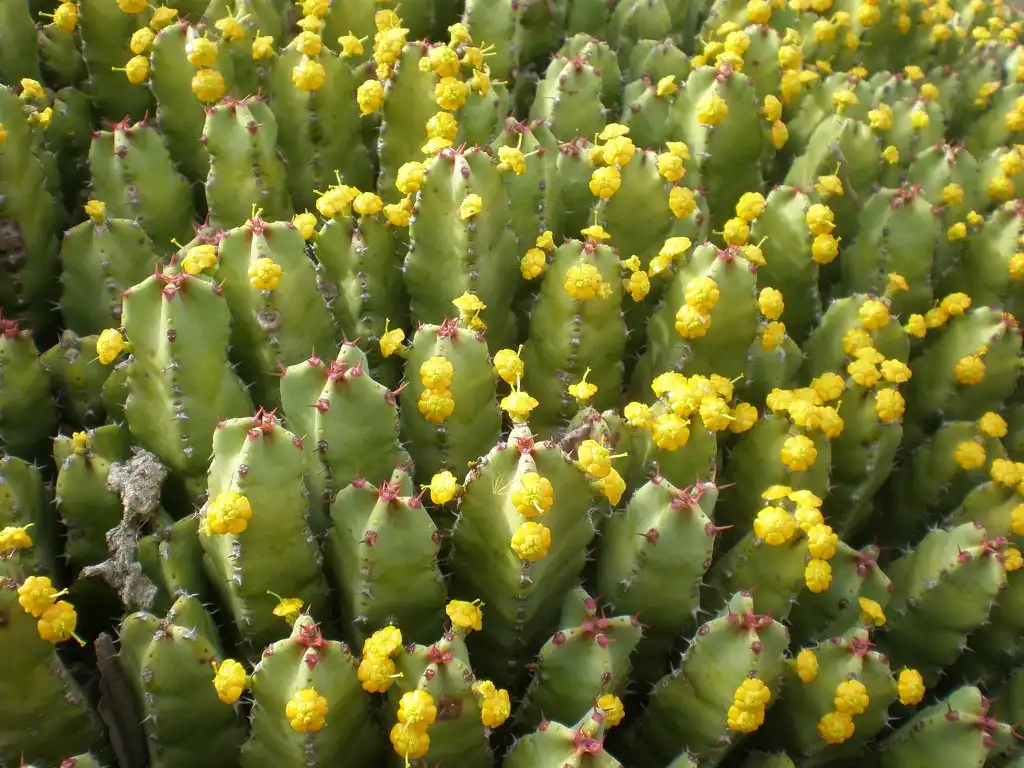
• Photo of Euphorbia resinifera (Euphorbia resiniferas)

Plant Profile: Euphorbia resinifera

Taxonomy: Euphorbia resinifera

Names

African Spurge, Euphorbium, Resin Spurge, Staghorn Coral

  • Photo of Euphorbia resinifera (Euphorbia resiniferas)

Phonetic Spelling:yoo-FOR-bee-ah res-in-IH-fer-ah

Genus:Euphorbia

Species:resinifera

Family:Euphorbiaceae

Euphorbia resinifera, commonly known as Resin Spurge, is a type of spurge characterized by its upright, succulent stems that resemble a cactus at first sight. This plant develops into a compact, slow-growing shrub that forms a cushion-like cluster, reaching heights of up to 24 inches and spreading as wide as 6 feet, 7 inches. Its upright branches are pale green, featuring four distinct ridges, short, sharp spines, and small, subtle flowers. Occasionally, it is cultivated as a houseplant.

Resin Spurge exhibits a rigid, mounding growth habit and typically lacks leaves, relying on its stems for photosynthesis. The flowers are small, uncomplicated, and bright yellow, though they rarely bloom outside their native habitat. This plant thrives in conditions ranging from partial to full sunlight and is adaptable to alkaline and saline soils, provided they are well-drained. During most of the year, it requires little to no additional watering, with extra moisture needed only during the peak summer months. Propagation can be achieved through stem cuttings, as the plant produces numerous branches and readily available segments. It is advisable to let the cuttings dry for a week before planting to allow the wounds to heal; otherwise, unsealed cuttings may rot before establishing roots.

Regarding pests and diseases, there are no known issues affecting this plant.

Euphorbia resinifera Feature Summary

Euphorbia resinifera Image Gallery

Tags

#poisonous
#houseplant
#shrub
#succulent
#cpp

Similar Plants

Euphorbia resinifera Feature Summary

Fruit
A small capsule with one seed in each cell.
Flowers
The flowers are small, simple, and bright yellow.
Gold/Yellow
< 1 inch
Stem
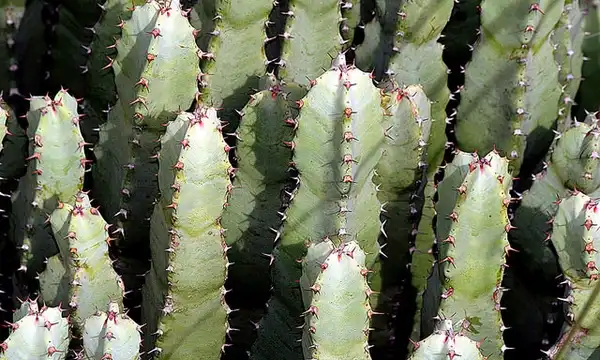
The stems are erect, succulent, superficially like a cactus, four-angled, with short but sharp pairs of 0.24 inch spines on the angles, spaced about 0.39 inches apart up the stem.
Covered with a powdery bloom (glaucous)
Straight
Poisonous to Humans
When ingested, sap from the plant can cause nausea, vomiting, or diarrhea when ingested. If your skin should come in contact with the sap, expect redness, swelling, or blisters after some delay. The plant causes only low toxicity if eaten. Skin irritation is minor and of short duration. Resin euphorbia emits a thick white milky sap known as latex when stems are cut or damaged. The latex is particularly dangerous for the eyes, skin and mucous membranes and will produce burning pain in bones and limbs, paralytic weakness in the joints, and respiratory and skin toxicity.
Diterpene esters in milky latex
Seeds
Leaves
Stems
Sap/Juice
Flowers
Bark
Fruits
Roots
Whole Plant Traits
Shrub
Poisonous
Succulent
Erect
Mounding
Dense
Ascending
Coarse
Cultural Conditions
Full sun (6 or more hours of direct sunlight a day)
Partial Shade (Direct sunlight only part of the day, 2-6 hours)
Good Drainage
Occasionally Dry
Sand
Shallow Rocky
Leaves
Landscape
Poisonous to Humans

Euphorbia resinifera Attributes

Euphorbia resinifera: Country Or Region Of Origin

Morocco
Euphorbia resinifera: Edibility

Toxic

Euphorbia resinifera: Life Cycle

Annual
Biennial
Bulb
Perennial
Woody

Euphorbia resinifera: Recommended Propagation Strategy

Division
Grafting
Layering
Leaf Cutting
Root Cutting
Seed
Stem Cutting

Euphorbia resinifera Fruit

Euphorbia resinifera: Fruit Description

A small capsule with one seed in each cell.

Euphorbia resinifera: Fruit Type

Achene
Aggregate
Berry
Capsule
Caryopsis
Drupe
Follicle
Legume
Nut
Pome
Samara
Schizocarp
Siliqua

Euphorbia resinifera Flowers

Euphorbia resinifera: Flower Description

The flowers are small, simple, and bright yellow.

Euphorbia resinifera: Flower Color

filter_vintage
Gold/Yellow

Euphorbia resinifera: Flower Inflorescence

Catkin
Corymb
Cyme
Head
Insignificant
Panicle
Raceme
Solitary
Spadix
Spike
Umbel

Euphorbia resinifera: Flower Size

1-3 inches
3-6 inches
< 1 inch
> 6 inches

Euphorbia resinifera Stem

Euphorbia resinifera: Stem Description

The stems are erect, succulent, superficially like a cactus, four-angled, with short but sharp pairs of 0.24 inch spines on the angles, spaced about 0.39 inches apart up the stem.

Euphorbia resinifera: Stem Color

grass
Green

Euphorbia resinifera: Stem Is Aromatic

No
Yes

Euphorbia resinifera: Stem Cross Section

Angular
Oval
Round
Square

Euphorbia resinifera: Stem Surface

Corky Ridges
Covered with a powdery bloom (glaucous)
Dull
Hairy (pubescent)
Polished
Smooth (glabrous)

Euphorbia resinifera: Stem Form

Straight
Zig Zags

Euphorbia resinifera Poisonous to Humans

Euphorbia resinifera: Poison Symptoms

When ingested, sap from the plant can cause nausea, vomiting, or diarrhea when ingested. If your skin should come in contact with the sap, expect redness, swelling, or blisters after some delay. The plant causes only low toxicity if eaten. Skin irritation is minor and of short duration. Resin euphorbia emits a thick white milky sap known as latex when stems are cut or damaged. The latex is particularly dangerous for the eyes, skin and mucous membranes and will produce burning pain in bones and limbs, paralytic weakness in the joints, and respiratory and skin toxicity.

Euphorbia resinifera: Poison Toxic Principle

Diterpene esters in milky latex

Euphorbia resinifera: Poison Severity

High
Low
Medium

Euphorbia resinifera: Causes Contact Dermatitis

No
Yes

Euphorbia resinifera: Poison Part

Bark
Flowers
Fruits
Leaves
Roots
Sap/Juice
Seeds
Stems

Euphorbia resinifera Whole Plant Traits

Euphorbia resinifera: Plant Type

Annual
Bulb
Carnivorous
Edible
Epiphyte
Fern
Ground Cover
Herb
Herbaceous Perennial
Houseplant
Mushroom
Native Plant
Ornamental Grasses and Sedges
Perennial
Poisonous
Rose
Shrub
Succulent
Tree
Turfgrass
Vegetable
Vine
Water Plant
Weed
Wildflower

Euphorbia resinifera: Woody Plant Leaf Characteristics

Broadleaf Evergreen
Deciduous
Needled Evergreen
Semi-evergreen

Euphorbia resinifera: Habit/Form

Arching
Ascending
Broad
Cascading
Climbing
Clumping
Columnar
Conical
Creeping
Dense
Erect
Horizontal
Irregular
Mounding
Multi-stemmed
Multi-trunked
Open
Oval
Prostrate
Pyramidal
Rounded
Spreading
Vase
Weeping

Euphorbia resinifera: Growth Rate

Slow
Medium
Rapid

Euphorbia resinifera: Texture

Fine
Medium
Coarse

Euphorbia resinifera: Appendage

Prickles
Spines
Tendrils
Thorns

Euphorbia resinifera Cultural Conditions

Euphorbia resinifera: Light

Dappled Sunlight (Shade through upper canopy all day)
Deep shade (Less than 2 hours to no direct sunlight)
Full sun (6 or more hours of direct sunlight a day)
Partial Shade (Direct sunlight only part of the day, 2-6 hours)

Euphorbia resinifera: Soil Drainage

Frequent Standing Water
Good Drainage
Moist
Occasional Flooding
Occasionally Dry
Occasionally Wet
Very Dry

Euphorbia resinifera: USDA Plant Hardiness Zone

thermostat
10a
thermostat
10b
thermostat
11a
thermostat
11b
thermostat
9a
thermostat
9b

Euphorbia resinifera: Soil Texture

Clay
High Organic Matter
Loam (Silt)
Sand
Shallow Rocky

Euphorbia resinifera Leaves

Euphorbia resinifera: Woody Plant Leaf Characteristics

Broadleaf Evergreen
Deciduous
Needled Evergreen
Semi-evergreen

Euphorbia resinifera: Leaf Color

spa
Insignificant

Euphorbia resinifera: Hairs Present

No
Yes

Euphorbia resinifera Landscape

Euphorbia resinifera: Design Feature

Accent
Barrier
Border
Flowering Tree
Foundation Planting
Hedge
Mass Planting
Screen/Privacy
Security
Shade Tree
Small groups
Small Tree
Specimen
Street Tree
Understory Tree

Euphorbia resinifera: Landscape Location

Coastal
Container
Hanging Baskets
Houseplants
Lawn
Meadow
Naturalized Area
Near Septic
Patio
Pond
Pool/Hardscape
Recreational Play Area
Riparian
Rock Wall
Slope/Bank
Small Space
Vertical Spaces
Walkways
Woodland

Euphorbia resinifera: Problems

Allelopathic
Contact Dermatitis
Frequent Disease Problems
Frequent Insect Problems
Invasive Species
Malodorous
Messy
Poisonous to Humans
Problem for Cats
Problem for Children
Problem for Dogs
Problem for Horses
Short-lived
Spines/Thorns
Weak Wood
Weedy