Galanthus nivalis: Country Or Region Of Origin
Europe and Southwestern Asia
Phonetic Spelling:gah-LAN-thus niv-AL-is
Genus:Galanthus
Species:nivalis
Family:Amaryllidaceae
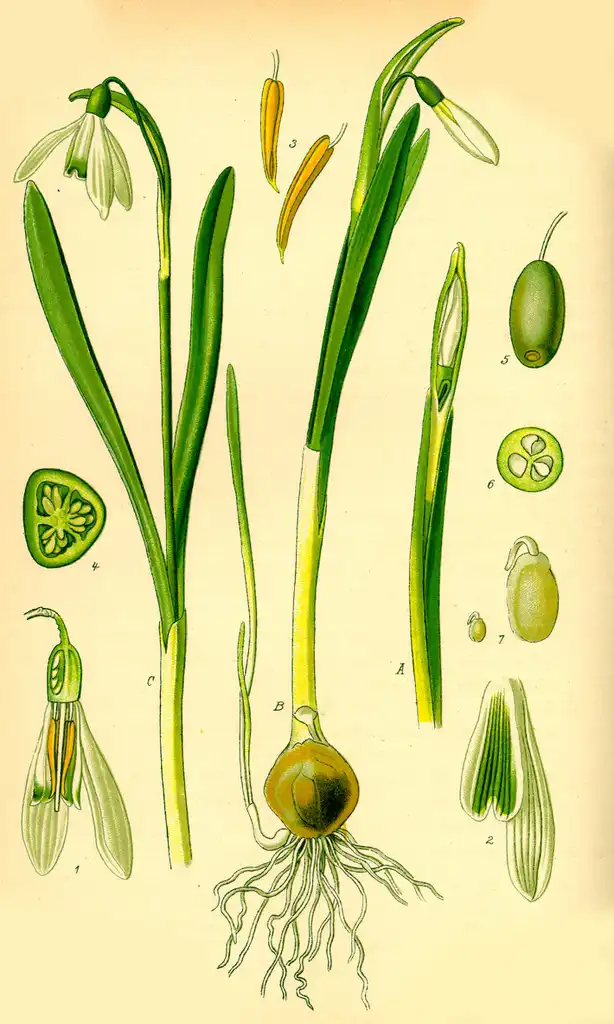
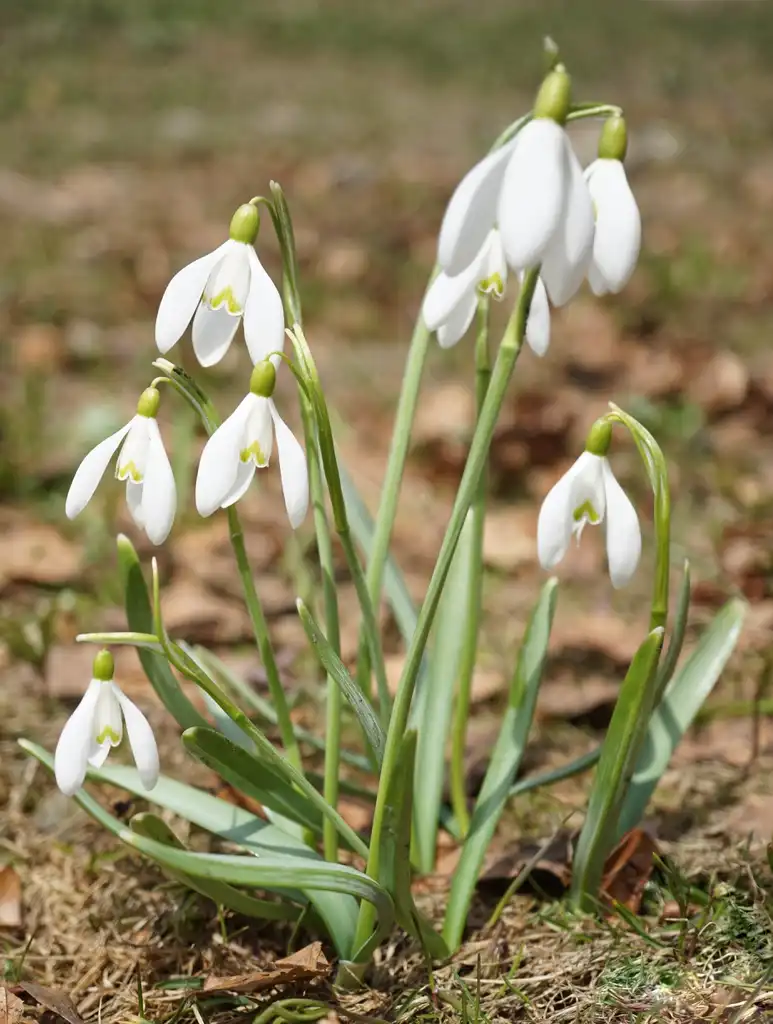
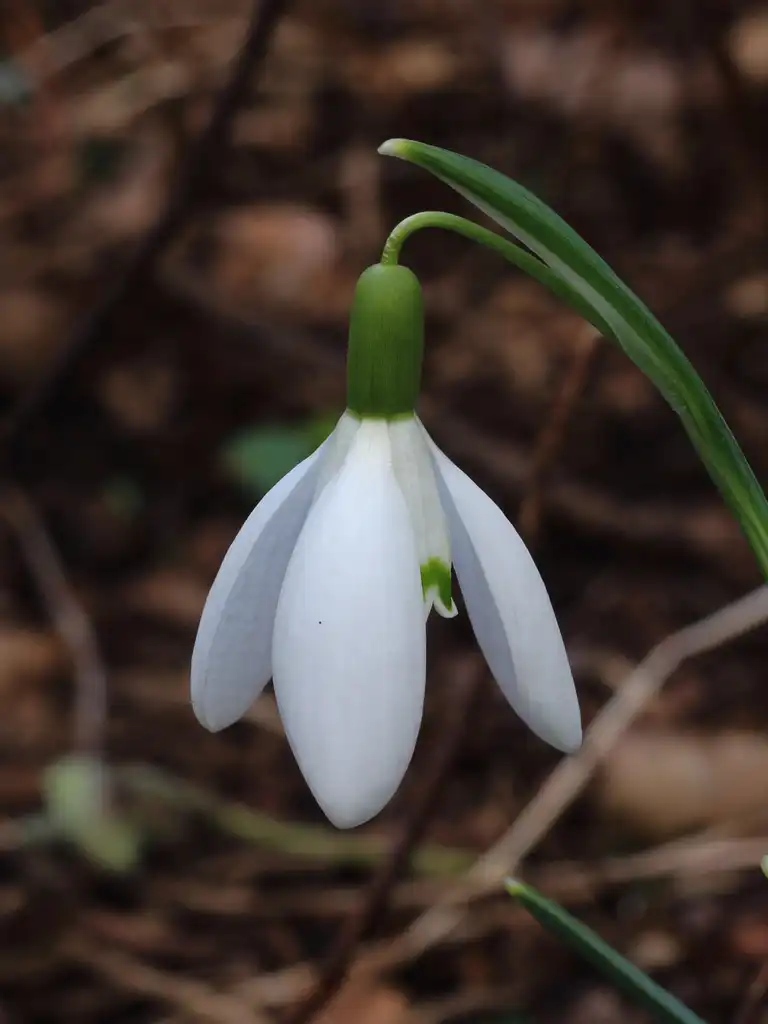
Galanthus nivalis, commonly known as the Snowdrop, is a bulbous perennial that originates from Europe and southwestern Asia. This plant features two to three strap-like basal leaves and a single flower atop a bare stem. The flower consists of six segments, predominantly white, with the inner petals displaying a distinctive green mark at their tips. Notably, the inner petals are shorter than the outer three. Snowdrops are among the first indicators of spring, blooming from late February to late March, often pushing through the snow.
These plants thrive in well-drained organic soil and prefer full sun to partial shade, requiring additional moisture when grown in less light. They flourish particularly well beneath deciduous trees, where they receive ample sunlight in early spring but are shaded as the trees leaf out. Snowdrops favor cooler climates and may have a shorter lifespan in regions south of Zone 7. They readily naturalize through self-seeding and bulb offsets, forming extensive colonies. For optimal growth, plant them 0-2 inches apart, with a density of 60 to 400 bulbs per square foot, burying them about 5 inches deep. Their rapid spread makes them a popular choice for lawns, rock gardens, borders, and flower beds.
The trade of wild G. nivalis specimens is strictly regulated to ensure their conservation; consequently, most nurseries offer plants propagated from bulb offsets, scale cuttings, or seeds.
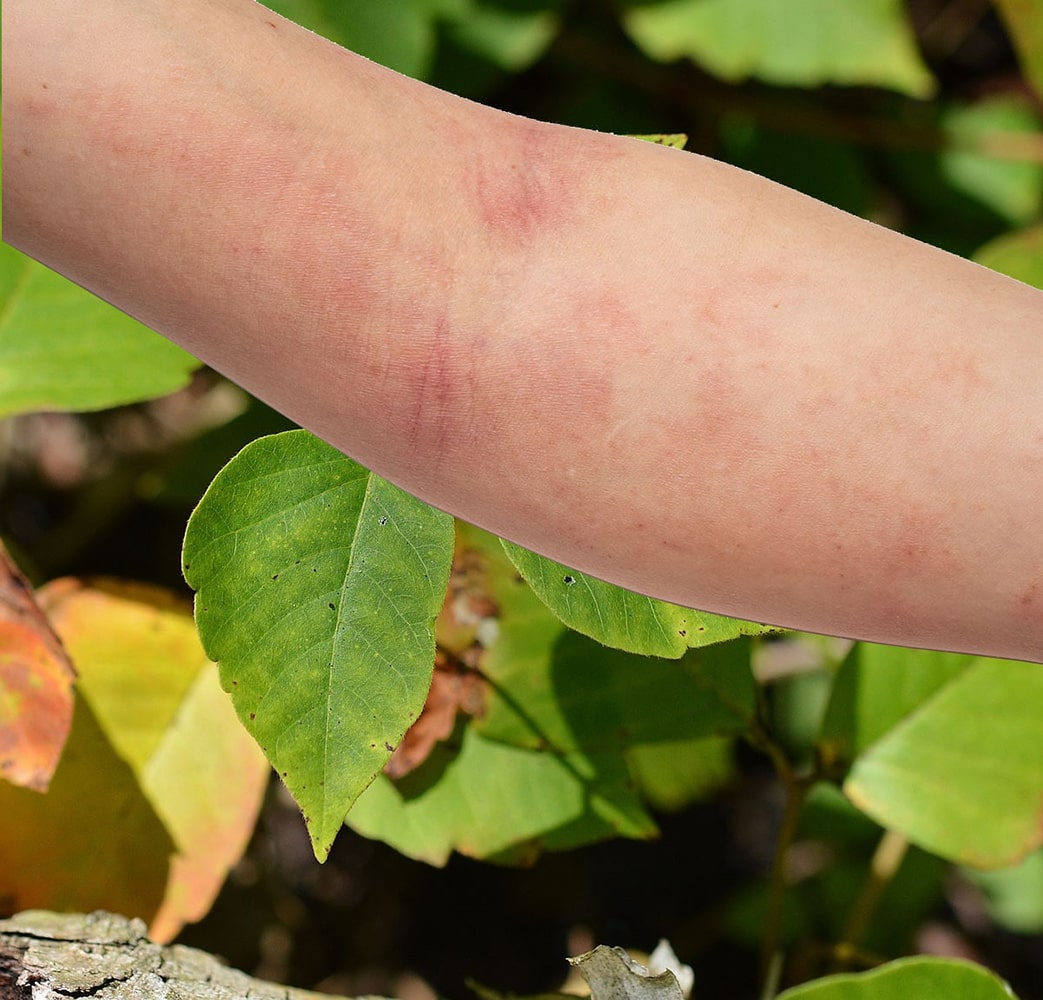
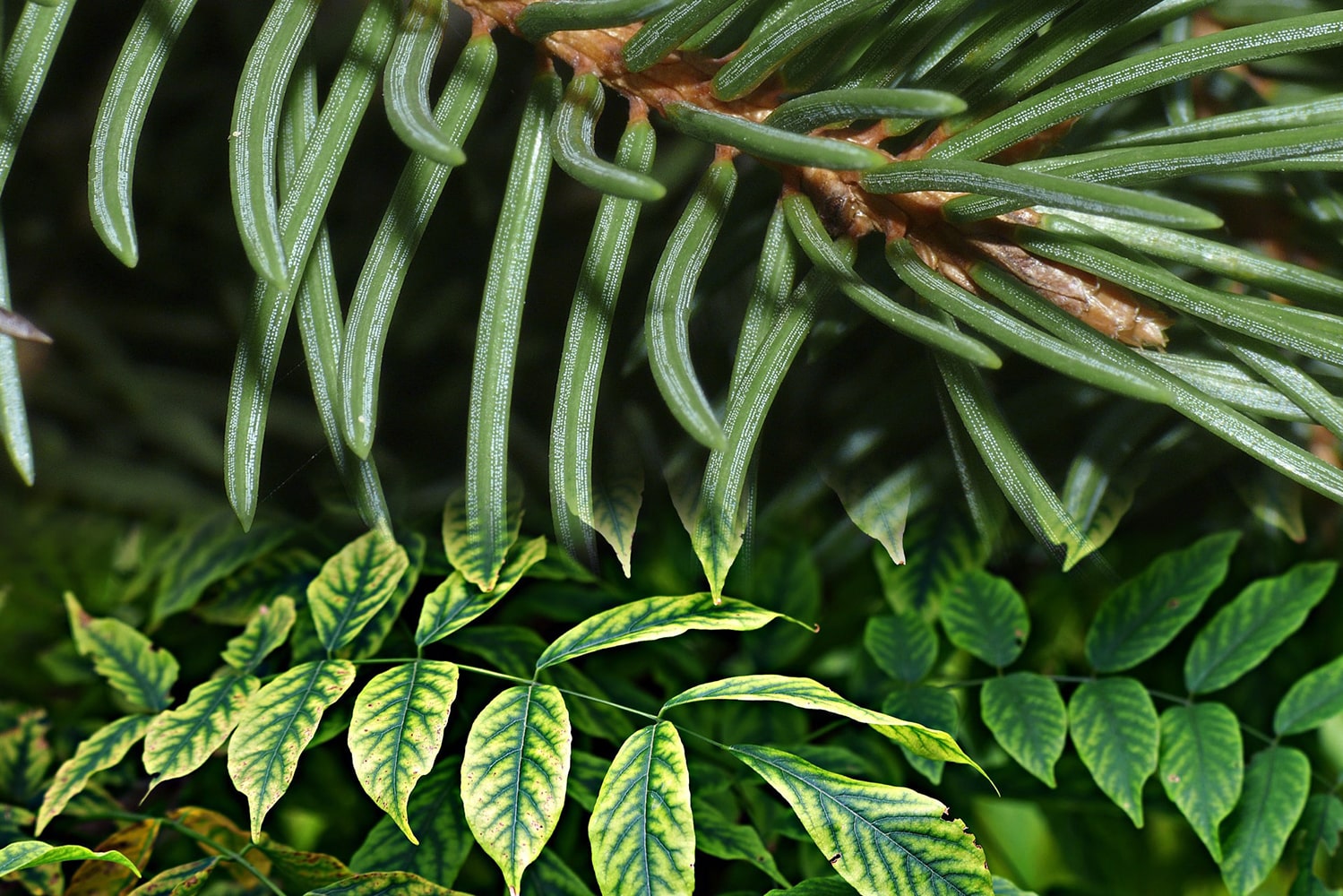
Regarding pests and diseases, Snowdrops are generally resilient, facing no significant threats. However, it is advisable to wear gloves when handling the bulbs to prevent skin irritation. Additionally, leaf scorch may occur if the soil's pH level is excessively high.
Galanthus nivalis Feature Summary
Galanthus nivalis Image Gallery