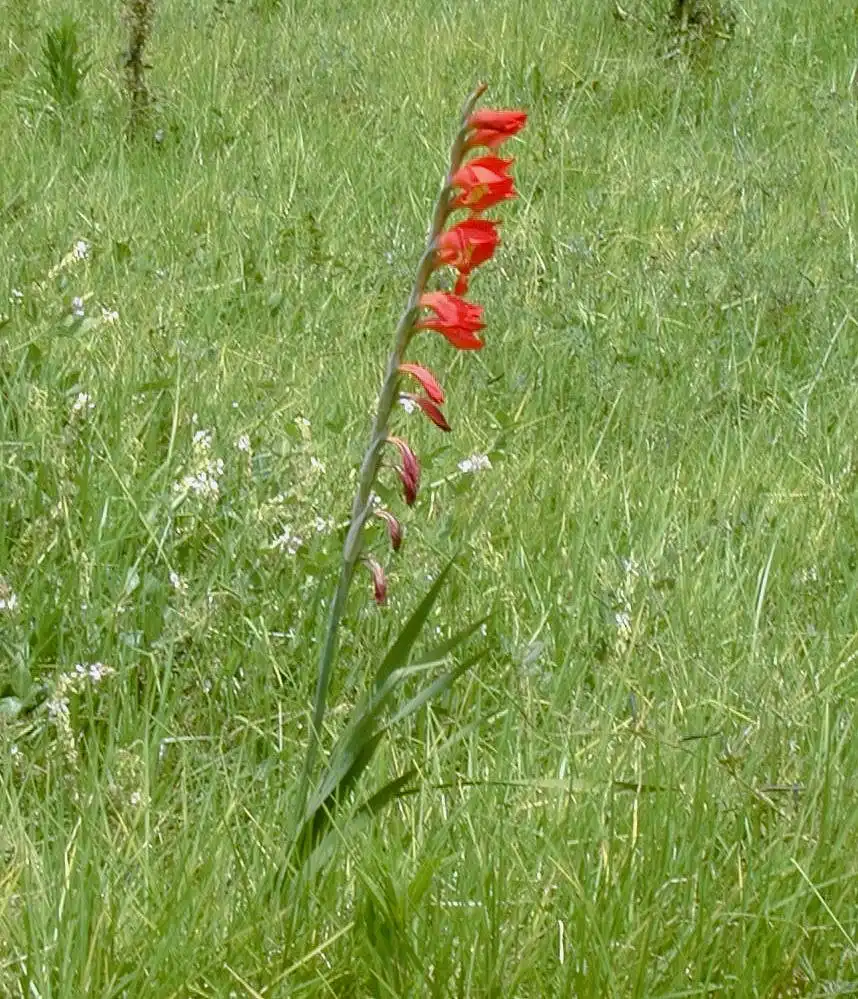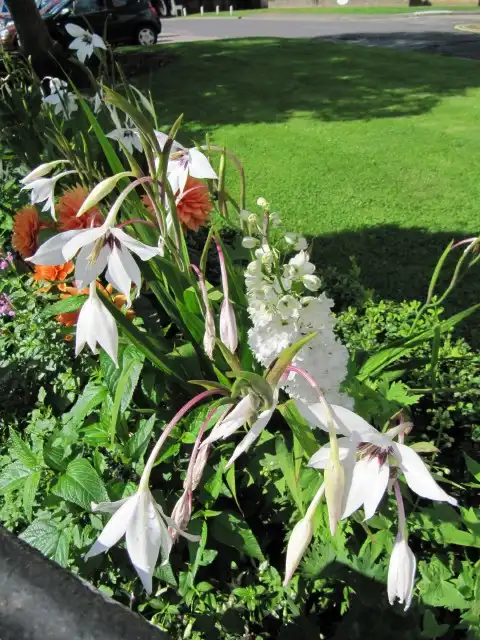
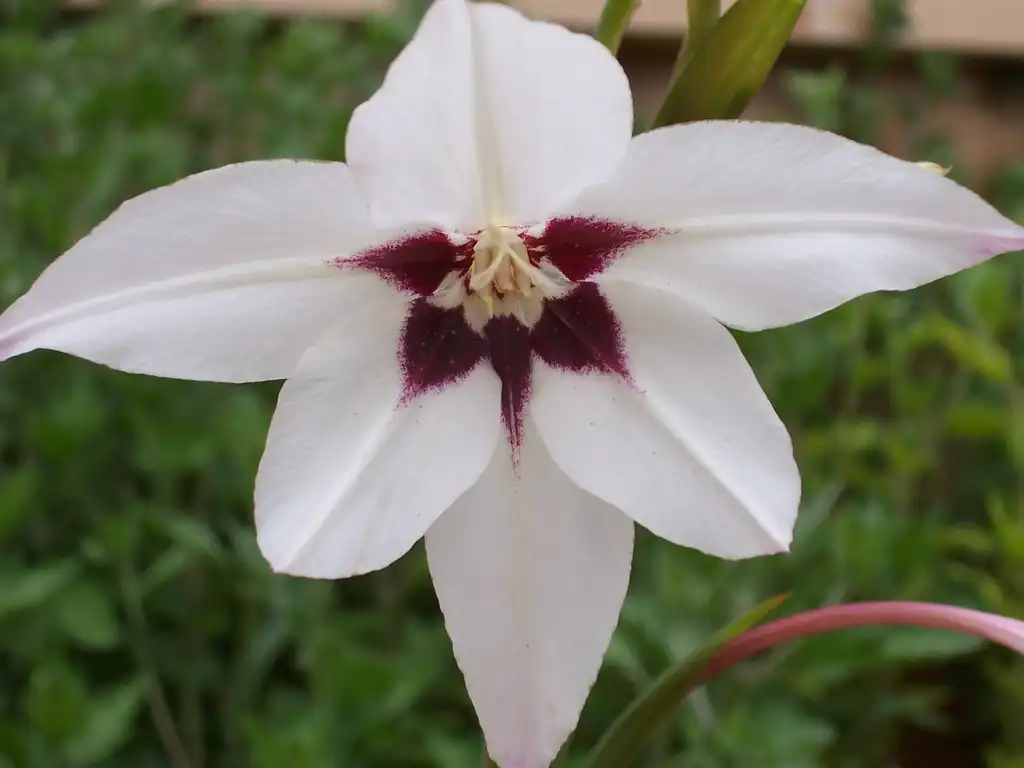
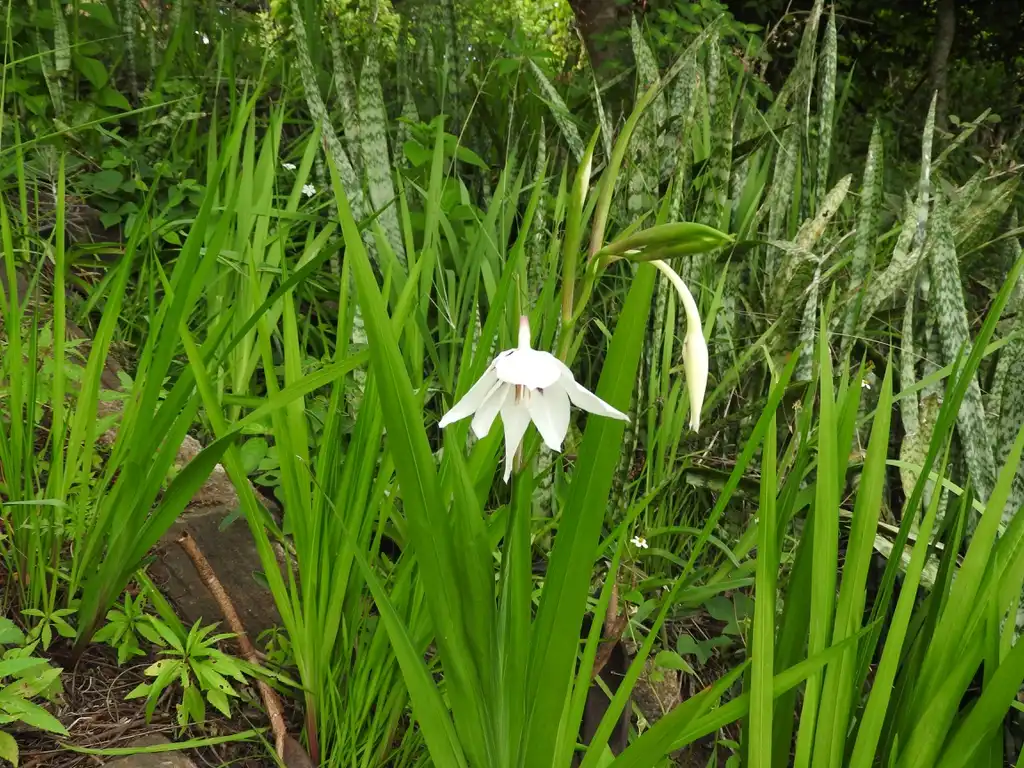
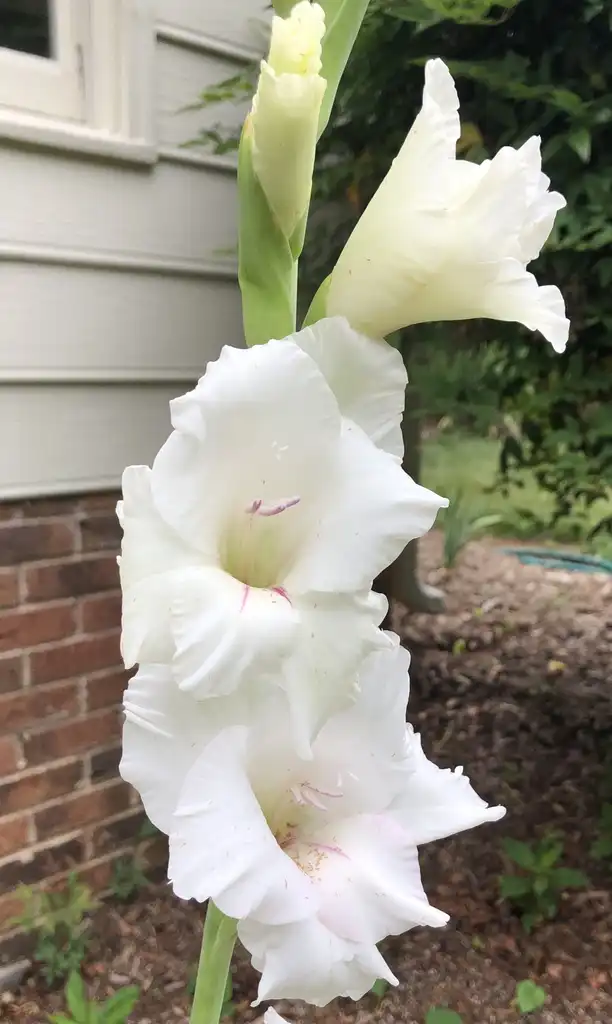
• Photo of Gladiolus (Gladioluss)

Plant Profile: Gladiolus

Taxonomy: Gladiolus

Names

Aunt Eliza Rat's Rail, Gladiola, Gladiolus, Glads, Sword Lilies, Sword Lily

  • Photo of Gladiolus (Gladioluss)

Phonetic Spelling:glad-ee-OH-lus

Genus:Gladiolus

Species:

Family:Iridaceae

Gladiolus, commonly referred to as gladiolas, is a genus of flowering bulbs characterized by their sword-like green leaves, which form upright fans about two inches long, and their funnel-shaped blossoms that bloom sequentially from the bottom to the top on slender stems during the summer and early fall. These fragrant flowers are not only beautiful but also make for stunning cut arrangements. While the bulbs can survive winter in USDA zones 7 to 10, for optimal flowering, it is advisable to treat the corms as annuals by lifting them in the fall and replanting them after the last frost of the following spring. They fall under the Tender III classification and are susceptible to damage when temperatures drop below 25 degrees Fahrenheit (2 degrees Celsius).

This genus encompasses over 300 species, showcasing a diverse palette of flower colors, including white, cream, yellow, orange, red, pink, lavender, purple, and green, which are categorized into three primary hybrid groups.

Gladiolas thrive best in full sun or afternoon shade, sheltered from strong winds, and prefer rich, well-drained soil, although they can adapt to various soil types, except for heavy clay. They flourish in moist borders. Corms can be started indoors in early spring or planted directly in the ground after the last frost. It’s important to wait until the soil warms up and to make staggered plantings to prolong the blooming period. For planting, place small corms 2 to 3 inches deep and larger corms 5 to 6 inches deep, ensuring they are spaced 5 to 8 inches apart, regardless of their size.

During the growing season, maintain consistent moisture and avoid letting the soil dry out. Once blooming has finished, reduce watering. When the foliage begins to yellow and before the first significant frost, carefully dig up the corms, trim off the stems and leaves, separate the cormels (the small corms at the base), and allow the corms and cormels to dry. Discard any that are diseased or damaged, and store the healthy ones in a dry medium in a cool, frost-free area for the winter.

**Diseases, Insects, and Other Plant Issues:**
Gladiolus are prone to various issues, including Botrytis, crown rot, rust, wilt, and mosaic virus. Keep an eye out for pests such as aphids, mealybugs, spider mites, and thrips. If thrips or fungal problems occurred during the growing season, it may be wise to treat the corms with an insecticide or fungicide before storing them.

Gladiolus Feature Summary

Gladiolus Image Gallery

Tags

#cultivars
#fragrant
#full sun tolerant
#many colors
#partial sun
#showy
#edible flowers
#corms
#cut flowers
#well-drained soil
#summer bulbs
#borders
#edible garden
#problem for cats
#ebh
#problem for dogs
#problem for horses
#ebh-g

Similar Plants

Gladiolus is often confused with:

Gladiolus Feature Summary

Attributes
Africa, Madagascar, Eurasia
Harvest corms after foliage dies in the fall. Clean carefully and store dry in mesh bags with good air circulation at 35-41 degrees F (2-5C)
Flowers (with anthers removed) are edible. Works best as a garnish or as a container for dip or spread.
Fruit
Capsules usually slightly inflated, oblong to ellipsoid or globose [rarely nearly cylindric], softly cartilaginous. Seeds usually many, broadly winged; rarely few, wingless, globose or angular; seed coat light to dark brown.
Flowers
Many cultivars with a variety of colors. Edible once anthers are removed. Bloom from late summer into early fall. Inflorescences spicate, partly to fully secund (on one side of the spike) or with flowers weakly distichous; bracts green, sometimes flushed grayish purple, unequal, outer usually exceeding inner, acute or inner forked or notched apically. Flowers zygomorphic [actinomorphic]; tepals basally connate into tube, variously colored, usually with contrasting markings comprising nectar guide on outer tepals, usually unequal, dorsal tepal largest, arched to hooded over stamens, outer 3 tepals narrower; perianth tube obliquely funnel-shaped to cylindric; stamens usually unilateral; anthers usually parallel; style usually arching over stamens, dividing into 3 filiform branches, these distally expanded.
Pink
Purple/Lavender
White
Gold/Yellow
Red/Burgundy
Green
Orange
Cream/Tan
Fragrant
Good Cut
Showy
Edible
6 petals/rays
Tepals
1-3 inches
Leaves
Leaves 1–9; blade lanceolate to linear, plane or margins and/or midribs variously raised and thickened (then H- or X-shaped in cross section), or evidently terete, midribs and margins much thickened, grooved; grooves 4, narrow, longitudinal.
Linear
Lanceolate
> 6 inches
1-3 inches
Stem
Stems are simple or branched.
Straight
Poisonous to Humans
Salivation, vomiting, drooling, lethargy, diarrhea. Highest concentration in corms (bulbs)
Leaves
Roots
Whole Plant Traits
Edible
Bulb
Erect
Dense
Clumping
Cultural Conditions
Full sun (6 or more hours of direct sunlight a day)
Partial Shade (Direct sunlight only part of the day, 2-6 hours)
Good Drainage
Moist
Occasionally Wet
Less than 12 inches
Coastal
Piedmont
7a
7b
8b
8a
9a
9b
10a
10b
High Organic Matter
Loam (Silt)
Landscape
Cutting Garden
Edible Garden
Problem for Cats
Problem for Dogs
Problem for Horses

Gladiolus Attributes

Gladiolus: Country Or Region Of Origin

Africa, Madagascar, Eurasia
Gladiolus: Bulb Storage

Harvest corms after foliage dies in the fall. Clean carefully and store dry in mesh bags with good air circulation at 35-41 degrees F (2-5C)
Gladiolus: Edibility

Flowers (with anthers removed) are edible. Works best as a garnish or as a container for dip or spread.

Gladiolus: Life Cycle

Annual
Biennial
Bulb
Perennial
Woody

Gladiolus: Recommended Propagation Strategy

Division
Grafting
Layering
Leaf Cutting
Root Cutting
Seed
Stem Cutting

Gladiolus Fruit

Gladiolus: Fruit Description

Capsules usually slightly inflated, oblong to ellipsoid or globose [rarely nearly cylindric], softly cartilaginous. Seeds usually many, broadly winged; rarely few, wingless, globose or angular; seed coat light to dark brown.

Gladiolus: Fruit Type

Achene
Aggregate
Berry
Capsule
Caryopsis
Drupe
Follicle
Legume
Nut
Pome
Samara
Schizocarp
Siliqua

Gladiolus Flowers

Gladiolus: Flower Description

Many cultivars with a variety of colors. Edible once anthers are removed. Bloom from late summer into early fall. Inflorescences spicate, partly to fully secund (on one side of the spike) or with flowers weakly distichous; bracts green, sometimes flushed grayish purple, unequal, outer usually exceeding inner, acute or inner forked or notched apically. Flowers zygomorphic [actinomorphic]; tepals basally connate into tube, variously colored, usually with contrasting markings comprising nectar guide on outer tepals, usually unequal, dorsal tepal largest, arched to hooded over stamens, outer 3 tepals narrower; perianth tube obliquely funnel-shaped to cylindric; stamens usually unilateral; anthers usually parallel; style usually arching over stamens, dividing into 3 filiform branches, these distally expanded.

Gladiolus: Flower Color

filter_vintage
Cream/Tan
filter_vintage
Gold/Yellow
filter_vintage
Green
filter_vintage
Orange
filter_vintage
Pink
filter_vintage
Purple/Lavender
filter_vintage
Red/Burgundy
filter_vintage
White

Gladiolus: Flower Inflorescence

Catkin
Corymb
Cyme
Head
Insignificant
Panicle
Raceme
Solitary
Spadix
Spike
Umbel

Gladiolus: Flower Value To Gardener

Edible
Fragrant
Good Cut
Good Dried
Long Bloom Season
Long-lasting
Showy

Gladiolus: Flower Bloom Time

Winter
Spring
Summer
Fall

Gladiolus: Flower Petals

2-3 rays/petals
4-5 petals/rays
6 petals/rays
7 - 20 petals/rays
asymmetrical petals
Bracts
Colored Sepals
fused petals
more than 20 petals/rays
Tepals

Gladiolus: Flower Shape

Bell
Cross
Crown
Cup
Dome
Funnel
Irregular
Lipped
Radial
Saucer
Star
Trumpet
Tubular
Urn
Wheel

Gladiolus: Flower Size

1-3 inches
3-6 inches
< 1 inch
> 6 inches

Gladiolus Leaves

Gladiolus: Leaf Description

Leaves 1–9; blade lanceolate to linear, plane or margins and/or midribs variously raised and thickened (then H- or X-shaped in cross section), or evidently terete, midribs and margins much thickened, grooved; grooves 4, narrow, longitudinal.

Gladiolus: Leaf Color

spa
Green

Gladiolus: Leaf Type

Compound (Pinnately , Bipinnately, Palmately)
Fronds
Needles
Sheath
Simple

Gladiolus: Leaf Arrangement

Alternate
Opposite
Other/more complex
Rosulate
Whorled

Gladiolus: Leaf Shape

Acicular
Auriculate
Cordate
Cuneate
Deltoid
Elliptical
Filiform
Lanceolate
Linear
Oblanceolate
Oblong
Obovate
Obtuse
Orbicular
Ovate
Palmasect
Palmatifid
Peltate
Pinnatifid
Pinnatisect
Reniform
Rhomboidal
Spatulate
Subcordate
Subulate

Gladiolus: Leaf Margin

Crenate
Crenulate
Dentate
Denticulate
Doubly Crenate
Doubly Dentate
Doubly Serrate
Entire
Lobed
Serrate
Sinuate
Undulate

Gladiolus: Hairs Present

No
Yes

Gladiolus: Leaf Length

< 1 inch
1-3 inches
3-6 inches
> 6 inches

Gladiolus: Leaf Width

< 1 inch
1-3 inches
3-6 inches
> 6 inches

Gladiolus Stem

Gladiolus: Stem Description

Stems are simple or branched.

Gladiolus: Stem Is Aromatic

No
Yes

Gladiolus: Stem Form

Straight
Zig Zags

Gladiolus Poisonous to Humans

Gladiolus: Poison Symptoms

Salivation, vomiting, drooling, lethargy, diarrhea. Highest concentration in corms (bulbs)

Gladiolus: Poison Toxic Principle

Unknown

Gladiolus: Poison Severity

High
Low
Medium

Gladiolus: Causes Contact Dermatitis

No
Yes

Gladiolus: Poison Part

Bark
Flowers
Fruits
Leaves
Roots
Sap/Juice
Seeds
Stems

Gladiolus Whole Plant Traits

Gladiolus: Plant Type

Annual
Bulb
Carnivorous
Edible
Epiphyte
Fern
Ground Cover
Herb
Herbaceous Perennial
Houseplant
Mushroom
Native Plant
Ornamental Grasses and Sedges
Perennial
Poisonous
Rose
Shrub
Succulent
Tree
Turfgrass
Vegetable
Vine
Water Plant
Weed
Wildflower

Gladiolus: Habit/Form

Arching
Ascending
Broad
Cascading
Climbing
Clumping
Columnar
Conical
Creeping
Dense
Erect
Horizontal
Irregular
Mounding
Multi-stemmed
Multi-trunked
Open
Oval
Prostrate
Pyramidal
Rounded
Spreading
Vase
Weeping

Gladiolus: Growth Rate

Slow
Medium
Rapid

Gladiolus: Maintenance

Low
Medium
High

Gladiolus Cultural Conditions

Gladiolus: Light

Dappled Sunlight (Shade through upper canopy all day)
Deep shade (Less than 2 hours to no direct sunlight)
Full sun (6 or more hours of direct sunlight a day)
Partial Shade (Direct sunlight only part of the day, 2-6 hours)

Gladiolus: Soil Drainage

Frequent Standing Water
Good Drainage
Moist
Occasional Flooding
Occasionally Dry
Occasionally Wet
Very Dry

Gladiolus: Available Space To Plant

12 inches-3 feet
12-24 feet
24-60 feet
3 feet-6 feet
6-feet-12 feet
Less than 12 inches
more than 60 feet

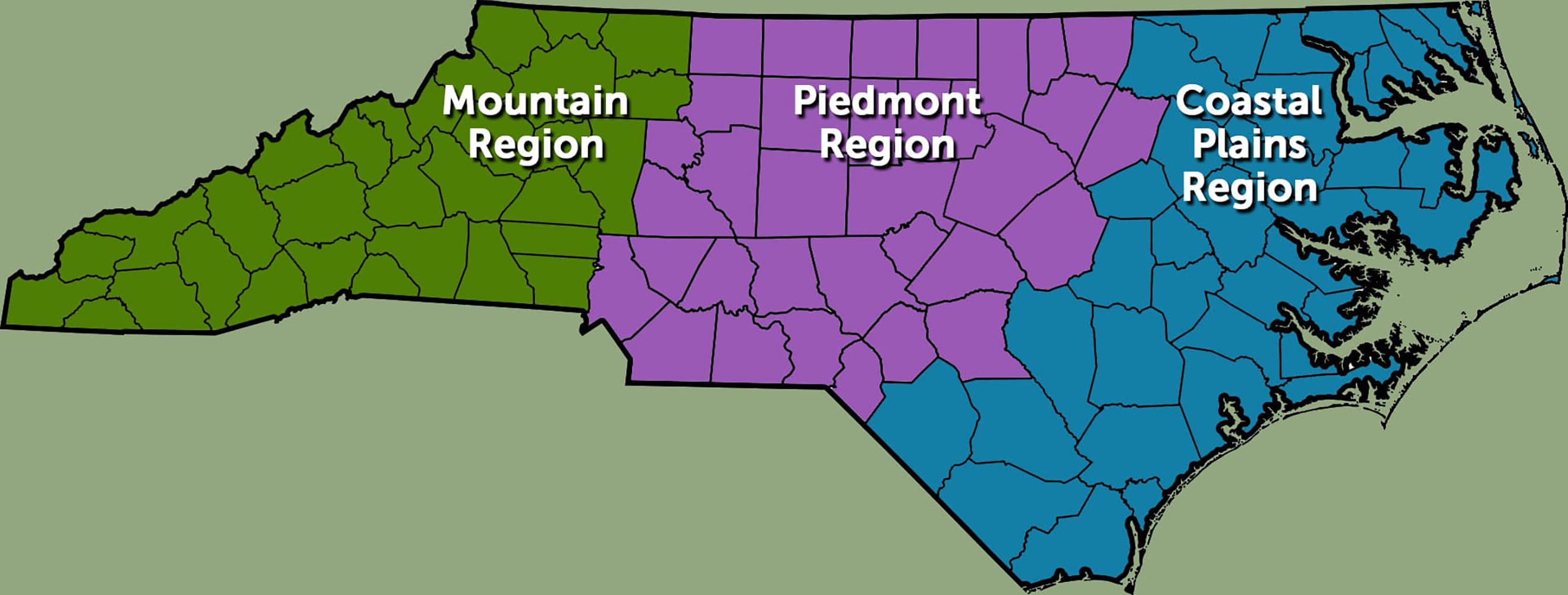
Gladiolus: NC Region

Coastal
Mountains
Piedmont

Gladiolus: USDA Plant Hardiness Zone

thermostat
10a
thermostat
10b
thermostat
7a
thermostat
7b
thermostat
8a
thermostat
8b
thermostat
9a
thermostat
9b

Gladiolus: Soil Texture

Clay
High Organic Matter
Loam (Silt)
Sand
Shallow Rocky

Gladiolus Landscape

Gladiolus: Landscape Theme

Asian Garden
Butterfly Garden
Children's Garden
Cottage Garden
Cutting Garden
Drought Tolerant Garden
Edible Garden
English Garden
Fairy Garden
Garden for the Blind
Native Garden
Nighttime Garden
Pollinator Garden
Rain Garden
Rock Garden
Shade Garden
Water Garden
Winter Garden

Gladiolus: Design Feature

Accent
Barrier
Border
Flowering Tree
Foundation Planting
Hedge
Mass Planting
Screen/Privacy
Security
Shade Tree
Small groups
Small Tree
Specimen
Street Tree
Understory Tree

Gladiolus: Landscape Location

Coastal
Container
Hanging Baskets
Houseplants
Lawn
Meadow
Naturalized Area
Near Septic
Patio
Pond
Pool/Hardscape
Recreational Play Area
Riparian
Rock Wall
Slope/Bank
Small Space
Vertical Spaces
Walkways
Woodland

Gladiolus: Attracts

Bats
Bees
Butterflies
Frogs
Hummingbirds
Moths
Pollinators
Predatory Insects
Reptiles
Small Mammals
Songbirds
Specialized Bees

Gladiolus: Problems

Allelopathic
Contact Dermatitis
Frequent Disease Problems
Frequent Insect Problems
Invasive Species
Malodorous
Messy
Poisonous to Humans
Problem for Cats
Problem for Children
Problem for Dogs
Problem for Horses
Short-lived
Spines/Thorns
Weak Wood
Weedy