Iris jacquinii: Country Or Region Of Origin
Northwest Spain, Pyrenees and France
Phonetic Spelling:EYE-ris jak-KIN-ee-eye
Genus:Iris
Species:jacquinii
Family:Iridaceae
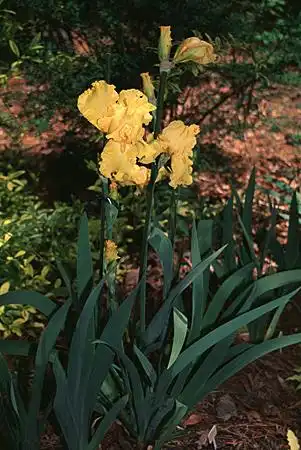
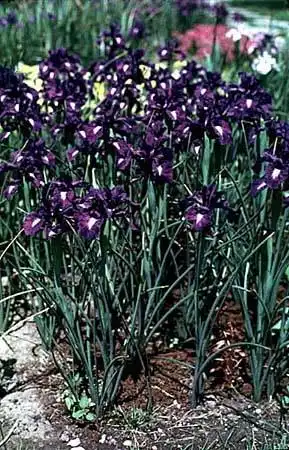
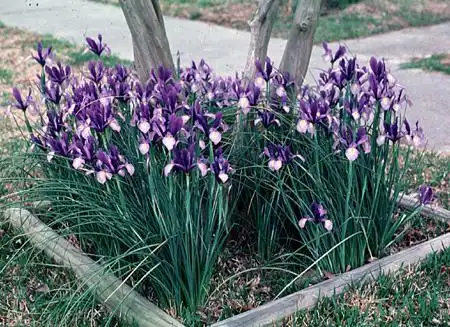
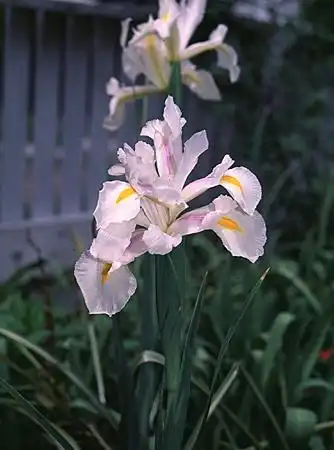
Often referred to as the English Iris due to its popularity in England and its export to the Low Countries, this species actually originates from Spain and France and has been known by several different names over time. It is one of the larger, more visually striking irises, featuring three upright inner petals that measure between 1.5 to 2 inches in height and can reach up to 2 inches in width. The three outer petals, or falls, are also substantial, measuring 2 to 3 inches long and 1 to 1.5 inches wide. The blooms, which can be bluish-purple, pale blue, white, or even yellow, appear atop 15-inch stalks, typically in clusters of two to three during late June. The plant's strap-like leaves can grow up to 20 inches tall, spreading out at the base in a fan shape.
As a perennial herbaceous plant, it thrives in full sunlight and requires consistent moisture throughout the growing season. This iris is ideal for planting in flower beds, borders, and rock gardens. It can be naturalized by allowing its bulbs to spread and should be propagated through division. When planting, the bulbs should be buried 8 inches deep and spaced 6 inches apart, with a recommended density of 6 to 10 bulbs per square foot.
For further details on Iris, please refer to additional resources.
Iris jacquinii Feature Summary