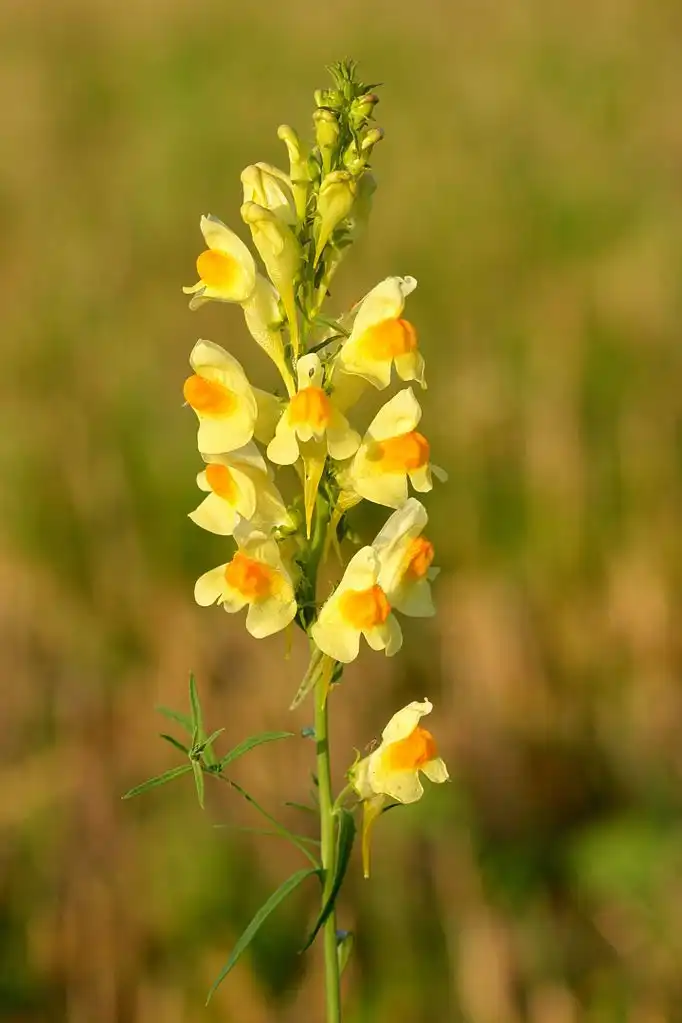
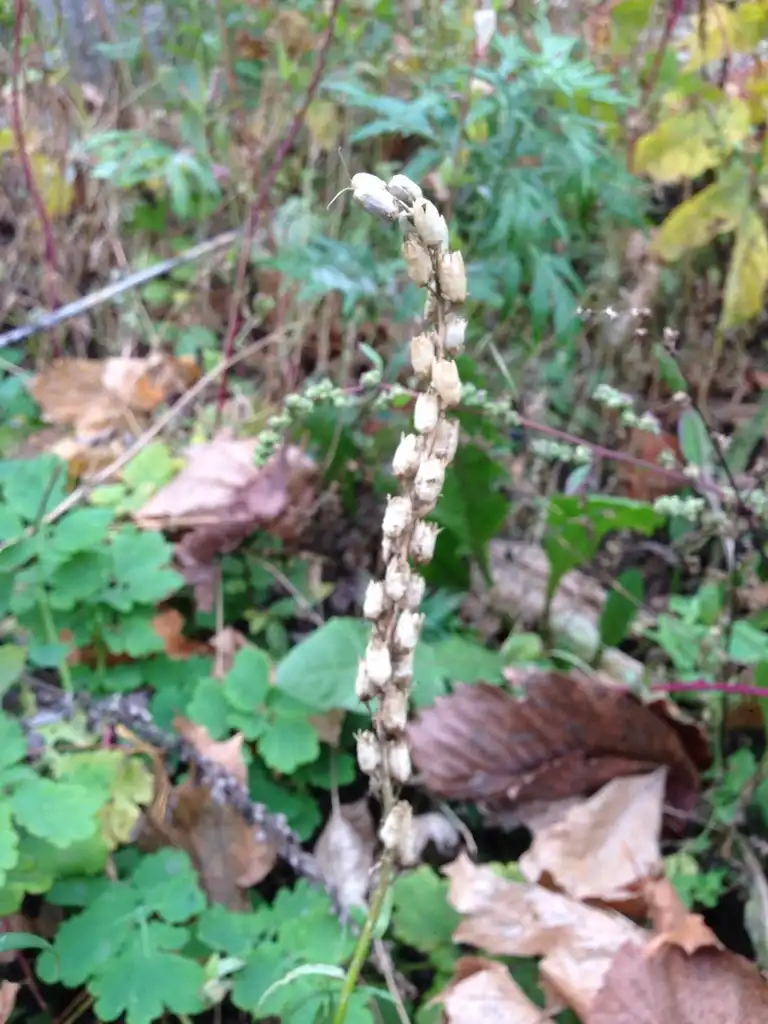
• Photo of Linaria vulgaris (Linaria vulgariss)

Plant Profile: Linaria vulgaris

Taxonomy: Linaria vulgaris

Names

Butter and Eggs, Jacob's Ladder, Wild Snapdragon, Yellow Toadflax

  • Photo of Linaria vulgaris (Linaria vulgariss)

Phonetic Spelling:lin-AR-ee-uh vul-GAIR-iss

Genus:Linaria

Species:vulgaris

Family:Plantaginaceae

Yellow Toadflax, a perennial member of the plantain family, originates from Eurasia but has established itself in North America, where it has become invasive in various western states. In North Carolina, it thrives particularly in the Piedmont and mountainous regions. This plant propagates through creeping rhizomes and seeds, with roots that can extend up to 10 feet, leading to the formation of new daughter plants along the way. From mid-summer to mid-fall, it showcases vibrant yellow and orange blooms that resemble snapdragons, appearing in dense clusters. Its leaves are slender and exhibit a blue or gray-green hue, attracting bees to its flowers.

Yellow Toadflax often appears in disturbed environments, such as along roadsides, railways, and areas affected by fires, as well as in fields, pastures, and the edges of forests. Due to its resilience and tendency to spread, it is challenging to eliminate and is not advisable for inclusion in home gardens.

Linaria vulgaris Feature Summary

Linaria vulgaris Image Gallery

Tags

#perennial
#wildflower garden

Similar Plants

Linaria vulgaris Feature Summary

Attributes
Used as a yellow dye for centuries in Germany
Perennial
Fruit
Brown, globe-shaped capsules.
Brown/Copper
Flowers
1 in. yellow flower with an orange throat on a long, crowded raceme; thin drooping spurs at base; slight medicinal odor; upper lip is two-lobed
Gold/Yellow
Orange
1-3 inches
Leaves
1 to 2.5 in. slender gray-green leaves, pointed at each end; upper leaves are alternate and lower leaves are whorled
Green
Gray/Silver
1-3 inches
Whole Plant Traits
Wildflower
Erect
Spreading
Prostrate
Landscape
Butterflies

Linaria vulgaris Attributes

Linaria vulgaris: Uses (Ethnobotany)

Used as a yellow dye for centuries in Germany
Linaria vulgaris: Country Or Region Of Origin

Temp. Eurasia

Linaria vulgaris: Life Cycle

Annual
Biennial
Bulb
Perennial
Woody

Linaria vulgaris Fruit

Linaria vulgaris: Fruit Description

Brown, globe-shaped capsules.

Linaria vulgaris: Fruit Type

Achene
Aggregate
Berry
Capsule
Caryopsis
Drupe
Follicle
Legume
Nut
Pome
Samara
Schizocarp
Siliqua

Linaria vulgaris: Fruit Color

grass
Brown/Copper

Linaria vulgaris Flowers

Linaria vulgaris: Flower Description

1 in. yellow flower with an orange throat on a long, crowded raceme; thin drooping spurs at base; slight medicinal odor; upper lip is two-lobed

Linaria vulgaris: Flower Color

filter_vintage
Gold/Yellow
filter_vintage
Orange

Linaria vulgaris: Flower Inflorescence

Catkin
Corymb
Cyme
Head
Insignificant
Panicle
Raceme
Solitary
Spadix
Spike
Umbel

Linaria vulgaris: Flower Bloom Time

Winter
Spring
Summer
Fall

Linaria vulgaris: Flower Shape

Bell
Cross
Crown
Cup
Dome
Funnel
Irregular
Lipped
Radial
Saucer
Star
Trumpet
Tubular
Urn
Wheel

Linaria vulgaris: Flower Size

1-3 inches
3-6 inches
< 1 inch
> 6 inches

Linaria vulgaris Leaves

Linaria vulgaris: Leaf Description

1 to 2.5 in. slender gray-green leaves, pointed at each end; upper leaves are alternate and lower leaves are whorled

Linaria vulgaris: Leaf Color

spa
Gray/Silver
spa
Green

Linaria vulgaris: Leaf Shape

Acicular
Auriculate
Cordate
Cuneate
Deltoid
Elliptical
Filiform
Lanceolate
Linear
Oblanceolate
Oblong
Obovate
Obtuse
Orbicular
Ovate
Palmasect
Palmatifid
Peltate
Pinnatifid
Pinnatisect
Reniform
Rhomboidal
Spatulate
Subcordate
Subulate

Linaria vulgaris: Hairs Present

No
Yes

Linaria vulgaris: Leaf Length

< 1 inch
1-3 inches
3-6 inches
> 6 inches

Linaria vulgaris Whole Plant Traits

Linaria vulgaris: Plant Type

Annual
Bulb
Carnivorous
Edible
Epiphyte
Fern
Ground Cover
Herb
Herbaceous Perennial
Houseplant
Mushroom
Native Plant
Ornamental Grasses and Sedges
Perennial
Poisonous
Rose
Shrub
Succulent
Tree
Turfgrass
Vegetable
Vine
Water Plant
Weed
Wildflower

Linaria vulgaris: Habit/Form

Arching
Ascending
Broad
Cascading
Climbing
Clumping
Columnar
Conical
Creeping
Dense
Erect
Horizontal
Irregular
Mounding
Multi-stemmed
Multi-trunked
Open
Oval
Prostrate
Pyramidal
Rounded
Spreading
Vase
Weeping

Linaria vulgaris: Growth Rate

Slow
Medium
Rapid

Linaria vulgaris Stem

Linaria vulgaris: Stem Is Aromatic

No
Yes

Linaria vulgaris Landscape

Linaria vulgaris: Attracts

Bats
Bees
Butterflies
Frogs
Hummingbirds
Moths
Pollinators
Predatory Insects
Reptiles
Small Mammals
Songbirds
Specialized Bees