Maianthemum canadense: Country Or Region Of Origin
Subarctic America to N. Central & E. Central U.S.A
Phonetic Spelling:may-an-the-mum ka-na-DEN-see
Genus:Maianthemum
Species:canadense
Family:Liliaceae
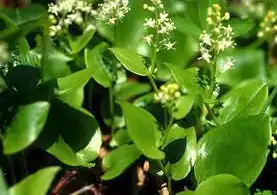
This wildflower thrives in its natural environment, often forming colonies in deciduous or mixed forests, along the edges of bogs, and in various wetland regions. Typically measuring between 3 to 5 inches in height, it propagates through rhizomes or creeping roots. As a perennial, it produces small white flowers in May and June, which later transform into fragrant red berries by fall, attracting birds and small mammals like chipmunks. The plant's short stem is notable for its occasional angular bends rather than a straight form. Preferring cool temperatures and moist soil, it flourishes in shaded or partially shaded areas.
Commonly referred to as Canada Mayflower or False lily-of-the-valley, this plant requires rich, damp soil for optimal growth. It thrives in mossy, wooded settings and can adapt to a range of soil pH levels, from acidic to nearly neutral. Typically found in moist forests, particularly at higher elevations, it is important to note that the name False lily-of-the-valley stems from its resemblance to the non-native Lily of the Valley (Convallaria majalis), which is a completely different species. Additionally, this plant exhibits some tolerance to heat.
Maianthemum canadense Feature Summary
Maianthemum canadense Image Gallery