Malus domestica 'Golden Delicious': Country Or Region Of Origin
United States, W. Virginia
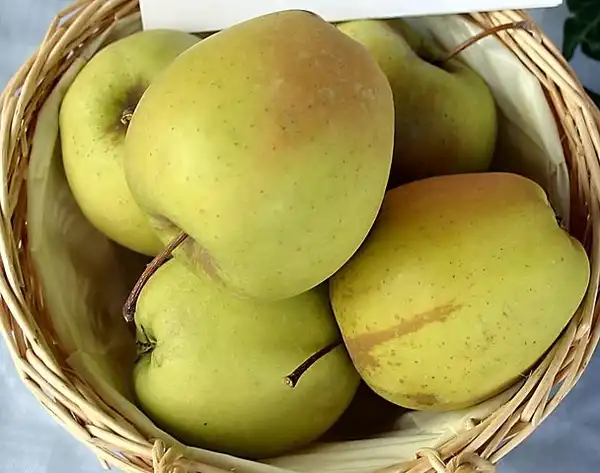
Phonetic Spelling:MAY-lus doh-MESS-tik-a
Genus:Malus
Species:domestica
Family:Rosaceae
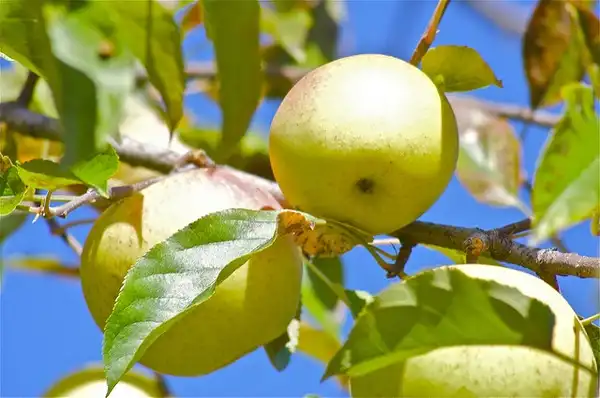
The Golden Delicious apple tree is known for its prolific fruit production, growing fruit from the trunk outward. To prevent biennial bearing and fruit drop, it is essential to thin the apples. While this variety is considered self-pollinating, having a pollinator nearby can enhance fruit yield. Suitable pollinators include Red Delicious, Honeycrisp, and Empire apple trees.
The tree's size varies depending on whether you choose a dwarf variety, which reaches 8 to 10 feet, or a semi-dwarf variety, which grows to 12 to 15 feet. This cultivar is resilient, tolerating both heat and cold conditions.
In North Carolina, the Golden Delicious apples typically ripen around mid-September. They are known for their sweet, crisp flavor, making them ideal for both baking and fresh consumption, which contributes to their popularity among home orchard enthusiasts.
For optimal growth, the tree thrives in average to loamy soil, with enriched soil leading to improved fruit production. A slightly acidic soil pH, ideally between 5.0 and 6.8, is most beneficial for apple trees.
Full sunlight and good air circulation around the tree and its branches are crucial for fruit production. It is advisable to avoid planting the tree near taller structures or trees that could cast shade for several hours each day. In summary, ensuring adequate sunlight, air movement, and well-drained soil contributes to a healthy and fruitful tree.
However, this tree is susceptible to apple scab and may also face challenges from powdery mildew, apple canker, and honey (root) fungus.
For more information on Malus domestica, please refer to additional resources.
Malus domestica 'Golden Delicious' Feature Summary
Malus domestica 'Golden Delicious' Image Gallery