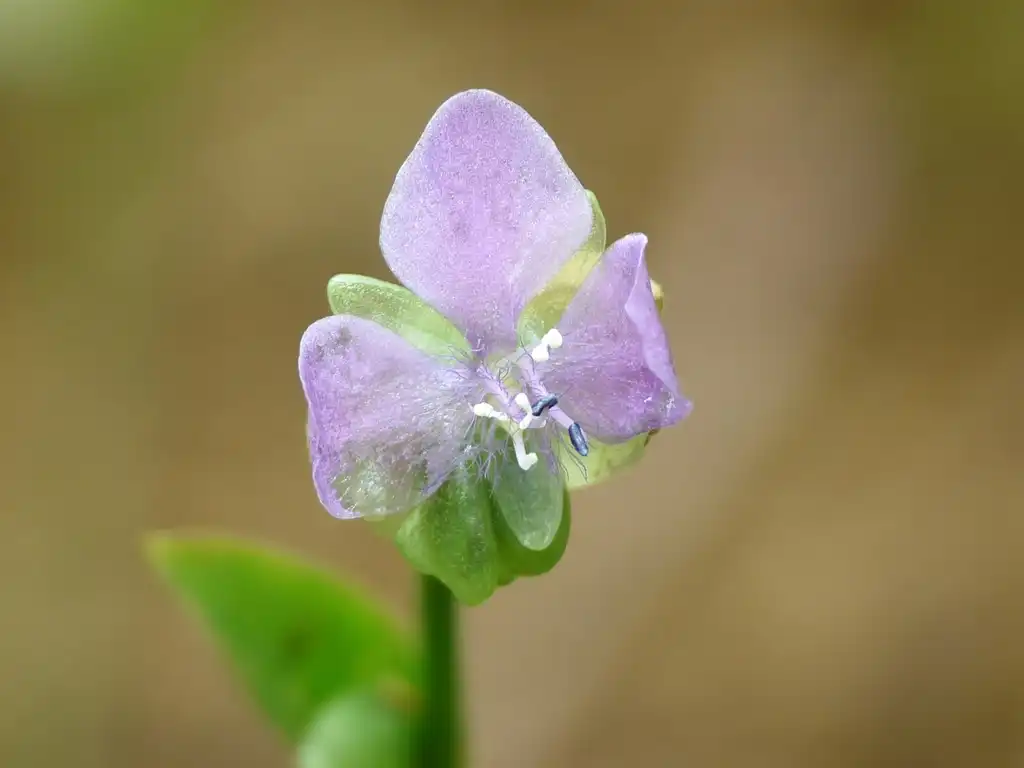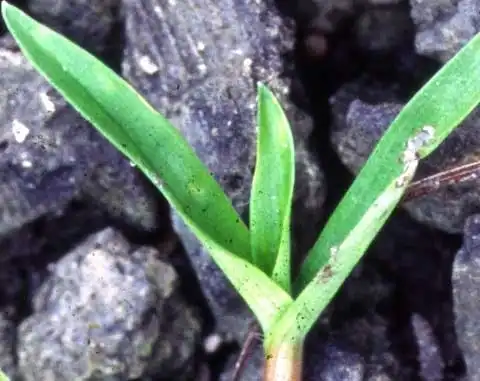
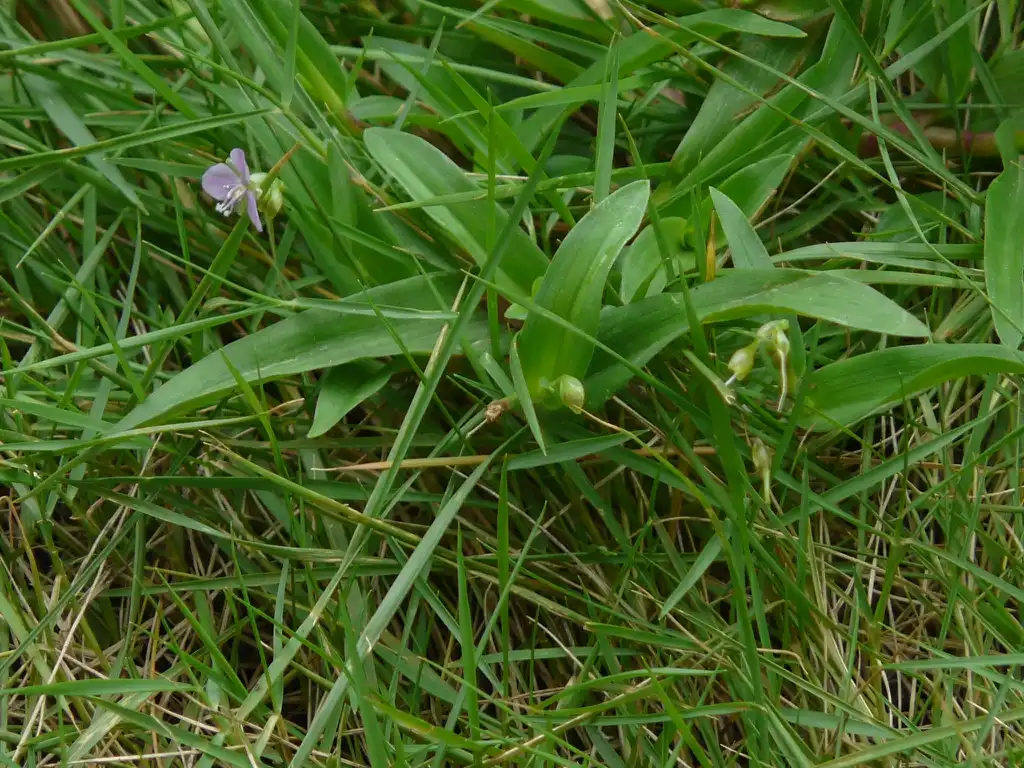
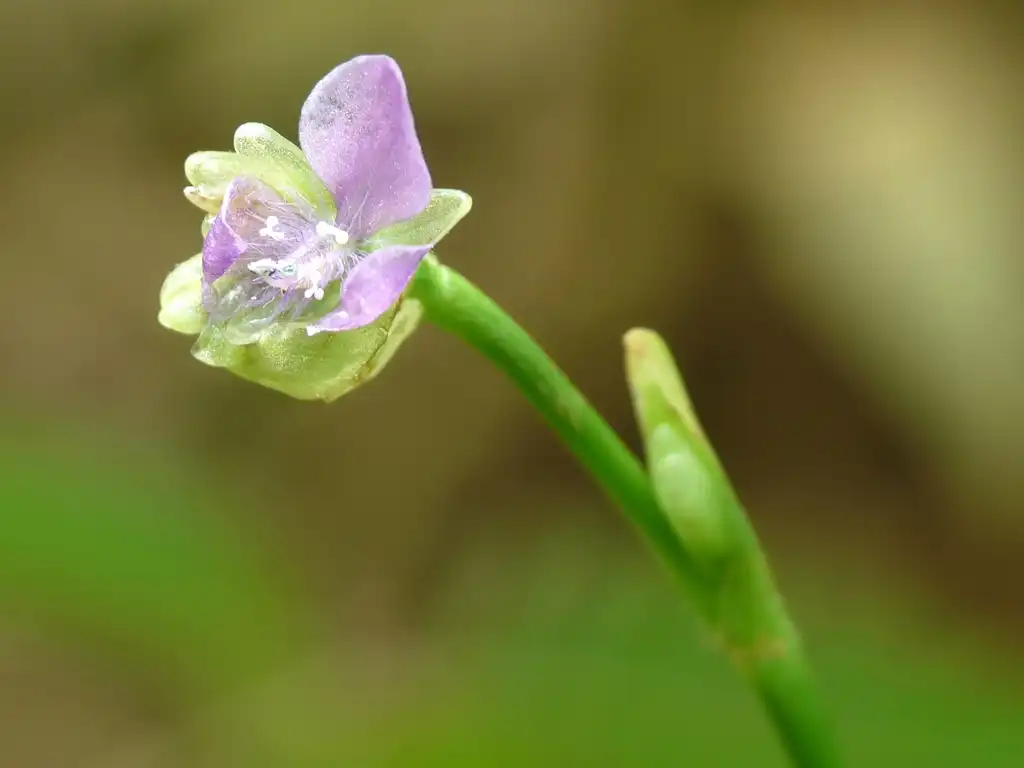
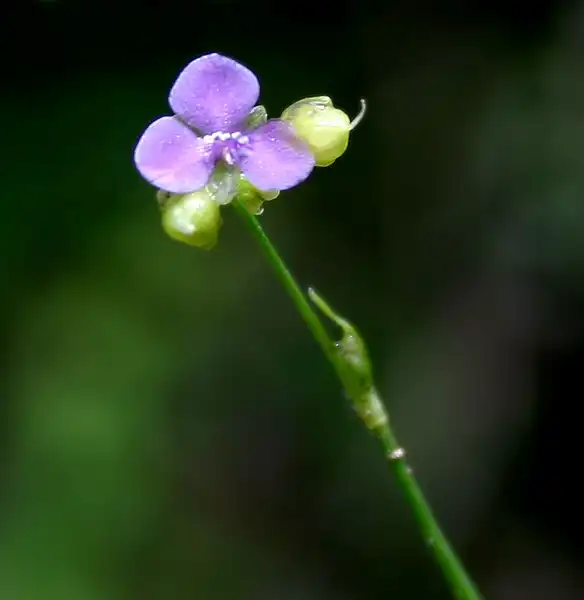
• Photo of Murdannia nudiflora (Murdannia nudifloras)

Plant Profile: Murdannia nudiflora

Taxonomy: Murdannia nudiflora

Names

Doveweed

  • Photo of Murdannia nudiflora (Murdannia nudifloras)

Phonetic Spelling:mur-DAN-ee-uh noo-dee-FLOR-uh

Genus:Murdannia

Species:nudiflora

Family:Commelinaceae

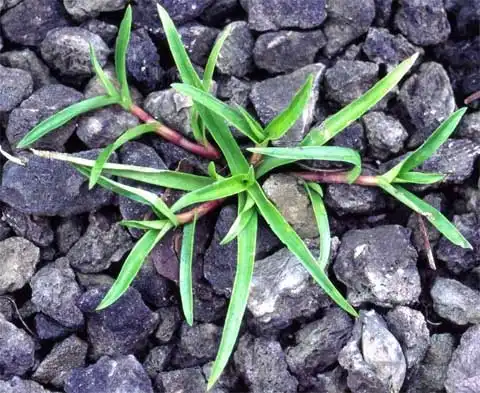
Doveweed (Commelinaceae), a sprawling summer annual belonging to the spiderwort family, often creates a thick mat on the ground. This weed thrives in hot, humid conditions, with most seedlings sprouting between late May and August. After flowering, the plants typically die off following the first frost. In their early stages, doveweed can be mistaken for grass due to its appearance. The stems are fleshy, trailing, and capable of rooting at the nodes. Doveweed reproduces solely through seeds, allowing it to generate multiple generations within a single growing season. Infestations usually start in areas like drainage ditches or low-lying spots where water accumulates. Controlling doveweed can be quite challenging. A related species, marsh dayflower (Murdannia keisak), is less prevalent but inhabits similar environments. Marsh dayflower is generally larger and more robust than doveweed, and its sepals are comparable in length to its petals, unlike doveweed, where the sepals are shorter. There are few herbicides effective against this weed.

Murdannia nudiflora Feature Summary

Murdannia nudiflora Image Gallery

Tags

#purple
#annual
#resistant
#weed
#purple flowers
#weedy
#seeds
#spreading
#mat
#ditches
#poor soils tolerant

Similar Plants

Murdannia nudiflora Feature Summary

Flowers
Purplish 3-petalled flowers occur in loose groups from mid-summer to fall
Purple/Lavender
2-3 rays/petals
Leaves
Leaves are 2 to 5 inches long, about 1/4 to 1/2 inch wide, pointed, with parallel veins; alternate and clasping the stem with a sheath. When very young, this plant can easily be confused with a grass
Lanceolate
3-6 inches
< 1 inch
Whole Plant Traits
Cultural Conditions
Full sun (6 or more hours of direct sunlight a day)
Good Drainage
Occasionally Wet
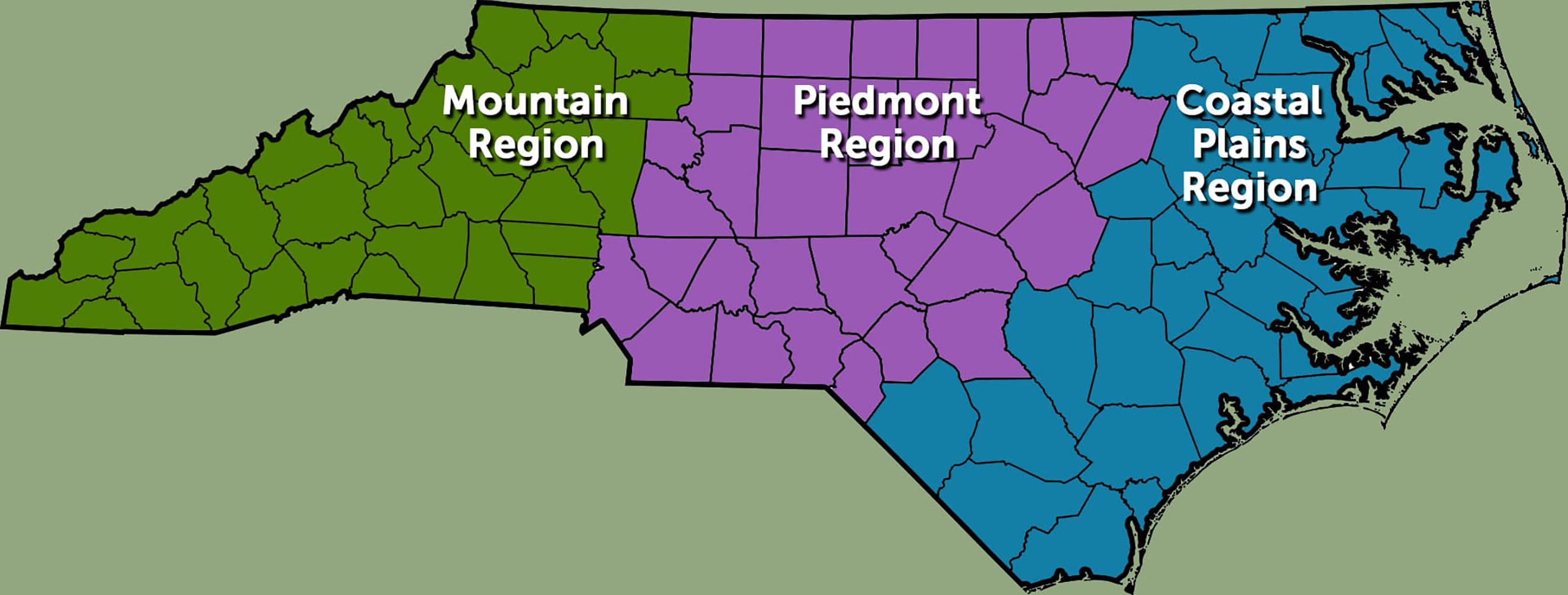
Coastal
Mountains
Piedmont
Clay
Loam (Silt)
Sand
Shallow Rocky
Landscape

Murdannia nudiflora Attributes

Murdannia nudiflora: Country Or Region Of Origin

Asia
Murdannia nudiflora: Distribution

SE US

Murdannia nudiflora: Life Cycle

Annual
Biennial
Bulb
Perennial
Woody

Murdannia nudiflora: Recommended Propagation Strategy

Division
Grafting
Layering
Leaf Cutting
Root Cutting
Seed
Stem Cutting

Murdannia nudiflora Flowers

Murdannia nudiflora: Flower Description

Purplish 3-petalled flowers occur in loose groups from mid-summer to fall

Murdannia nudiflora: Flower Color

filter_vintage
Purple/Lavender

Murdannia nudiflora: Flower Bloom Time

Winter
Spring
Summer
Fall

Murdannia nudiflora: Flower Petals

2-3 rays/petals
4-5 petals/rays
6 petals/rays
7 - 20 petals/rays
asymmetrical petals
Bracts
Colored Sepals
fused petals
more than 20 petals/rays
Tepals

Murdannia nudiflora: Flower Shape

Bell
Cross
Crown
Cup
Dome
Funnel
Irregular
Lipped
Radial
Saucer
Star
Trumpet
Tubular
Urn
Wheel

Murdannia nudiflora Leaves

Murdannia nudiflora: Leaf Description

Leaves are 2 to 5 inches long, about 1/4 to 1/2 inch wide, pointed, with parallel veins; alternate and clasping the stem with a sheath. When very young, this plant can easily be confused with a grass

Murdannia nudiflora: Leaf Color

spa
Green

Murdannia nudiflora: Leaf Type

Compound (Pinnately , Bipinnately, Palmately)
Fronds
Needles
Sheath
Simple

Murdannia nudiflora: Leaf Arrangement

Alternate
Opposite
Other/more complex
Rosulate
Whorled

Murdannia nudiflora: Leaf Shape

Acicular
Auriculate
Cordate
Cuneate
Deltoid
Elliptical
Filiform
Lanceolate
Linear
Oblanceolate
Oblong
Obovate
Obtuse
Orbicular
Ovate
Palmasect
Palmatifid
Peltate
Pinnatifid
Pinnatisect
Reniform
Rhomboidal
Spatulate
Subcordate
Subulate

Murdannia nudiflora: Hairs Present

No
Yes

Murdannia nudiflora: Leaf Length

< 1 inch
1-3 inches
3-6 inches
> 6 inches

Murdannia nudiflora: Leaf Feel

Fleshy
Glossy
Leathery
Papery
Prickly
Rough
Rubbery
Slippery
Smooth
Soft
Velvety
Waxy

Murdannia nudiflora: Leaf Width

< 1 inch
1-3 inches
3-6 inches
> 6 inches

Murdannia nudiflora Whole Plant Traits

Murdannia nudiflora: Plant Type

Annual
Bulb
Carnivorous
Edible
Epiphyte
Fern
Ground Cover
Herb
Herbaceous Perennial
Houseplant
Mushroom
Native Plant
Ornamental Grasses and Sedges
Perennial
Poisonous
Rose
Shrub
Succulent
Tree
Turfgrass
Vegetable
Vine
Water Plant
Weed
Wildflower

Murdannia nudiflora: Habit/Form

Arching
Ascending
Broad
Cascading
Climbing
Clumping
Columnar
Conical
Creeping
Dense
Erect
Horizontal
Irregular
Mounding
Multi-stemmed
Multi-trunked
Open
Oval
Prostrate
Pyramidal
Rounded
Spreading
Vase
Weeping

Murdannia nudiflora: Growth Rate

Slow
Medium
Rapid

Murdannia nudiflora: Maintenance

Low
Medium
High

Murdannia nudiflora Cultural Conditions

Murdannia nudiflora: Light

Dappled Sunlight (Shade through upper canopy all day)
Deep shade (Less than 2 hours to no direct sunlight)
Full sun (6 or more hours of direct sunlight a day)
Partial Shade (Direct sunlight only part of the day, 2-6 hours)

Murdannia nudiflora: Soil Drainage

Frequent Standing Water
Good Drainage
Moist
Occasional Flooding
Occasionally Dry
Occasionally Wet
Very Dry

Murdannia nudiflora: NC Region

Coastal
Mountains
Piedmont

Murdannia nudiflora: Soil Texture

Clay
High Organic Matter
Loam (Silt)
Sand
Shallow Rocky

Murdannia nudiflora Stem

Murdannia nudiflora: Stem Is Aromatic

No
Yes

Murdannia nudiflora Landscape

Murdannia nudiflora: Problems

Allelopathic
Contact Dermatitis
Frequent Disease Problems
Frequent Insect Problems
Invasive Species
Malodorous
Messy
Poisonous to Humans
Problem for Cats
Problem for Children
Problem for Dogs
Problem for Horses
Short-lived
Spines/Thorns
Weak Wood
Weedy