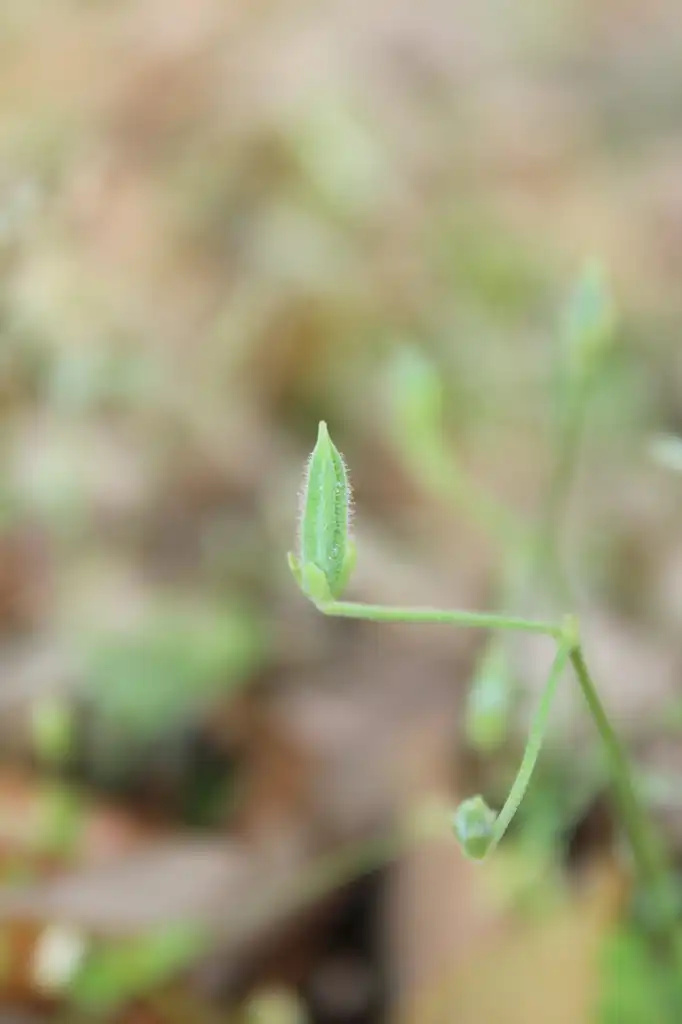
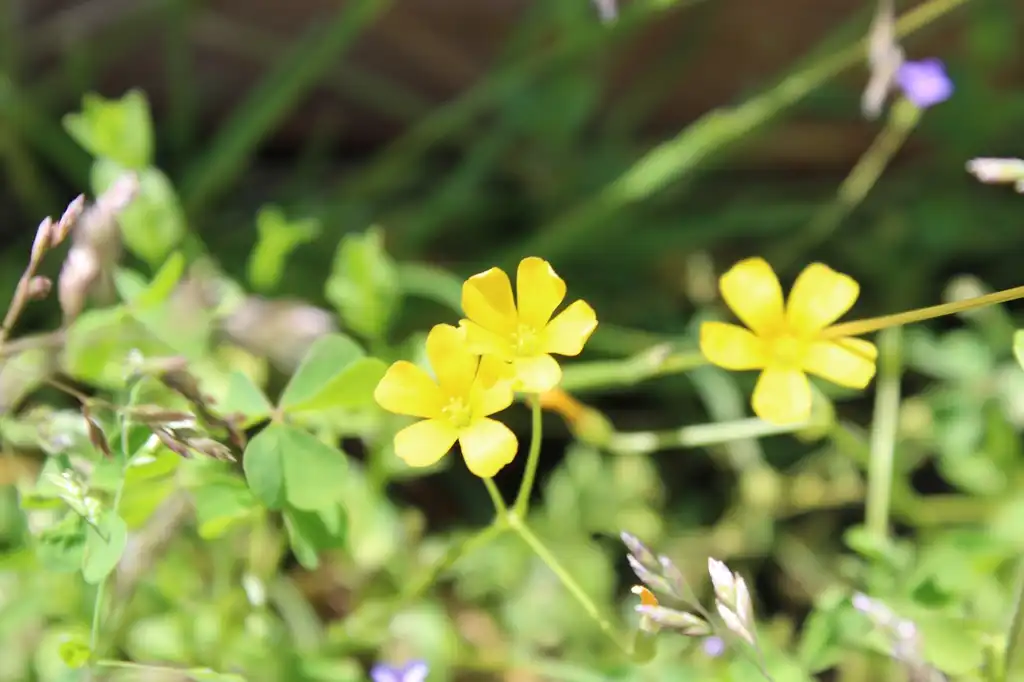
• Photo of Oxalis stricta (Oxalis strictas)

Plant Profile: Oxalis stricta

Taxonomy: Oxalis stricta

Names

Common Yellow Woodsorrel, Lemon Clover, Oxalis, Pickle Plant, Shamrock Plant, Sourgrass, Wood Sorrel, Yellow Woodsorrel, Yellow Wood Sorrel

  • Photo of Oxalis stricta (Oxalis strictas)

Phonetic Spelling:oks-AL-iss STRIK-tuh

Genus:Oxalis

Species:stricta

Family:Oxalidaceae

Common yellow woodsorrel belongs to the Oxalidaceae family and is often regarded as a weed in various lawns and garden settings. It can also be found in woodlands, meadows, and other disturbed environments. This plant thrives in warmer climates during the spring and fall, although it can be found throughout the year. As a perennial, it spreads through rhizomes, stolons, and seeds. The seeds are forcefully ejected from cylindrical pods, capable of traveling up to 16 feet, similar to the behavior of Impatiens. They germinate rapidly, as they do not undergo a dormancy period. The flowers are a vibrant yellow, and the plant is characterized by its heart-shaped leaflets on trifoliolate leaves and cylindrical seed pods. While the leaves may resemble those of clover, woodsorrel is not part of the legume family. Notably, the leaves curl at night and unfurl in the morning to facilitate photosynthesis. This plant prefers well-drained sandy-loam soils that are dry to moist and alkaline, and it can thrive even in nutrient-poor conditions.

In terms of pests and diseases, woodsorrel can host whiteflies and mites.

To manage Oxalis stricta, maintaining cleanliness is essential, particularly in container plants and propagation areas. It is important to prevent the plants from seeding and to properly dispose of any plant material instead of leaving it on the ground, as it may continue to mature. Before planting, inspect all new plant materials for signs of this weed. Most preemergence herbicides effectively control woodsorrel from seeds. However, once established, completely eradicating the rhizomes and stolons is nearly impossible. Since seeds require sunlight to germinate, applying mulch can help limit germination, though it will not prevent propagation from root fragments. Nonselective herbicides are most effective when the plants are still young.

This information is brought to you by Homegrown, featuring Travis Birdsell, County Extension Director and Extension Agent for Ashe County Extension.

For further details on Oxalis, please refer to additional resources.

Oxalis stricta Feature Summary

Oxalis stricta Image Gallery

Tags

#full sun tolerant
#edible plant
#weed
#edible weed
#weedy
#NC native
#heart-shaped
#disturbed areas
#cool season weed
#poor soils tolerant
#edible
#native weed
#partial shade tolerant
#problem for cats
#problem for dogs
#problem for horses
#meadows
#woodlands

Similar Plants

Oxalis stricta is often confused with:

Oxalis stricta Feature Summary

Attributes
North America, Eurasia
Leaves, stems, flowers, and seed pods are edible and have a sour, tangy flavor. Use sparingly due to oxalic acid content.
Perennial
Fruit
Cylindrical seed pods that are explosive and can catapult seeds up to 16 feet away.
Flowers
Bright yellow
Gold/Yellow
Spring
Summer
Fall
4-5 petals/rays
Leaves
Heart-shaped trifoliate leaflets
Compound (Pinnately , Bipinnately, Palmately)
Poisonous to Humans
All parts of the plant have toxic potential, although the possibility of serious effects is usually limited to ingestions of large quantities. Consuming Oxalis species can produce colic in horses, and kidney failure is possible if significant amounts are eaten.
Soluble calcium oxylates
Whole Plant Traits
Perennial
Annual
Edible
Native Plant
Weed
Wildflower
Cultural Conditions
Full sun (6 or more hours of direct sunlight a day)
Partial Shade (Direct sunlight only part of the day, 2-6 hours)
Alkaline (>8.0)
Good Drainage
Moist
Occasionally Dry
Less than 12 inches
Loam (Silt)
Sand
Landscape
Problem for Cats
Problem for Dogs
Problem for Horses
Weedy

Oxalis stricta Attributes

Oxalis stricta: Country Or Region Of Origin

North America, Eurasia
Oxalis stricta: Edibility

Leaves, stems, flowers, and seed pods are edible and have a sour, tangy flavor. Use sparingly due to oxalic acid content.

Oxalis stricta: Life Cycle

Annual
Biennial
Bulb
Perennial
Woody

Oxalis stricta: Recommended Propagation Strategy

Division
Grafting
Layering
Leaf Cutting
Root Cutting
Seed
Stem Cutting

Oxalis stricta Fruit

Oxalis stricta: Fruit Description

Cylindrical seed pods that are explosive and can catapult seeds up to 16 feet away.

Oxalis stricta Flowers

Oxalis stricta: Flower Description

Bright yellow

Oxalis stricta: Flower Color

filter_vintage
Gold/Yellow

Oxalis stricta: Flower Inflorescence

Catkin
Corymb
Cyme
Head
Insignificant
Panicle
Raceme
Solitary
Spadix
Spike
Umbel

Oxalis stricta: Flower Bloom Time

Winter
Spring
Summer
Fall

Oxalis stricta: Flower Petals

2-3 rays/petals
4-5 petals/rays
6 petals/rays
7 - 20 petals/rays
asymmetrical petals
Bracts
Colored Sepals
fused petals
more than 20 petals/rays
Tepals

Oxalis stricta Leaves

Oxalis stricta: Leaf Description

Heart-shaped trifoliate leaflets

Oxalis stricta: Leaf Color

spa
Green

Oxalis stricta: Leaf Type

Compound (Pinnately , Bipinnately, Palmately)
Fronds
Needles
Sheath
Simple

Oxalis stricta: Leaf Shape

Acicular
Auriculate
Cordate
Cuneate
Deltoid
Elliptical
Filiform
Lanceolate
Linear
Oblanceolate
Oblong
Obovate
Obtuse
Orbicular
Ovate
Palmasect
Palmatifid
Peltate
Pinnatifid
Pinnatisect
Reniform
Rhomboidal
Spatulate
Subcordate
Subulate

Oxalis stricta: Leaf Margin

Crenate
Crenulate
Dentate
Denticulate
Doubly Crenate
Doubly Dentate
Doubly Serrate
Entire
Lobed
Serrate
Sinuate
Undulate

Oxalis stricta: Hairs Present

No
Yes

Oxalis stricta Poisonous to Humans

Oxalis stricta: Poison Symptoms

All parts of the plant have toxic potential, although the possibility of serious effects is usually limited to ingestions of large quantities. Consuming Oxalis species can produce colic in horses, and kidney failure is possible if significant amounts are eaten.

Oxalis stricta: Poison Toxic Principle

Soluble calcium oxylates

Oxalis stricta: Poison Severity

High
Low
Medium

Oxalis stricta: Causes Contact Dermatitis

No
Yes

Oxalis stricta Whole Plant Traits

Oxalis stricta: Plant Type

Annual
Bulb
Carnivorous
Edible
Epiphyte
Fern
Ground Cover
Herb
Herbaceous Perennial
Houseplant
Mushroom
Native Plant
Ornamental Grasses and Sedges
Perennial
Poisonous
Rose
Shrub
Succulent
Tree
Turfgrass
Vegetable
Vine
Water Plant
Weed
Wildflower

Oxalis stricta: Growth Rate

Slow
Medium
Rapid

Oxalis stricta: Maintenance

Low
Medium
High

Oxalis stricta Cultural Conditions

Oxalis stricta: Light

Dappled Sunlight (Shade through upper canopy all day)
Deep shade (Less than 2 hours to no direct sunlight)
Full sun (6 or more hours of direct sunlight a day)
Partial Shade (Direct sunlight only part of the day, 2-6 hours)

Oxalis stricta: Soil pH

Acid (<6.0)
Alkaline (>8.0)
Neutral (6.0-8.0)

Oxalis stricta: Soil Drainage

Frequent Standing Water
Good Drainage
Moist
Occasional Flooding
Occasionally Dry
Occasionally Wet
Very Dry

Oxalis stricta: Available Space To Plant

12 inches-3 feet
12-24 feet
24-60 feet
3 feet-6 feet
6-feet-12 feet
Less than 12 inches
more than 60 feet

Oxalis stricta: Soil Texture

Clay
High Organic Matter
Loam (Silt)
Sand
Shallow Rocky

Oxalis stricta Stem

Oxalis stricta: Stem Is Aromatic

No
Yes

Oxalis stricta Landscape

Oxalis stricta: Resistance To Challenges

Black Walnut
Compaction
Deer
Diseases
Drought
Dry Soil
Erosion
Fire
Foot Traffic
Heat
Heavy Shade
Humidity
Insect Pests
Pollution
Poor Soil
Rabbits
Salt
Slugs
Squirrels
Storm damage
Urban Conditions
Voles
Wet Soil
Wind

Oxalis stricta: Problems

Allelopathic
Contact Dermatitis
Frequent Disease Problems
Frequent Insect Problems
Invasive Species
Malodorous
Messy
Poisonous to Humans
Problem for Cats
Problem for Children
Problem for Dogs
Problem for Horses
Short-lived
Spines/Thorns
Weak Wood
Weedy