Phlomis fruticosa: Uses (Ethnobotany)
Leaves used as lamp wicks in ancient Greece
Phonetic Spelling:
Genus:Phlomis
Species:fruticosa
Family:Lamiaceae
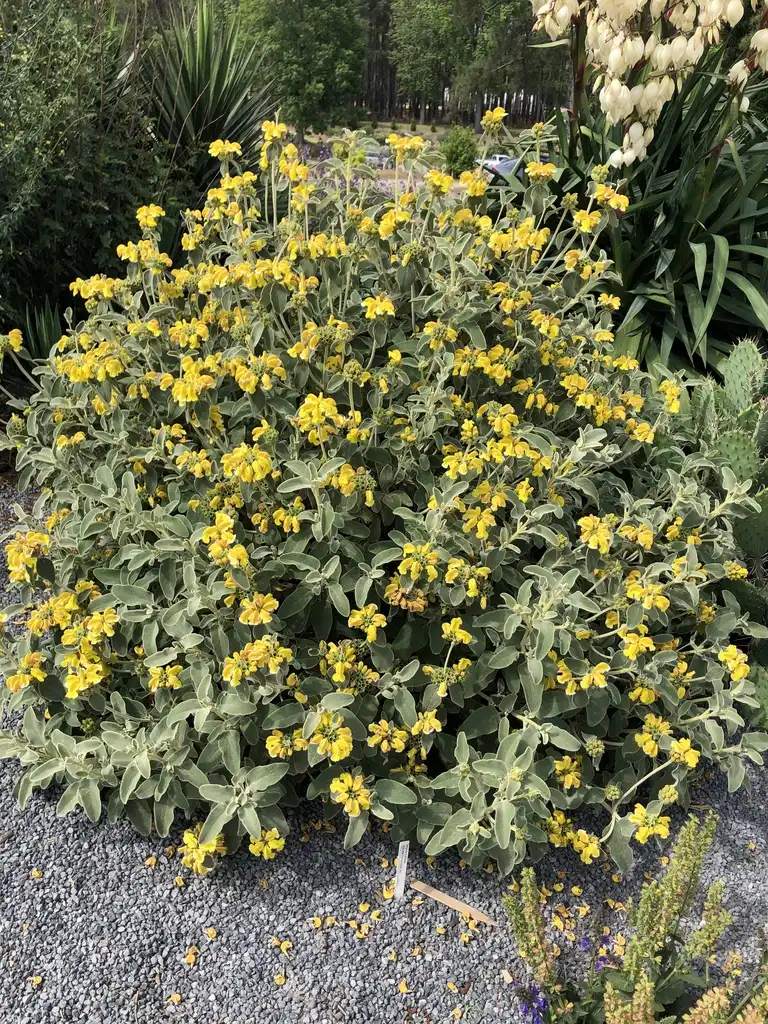
The Jerusalem Sage originates from various regions, including Albania, Cyprus, the East Aegean Islands, Greece, Italy, Crete, Sardinia, Sicily, Transcaucasia, Turkey, and the former Yugoslavia. This broadleaf evergreen is characterized by its mounding, shrubby form and soft, hairy texture, classifying it as a perennial. In USDA Zones 8-10, it retains its evergreen status, while in Zones 5-7, it becomes deciduous. Belonging to the Mint family (Lamiaceae), its genus name, Phlomis, derives from Greek, meaning "flame," likely referencing its historical use of leaves as lamp wicks. The species name, fruticosa, translates to "shrubby" or "short," which aptly describes its growth habit. The plant typically reaches heights of 2 to 4 feet and spreads between 3 to 5 feet.
This low-maintenance plant exhibits medium to rapid growth and thrives in full sun to partial shade. When grown in shaded areas, it may develop unattractive, leggy stems. It requires well-drained soil that can range from dry to moist and is adaptable to various soil types. Propagation can be achieved through softwood cuttings in summer, root ball division in spring, or by sowing seeds in late spring.
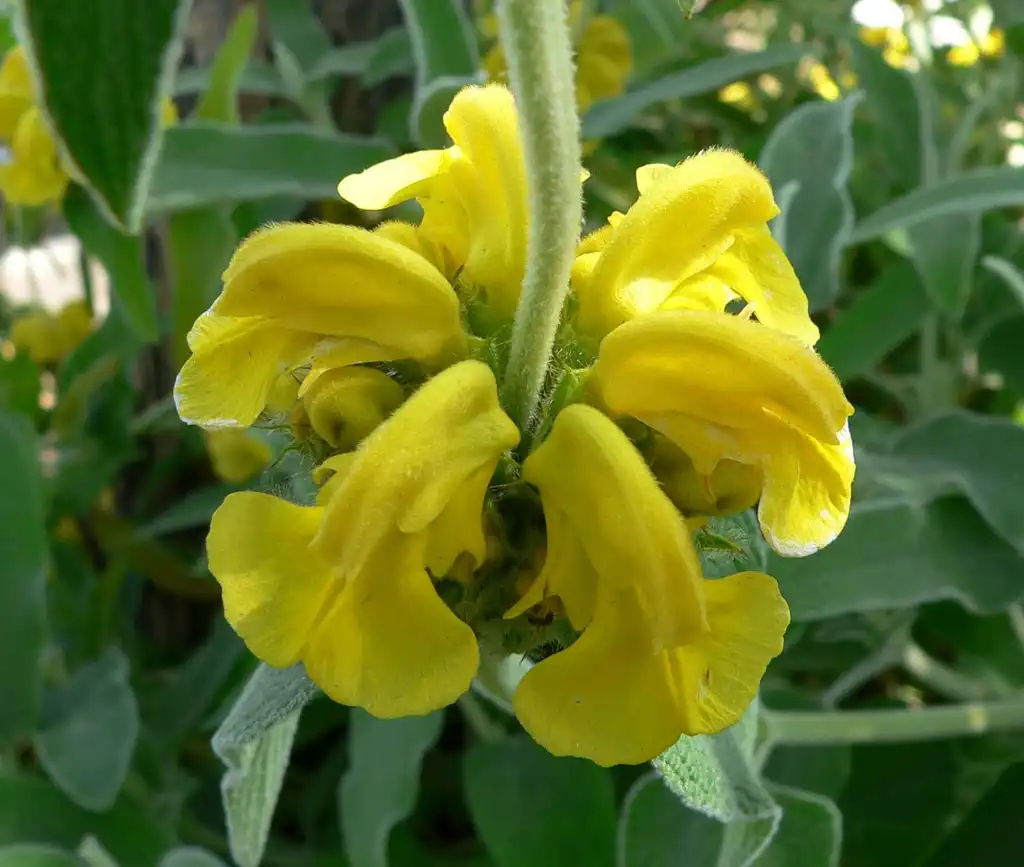
The leaves of the Jerusalem Sage are wrinkled, gray-green, and possess a soft, woolly texture, with white undersides covered in fine hairs reminiscent of Lamb's Ear. Its unscented flowers bloom from late spring to late summer, showcasing a vibrant golden yellow color. These flowers grow in spikes along the upper half of the stem tips, creating a layered or tiered appearance similar to snapdragons. The nectar from the flowers attracts bees, butterflies, and hummingbirds. Additionally, the plant is resistant to deer and rabbits and is drought-tolerant.
This plant is an excellent choice for borders, container gardens, cottage gardens, cut or dried flower arrangements, or mass plantings. It is generally free from serious pests or diseases, with the exception of occasional leafhoppers.
Phlomis fruticosa Feature Summary
Phlomis fruticosa Image Gallery