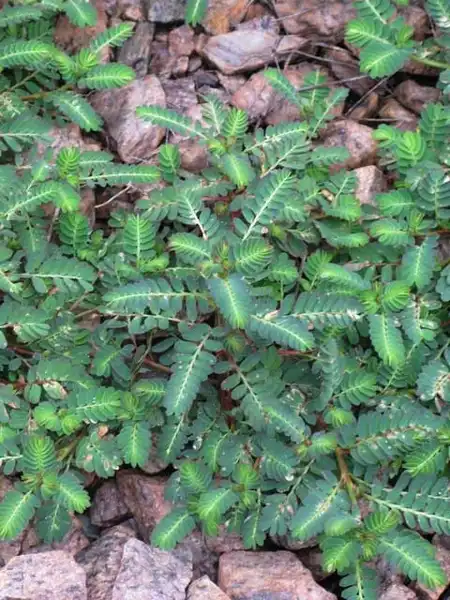
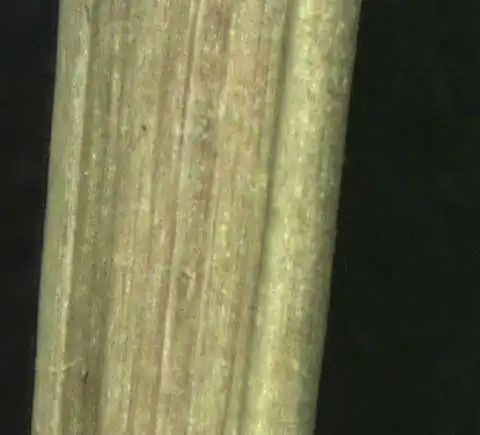
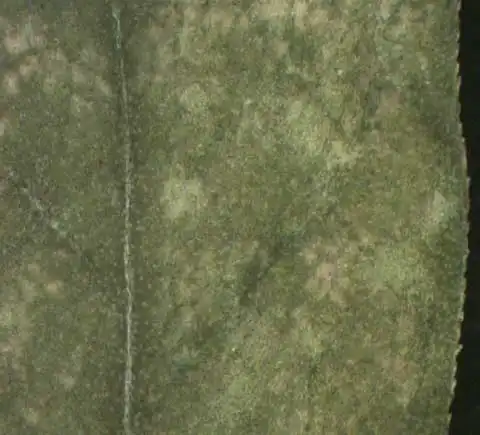
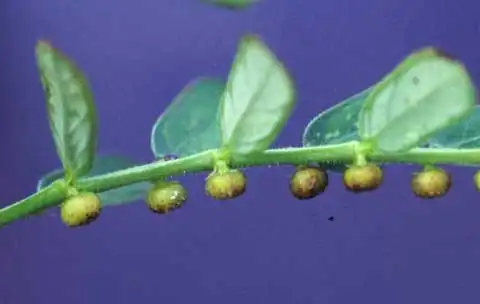
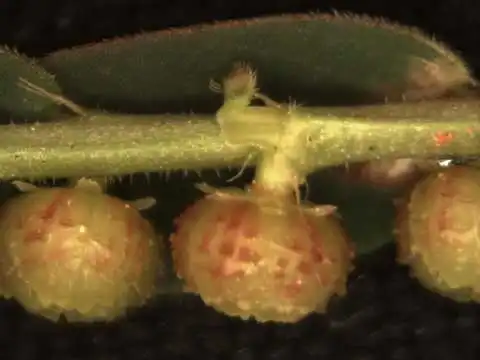
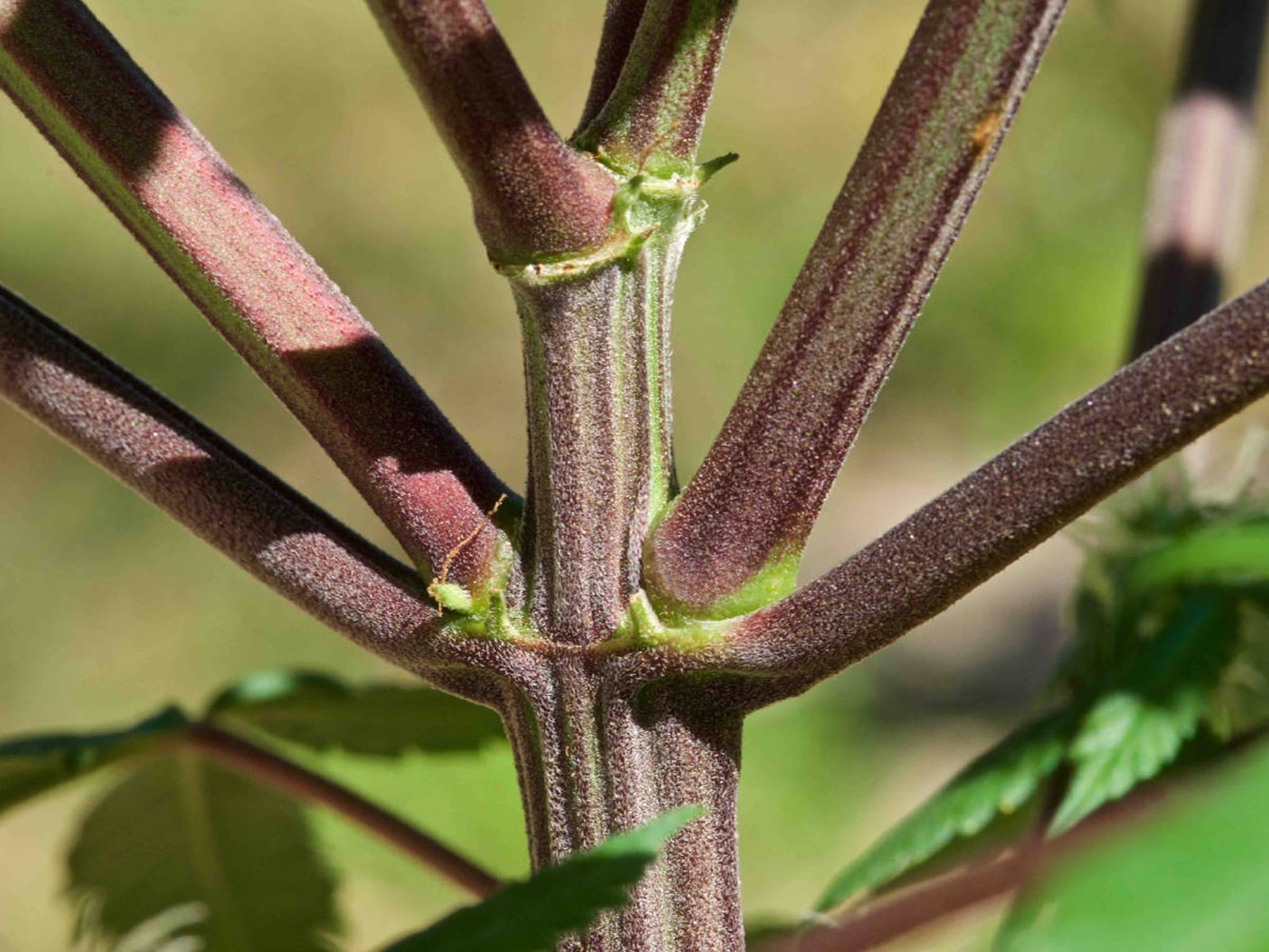
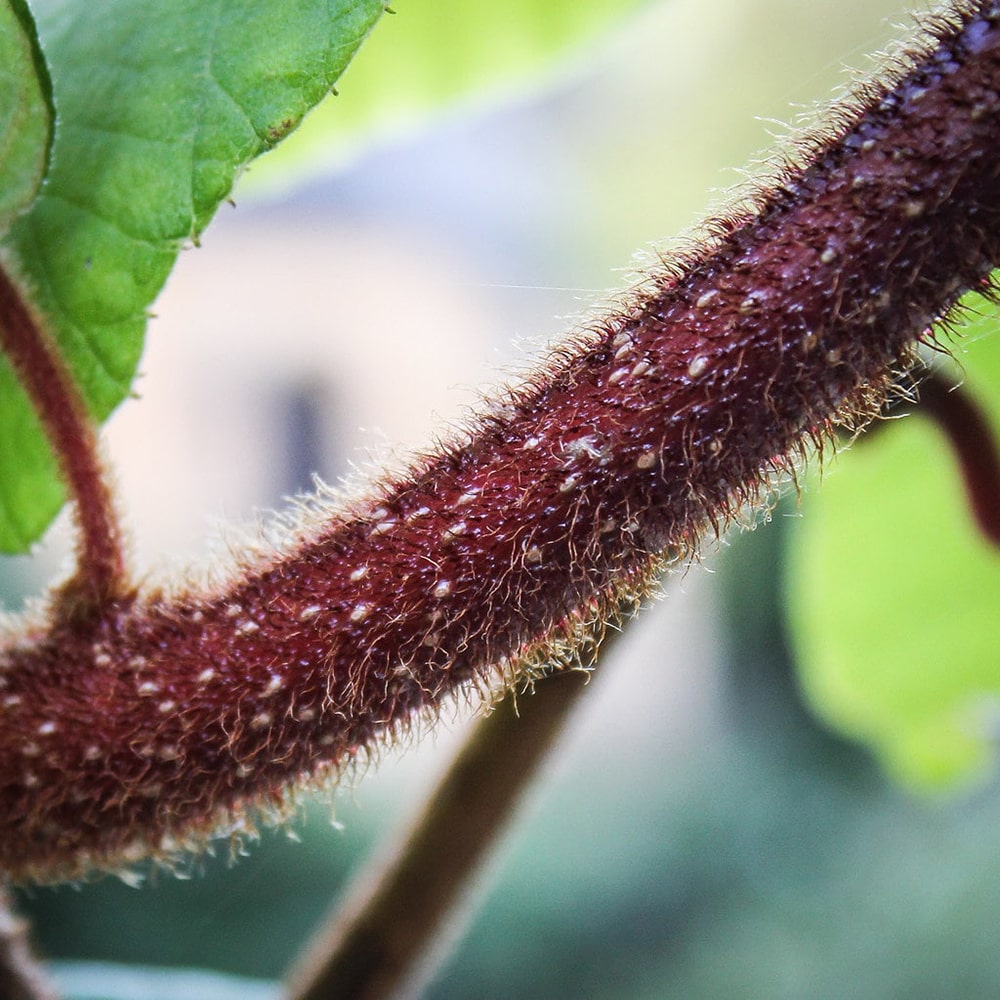
• Photo of Phyllanthus urinaria (Phyllanthus urinarias)

Plant Profile: Phyllanthus urinaria

Taxonomy: Phyllanthus urinaria

Names

Chamberbitter, Chamber Bitter, Gripeweed, Shatterstone, Stonebreaker

  • Photo of Phyllanthus urinaria (Phyllanthus urinarias)

Phonetic Spelling:fil-LAN-thus yer-in-AIR-ee-ah

Genus:Phyllanthus

Species:urinaria

Family:Phyllanthaceae

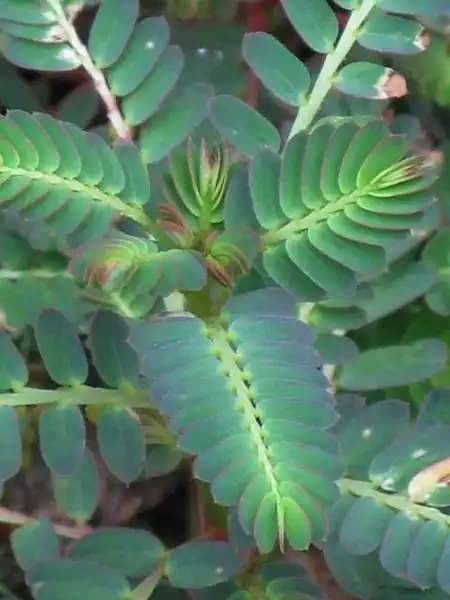
Chamberbitter is a summer annual characterized by its heavily branched base and upright stems, typically reaching heights of 1 to 2 feet and often forming a mound. The leaves are oblong, measuring between 1/2 to 3/4 inch long, and are found on short branches, resembling the compound leaves of certain legumes. Despite belonging to the spurge family, chamberbitter does not release a milky sap when its stems are broken. The flowers are small, subtle, and greenish-white in color. Notably, the round fruit appears on the undersides of lateral branches at the leaf axils. While it shares a resemblance with long-stalked phyllanthus (Phyllanthus tenellus), the two can be distinguished by the length of their seedpod stalks: chamberbitter's fruit is sessile (lacking stalks), whereas long-stalked phyllanthus has stalks measuring approximately 1/4 to 1/2 inch. Phyllanthus seeds require substrate temperatures exceeding 75°F for germination, making them more prevalent in summer, although they can persist into late fall in the southeastern United States and year-round in subtropical regions. These plants bloom throughout the summer and fall, ultimately dying off after frost, with their fruit forcefully ejecting seeds over short distances.

Management strategies for chamberbitter: Both phyllanthus species are notoriously challenging to control. It is crucial to prevent the plants from seeding. Before planting, thoroughly inspect pots to eliminate any new infestations before they can spread. Most preemergence herbicides labeled for use are ineffective against them.

Propagation: Seeds are expelled forcefully.

Phyllanthus urinaria Feature Summary

Phyllanthus urinaria Image Gallery

Tags

#weed
#weedy
#summer annual weed
#red stems
#warm season weed

Similar Plants

Phyllanthus urinaria Feature Summary

Attributes
Tropical & Subtropical Asia to N. Australia
Fruit
Green or greenish red .12" in diameter divided into three parts. The surface has scales that are raised and when it dries it expel seeds for dispersal.
Green
Red/Burgundy
Flowers
Insignificant small greenish-yellow-white male and female flowers on same plant. Female flowers form from the first to middle part of the leaf and male flowers from the middle to the tip.
White
Gold/Yellow
Green
< 1 inch
Leaves
Tiny (0.2" long 0.2") wide alternate bright dark green above reddish green below.
Linear
Oblong
< 1 inch
< 1 inch
Stem
Branching slender stems are crimson red.
Red/Burgundy
Whole Plant Traits
Annual
Weed
Erect
Mounding
Spreading
Landscape

Phyllanthus urinaria Attributes

Phyllanthus urinaria: Country Or Region Of Origin

Tropical & Subtropical Asia to N. Australia
Phyllanthus urinaria: Life Cycle

Annual
Biennial
Bulb
Perennial
Woody

Phyllanthus urinaria: Recommended Propagation Strategy

Division
Grafting
Layering
Leaf Cutting
Root Cutting
Seed
Stem Cutting

Phyllanthus urinaria Fruit

Phyllanthus urinaria: Fruit Description

Green or greenish red .12" in diameter divided into three parts. The surface has scales that are raised and when it dries it expel seeds for dispersal.

Phyllanthus urinaria: Fruit Color

grass
Green
grass
Red/Burgundy

Phyllanthus urinaria: Fruit Length

< 1 inch
1-3 inches
> 3 inches

Phyllanthus urinaria Flowers

Phyllanthus urinaria: Flower Description

Insignificant small greenish-yellow-white male and female flowers on same plant. Female flowers form from the first to middle part of the leaf and male flowers from the middle to the tip.

Phyllanthus urinaria: Flower Color

filter_vintage
Gold/Yellow
filter_vintage
Green
filter_vintage
White

Phyllanthus urinaria: Flower Inflorescence

Catkin
Corymb
Cyme
Head
Insignificant
Panicle
Raceme
Solitary
Spadix
Spike
Umbel

Phyllanthus urinaria: Flower Size

1-3 inches
3-6 inches
< 1 inch
> 6 inches

Phyllanthus urinaria Leaves

Phyllanthus urinaria: Leaf Description

Tiny (0.2" long 0.2") wide alternate bright dark green above reddish green below.

Phyllanthus urinaria: Leaf Color

spa
Green

Phyllanthus urinaria: Leaf Type

Compound (Pinnately , Bipinnately, Palmately)
Fronds
Needles
Sheath
Simple

Phyllanthus urinaria: Leaf Arrangement

Alternate
Opposite
Other/more complex
Rosulate
Whorled

Phyllanthus urinaria: Leaf Shape

Acicular
Auriculate
Cordate
Cuneate
Deltoid
Elliptical
Filiform
Lanceolate
Linear
Oblanceolate
Oblong
Obovate
Obtuse
Orbicular
Ovate
Palmasect
Palmatifid
Peltate
Pinnatifid
Pinnatisect
Reniform
Rhomboidal
Spatulate
Subcordate
Subulate

Phyllanthus urinaria: Leaf Margin

Crenate
Crenulate
Dentate
Denticulate
Doubly Crenate
Doubly Dentate
Doubly Serrate
Entire
Lobed
Serrate
Sinuate
Undulate

Phyllanthus urinaria: Hairs Present

No
Yes

Phyllanthus urinaria: Leaf Length

< 1 inch
1-3 inches
3-6 inches
> 6 inches

Phyllanthus urinaria: Leaf Width

< 1 inch
1-3 inches
3-6 inches
> 6 inches

Phyllanthus urinaria Stem

Phyllanthus urinaria: Stem Description

Branching slender stems are crimson red.

Phyllanthus urinaria: Stem Color

grass
Red/Burgundy

Phyllanthus urinaria: Stem Is Aromatic

No
Yes

Phyllanthus urinaria Whole Plant Traits

Phyllanthus urinaria: Plant Type

Annual
Bulb
Carnivorous
Edible
Epiphyte
Fern
Ground Cover
Herb
Herbaceous Perennial
Houseplant
Mushroom
Native Plant
Ornamental Grasses and Sedges
Perennial
Poisonous
Rose
Shrub
Succulent
Tree
Turfgrass
Vegetable
Vine
Water Plant
Weed
Wildflower

Phyllanthus urinaria: Habit/Form

Arching
Ascending
Broad
Cascading
Climbing
Clumping
Columnar
Conical
Creeping
Dense
Erect
Horizontal
Irregular
Mounding
Multi-stemmed
Multi-trunked
Open
Oval
Prostrate
Pyramidal
Rounded
Spreading
Vase
Weeping

Phyllanthus urinaria: Growth Rate

Slow
Medium
Rapid

Phyllanthus urinaria Landscape

Phyllanthus urinaria: Problems

Allelopathic
Contact Dermatitis
Frequent Disease Problems
Frequent Insect Problems
Invasive Species
Malodorous
Messy
Poisonous to Humans
Problem for Cats
Problem for Children
Problem for Dogs
Problem for Horses
Short-lived
Spines/Thorns
Weak Wood
Weedy