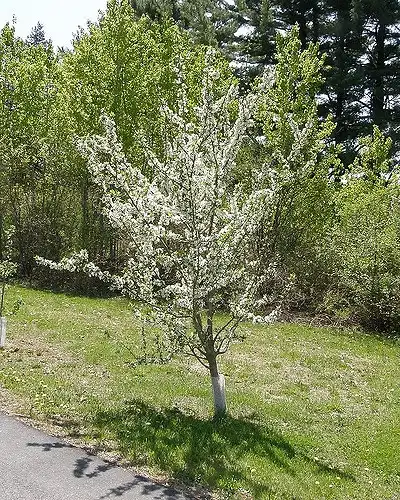
• Photo of Prunus domestica 'Stanley' (Prunus domestica 'Stanley's)

Plant Profile: Prunus domestica 'Stanley'

Names

Stanley European Plum

  • Photo of Prunus domestica 'Stanley' (Prunus domestica 'Stanley's)

Phonetic Spelling:PROO-nus doh-MESS-tik-a

Genus:Prunus

Species:domestica

Family:Rosaceae

The Stanley European plum is a variety of prune-type plum tree known for its high sugar content, making it ideal for canning and drying. While it is capable of self-pollination, it is advisable to plant two different cultivars for optimal fruit production. This variety is not as hardy as some others, such as the Mount Royal. The tree's mature size varies based on the selected type, whether standard or dwarf.

**Height:** 18-20 feet or 8-10 feet
**Width:** 18-20 feet or 8-10 feet

**Form:** Upright and vase-shaped

For additional details, refer to Prunus domestica.

Prunus domestica 'Stanley' Feature Summary

Prunus domestica 'Stanley' Image Gallery

Tags

#deciduous
#problem for cats
#problem for dogs
#problem for horses

Similar Plants

Prunus domestica 'Stanley' is often confused with:

Prunus domestica 'Stanley' Feature Summary

Attributes
The medium sized fruit has a blue skin and pale yellow flesh. The fruit is sweet and juicy. The high sugar content makes it a great choice for canning and drying. Ripens in early September.
Fruit
The medium sized fruit has a blue skin and pale yellow flesh.
Gold/Yellow
Blue
Flowers
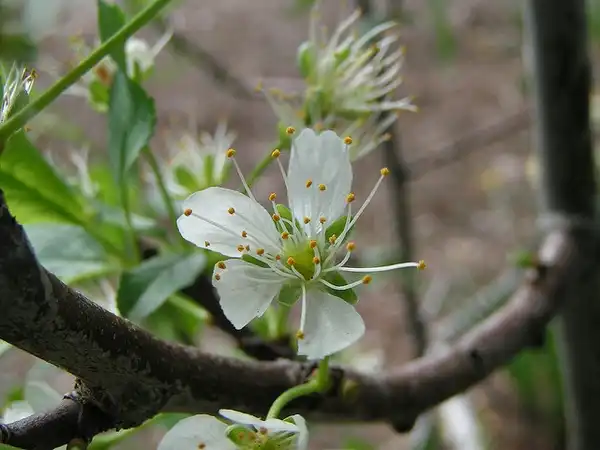
The white blossom is a good ornamental feature.
Leaves
The green elliptic leaves have fine tooth on the margin.
Elliptical
Poisonous to Humans
Stems, leaves, seeds contain cyanide, particularly toxic in the process of wilting: brick red mucous membranes, dilated pupils, difficulty breathing, panting, shock.
Cyanogenic glycosides
Seeds
Leaves
Stems
Whole Plant Traits
Cultural Conditions
Full sun (6 or more hours of direct sunlight a day)
Good Drainage
Loam (Silt)
Landscape
Problem for Cats
Problem for Dogs
Problem for Horses

Prunus domestica 'Stanley' Attributes

Prunus domestica 'Stanley': Edibility

The medium sized fruit has a blue skin and pale yellow flesh. The fruit is sweet and juicy. The high sugar content makes it a great choice for canning and drying. Ripens in early September.

Prunus domestica 'Stanley' Fruit

Prunus domestica 'Stanley': Fruit Description

The medium sized fruit has a blue skin and pale yellow flesh.

Prunus domestica 'Stanley': Fruit Color

grass
Blue
grass
Gold/Yellow

Prunus domestica 'Stanley': Display/Harvest Time

Fall
Spring
Summer
Winter

Prunus domestica 'Stanley' Flowers

Prunus domestica 'Stanley': Flower Description

The white blossom is a good ornamental feature.

Prunus domestica 'Stanley': Flower Color

filter_vintage
White

Prunus domestica 'Stanley': Flower Bloom Time

Winter
Spring
Summer
Fall

Prunus domestica 'Stanley' Leaves

Prunus domestica 'Stanley': Leaf Description

The green elliptic leaves have fine tooth on the margin.

Prunus domestica 'Stanley': Woody Plant Leaf Characteristics

Broadleaf Evergreen
Deciduous
Needled Evergreen
Semi-evergreen

Prunus domestica 'Stanley': Leaf Color

spa
Green

Prunus domestica 'Stanley': Leaf Shape

Acicular
Auriculate
Cordate
Cuneate
Deltoid
Elliptical
Filiform
Lanceolate
Linear
Oblanceolate
Oblong
Obovate
Obtuse
Orbicular
Ovate
Palmasect
Palmatifid
Peltate
Pinnatifid
Pinnatisect
Reniform
Rhomboidal
Spatulate
Subcordate
Subulate

Prunus domestica 'Stanley': Hairs Present

No
Yes

Prunus domestica 'Stanley' Poisonous to Humans

Prunus domestica 'Stanley': Poison Symptoms

Stems, leaves, seeds contain cyanide, particularly toxic in the process of wilting: brick red mucous membranes, dilated pupils, difficulty breathing, panting, shock.

Prunus domestica 'Stanley': Poison Toxic Principle

Cyanogenic glycosides

Prunus domestica 'Stanley': Poison Severity

High
Low
Medium

Prunus domestica 'Stanley': Causes Contact Dermatitis

No
Yes

Prunus domestica 'Stanley': Poison Part

Bark
Flowers
Fruits
Leaves
Roots
Sap/Juice
Seeds
Stems

Prunus domestica 'Stanley' Whole Plant Traits

Prunus domestica 'Stanley': Plant Type

Annual
Bulb
Carnivorous
Edible
Epiphyte
Fern
Ground Cover
Herb
Herbaceous Perennial
Houseplant
Mushroom
Native Plant
Ornamental Grasses and Sedges
Perennial
Poisonous
Rose
Shrub
Succulent
Tree
Turfgrass
Vegetable
Vine
Water Plant
Weed
Wildflower

Prunus domestica 'Stanley': Woody Plant Leaf Characteristics

Broadleaf Evergreen
Deciduous
Needled Evergreen
Semi-evergreen

Prunus domestica 'Stanley': Habit/Form

Arching
Ascending
Broad
Cascading
Climbing
Clumping
Columnar
Conical
Creeping
Dense
Erect
Horizontal
Irregular
Mounding
Multi-stemmed
Multi-trunked
Open
Oval
Prostrate
Pyramidal
Rounded
Spreading
Vase
Weeping

Prunus domestica 'Stanley': Growth Rate

Slow
Medium
Rapid

Prunus domestica 'Stanley': Texture

Fine
Medium
Coarse

Prunus domestica 'Stanley' Cultural Conditions

Prunus domestica 'Stanley': Light

Dappled Sunlight (Shade through upper canopy all day)
Deep shade (Less than 2 hours to no direct sunlight)
Full sun (6 or more hours of direct sunlight a day)
Partial Shade (Direct sunlight only part of the day, 2-6 hours)

Prunus domestica 'Stanley': Soil Drainage

Frequent Standing Water
Good Drainage
Moist
Occasional Flooding
Occasionally Dry
Occasionally Wet
Very Dry

Prunus domestica 'Stanley': USDA Plant Hardiness Zone

thermostat
5a
thermostat
5b
thermostat
6a
thermostat
6b
thermostat
7a
thermostat
7b

Prunus domestica 'Stanley': Soil Texture

Clay
High Organic Matter
Loam (Silt)
Sand
Shallow Rocky

Prunus domestica 'Stanley' Stem

Prunus domestica 'Stanley': Stem Is Aromatic

No
Yes

Prunus domestica 'Stanley' Landscape

Prunus domestica 'Stanley': Problems

Allelopathic
Contact Dermatitis
Frequent Disease Problems
Frequent Insect Problems
Invasive Species
Malodorous
Messy
Poisonous to Humans
Problem for Cats
Problem for Children
Problem for Dogs
Problem for Horses
Short-lived
Spines/Thorns
Weak Wood
Weedy