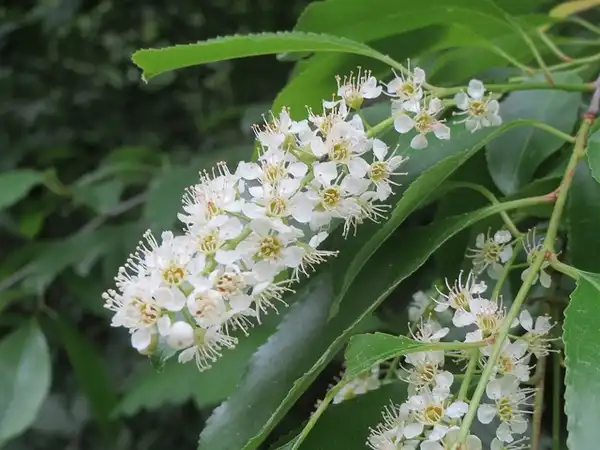
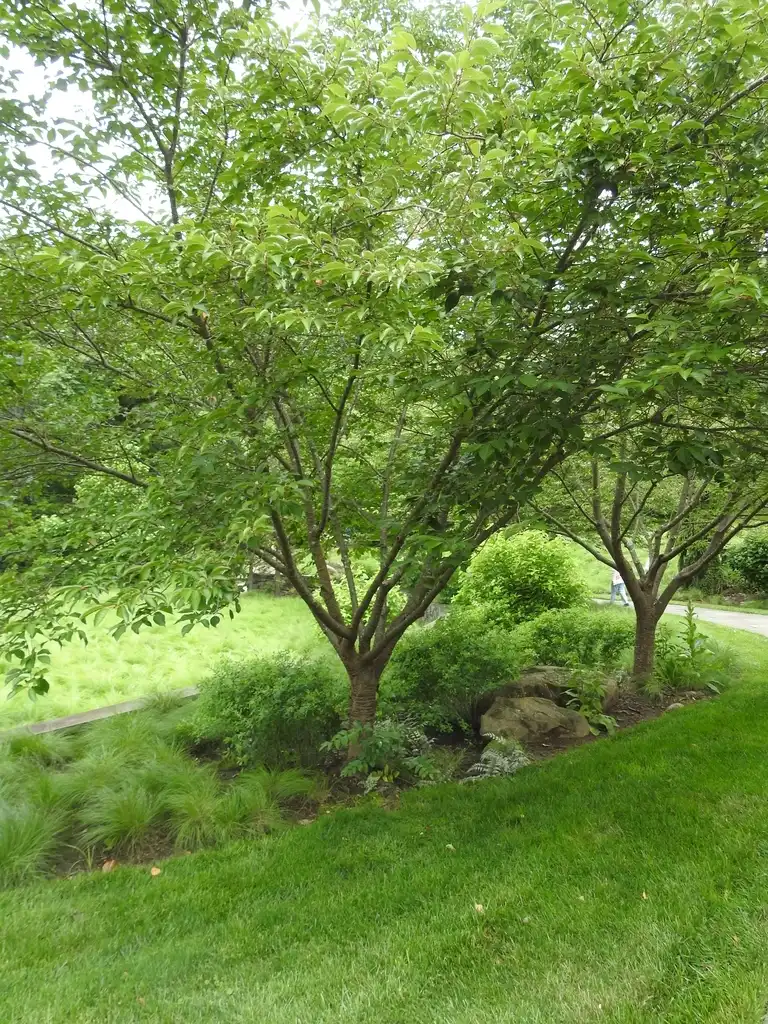
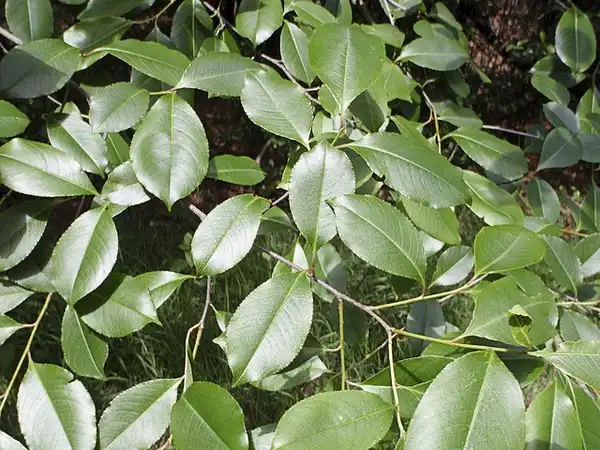
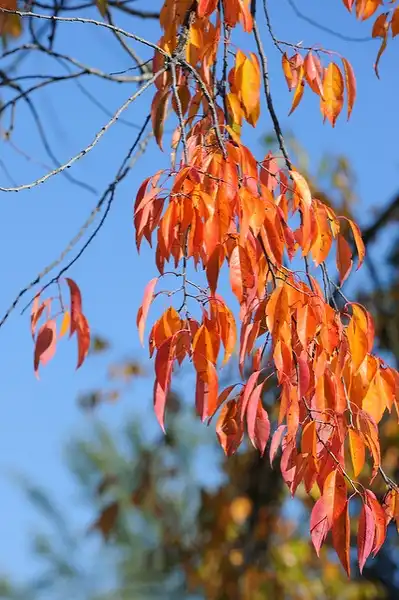
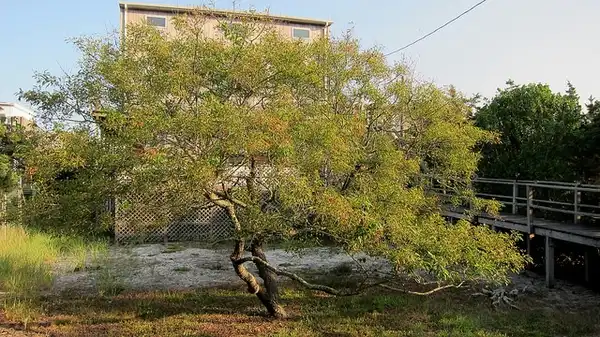
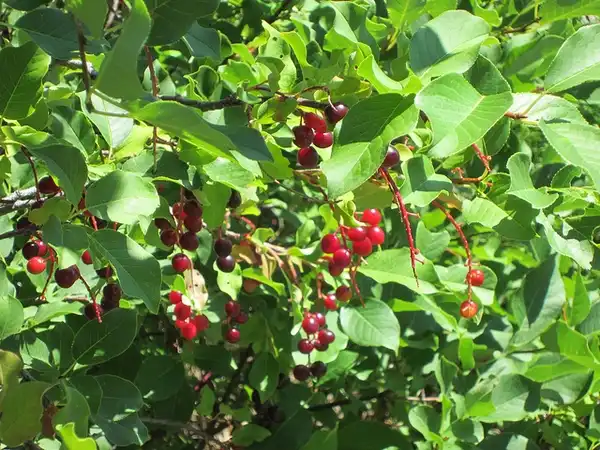
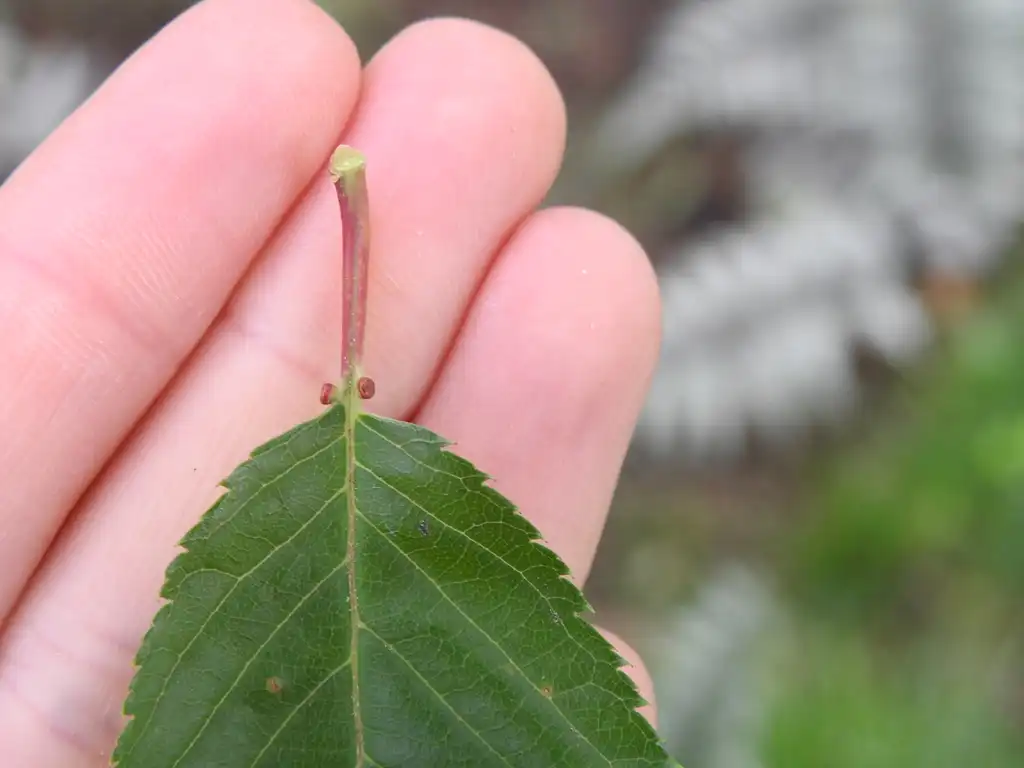
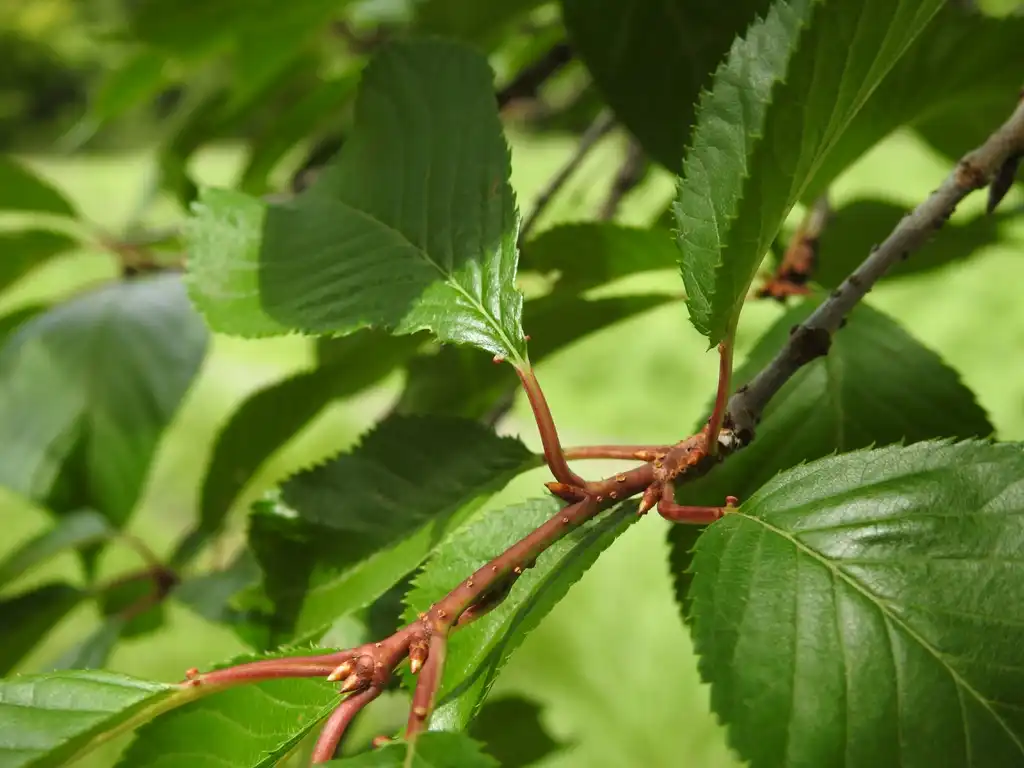
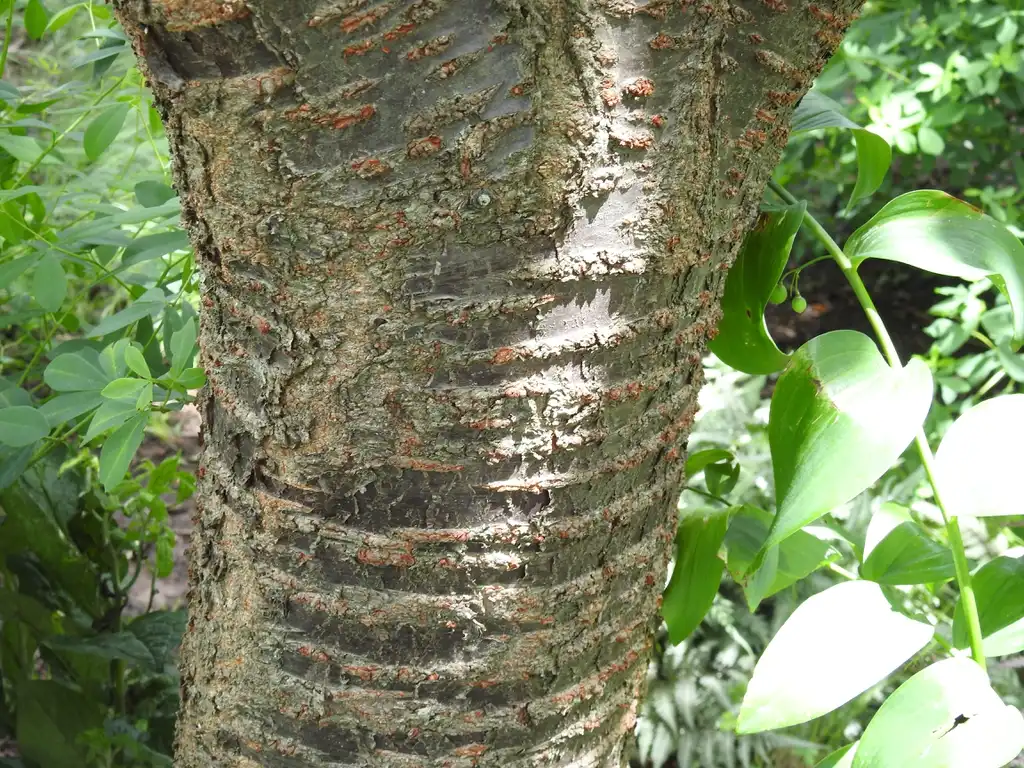
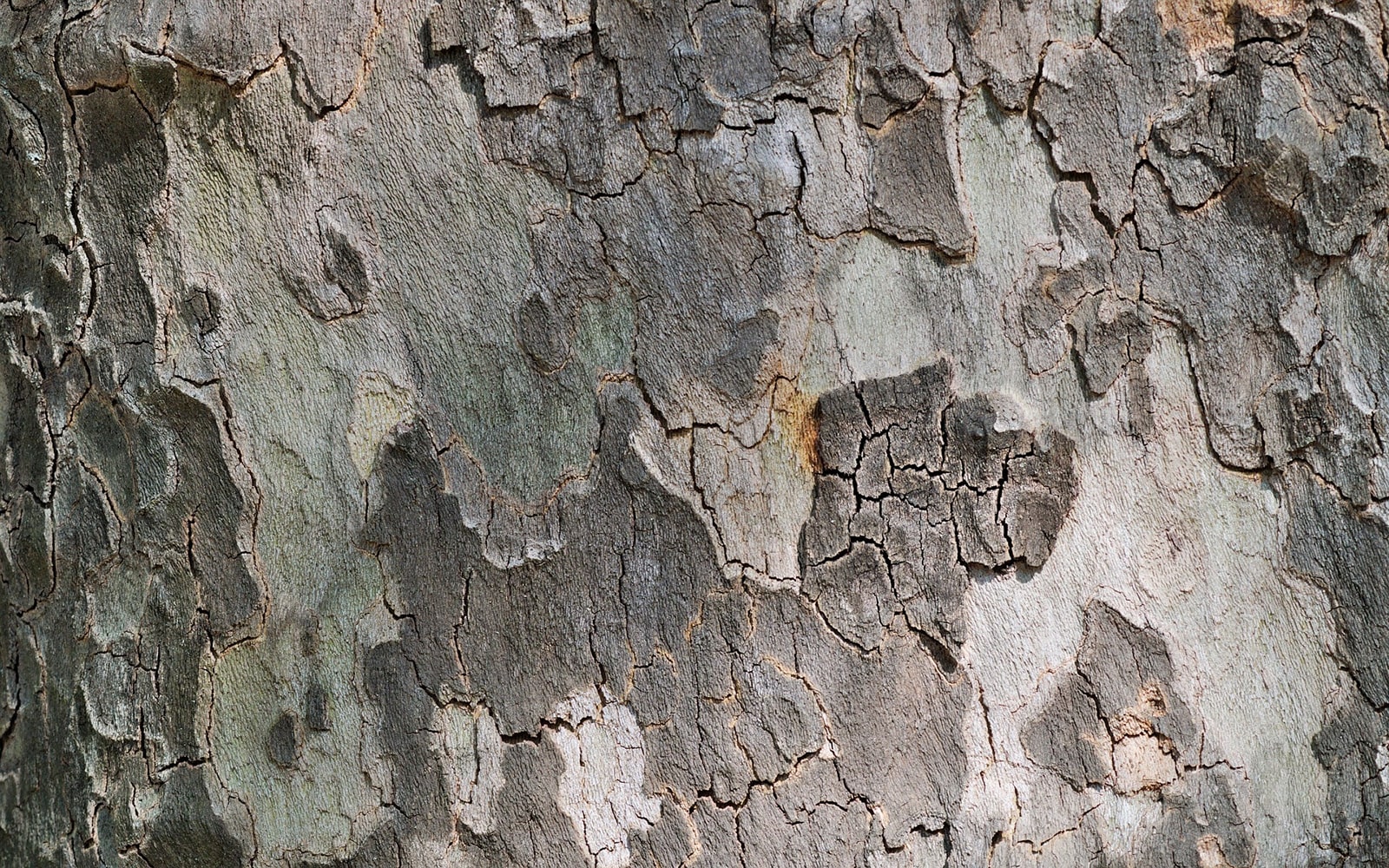
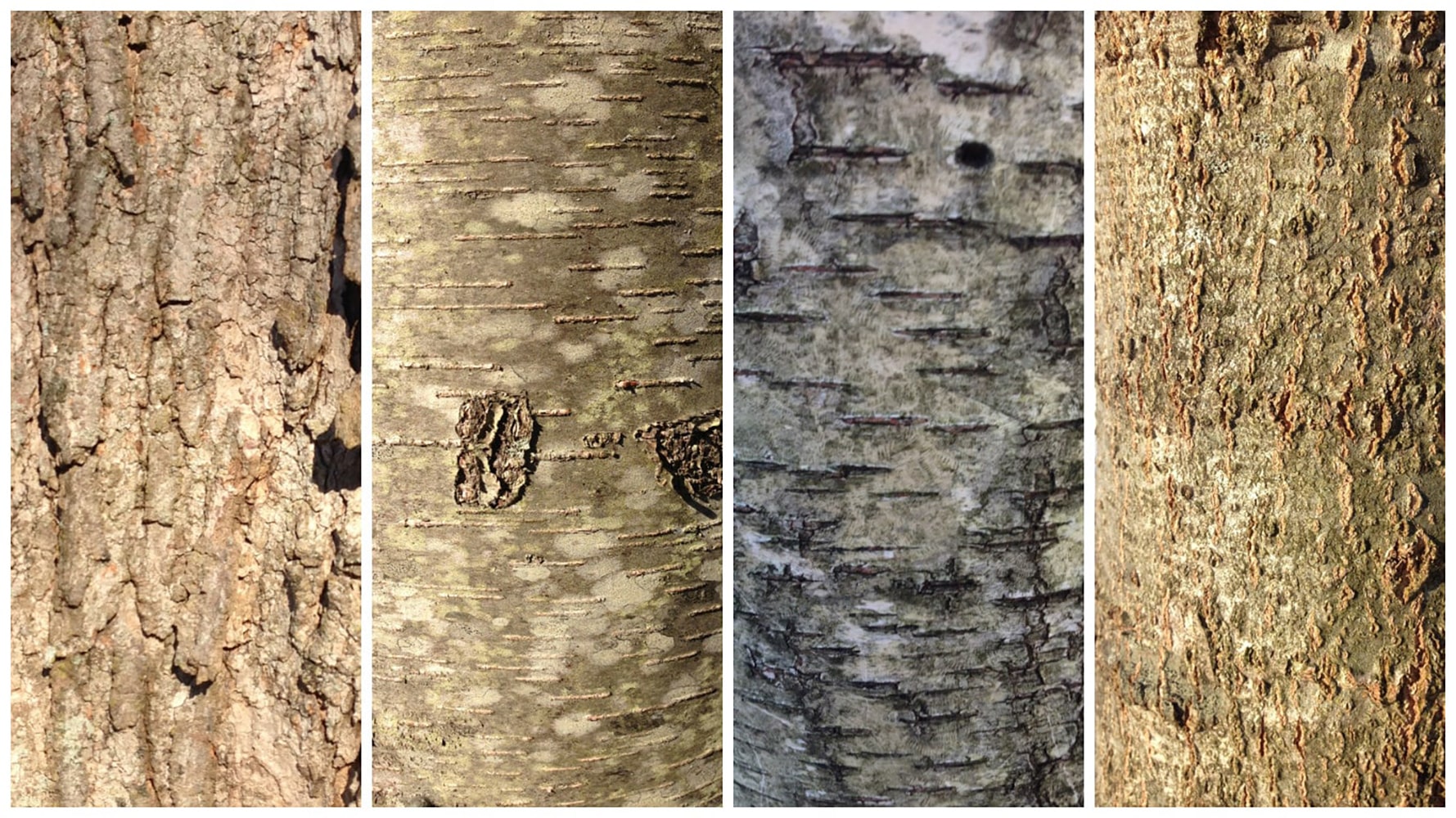
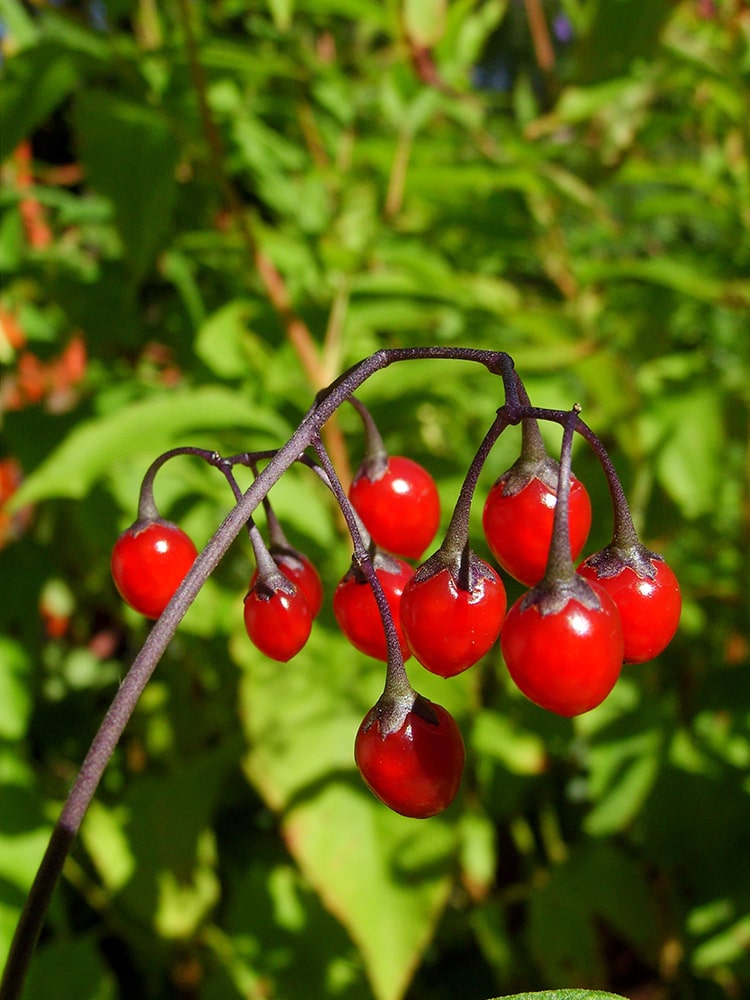
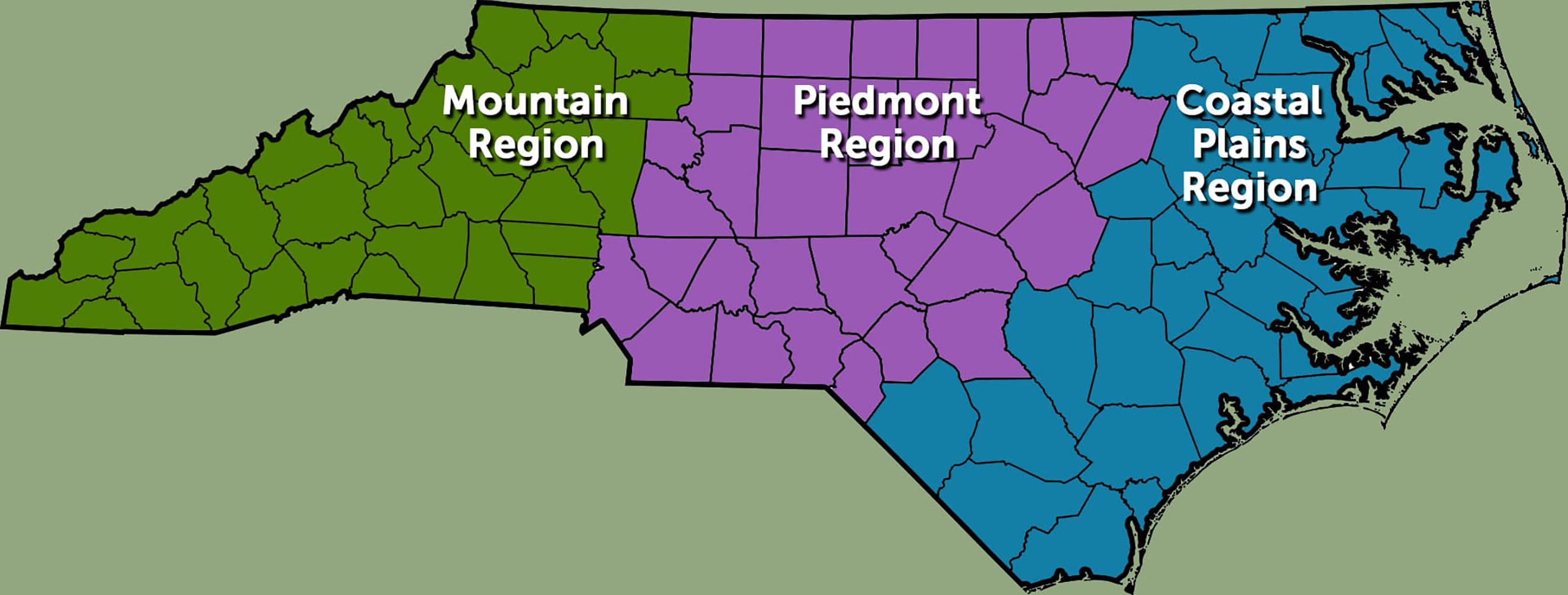
Black Cherry is a deciduous tree that can reach heights of 60 to 80 feet and is distributed throughout North Carolina, thriving particularly well in mountainous regions. Its leaves are arranged alternately, featuring finely serrated edges, subtle glands along the stem, and a yellow-brown fuzz on the underside. The bark is characterized by horizontal lenticels, and as the tree matures, it develops a scaly or flaky texture. In spring, it produces small white flowers, followed by round, dark purple fruits that ripen in late summer.
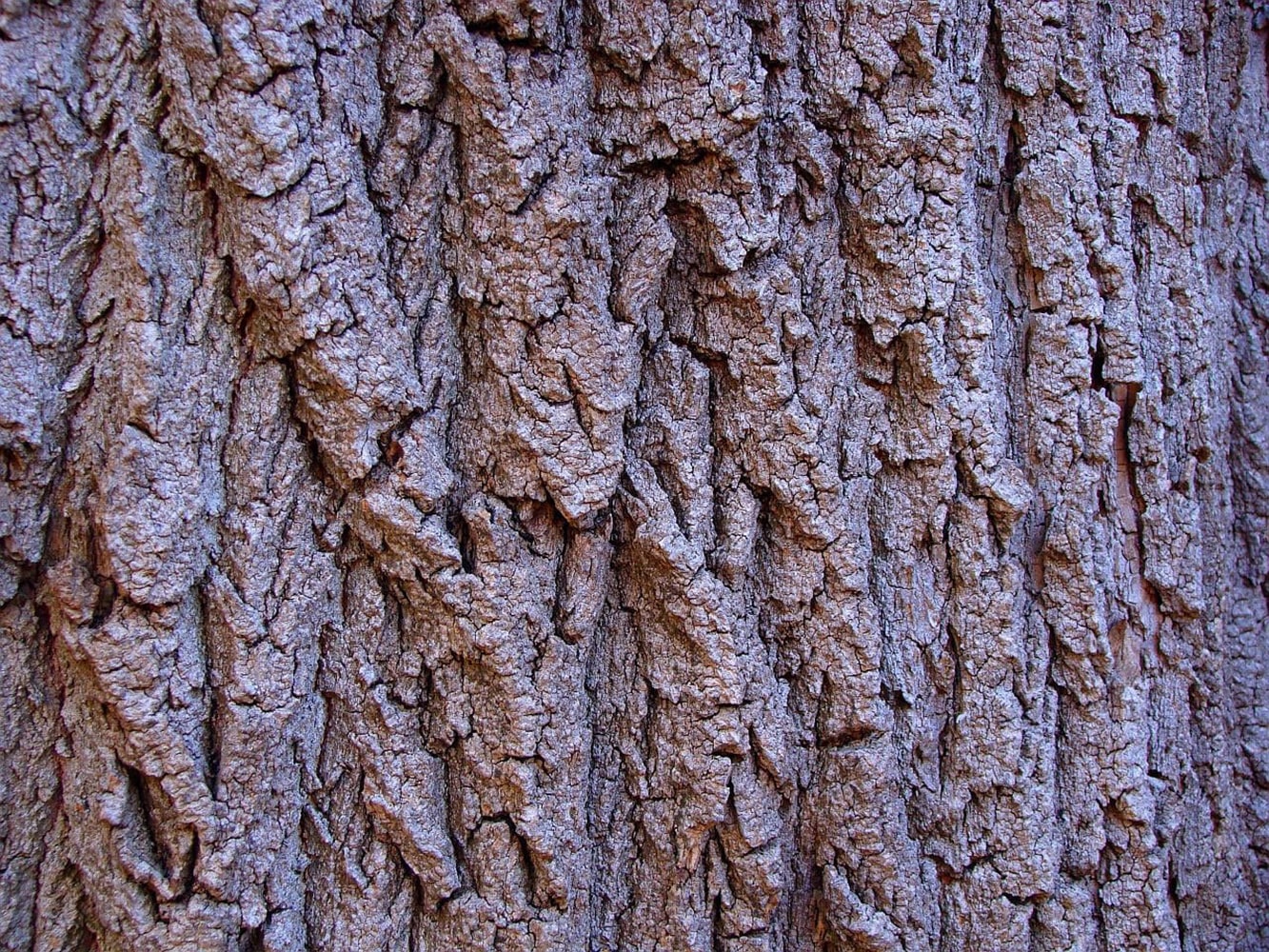
The bark of older trees takes on a dark, scaly appearance. The bark, roots, and leaves contain toxic cyanogenic compounds, which contribute to the distinct bitter almond scent of the inner bark.
Prunus serotina can be maintained at a shrub-like size by cutting it back to the ground every two to three years.
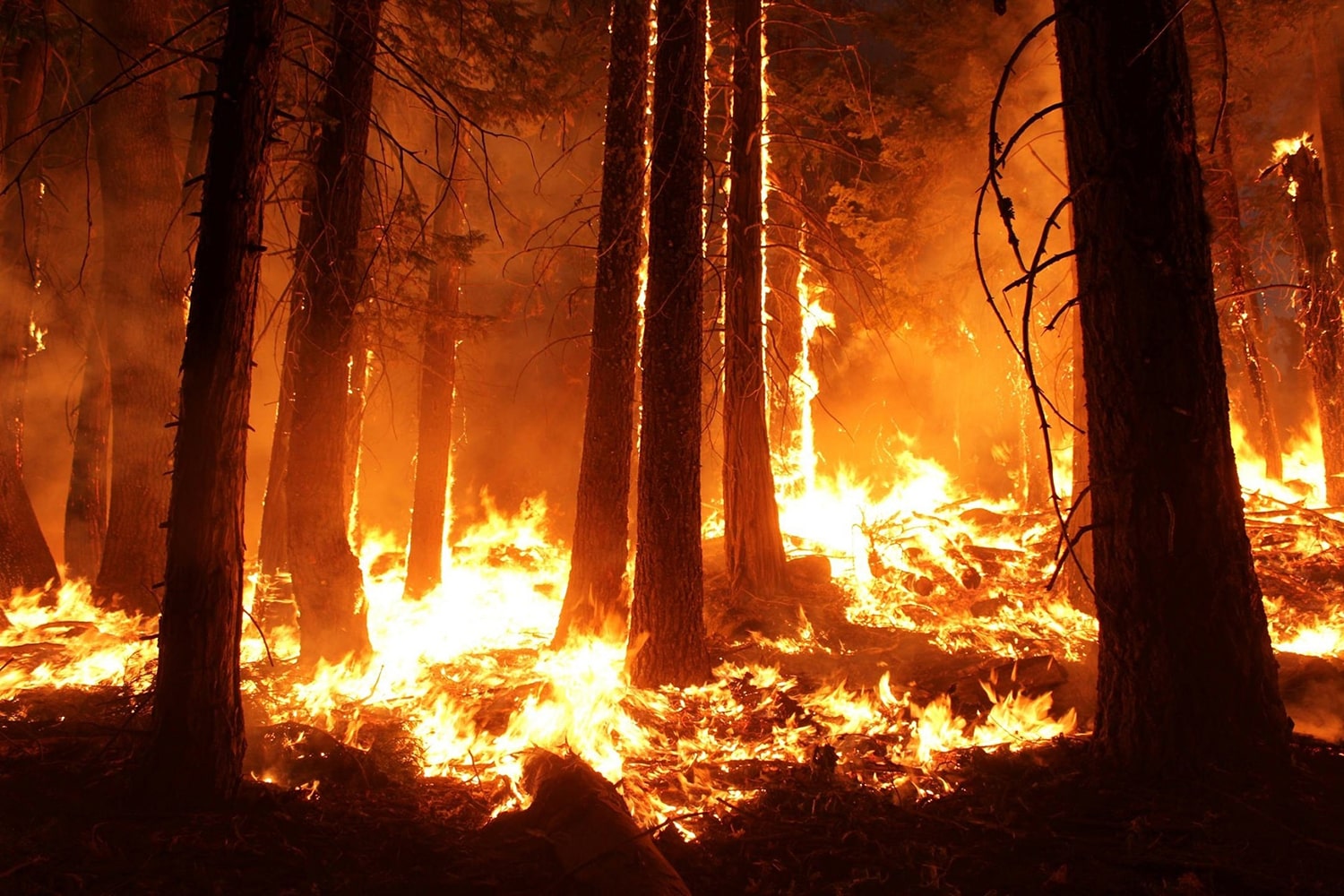
Fire Risk: This species has a low flammability rating.
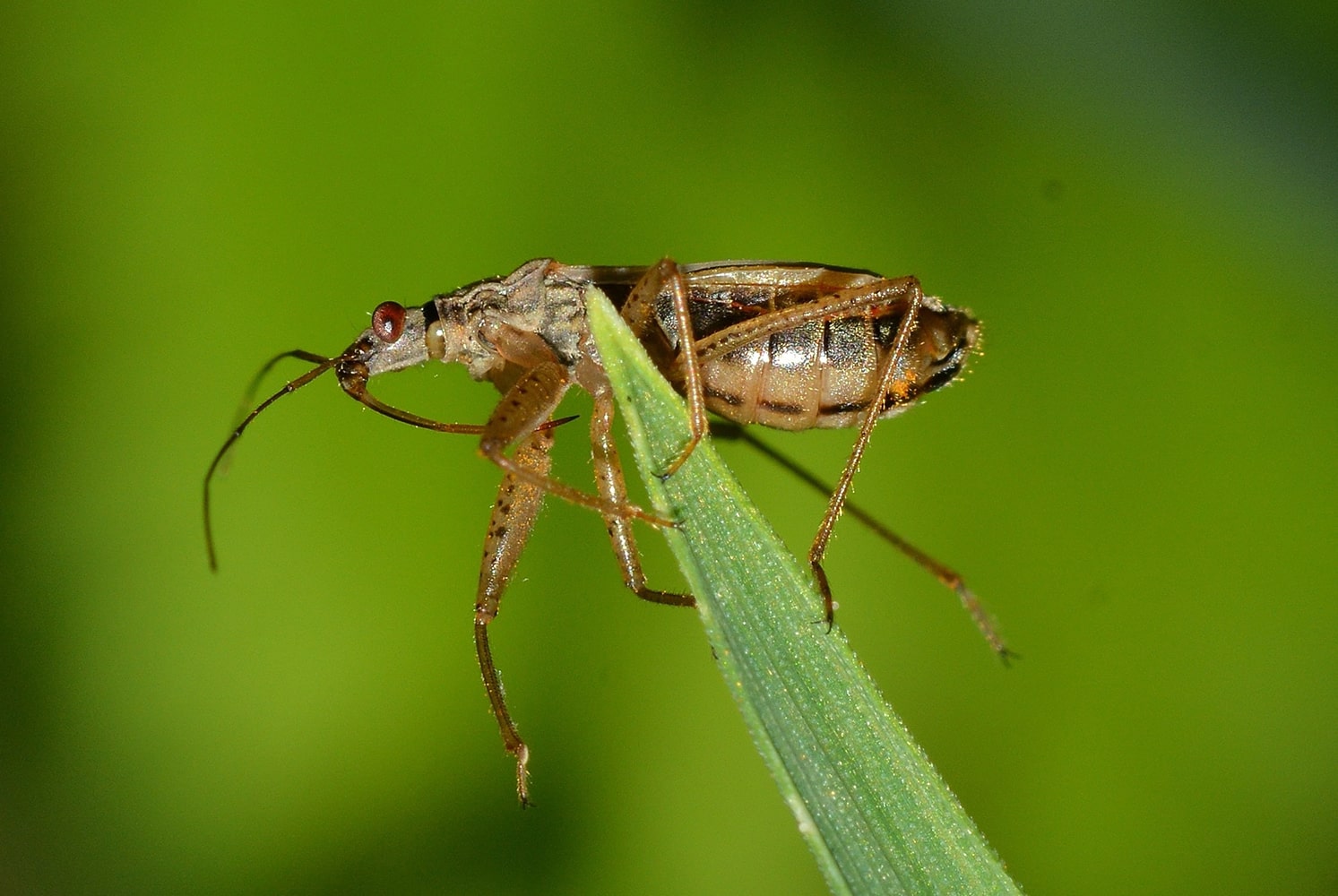
In terms of pests and diseases, the black cherry tree is vulnerable to a variety of insects and ailments. Common diseases include leaf spot, dieback, leaf curl, powdery mildew, root rot, and fire blight. Insect threats may consist of aphids, scale insects, borers, leafhoppers, caterpillars, tent caterpillars, and Japanese beetles, with spider mites also posing a potential issue.
Poison Delivery Mode: Ingestion.
#fragrant
#deciduous
#fall color
#shade tree
#wildlife plant
#showy
#native tree
#nectar plant
#flowering tree
#small mammals
#food source
#low flammability
#NC native
#deer resistant
#fire resistant
#edible fruits
#pollinator plant
#Braham Arboretum
#larval host plant
#food source summer
#fruits
#bird friendly
#nectar plant late spring
#butterfly friendly
#nectar plant mid-spring
#problem for cats
#pollinator garden
#problem for dogs
#problem for children
#problem for horses
#woodlands
#eastern tiger swallowtail butterfly
#red-spotted purple butterfly
#spring azure butterfly
#viceroy butterflies
#coral hairstreak butterfly