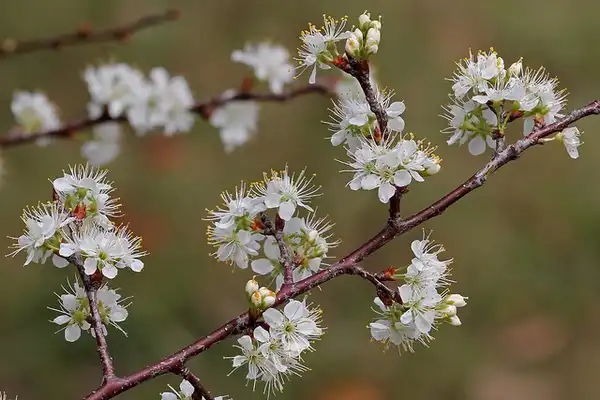
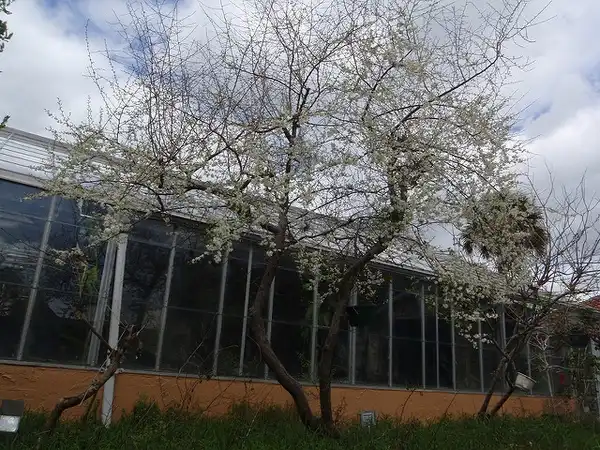
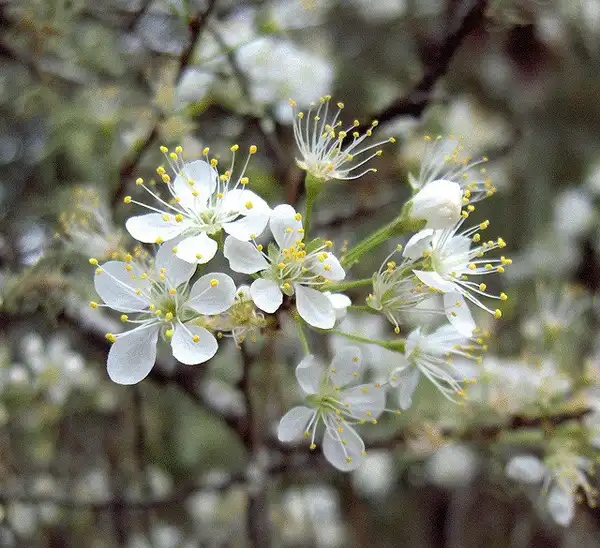
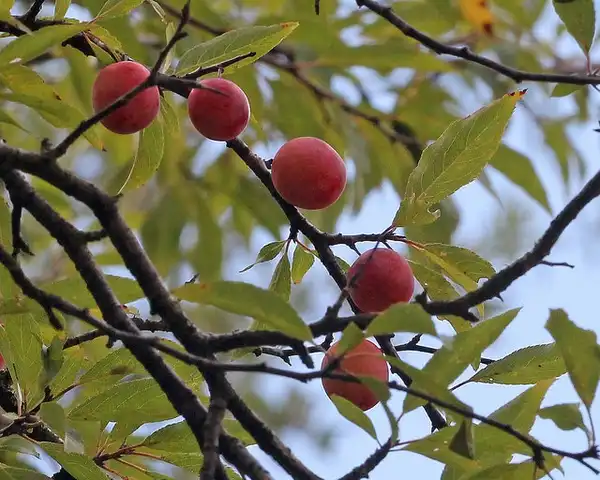
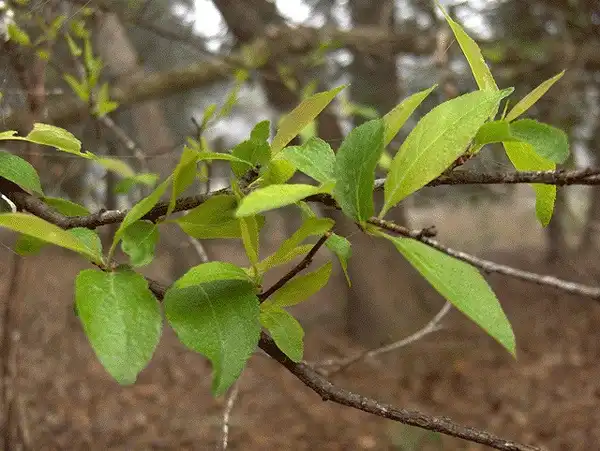
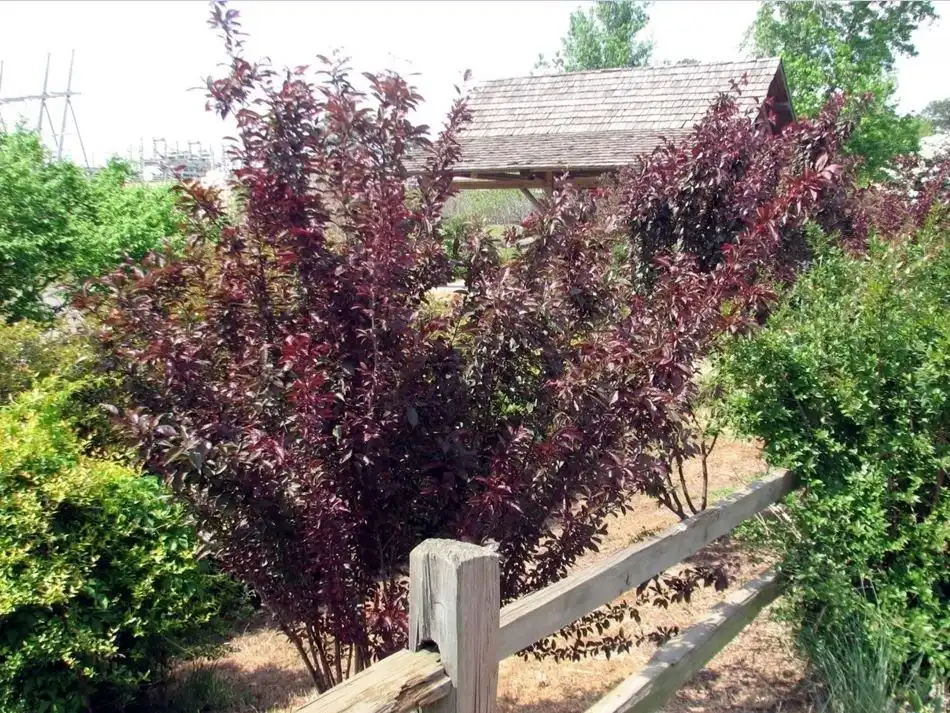
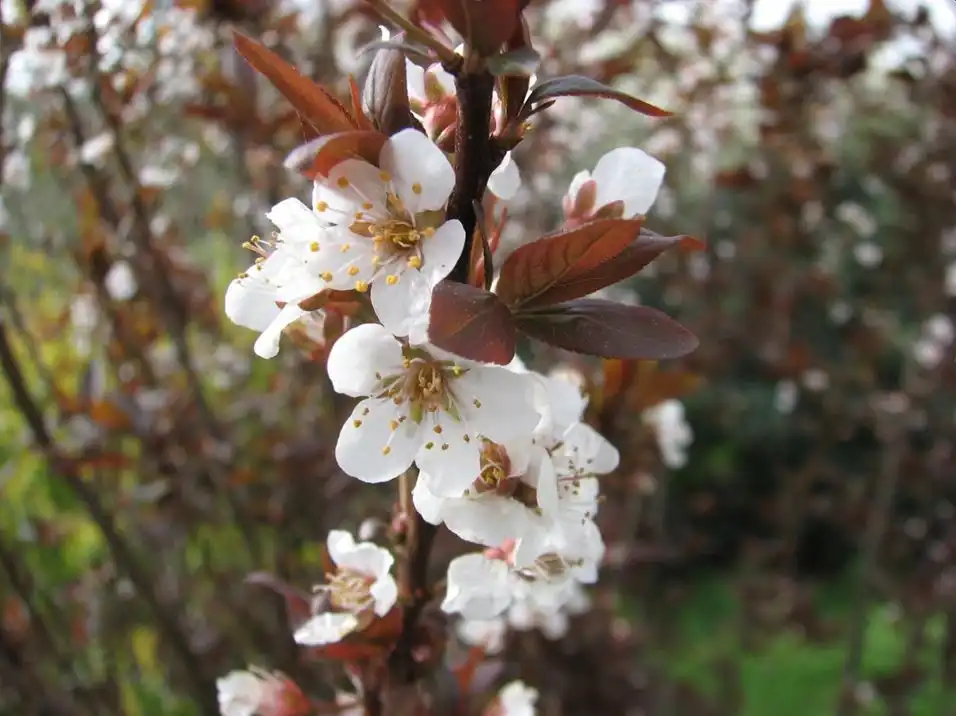
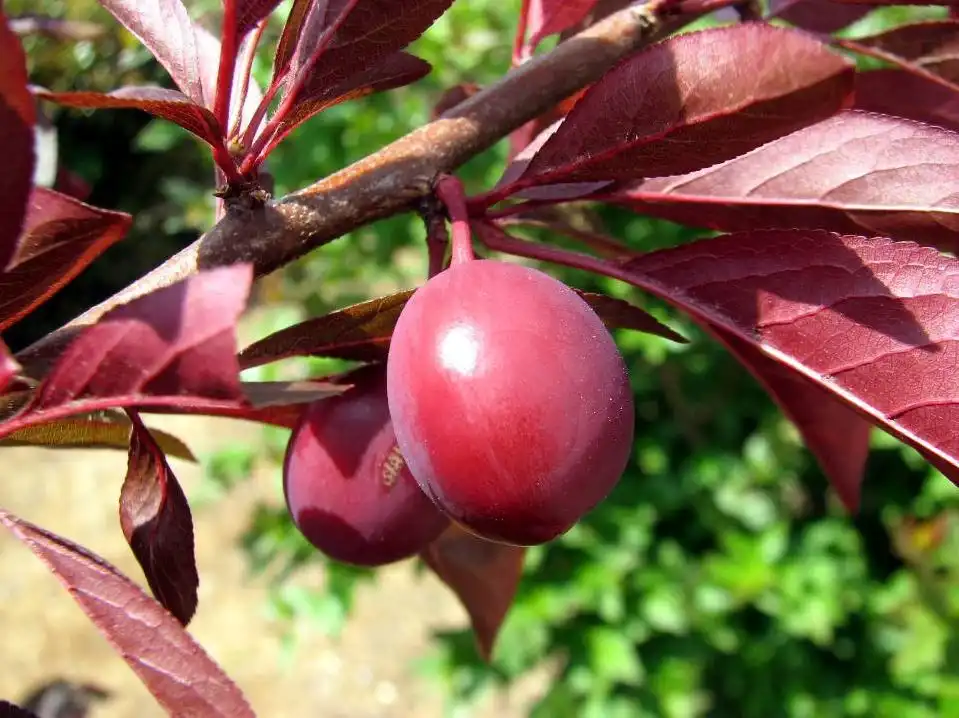
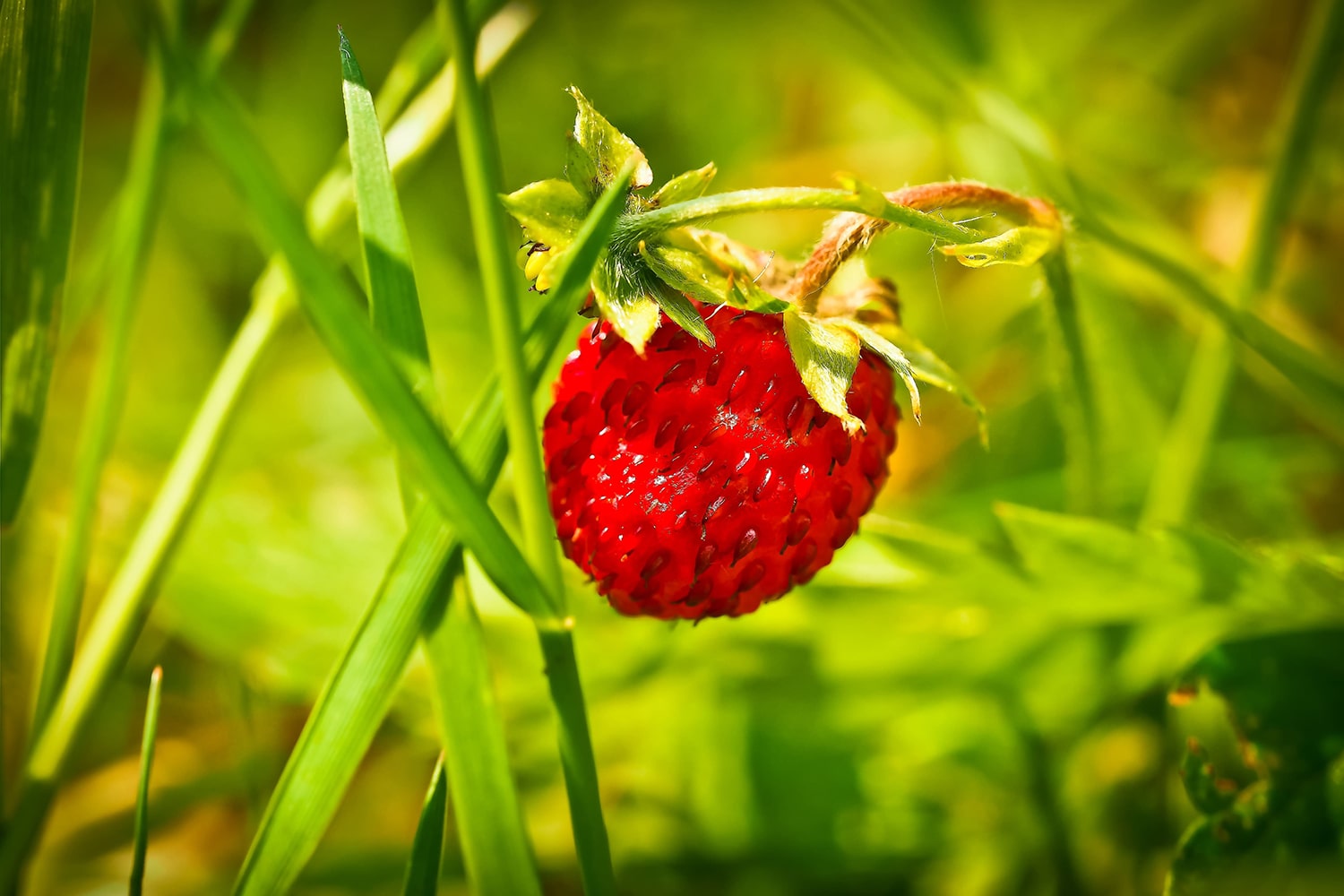
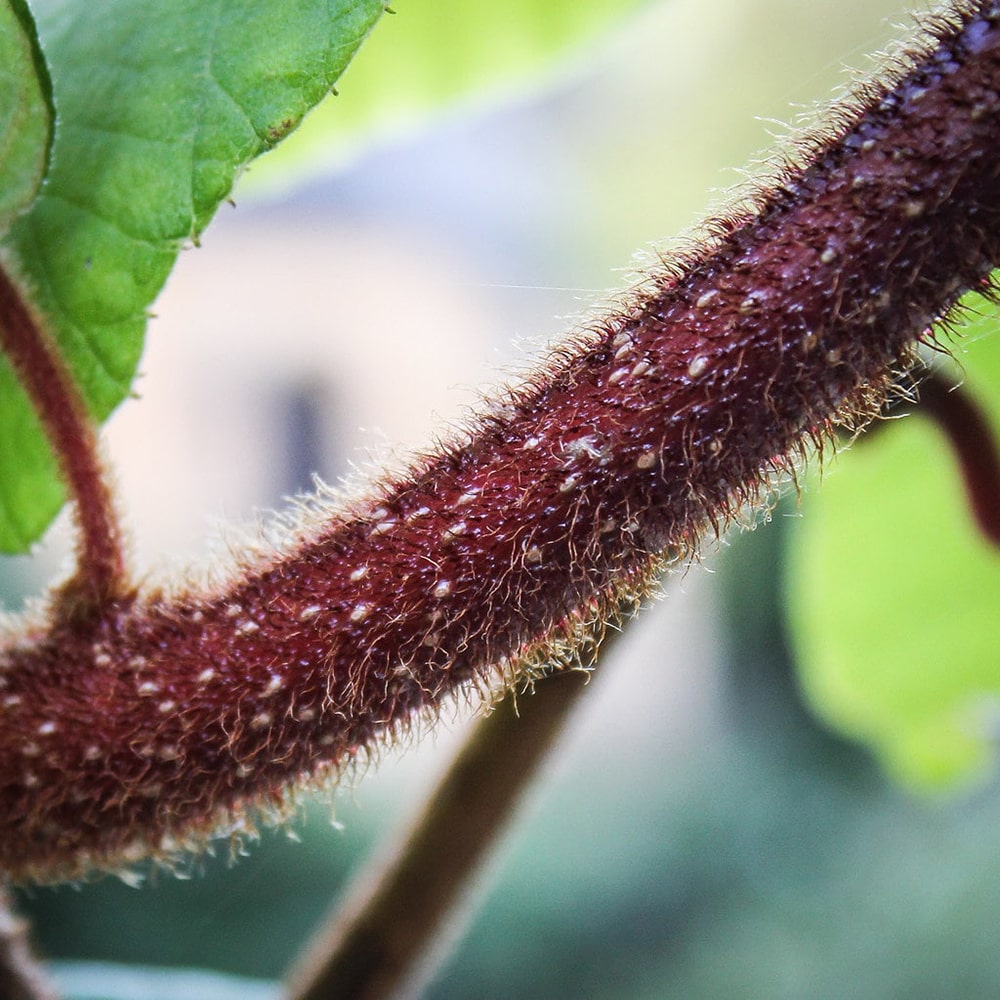
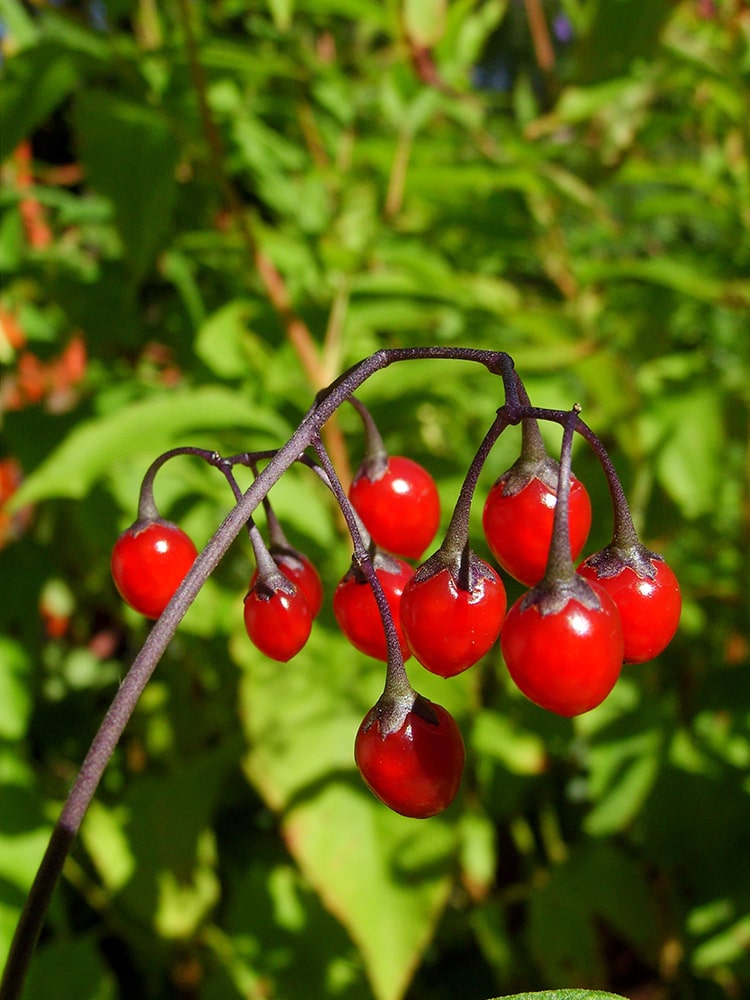
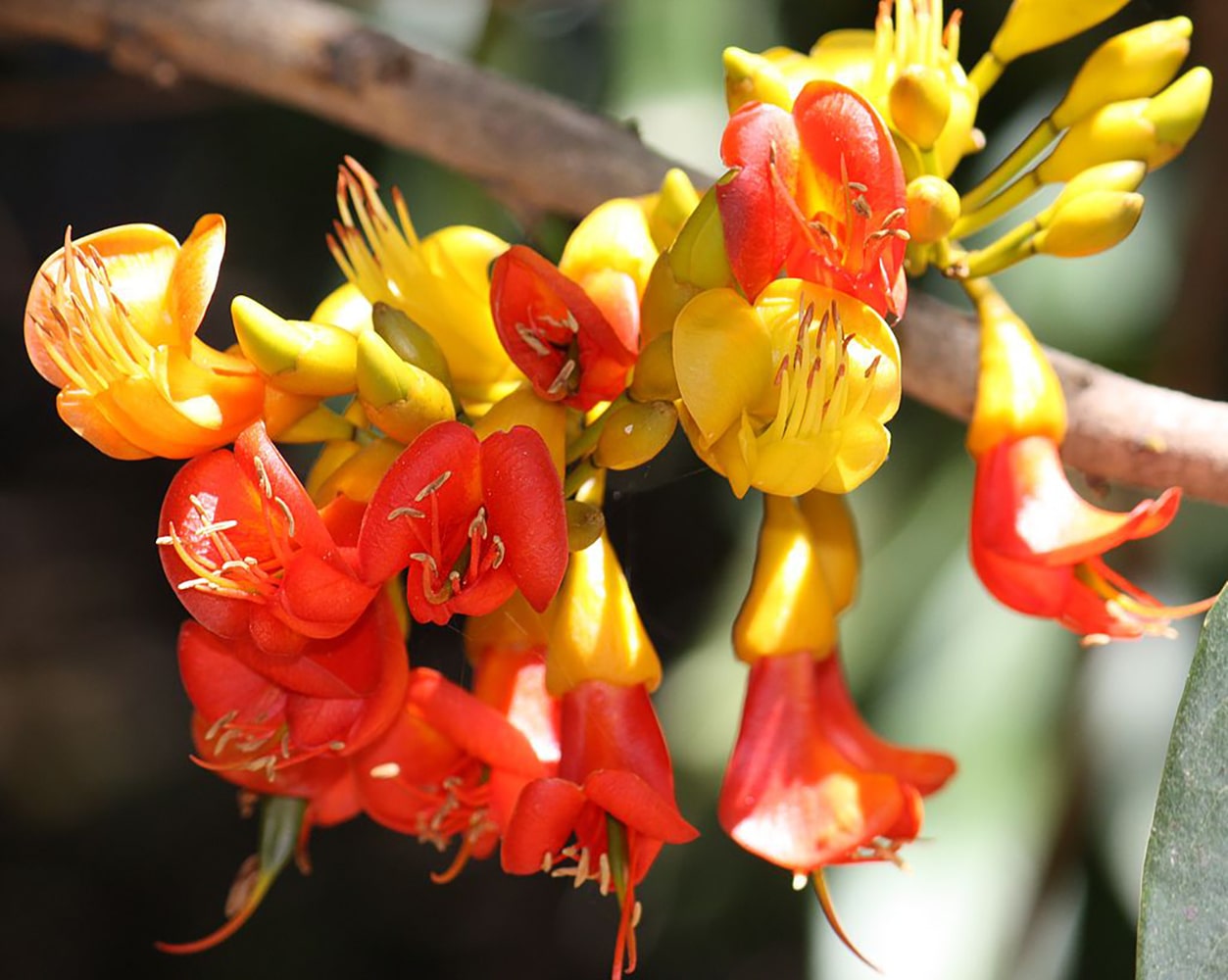
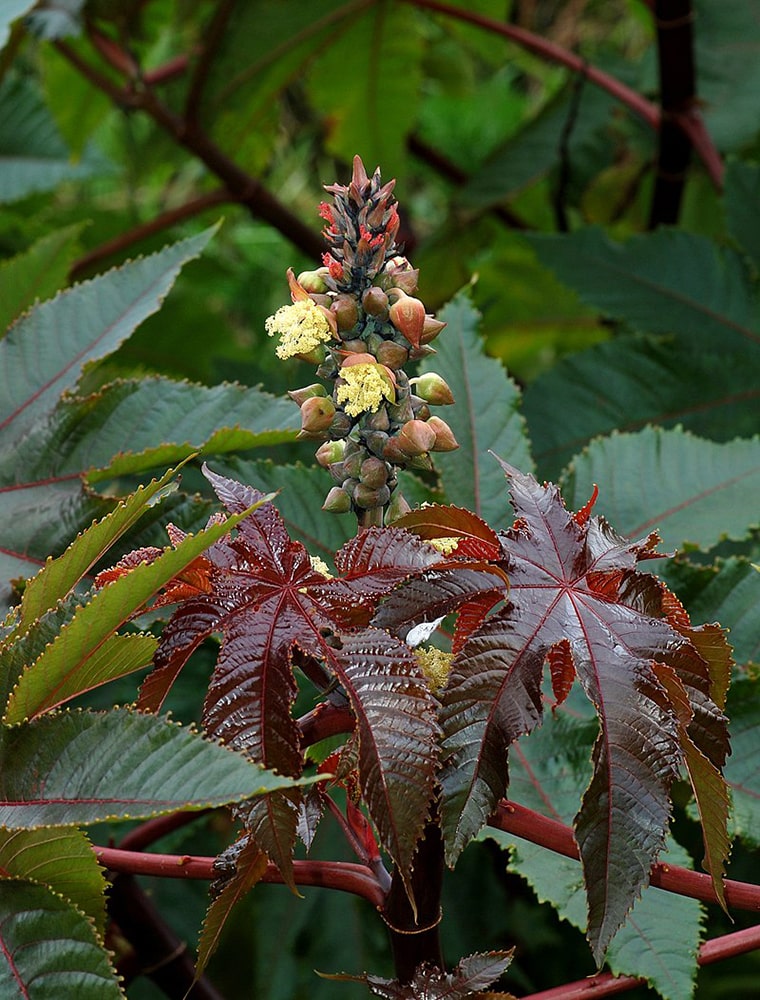
The Chickasaw Plum typically takes the form of a shrub that can reach heights of up to 15 feet. Its leaves are arranged alternately and feature finely serrated edges. The bark is initially smooth and red, dotted with numerous elongated light-colored lenticels. As the shrub matures, the bark develops a scaly texture and shallow furrows. In early spring, clusters of small, white flowers with five petals bloom. By summer, the tree bears small drupes, measuring about half an inch, that transition in color from yellow to red.
Historically, Native Americans would consume the fruit either fresh or dried for preservation during the winter months.
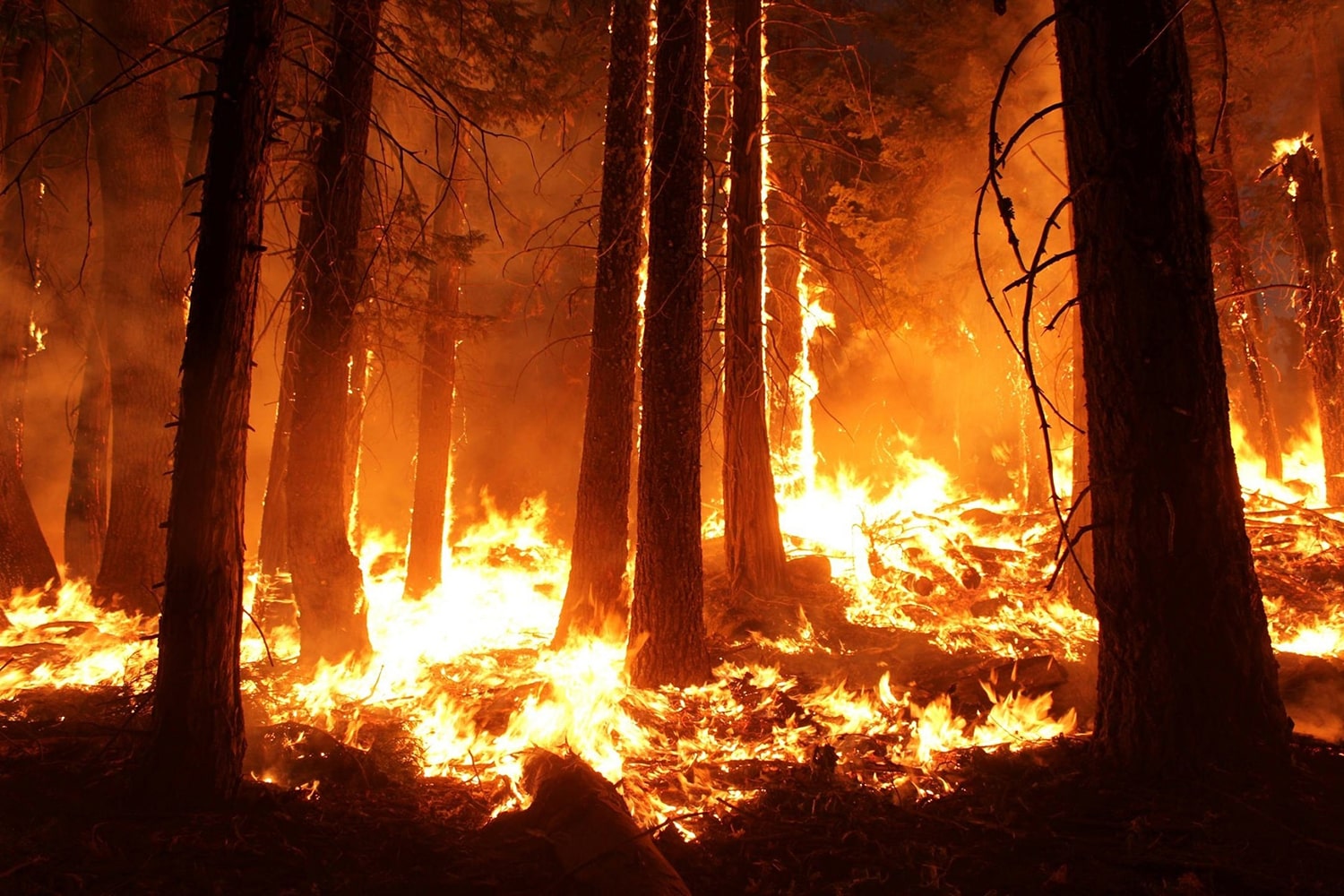
**Fire Risk:** This plant is rated low in flammability.
**Seasons of Interest:**
- **Leaves:**
- **Blooms:** Early spring
- **Fruit:** Summer
**Pests, Diseases, and Other Issues:** The Chickasaw Plum's fruit can be susceptible to plum curculio and brown rot. Additional potential diseases include leaf spot, canker, and black knot. Insect threats may involve aphids, scale insects, borers, and tent caterpillars.
**Growing Conditions:** The Chickasaw Plum thrives in average, medium, well-drained soils and prefers full sun to partial shade. It is crucial to promptly eliminate root suckers to prevent unwanted spreading. This plant is versatile and can adapt to a variety of growing conditions and soil types.
#fragrant
#deciduous
#full sun tolerant
#wildlife plant
#showy
#native tree
#moths
#cover plant
#food source
#low flammability
#NC native
#native garden
#fire resistant
#edible fruits
#pollinator plant
#edible garden
#larval host plant
#food source summer
#cover
#food source herbage
#food source nectar
#food source pollen
#fruits
#bird friendly
#mammals
#food source soft mast fruit
#butterfly friendly
#nectar plant mid-spring
#butterfly larvae
#nectar plant early spring
#problem for cats
#pollinators
#pollinator garden
#problem for dogs
#problem for horses
#audubon
#eastern tiger swallowtail butterfly
#red-spotted purple butterfly
#spring azure butterfly
#viceroy butterflies
#coral hairstreak butterfly