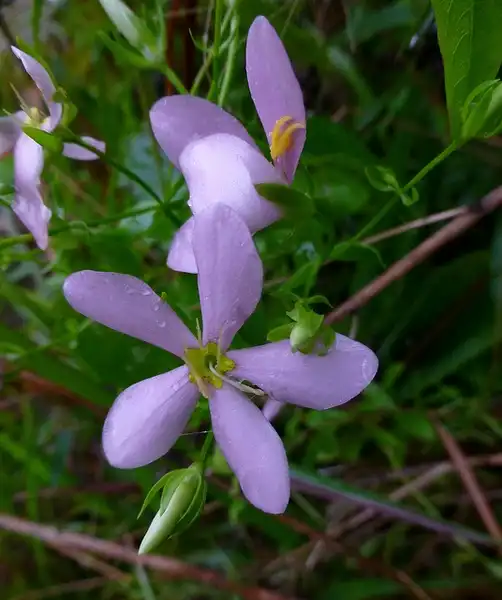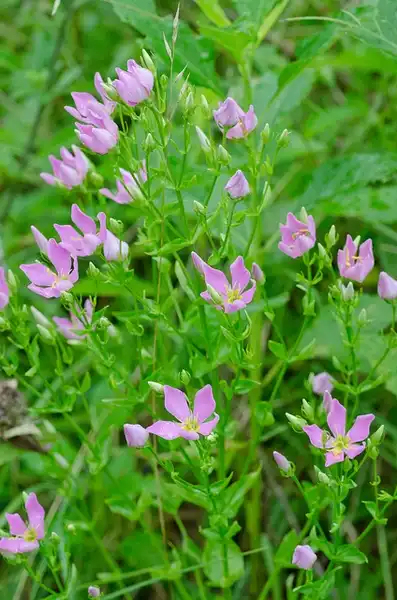
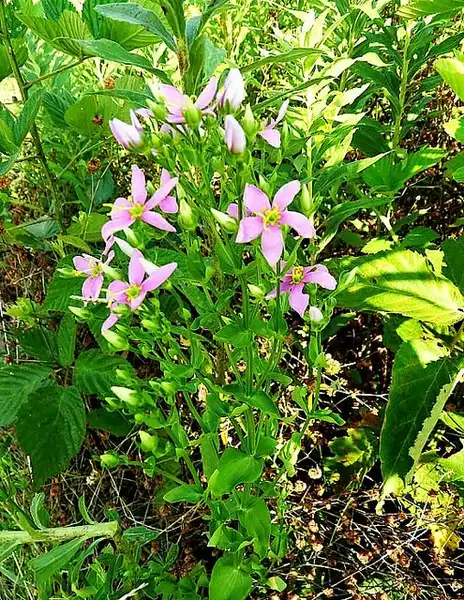
• Photo of Sabatia angularis (Sabatia angulariss)

Plant Profile: Sabatia angularis

Taxonomy: Sabatia angularis

Names

Rose-pink, Sabatia

  • Photo of Sabatia angularis (Sabatia angulariss)

Phonetic Spelling:sa-BAY-shee-uh ang-yoo-LAIR-iss

Genus:Sabatia

Species:angularis

Family:Gentianaceae

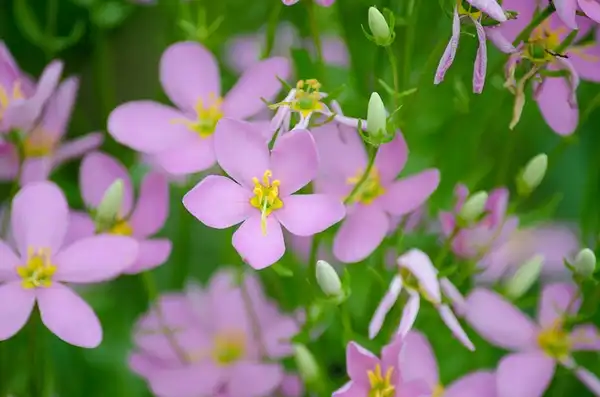
The rose-pink Sabatia is a striking wildflower known for its fragrant, single pink blooms, each measuring about an inch across and featuring five petals along with a distinctive greenish-yellow star-shaped center. The flowers grow in clusters with opposite branching. After blooming, they develop seed capsules that are approximately one-third of an inch long, containing numerous tiny seeds that can be easily dispersed by the wind when they mature, allowing them to establish in new areas. Although classified as a biennial, this plant readily self-seeds in gardens, often creating colonies that behave like perennials, producing a profusion of flowers each year. Its leaves are opposite, egg-shaped, and range from 0.7 to 1.5 inches in length, with a heart-shaped base that clasps the stem. Ideal planting locations include woodland borders, marshes, and thickets.

In 2020, this plant was honored as the NC Wildflower of the Year, a recognition facilitated by the North Carolina Botanical Garden with support from the Garden Club of North Carolina.

Sabatia angularis Feature Summary

Sabatia angularis Image Gallery

Tags

#fragrant
#showy
#wetlands
#marshes
#woodlands
#NC Wildflower of the Year

Similar Plants

Sabatia angularis Feature Summary

Attributes
Ontario south to New Mexico and Florida
Biennial
Flowers
Showy, fragrant, 1 in. single pink flowers with five petals; greenish yellow star-shaped eye; flower cluster has opposite branching
Pink
Green
4-5 petals/rays
< 1 inch
Leaves
Opposite egg-shaped leaves, 0.7 to 1.5 in. long; heart-shaped clasping base
1-3 inches
Whole Plant Traits
Herbaceous Perennial
Wildflower
Cultural Conditions
Full sun (6 or more hours of direct sunlight a day)
Partial Shade (Direct sunlight only part of the day, 2-6 hours)
Landscape

Sabatia angularis Attributes

Sabatia angularis: Distribution

Ontario south to New Mexico and Florida
Sabatia angularis: Life Cycle

Annual
Biennial
Bulb
Perennial
Woody

Sabatia angularis Flowers

Sabatia angularis: Flower Description

Showy, fragrant, 1 in. single pink flowers with five petals; greenish yellow star-shaped eye; flower cluster has opposite branching

Sabatia angularis: Flower Color

filter_vintage
Green
filter_vintage
Pink

Sabatia angularis: Flower Value To Gardener

Edible
Fragrant
Good Cut
Good Dried
Long Bloom Season
Long-lasting
Showy

Sabatia angularis: Flower Bloom Time

Winter
Spring
Summer
Fall

Sabatia angularis: Flower Petals

2-3 rays/petals
4-5 petals/rays
6 petals/rays
7 - 20 petals/rays
asymmetrical petals
Bracts
Colored Sepals
fused petals
more than 20 petals/rays
Tepals

Sabatia angularis: Flower Shape

Bell
Cross
Crown
Cup
Dome
Funnel
Irregular
Lipped
Radial
Saucer
Star
Trumpet
Tubular
Urn
Wheel

Sabatia angularis: Flower Size

1-3 inches
3-6 inches
< 1 inch
> 6 inches

Sabatia angularis Leaves

Sabatia angularis: Leaf Description

Opposite egg-shaped leaves, 0.7 to 1.5 in. long; heart-shaped clasping base

Sabatia angularis: Leaf Color

spa
Green

Sabatia angularis: Leaf Arrangement

Alternate
Opposite
Other/more complex
Rosulate
Whorled

Sabatia angularis: Hairs Present

No
Yes

Sabatia angularis: Leaf Length

< 1 inch
1-3 inches
3-6 inches
> 6 inches

Sabatia angularis Whole Plant Traits

Sabatia angularis: Plant Type

Annual
Bulb
Carnivorous
Edible
Epiphyte
Fern
Ground Cover
Herb
Herbaceous Perennial
Houseplant
Mushroom
Native Plant
Ornamental Grasses and Sedges
Perennial
Poisonous
Rose
Shrub
Succulent
Tree
Turfgrass
Vegetable
Vine
Water Plant
Weed
Wildflower

Sabatia angularis: Habit/Form

Arching
Ascending
Broad
Cascading
Climbing
Clumping
Columnar
Conical
Creeping
Dense
Erect
Horizontal
Irregular
Mounding
Multi-stemmed
Multi-trunked
Open
Oval
Prostrate
Pyramidal
Rounded
Spreading
Vase
Weeping

Sabatia angularis Cultural Conditions

Sabatia angularis: Light

Dappled Sunlight (Shade through upper canopy all day)
Deep shade (Less than 2 hours to no direct sunlight)
Full sun (6 or more hours of direct sunlight a day)
Partial Shade (Direct sunlight only part of the day, 2-6 hours)

Sabatia angularis: USDA Plant Hardiness Zone

thermostat
6a
thermostat
6b
thermostat
7a
thermostat
7b
thermostat
8a
thermostat
8b
thermostat
9a
thermostat
9b

Sabatia angularis Stem

Sabatia angularis: Stem Is Aromatic

No
Yes

Sabatia angularis Landscape

Sabatia angularis: Landscape Location

Coastal
Container
Hanging Baskets
Houseplants
Lawn
Meadow
Naturalized Area
Near Septic
Patio
Pond
Pool/Hardscape
Recreational Play Area
Riparian
Rock Wall
Slope/Bank
Small Space
Vertical Spaces
Walkways
Woodland