Plant Profile: Senna obtusifolia

Taxonomy: Senna obtusifolia

Names

Sicklepod

  • Photo of Senna obtusifolia (Senna obtusifolias)

Phonetic Spelling:SEN-nuh ob-too-sih-FOH-lee-uh

Genus:Senna

Species:obtusifolia

Family:Fabaceae

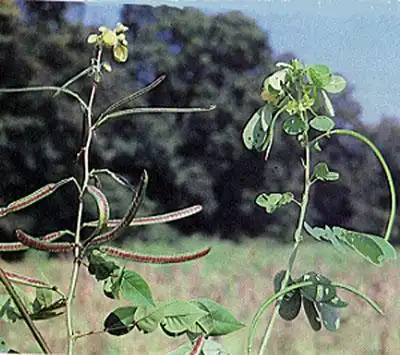
This is a branched, annual herb characterized by alternate leaves that are pinnately divided, lacking a noticeable gland at the base of the leaf stalk. The leaves consist of three pairs of leaflets, and the stipules are typically not persistent and do not have prominent striations. The flowers are yellow and consist of five parts, while the fruit is elongated, slender, and four-angled.

This plant can be found in forested or natural areas, particularly in open woodlands, and it tends to thrive in weedy conditions in disturbed regions and fields.

Senna obtusifolia Feature Summary

Senna obtusifolia Image Gallery

Tags

Senna obtusifolia Feature Summary

Attributes
Tropical & Subtropical America
Edible parts: young shoots; roasted seeds have been used as a substitute for coffee. Harvest time: only collect plants from areas you know have NOT been treated with pesticides. Gather the young shoots in July or early August. Safe food procedures: soak young shoots in warm water to remove dirt and debris. Do not use dish detergent or any type of sanitizer. These products can leave a residue. The shoots have an unpleasant odor in its raw state but this disappears after cooking. Boil in salted water for five minutes, pour off this first water and add fresh boiling and salted water. Boil for another eight minutes. Serve as a vegetable.
Fruit
fruit long, slender, 4-angled
Flowers
flowers yellow, 5-parted
Gold/Yellow
4-5 petals/rays
Leaves
leaves alternate, pinnately divided, without a conspicuous gland at the base of the leaf stalk; leaflets of 3 pairs; stipules usually not persistent and not conspicuously striated
Compound (Pinnately , Bipinnately, Palmately)
Poisonous to Humans
TOXIC ONLY IF LARGE QUANTITIES EATEN. Diarrhea, tremors, dark brown urine.
Anthraquinones, emodin glycosides, toxalbumins, alkaloids
Whole Plant Traits
Poisonous
Cultural Conditions
Coastal
Piedmont
Landscape
Woodland
Naturalized Area

Senna obtusifolia Attributes

Senna obtusifolia: Country Or Region Of Origin

Tropical & Subtropical America
Senna obtusifolia: Edibility

Edible parts: young shoots; roasted seeds have been used as a substitute for coffee. Harvest time: only collect plants from areas you know have NOT been treated with pesticides. Gather the young shoots in July or early August. Safe food procedures: soak young shoots in warm water to remove dirt and debris. Do not use dish detergent or any type of sanitizer. These products can leave a residue. The shoots have an unpleasant odor in its raw state but this disappears after cooking. Boil in salted water for five minutes, pour off this first water and add fresh boiling and salted water. Boil for another eight minutes. Serve as a vegetable.

Senna obtusifolia Fruit

Senna obtusifolia: Fruit Description

fruit long, slender, 4-angled

Senna obtusifolia Flowers

Senna obtusifolia: Flower Description

flowers yellow, 5-parted

Senna obtusifolia: Flower Color

filter_vintage
Gold/Yellow

Senna obtusifolia: Flower Petals

2-3 rays/petals
4-5 petals/rays
6 petals/rays
7 - 20 petals/rays
asymmetrical petals
Bracts
Colored Sepals
fused petals
more than 20 petals/rays
Tepals

Senna obtusifolia Leaves

Senna obtusifolia: Leaf Description

leaves alternate, pinnately divided, without a conspicuous gland at the base of the leaf stalk; leaflets of 3 pairs; stipules usually not persistent and not conspicuously striated

Senna obtusifolia: Leaf Color

spa
Green

Senna obtusifolia: Leaf Type

Compound (Pinnately , Bipinnately, Palmately)
Fronds
Needles
Sheath
Simple

Senna obtusifolia: Leaf Arrangement

Alternate
Opposite
Other/more complex
Rosulate
Whorled

Senna obtusifolia: Hairs Present

No
Yes

Senna obtusifolia Poisonous to Humans

Senna obtusifolia: Poison Symptoms

TOXIC ONLY IF LARGE QUANTITIES EATEN. Diarrhea, tremors, dark brown urine.

Senna obtusifolia: Poison Toxic Principle

Anthraquinones, emodin glycosides, toxalbumins, alkaloids

Senna obtusifolia: Poison Severity

High
Low
Medium

Senna obtusifolia: Causes Contact Dermatitis

No
Yes

Senna obtusifolia: Poison Part

Bark
Flowers
Fruits
Leaves
Roots
Sap/Juice
Seeds
Stems

Senna obtusifolia Whole Plant Traits

Senna obtusifolia: Plant Type

Annual
Bulb
Carnivorous
Edible
Epiphyte
Fern
Ground Cover
Herb
Herbaceous Perennial
Houseplant
Mushroom
Native Plant
Ornamental Grasses and Sedges
Perennial
Poisonous
Rose
Shrub
Succulent
Tree
Turfgrass
Vegetable
Vine
Water Plant
Weed
Wildflower

Senna obtusifolia Cultural Conditions

Senna obtusifolia: NC Region

Coastal
Mountains
Piedmont

Senna obtusifolia Stem

Senna obtusifolia: Stem Is Aromatic

No
Yes

Senna obtusifolia Landscape

Senna obtusifolia: Landscape Location

Coastal
Container
Hanging Baskets
Houseplants
Lawn
Meadow
Naturalized Area
Near Septic
Patio
Pond
Pool/Hardscape
Recreational Play Area
Riparian
Rock Wall
Slope/Bank
Small Space
Vertical Spaces
Walkways
Woodland

Senna obtusifolia: Problems

Allelopathic
Contact Dermatitis
Frequent Disease Problems
Frequent Insect Problems
Invasive Species
Malodorous
Messy
Poisonous to Humans
Problem for Cats
Problem for Children
Problem for Dogs
Problem for Horses
Short-lived
Spines/Thorns
Weak Wood
Weedy