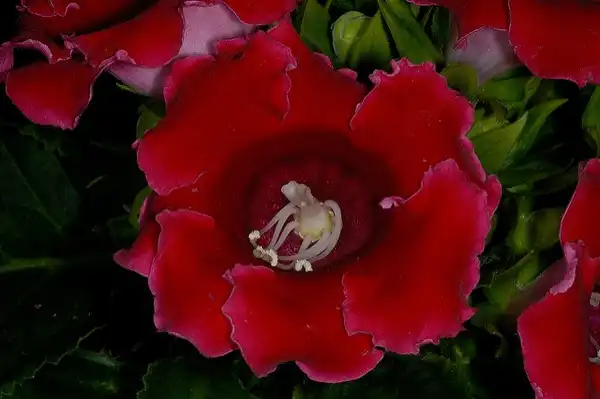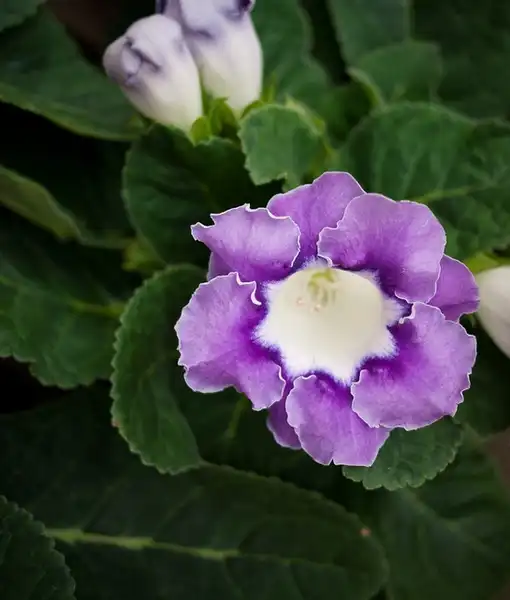
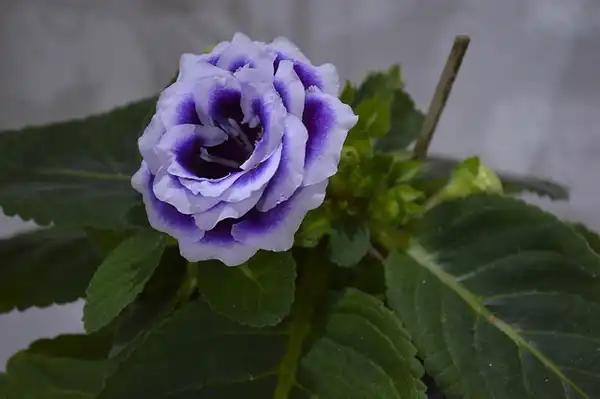
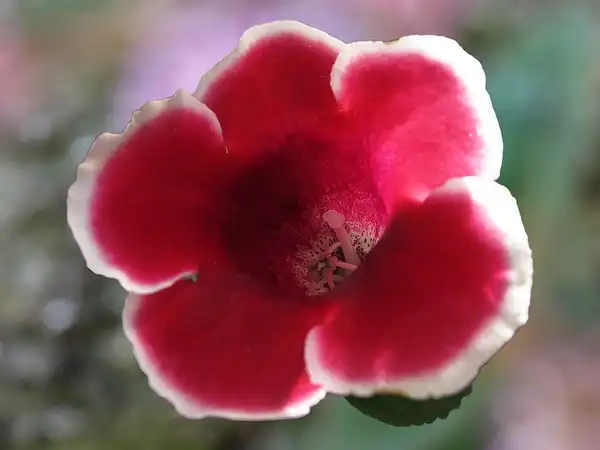
• Photo of Sinningia speciosa (Sinningia speciosas)

Plant Profile: Sinningia speciosa

Taxonomy: Sinningia speciosa

Names

Bright Eyes, Gloxina, Gloxinia, Violet Slipper Gloxinia

  • Photo of Sinningia speciosa (Sinningia speciosas)

Phonetic Spelling:sigh-NIN-jee-uh spee-see-OH-suh

Genus:Sinningia

Species:speciosa

Family:Gesneriaceae

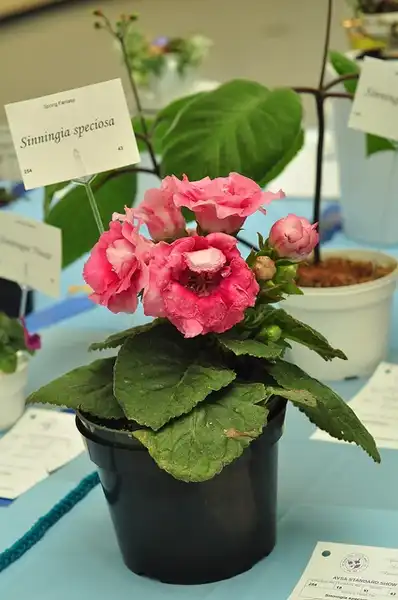
Gloxinia, a perennial bulb related to African violets, is commonly cultivated as a houseplant that can be moved outdoors during the summer months. This plant features soft, velvety green leaves that grow in a rosette pattern at the base. For optimal growth, gloxinia requires bright indoor light, avoiding direct sunlight, and should be kept consistently moist. It typically flowers in the spring; after blooming, it’s advisable to trim the leaves back to the first two to promote a second flowering. Following this second bloom, reduce watering until the leaves begin to wither. Store the pots in a dark area with a stable temperature between 60 and 65 degrees Fahrenheit, and lightly mist the tubers to prevent them from drying out. After a period of dormancy, the tubers will start to sprout again, at which point you can return the pots to a well-lit location and resume regular watering.

Be aware that potential issues such as gray mold or crown rot may arise from excessive watering.

Sinningia speciosa Feature Summary

Sinningia speciosa Image Gallery

Tags

#bulb
#showy flowers
#houseplant
#velvety
#hairy leaves
#non-toxic for horses
#non-toxic for dogs
#non-toxic for cats

Similar Plants

Sinningia speciosa Feature Summary

Whole Plant Traits
Perennial
Cultural Conditions
Dappled Sunlight (Shade through upper canopy all day)
Good Drainage
Flowers
Purple/Lavender
White
Gold/Yellow
Red/Burgundy
Spring
Summer

Sinningia speciosa Attributes

Sinningia speciosa: Country Or Region Of Origin

Brazil
Sinningia speciosa: Recommended Propagation Strategy

Division
Grafting
Layering
Leaf Cutting
Root Cutting
Seed
Stem Cutting

Sinningia speciosa Whole Plant Traits

Sinningia speciosa: Plant Type

Annual
Bulb
Carnivorous
Edible
Epiphyte
Fern
Ground Cover
Herb
Herbaceous Perennial
Houseplant
Mushroom
Native Plant
Ornamental Grasses and Sedges
Perennial
Poisonous
Rose
Shrub
Succulent
Tree
Turfgrass
Vegetable
Vine
Water Plant
Weed
Wildflower

Sinningia speciosa Cultural Conditions

Sinningia speciosa: Light

Dappled Sunlight (Shade through upper canopy all day)
Deep shade (Less than 2 hours to no direct sunlight)
Full sun (6 or more hours of direct sunlight a day)
Partial Shade (Direct sunlight only part of the day, 2-6 hours)

Sinningia speciosa: Soil Drainage

Frequent Standing Water
Good Drainage
Moist
Occasional Flooding
Occasionally Dry
Occasionally Wet
Very Dry

Sinningia speciosa Flowers

Sinningia speciosa: Flower Color

filter_vintage
Gold/Yellow
filter_vintage
Purple/Lavender
filter_vintage
Red/Burgundy
filter_vintage
White

Sinningia speciosa: Flower Bloom Time

Winter
Spring
Summer
Fall

Sinningia speciosa Leaves

Sinningia speciosa: Leaf Color

spa
Green

Sinningia speciosa: Leaf Shape

Acicular
Auriculate
Cordate
Cuneate
Deltoid
Elliptical
Filiform
Lanceolate
Linear
Oblanceolate
Oblong
Obovate
Obtuse
Orbicular
Ovate
Palmasect
Palmatifid
Peltate
Pinnatifid
Pinnatisect
Reniform
Rhomboidal
Spatulate
Subcordate
Subulate

Sinningia speciosa: Hairs Present

No
Yes

Sinningia speciosa: Leaf Feel

Fleshy
Glossy
Leathery
Papery
Prickly
Rough
Rubbery
Slippery
Smooth
Soft
Velvety
Waxy

Sinningia speciosa Stem

Sinningia speciosa: Stem Is Aromatic

No
Yes