Plant Profile: Solanum carolinense

Taxonomy: Solanum carolinense

Names

Horse Nettle, Wild Tomato

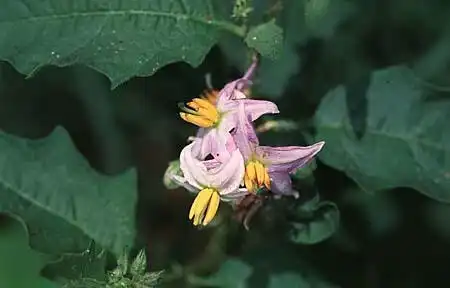
  • Photo of Solanum carolinense (Solanum carolinenses)

Phonetic Spelling:so-LAN-num kair-oh-lin-EN-say

Genus:Solanum

Species:carolinense

Family:Solanaceae

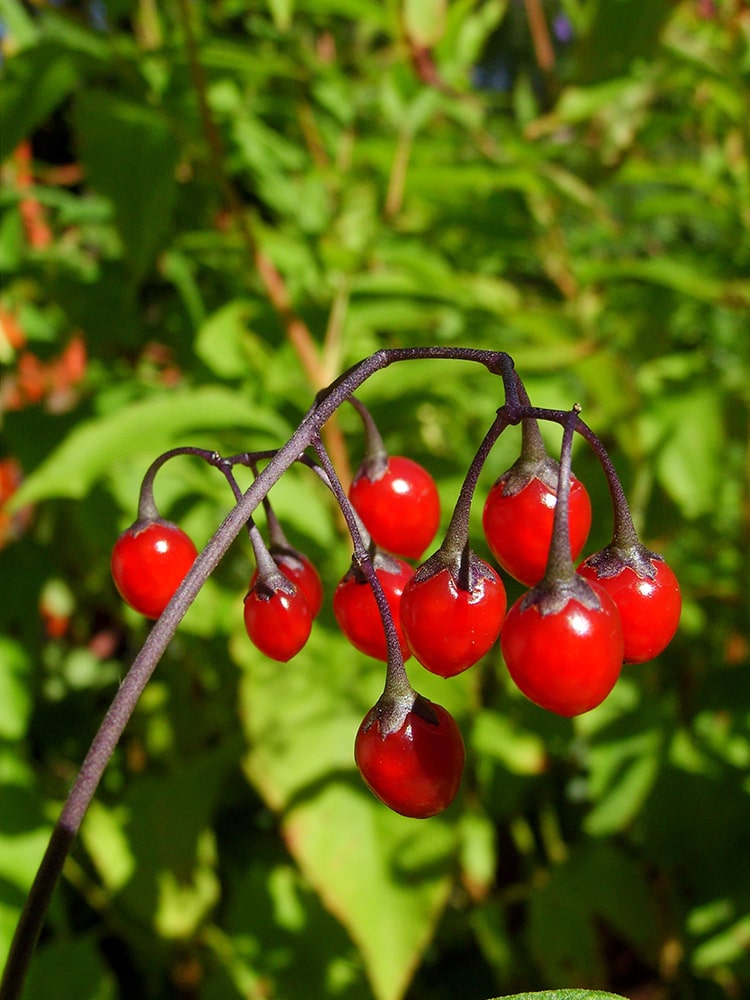
A perennial herb characterized by its prickly texture, featuring alternate and simple leaves that may be lobed or have coarse teeth. The flowers range in color from white to purplish and consist of five distinct parts, while the fruit is a yellow berry.

This plant typically thrives in environments such as roadsides, fields, and areas with sandy soil. It is commonly found in weedy patches of disturbed land, including roadsides, abandoned fields, waste areas, pastures, and even within forested or natural settings.

The mode of toxicity is through ingestion, and it is important to note that it is only considered toxic if consumed in large quantities.

Solanum carolinense Feature Summary

Solanum carolinense Image Gallery

Tags

#NC native
#problem for cats
#problem for dogs
#problem for horses

Similar Plants

Solanum carolinense Feature Summary

Attributes
East Canada to Northern Mexico and Haiti
Throughout
Perennial
Fruit
fruit orange to yellow berry
Gold/Yellow
Orange
Flowers
Star-shaped flower with five white to violet lobes; protruding yellow stamens in center
Purple/Lavender
White
4-5 petals/rays
Leaves
Rough, irregularly lobed, widely toothed leaves
Stem
slender yellow prickles on stems and midrib
Poisonous to Humans
Nausea, vomiting, salivation, drowsiness, abdominal pain, diarrhea, weakness, respiratory depression; may be fatal.
Solanine alkaloid.
Whole Plant Traits
Native Plant
Poisonous
Wildflower
Cultural Conditions
Landscape
Problem for Cats
Problem for Dogs
Problem for Horses

Solanum carolinense Attributes

Solanum carolinense: Country Or Region Of Origin

East Canada to Northern Mexico and Haiti
Solanum carolinense: Distribution

Throughout

Solanum carolinense: Life Cycle

Annual
Biennial
Bulb
Perennial
Woody

Solanum carolinense Fruit

Solanum carolinense: Fruit Description

fruit orange to yellow berry

Solanum carolinense: Fruit Type

Achene
Aggregate
Berry
Capsule
Caryopsis
Drupe
Follicle
Legume
Nut
Pome
Samara
Schizocarp
Siliqua

Solanum carolinense: Fruit Color

grass
Gold/Yellow
grass
Orange

Solanum carolinense Flowers

Solanum carolinense: Flower Description

Star-shaped flower with five white to violet lobes; protruding yellow stamens in center

Solanum carolinense: Flower Color

filter_vintage
Purple/Lavender
filter_vintage
White

Solanum carolinense: Flower Bloom Time

Winter
Spring
Summer
Fall

Solanum carolinense: Flower Petals

2-3 rays/petals
4-5 petals/rays
6 petals/rays
7 - 20 petals/rays
asymmetrical petals
Bracts
Colored Sepals
fused petals
more than 20 petals/rays
Tepals

Solanum carolinense: Flower Shape

Bell
Cross
Crown
Cup
Dome
Funnel
Irregular
Lipped
Radial
Saucer
Star
Trumpet
Tubular
Urn
Wheel

Solanum carolinense Leaves

Solanum carolinense: Leaf Description

Rough, irregularly lobed, widely toothed leaves

Solanum carolinense: Leaf Type

Compound (Pinnately , Bipinnately, Palmately)
Fronds
Needles
Sheath
Simple

Solanum carolinense: Leaf Arrangement

Alternate
Opposite
Other/more complex
Rosulate
Whorled

Solanum carolinense: Hairs Present

No
Yes

Solanum carolinense Stem

Solanum carolinense: Stem Description

slender yellow prickles on stems and midrib

Solanum carolinense: Stem Is Aromatic

No
Yes

Solanum carolinense Poisonous to Humans

Solanum carolinense: Poison Symptoms

Nausea, vomiting, salivation, drowsiness, abdominal pain, diarrhea, weakness, respiratory depression; may be fatal.

Solanum carolinense: Poison Toxic Principle

Solanine alkaloid.

Solanum carolinense: Poison Severity

High
Low
Medium

Solanum carolinense: Causes Contact Dermatitis

No
Yes

Solanum carolinense: Poison Part

Bark
Flowers
Fruits
Leaves
Roots
Sap/Juice
Seeds
Stems

Solanum carolinense Whole Plant Traits

Solanum carolinense: Plant Type

Annual
Bulb
Carnivorous
Edible
Epiphyte
Fern
Ground Cover
Herb
Herbaceous Perennial
Houseplant
Mushroom
Native Plant
Ornamental Grasses and Sedges
Perennial
Poisonous
Rose
Shrub
Succulent
Tree
Turfgrass
Vegetable
Vine
Water Plant
Weed
Wildflower

Solanum carolinense Cultural Conditions

Solanum carolinense: Soil Texture

Clay
High Organic Matter
Loam (Silt)
Sand
Shallow Rocky

Solanum carolinense Landscape

Solanum carolinense: Problems

Allelopathic
Contact Dermatitis
Frequent Disease Problems
Frequent Insect Problems
Invasive Species
Malodorous
Messy
Poisonous to Humans
Problem for Cats
Problem for Children
Problem for Dogs
Problem for Horses
Short-lived
Spines/Thorns
Weak Wood
Weedy