Plant Profile: Sprekelia

Taxonomy: Sprekelia

Names

Aztec Lily, Jacobean Lily, St. James Lily

  • Photo of Sprekelia (Sprekelias)

Phonetic Spelling:sprek-EL-ee-uh

Genus:Sprekelia

Species:

Family:Amaryllidaceae

Sprekelia, commonly known as the Aztec Lily, is a herbaceous perennial bulb and one of only three recognized species within the Amaryllis family. Its flowers bear a striking resemblance to those of popular houseplants. While the common name often includes "lily," it is important to note that Sprekelia is not a true lily. The species most frequently cultivated for its vibrant blooms is Sprekelia formosissima, although it remains relatively rare, particularly in cooler regions. This delicate bulb, native to southern Mexico and Guatemala, thrives only in USDA hardiness zones 8 and above. In warmer climates, Aztec Lily is typically grown outdoors, while in colder areas, it is often kept in pots. For those in temperate zones, these bulbs can be planted in well-drained soil during the summer and then brought indoors, similar to how one might treat gladiolus.

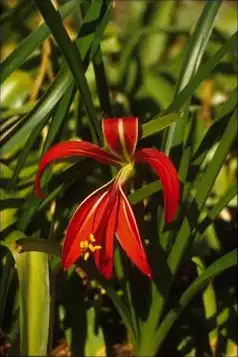
The flowers usually display colors ranging from scarlet to deep crimson, with some varieties showcasing pink hues, a white cultivar, or lighter midribs and white edges on the red tepals. Unfortunately, the blooms have a short lifespan, lasting only a few days before wilting. The long, dark green, strap-like leaves emerge in spring, coinciding with or preceding the flowering period. When cultivated as houseplants or in greenhouses, they may bloom at different times throughout the year. If grown seasonally, expect flowering to occur several weeks after planting.

Sprekelia is typically cultivated from bulbs in well-drained soil, often mulched or brought indoors during winter. The bulbs can be harvested and stored in peat or vermiculite at temperatures between 41 and 55 degrees Fahrenheit. However, this plant does not respond well to disturbance and may take several years to flower again after being dug up or divided. It is worth noting that the bulbs are classified as Tender III and can suffer damage if exposed to temperatures below 25 degrees Fahrenheit. When planting in spring, bulbs should be placed 2 inches deep and spaced 12 to 16 inches apart. Each bulb can produce several leaves that initially grow in an upright rosette before bending over as they lengthen. Bulbs can reach up to 2 inches in diameter, but even under optimal conditions, they may not bloom every year.

**Insects, Diseases, and Other Issues:**
The Aztec Lily is relatively pest-resistant, though it can occasionally be affected by mealybugs, which tend to hide in the crevices where the leaves emerge from the bulb.

Sprekelia Feature Summary

Sprekelia Image Gallery

Tags

#showy flowers
#dramatic
#summer bulbs
#flowering houseplant

Similar Plants

Sprekelia Feature Summary

Attributes
Mexico and Central America
stored in peat or vermiculite at 41 to 55 degrees F
Flowers
Brilliant red flowers up to 6 inches across are borne singly on the end of sturdy, hollow, cylindrical scapes about a foot long. Each flower is bilaterally symmetrical with six long tepals, with the broader, central upper one upright, two narrow lateral ones that are curved back at the tips and three lower narrow deflexed ones partly fused together, rolling up in a horizontal cylinder, encircling the long filaments of the stamens and large anthers with yellow pollen.
Red/Burgundy
3-6 inches
Leaves
The long, dark-green, strap-like leaves emerge in spring about the same time as or before the flowers. In their native habitat this is typically just after the first rains. Several leaves are produced from each bulb, growing in an upright rosette at first, then flopping over as they get longer.
> 6 inches
< 1 inch
Cultural Conditions
Full sun (6 or more hours of direct sunlight a day)
Good Drainage
High Organic Matter
Loam (Silt)
Landscape

Sprekelia Attributes

Sprekelia: Country Or Region Of Origin

Mexico and Central America
Sprekelia: Bulb Storage

stored in peat or vermiculite at 41 to 55 degrees F

Sprekelia: Life Cycle

Annual
Biennial
Bulb
Perennial
Woody

Sprekelia: Recommended Propagation Strategy

Division
Grafting
Layering
Leaf Cutting
Root Cutting
Seed
Stem Cutting

Sprekelia Flowers

Sprekelia: Flower Description

Brilliant red flowers up to 6 inches across are borne singly on the end of sturdy, hollow, cylindrical scapes about a foot long. Each flower is bilaterally symmetrical with six long tepals, with the broader, central upper one upright, two narrow lateral ones that are curved back at the tips and three lower narrow deflexed ones partly fused together, rolling up in a horizontal cylinder, encircling the long filaments of the stamens and large anthers with yellow pollen.

Sprekelia: Flower Color

filter_vintage
Red/Burgundy

Sprekelia: Flower Value To Gardener

Edible
Fragrant
Good Cut
Good Dried
Long Bloom Season
Long-lasting
Showy

Sprekelia: Flower Bloom Time

Winter
Spring
Summer
Fall

Sprekelia: Flower Shape

Bell
Cross
Crown
Cup
Dome
Funnel
Irregular
Lipped
Radial
Saucer
Star
Trumpet
Tubular
Urn
Wheel

Sprekelia: Flower Size

1-3 inches
3-6 inches
< 1 inch
> 6 inches

Sprekelia Leaves

Sprekelia: Leaf Description

The long, dark-green, strap-like leaves emerge in spring about the same time as or before the flowers. In their native habitat this is typically just after the first rains. Several leaves are produced from each bulb, growing in an upright rosette at first, then flopping over as they get longer.

Sprekelia: Woody Plant Leaf Characteristics

Broadleaf Evergreen
Deciduous
Needled Evergreen
Semi-evergreen

Sprekelia: Leaf Color

spa
Green

Sprekelia: Leaf Type

Compound (Pinnately , Bipinnately, Palmately)
Fronds
Needles
Sheath
Simple

Sprekelia: Leaf Margin

Crenate
Crenulate
Dentate
Denticulate
Doubly Crenate
Doubly Dentate
Doubly Serrate
Entire
Lobed
Serrate
Sinuate
Undulate

Sprekelia: Hairs Present

No
Yes

Sprekelia: Leaf Length

< 1 inch
1-3 inches
3-6 inches
> 6 inches

Sprekelia: Leaf Feel

Fleshy
Glossy
Leathery
Papery
Prickly
Rough
Rubbery
Slippery
Smooth
Soft
Velvety
Waxy

Sprekelia: Leaf Width

< 1 inch
1-3 inches
3-6 inches
> 6 inches

Sprekelia Whole Plant Traits

Sprekelia: Plant Type

Annual
Bulb
Carnivorous
Edible
Epiphyte
Fern
Ground Cover
Herb
Herbaceous Perennial
Houseplant
Mushroom
Native Plant
Ornamental Grasses and Sedges
Perennial
Poisonous
Rose
Shrub
Succulent
Tree
Turfgrass
Vegetable
Vine
Water Plant
Weed
Wildflower

Sprekelia: Woody Plant Leaf Characteristics

Broadleaf Evergreen
Deciduous
Needled Evergreen
Semi-evergreen

Sprekelia: Habit/Form

Arching
Ascending
Broad
Cascading
Climbing
Clumping
Columnar
Conical
Creeping
Dense
Erect
Horizontal
Irregular
Mounding
Multi-stemmed
Multi-trunked
Open
Oval
Prostrate
Pyramidal
Rounded
Spreading
Vase
Weeping

Sprekelia: Growth Rate

Slow
Medium
Rapid

Sprekelia: Maintenance

Low
Medium
High

Sprekelia: Texture

Fine
Medium
Coarse

Sprekelia Cultural Conditions

Sprekelia: Light

Dappled Sunlight (Shade through upper canopy all day)
Deep shade (Less than 2 hours to no direct sunlight)
Full sun (6 or more hours of direct sunlight a day)
Partial Shade (Direct sunlight only part of the day, 2-6 hours)

Sprekelia: Soil Drainage

Frequent Standing Water
Good Drainage
Moist
Occasional Flooding
Occasionally Dry
Occasionally Wet
Very Dry

Sprekelia: Available Space To Plant

12 inches-3 feet
12-24 feet
24-60 feet
3 feet-6 feet
6-feet-12 feet
Less than 12 inches
more than 60 feet

Sprekelia: Soil Texture

Clay
High Organic Matter
Loam (Silt)
Sand
Shallow Rocky

Sprekelia Stem

Sprekelia: Stem Is Aromatic

No
Yes

Sprekelia Landscape

Sprekelia: Design Feature

Accent
Barrier
Border
Flowering Tree
Foundation Planting
Hedge
Mass Planting
Screen/Privacy
Security
Shade Tree
Small groups
Small Tree
Specimen
Street Tree
Understory Tree

Sprekelia: Landscape Location

Coastal
Container
Hanging Baskets
Houseplants
Lawn
Meadow
Naturalized Area
Near Septic
Patio
Pond
Pool/Hardscape
Recreational Play Area
Riparian
Rock Wall
Slope/Bank
Small Space
Vertical Spaces
Walkways
Woodland