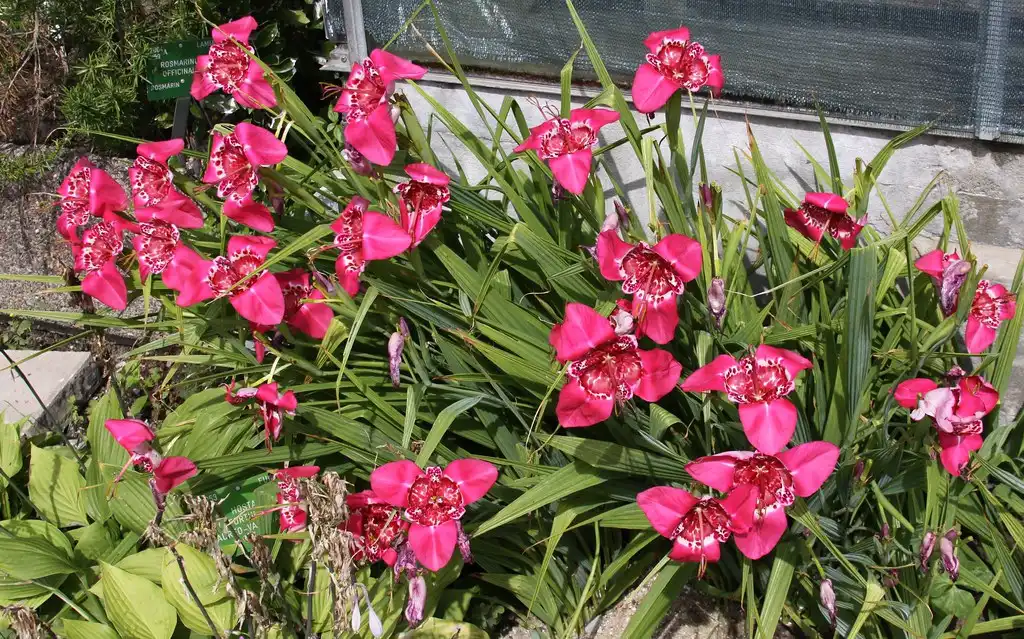
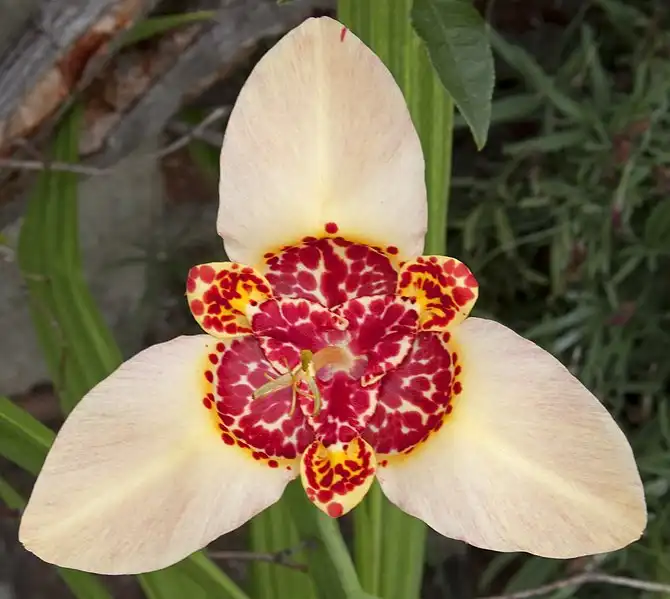
• Photo of Tigridia (Tigridias)

Plant Profile: Tigridia

Taxonomy: Tigridia

Names

Jockey's Cap Lily, Mexican Shell Flowers, Peacock Flower, Tiger Flowers

  • Photo of Tigridia (Tigridias)

Phonetic Spelling:tig-GREE-dee-uh

Genus:Tigridia

Species:

Family:Iridceae

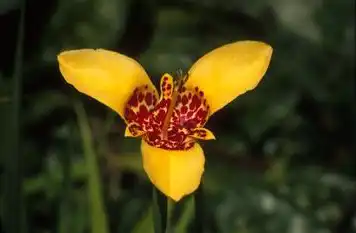
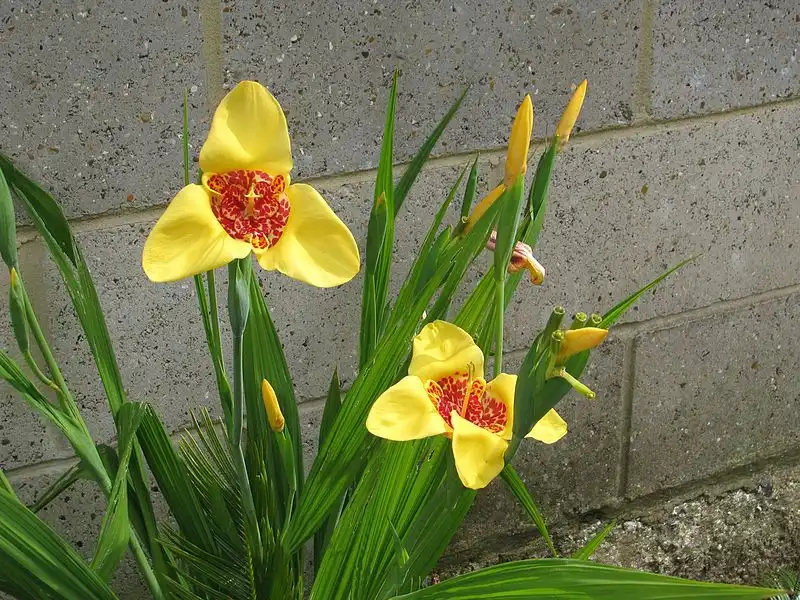
The striking two-toned flowers of the Tigridia range from 3 to 6 inches in diameter. These flared blossoms showcase vibrant hues of white, pink, red, orchid, yellow, or orange, often featuring contrasting spots at their centers. Each flower consists of three large petals accompanied by three smaller ones, while the leaves bear a resemblance to those of gladiolas. A single slender stem typically supports multiple flowers, each of which lasts for just one day. However, since each plant produces numerous stems, the blooming period can extend over several weeks. Tigridia thrives best in full sunlight and does not fare well in complete shade.

To maintain healthy growth, it is advisable to divide the bulbs every few years, as they generate offsets that can create substantial clumps.

In their natural habitat, Tigridia can be found flourishing in oak and pine forests, as well as along roadsides. The roots of this plant are edible; when baked, they have a flavor akin to sweet potatoes, though consuming them raw may result in a burning sensation.

Regarding pests, diseases, and other issues: eating the raw roots can lead to a burning effect.

Tigridia Feature Summary

Tigridia Image Gallery

Tags

#bulb
#drought tolerant
#perennial
#perennial bulb
#corm
#rabbit resistant
#deer resistant

Similar Plants

Tigridia Feature Summary

Attributes
Mexico and South America
Attracts pollinators
The roots are edible.
Attracts Pollinators
Whole Plant Traits
Cultural Conditions
Full sun (6 or more hours of direct sunlight a day)
Partial Shade (Direct sunlight only part of the day, 2-6 hours)
Alkaline (>8.0)
Neutral (6.0-8.0)
Good Drainage
Less than 12 inches
Coastal
High Organic Matter
Loam (Silt)
Sand
Flowers
Pink
Purple/Lavender
White
Gold/Yellow
Red/Burgundy
Orange
Cream/Tan
2-3 rays/petals
3-6 inches
Landscape
Cutting Garden
Cottage Garden
Container
Patio

Tigridia Attributes

Tigridia: Country Or Region Of Origin

Mexico and South America
Tigridia: Wildlife Value

Attracts pollinators

Tigridia: Edibility

The roots are edible.

Tigridia: Life Cycle

Annual
Biennial
Bulb
Perennial
Woody

Tigridia: Recommended Propagation Strategy

Division
Grafting
Layering
Leaf Cutting
Root Cutting
Seed
Stem Cutting

Tigridia: Play Value

Attractive Flowers
Attracts Pollinators
Buffer
Colorful
Defines Paths
Easy to Grow
Edible fruit
Fragrance
Pieces Used in Games
Screening
Shade
Sound
Textural
Wildlife Cover/Habitat
Wildlife Food Source
Wildlife Larval Host
Wildlife Nesting
Wind Break
Wind Shimmer

Tigridia Whole Plant Traits

Tigridia: Plant Type

Annual
Bulb
Carnivorous
Edible
Epiphyte
Fern
Ground Cover
Herb
Herbaceous Perennial
Houseplant
Mushroom
Native Plant
Ornamental Grasses and Sedges
Perennial
Poisonous
Rose
Shrub
Succulent
Tree
Turfgrass
Vegetable
Vine
Water Plant
Weed
Wildflower

Tigridia: Habit/Form

Arching
Ascending
Broad
Cascading
Climbing
Clumping
Columnar
Conical
Creeping
Dense
Erect
Horizontal
Irregular
Mounding
Multi-stemmed
Multi-trunked
Open
Oval
Prostrate
Pyramidal
Rounded
Spreading
Vase
Weeping

Tigridia: Maintenance

Low
Medium
High

Tigridia Cultural Conditions

Tigridia: Light

Dappled Sunlight (Shade through upper canopy all day)
Deep shade (Less than 2 hours to no direct sunlight)
Full sun (6 or more hours of direct sunlight a day)
Partial Shade (Direct sunlight only part of the day, 2-6 hours)

Tigridia: Soil pH

Acid (<6.0)
Alkaline (>8.0)
Neutral (6.0-8.0)

Tigridia: Soil Drainage

Frequent Standing Water
Good Drainage
Moist
Occasional Flooding
Occasionally Dry
Occasionally Wet
Very Dry

Tigridia: Available Space To Plant

12 inches-3 feet
12-24 feet
24-60 feet
3 feet-6 feet
6-feet-12 feet
Less than 12 inches
more than 60 feet

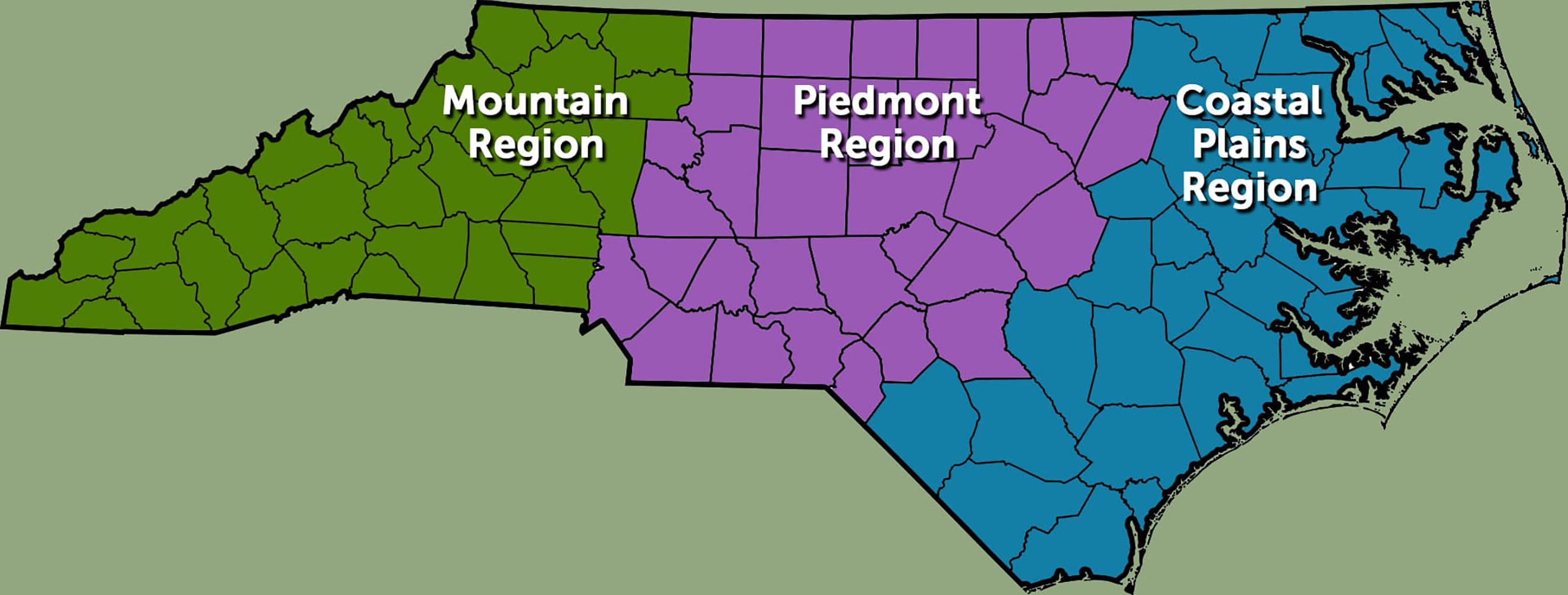
Tigridia: NC Region

Coastal
Mountains
Piedmont

Tigridia: USDA Plant Hardiness Zone

thermostat
10a
thermostat
10b
thermostat
8a
thermostat
8b
thermostat
9a
thermostat
9b

Tigridia: Soil Texture

Clay
High Organic Matter
Loam (Silt)
Sand
Shallow Rocky

Tigridia Flowers

Tigridia: Flower Color

filter_vintage
Cream/Tan
filter_vintage
Gold/Yellow
filter_vintage
Orange
filter_vintage
Pink
filter_vintage
Purple/Lavender
filter_vintage
Red/Burgundy
filter_vintage
White

Tigridia: Flower Value To Gardener

Edible
Fragrant
Good Cut
Good Dried
Long Bloom Season
Long-lasting
Showy

Tigridia: Flower Bloom Time

Winter
Spring
Summer
Fall

Tigridia: Flower Petals

2-3 rays/petals
4-5 petals/rays
6 petals/rays
7 - 20 petals/rays
asymmetrical petals
Bracts
Colored Sepals
fused petals
more than 20 petals/rays
Tepals

Tigridia: Flower Size

1-3 inches
3-6 inches
< 1 inch
> 6 inches

Tigridia Leaves

Tigridia: Leaf Color

spa
Green

Tigridia: Hairs Present

No
Yes

Tigridia Stem

Tigridia: Stem Is Aromatic

No
Yes

Tigridia Landscape

Tigridia: Landscape Theme

Asian Garden
Butterfly Garden
Children's Garden
Cottage Garden
Cutting Garden
Drought Tolerant Garden
Edible Garden
English Garden
Fairy Garden
Garden for the Blind
Native Garden
Nighttime Garden
Pollinator Garden
Rain Garden
Rock Garden
Shade Garden
Water Garden
Winter Garden

Tigridia: Design Feature

Accent
Barrier
Border
Flowering Tree
Foundation Planting
Hedge
Mass Planting
Screen/Privacy
Security
Shade Tree
Small groups
Small Tree
Specimen
Street Tree
Understory Tree

Tigridia: Landscape Location

Coastal
Container
Hanging Baskets
Houseplants
Lawn
Meadow
Naturalized Area
Near Septic
Patio
Pond
Pool/Hardscape
Recreational Play Area
Riparian
Rock Wall
Slope/Bank
Small Space
Vertical Spaces
Walkways
Woodland