Camassia cusickii: Country Or Region Of Origin
Northwestern United States
Phonetic Spelling:kah-MASS-see-ah koo-SIK-ee-eye
Genus:Camassia
Species:cusickii
Family:Asparagaceae
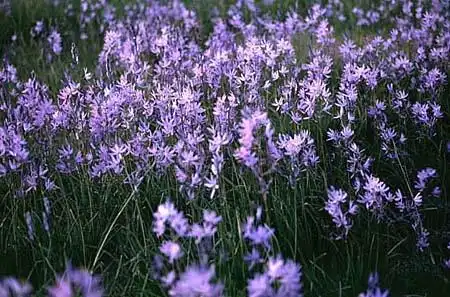
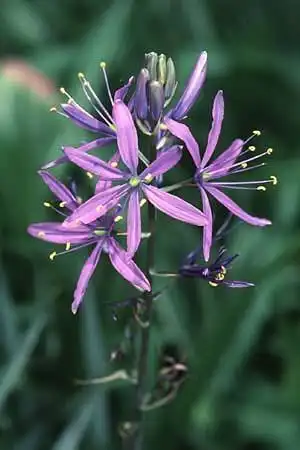
Camassia cusickii, commonly known as Cusick’s camass, is indigenous to the northeastern region of Oregon and western Idaho, yet it is widely cultivated as an ornamental plant across the United States. This species thrives in moist, fertile, acidic, and humusy soils that are well-drained, although it can also adapt to clay soils. It prefers full sun to partial shade and is suitable for growth in USDA Zones 4 to 8. While it can withstand summer droughts, it is essential to keep the soil moist during its growing season. The plant exhibits a fair degree of winter hardiness but may suffer damage when temperatures drop below 23°F (-5°C).
When left undisturbed in suitable soil and conditions, Cusick’s camass will naturally spread. For propagation from bulbs, it is advisable to harvest the small bulbs during the plant's dormant phase in late summer, placing 2 to 3 bulbs in a pot. These should be grown in pots for an additional one to two years in a frost-free environment before being transplanted. It is important to note that the bulbs need to be scored to encourage the development of offsets. When planting in the fall, space the bulbs about 3 to 4 inches apart, aiming for 8 to 10 bulbs per square foot, and bury them to a depth of 4 inches. The plant exhibits a growth habit characterized by runners that spread indefinitely through rhizomes or stolons.
In contrast to other species within the Camassia genus, Cusick’s camass was not utilized as a food source by Native American tribes due to its bitter flavor and slimy texture.
Regarding plant health, there are no significant reports of insect pests or diseases affecting this species.
Camassia cusickii Feature Summary
Camassia cusickii Image Gallery