Yellow Goat's Beard is a biennial wildflower known for its ornamental appeal and edible components, including roots, shoots, stems, and leaves. This plant typically thrives in disturbed environments such as roadsides, woodlands, and fields. It belongs to the Asteraceae family and is also referred to by several other names, including Meadow Goat's Beard, Meadow Salsify, Noonflower, and Jack-Go-To-Bed-At-Noon.
Originating from Europe, Central Asia, and Turkey, Yellow Goat's Beard has been introduced to various regions, including Canada, Haiti, and the United States.
The genus name, Tragopogon, is derived from two Greek terms: "tragos," meaning "goat," and "pogon," meaning "beard," which alludes to the plant's fuzzy seedhead that forms post-flowering. The species name, pratensis, translates to "of the meadows," indicating its preferred habitat. The common name Jack-Go-To-Bed-At-Noon highlights the plant's unique characteristic of closing its flowers by noon on sunny days.
This wildflower flourishes in full sunlight and can adapt to sandy, loamy, or clay soils, demonstrating resilience against strong winds while being intolerant of shade. It self-propagates through its "giant dandelion" plume, which is easily dispersed by the wind.
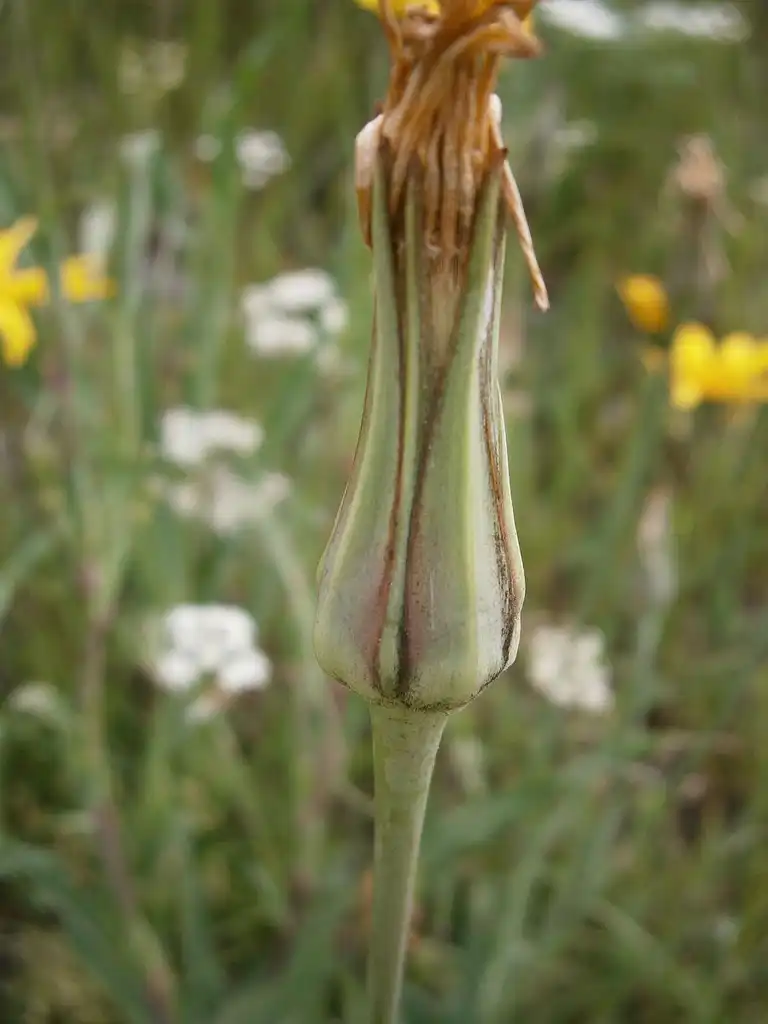
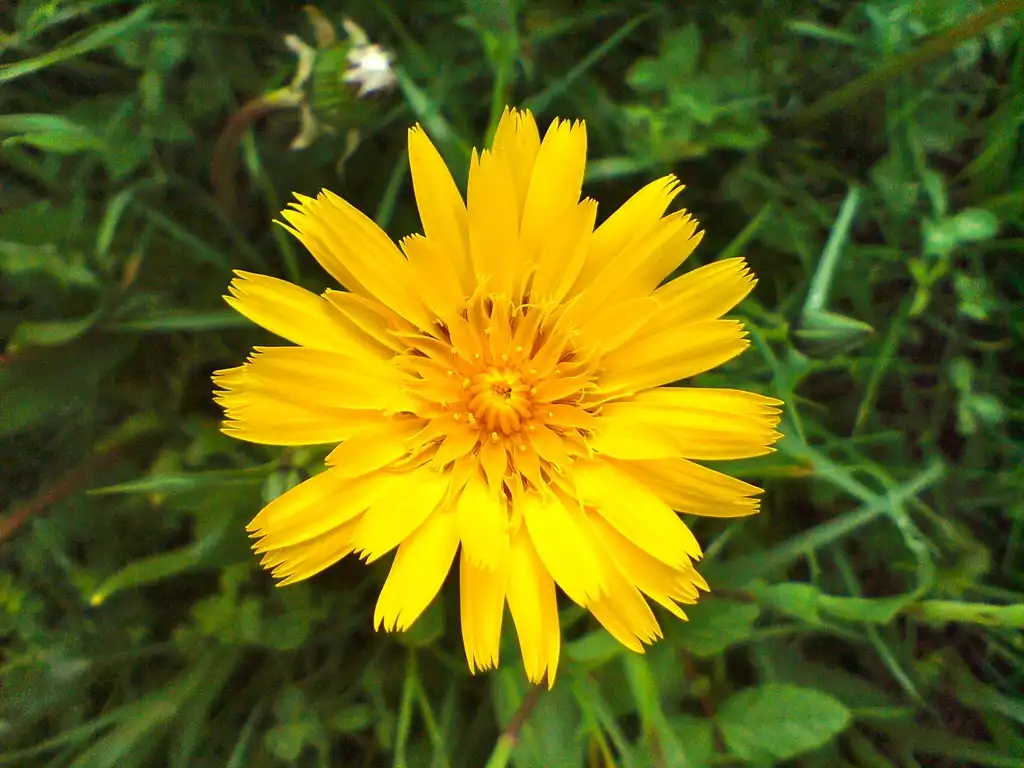
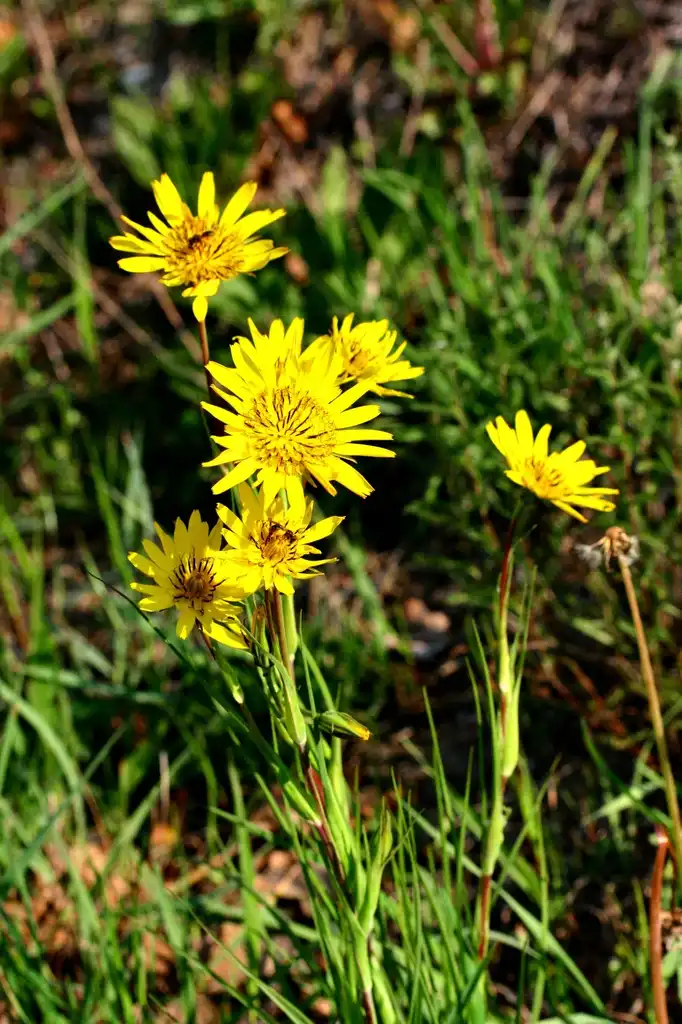
As a biennial, Yellow Goat's Beard develops a low rosette in its first year. In the second year, it produces one or more upright flowering stems that can reach heights of 1 to 3 feet, featuring a milky sap. The leaves are grass-like, green with a slight whitish hue, and curve backward at the tips. From May to August, the plant showcases yellow, daisy-like flowers atop the stems, followed by a fluffy, tan-white pappus that is also wind-dispersed for reseeding.
In addition to its ornamental value, Yellow Goat's Beard possesses medicinal and edible qualities. Its flowers attract bees and other pollinators, while the bitter sap deters small mammals from feeding on the foliage, stems, and roots. This plant is an excellent choice for Wildflower Gardens, Pollinator Gardens, or Cottage Gardens.
**Quick Identification Tips:**
**Insects, Diseases, and Other Issues:**
Generally, Yellow Goat's Beard is free from pests and diseases, although spittlebugs may occasionally be found on its stems.