Viola tricolor: Uses (Ethnobotany)
Traditional medicines and dyes
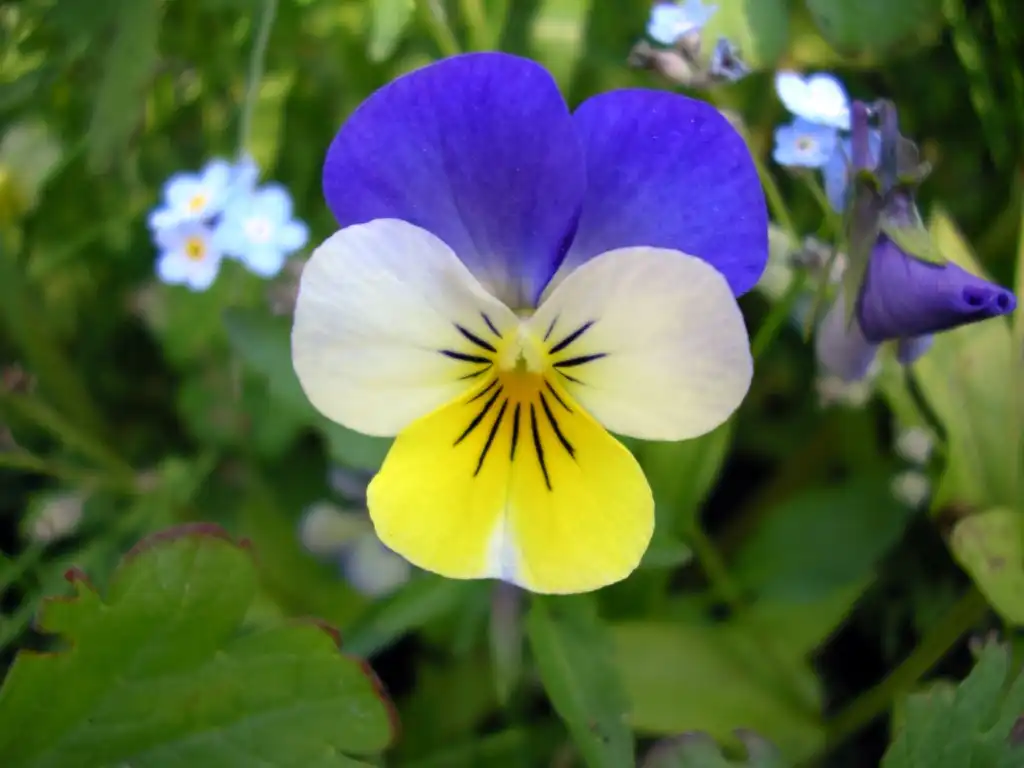
Phonetic Spelling:vy-OH-la TRY-kull-lur
Genus:Viola
Species:tricolor
Family:Violaceae
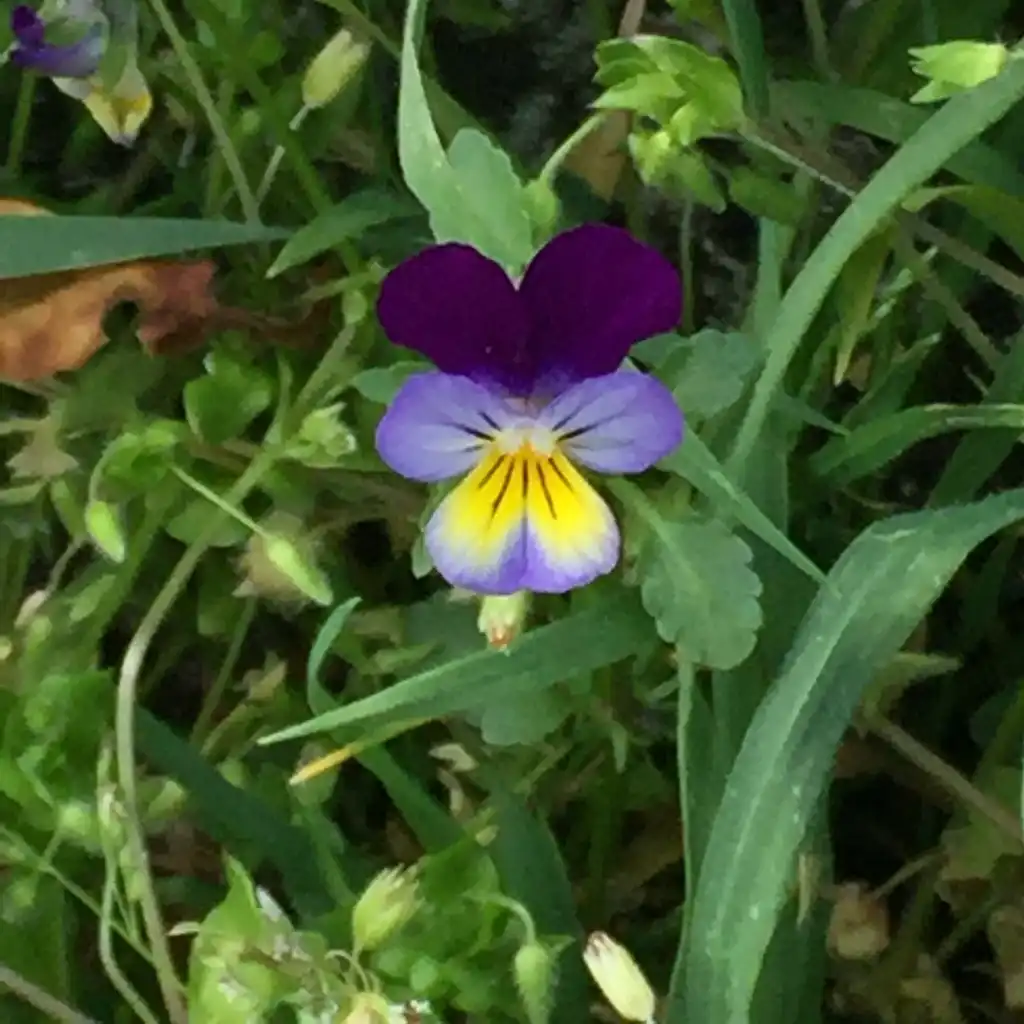
Often referred to as the wild pansy, this small herbaceous plant can be an annual, biennial, or a short-lived perennial wildflower that was brought to North America from Europe. It thrives in environments such as lichen-covered or meadow-like rocky outcrops, dry sloping meadows, banks, fields, gardens, wastelands, sandy areas, and coastal beaches. Unlike some other violets, it does not form a basal rosette; instead, its leaves are arranged alternately. The flowers, which are tri-colored—hence the name—can yield up to 50 seeds per capsule, allowing for easy propagation, though it is not overly invasive. Regular watering is essential, but care should be taken to avoid overwatering.
The attractive flowers have a mild flavor and can be consumed in small quantities. They contain saponins, which may be toxic in larger amounts, yet they are recognized for their anti-inflammatory properties and antioxidant content. Additionally, they are used medicinally to treat conditions such as eczema and autoimmune disorders. Topical applications of the plant are effective for issues like cradle cap, diaper rash, weeping sores, itchy skin, varicose ulcers, and ringworm.
This plant typically blooms from spring to summer and is generally short-lived, but it readily reseeds itself. It is the ancestor of modern pansies. A typical flower features violet or purple upper petals, white lateral petals, and a yellow lower petal, with several purple veins extending from the throat of the flower.
After the blooming period, the fertile flowers give way to seed capsules. Once mature, these capsules split into three sections, releasing the seeds.
The leaves of this plant exhibit a range of shapes. The lower leaves are heart-shaped to egg-shaped (cordate-ovate), while the middle and upper leaves are lanceolate or oblong-lanceolate, resembling a lance with rounded tips and parallel sides.
**Seasons of Interest:**
- **Bloom:** April to September
**Quick Identification**
Viola tricolor Feature Summary