Yucca aloifolia: Uses (Ethnobotany)
The roots can be used as soap and shampoo. Pioneers made rope and string from the fibrous leaves.
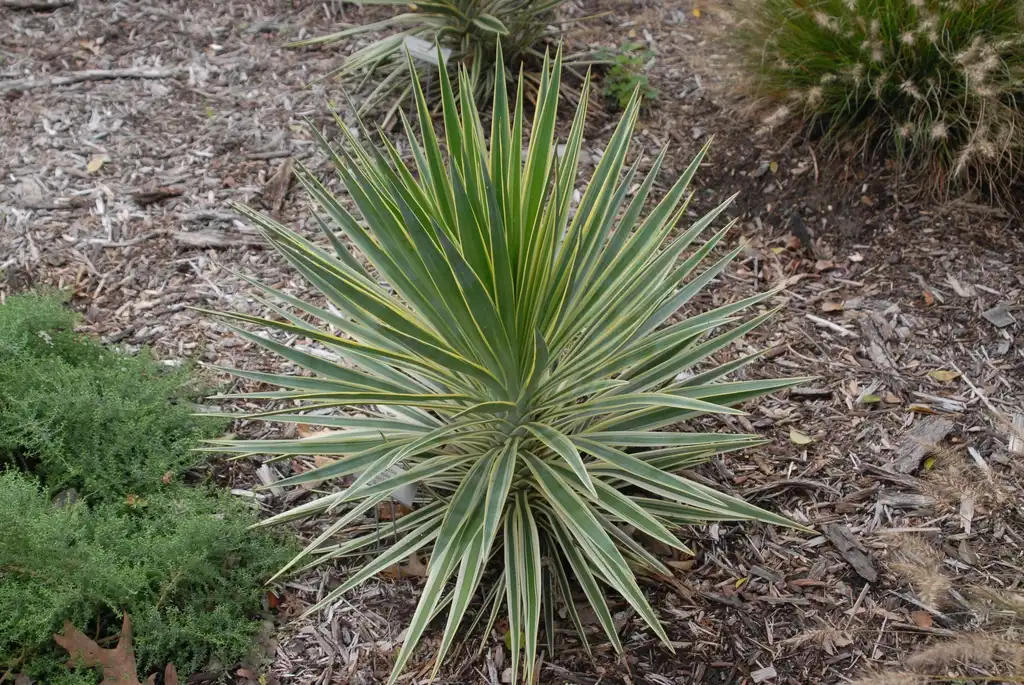
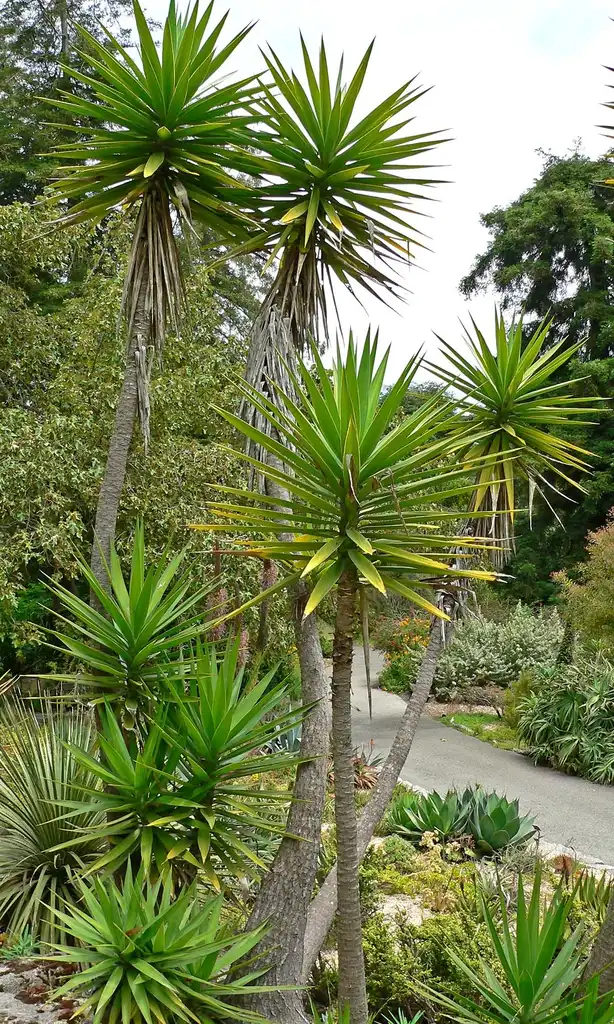
Phonetic Spelling:YUK-ah al-oh-ih-FOH-lee-uh
Genus:Yucca
Species:aloifolia
Family:Asparagaceae
Aloe Yucca is indigenous to the Atlantic and Gulf Coasts of the United States, ranging from southern Virginia down to Florida and extending westward to the Texas Gulf Coast. This plant thrives in sandy environments, particularly on coastal sand dunes in North Carolina. It exhibits excellent drought resistance and can withstand high levels of salt spray. The leaf tips are equipped with very sharp spines, and the margins lack any filaments. During the spring to late summer, depending on the year, it produces large clusters of drooping, bell-shaped flowers that emerge from the center of the plant. Once flowering concludes, the main trunk ceases to grow, but one or more lateral buds will quickly develop, with the uppermost bud becoming a new terminal shoot. Additionally, it generates new offshoots near the base of the trunk, leading to the formation of thicket-like areas.
Aloe Yucca requires well-drained sandy soils but can adapt to other types of well-drained soils as well. It thrives in full sunlight but can tolerate partial shade. When used as a privacy screen, its sharp leaf tips effectively deter neighbors. As a specimen plant, its striking blooms serve as a captivating focal point, making it suitable for rock gardens too. It can be planted along dunes due to its salt spray tolerance and is also resistant to deer damage.
Quick Identification:
Yucca aloifolia Feature Summary