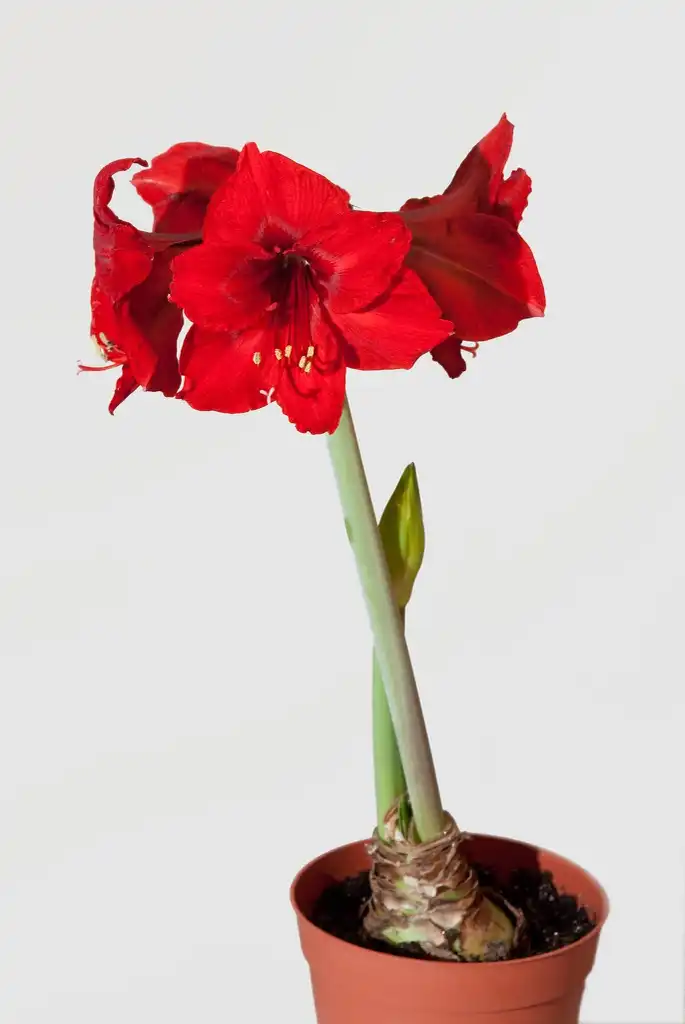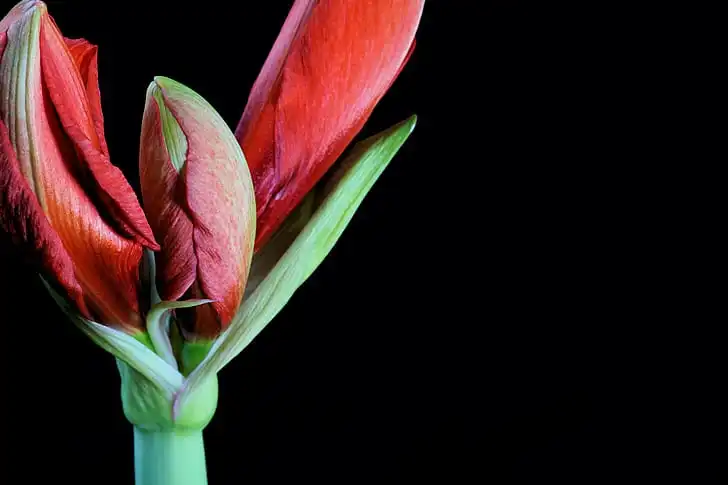
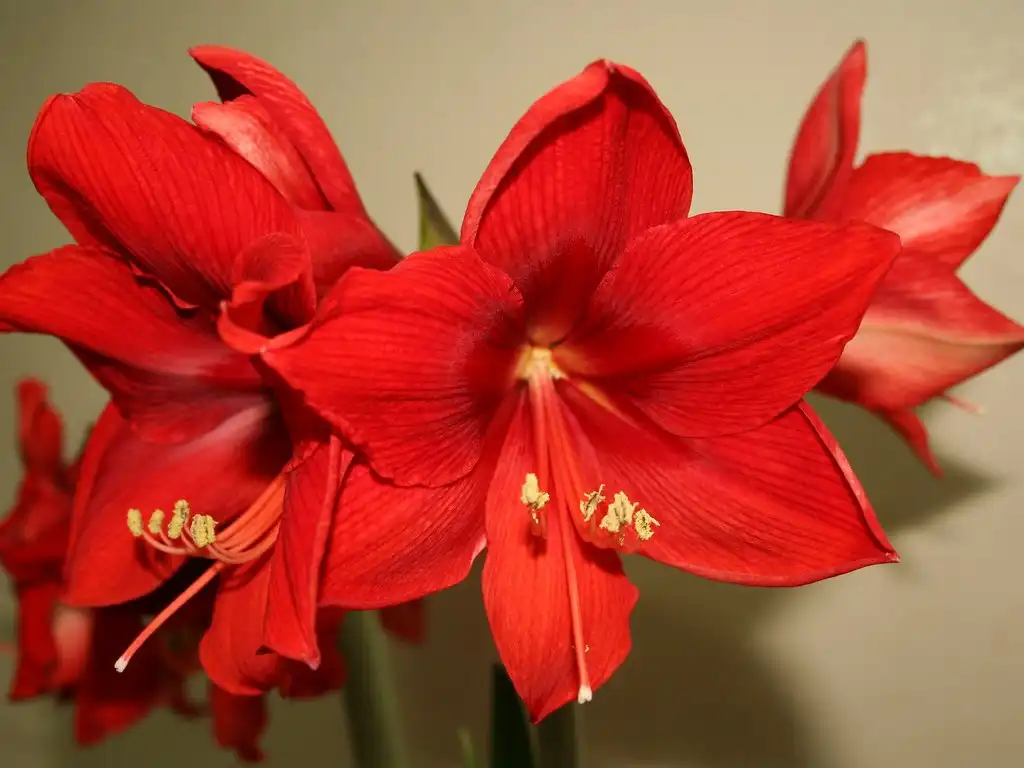
• Photo of Amaryllis (Amarylliss)

Plant Profile: Amaryllis

Taxonomy: Amaryllis

Names

Amaryllis, Belladonna lily, Cape Belladonna, Naked Lady, Saint Joseph lily

  • Photo of Amaryllis (Amarylliss)

Phonetic Spelling:am-ah-RIL-lis

Genus:Amaryllis

Species:

Family:Amaryllidaceae

Amaryllis represents the sole genus within the Amaryllidaceae family, comprising two species: Amaryllis belladonna and Amaryllis paradisicola. This genus is indigenous to South Africa and typically flowers around March. The bulbs of Amaryllis are sizable, measuring between 2 to 4 inches in diameter, and each bulb can yield a cluster of two to twelve funnel-shaped blossoms. In its native habitat, flowering is influenced by sunlight availability, and in open sandy regions, the plant blooms annually. Due to the considerable size and weight of the seeds, plants often grow in dense clusters. Strong winds can dislodge the seeds, allowing them to fall to the ground and begin germination.

For many years, botanists experienced confusion regarding the names Amaryllis and Hippeastrum. This led to the common name "amaryllis" being incorrectly used for cultivars of Hippeastrum, a striking winter-blooming bulb often cultivated as a houseplant, known for its large flowers that bloom during the winter months. The Hippeastrum species are native to Central and South America.

Regarding plant health, there are currently no known diseases or insect pests affecting Amaryllis.

Amaryllis Feature Summary

Amaryllis Image Gallery

Tags

#showy flowers
#houseplant
#red flowers
#interiorscape
#large flowers
#rock gardens
#winter flowers
#Christmas decorations
#problem for cats
#problem for dogs
#problem for horses

Similar Plants

Amaryllis is often confused with:

Amaryllis Feature Summary

Fruit
Seeds are compressed-globose, white to pink.
Pink
White
Flowers
One or more stout, hollow, leafless stems (scapes) that grow 12 to 18 inches tall support 2 to 6 large amaryllis flowers, in shades of red, pink and white with interesting spotting and banding. Each flower is 21/2 to 4 inches diameter with six spreading tepals (three outer sepals, three inner petals, with similar appearance to each other). The usual color is white with crimson veins, but pink or purple also occur naturally.
Pink
White
Red/Burgundy
Spring
Summer
Winter
6 petals/rays
> 6 inches
Leaves
Large strap-shaped green leaves begin to grow at about the time the flowers open. The leaves are green with a midrib, 12 to 20 inches long and 3/4 to 1 inch wide, arranged in two rows.
> 6 inches
1-3 inches
Stem
One or two leafless, stout, persistent and erect stems support the flowers.
Poisonous to Humans
Vomiting (not horses), depression, diarrhea, abdominal pain, hypersalivation, anorexia, tremors.
Lycorine and others
Whole Plant Traits
Houseplant
Bulb
Cultural Conditions
Full sun (6 or more hours of direct sunlight a day)
Partial Shade (Direct sunlight only part of the day, 2-6 hours)
8b
8a
9a
9b
10a
10b
11a
11b
Landscape
Rock Garden
Container
Houseplants
Problem for Cats
Problem for Dogs
Problem for Horses

Amaryllis Attributes

Amaryllis: Country Or Region Of Origin

South Africa
Amaryllis: Life Cycle

Annual
Biennial
Bulb
Perennial
Woody

Amaryllis: Recommended Propagation Strategy

Division
Grafting
Layering
Leaf Cutting
Root Cutting
Seed
Stem Cutting

Amaryllis Fruit

Amaryllis: Fruit Description

Seeds are compressed-globose, white to pink.

Amaryllis: Fruit Color

grass
Pink
grass
White

Amaryllis Flowers

Amaryllis: Flower Description

One or more stout, hollow, leafless stems (scapes) that grow 12 to 18 inches tall support 2 to 6 large amaryllis flowers, in shades of red, pink and white with interesting spotting and banding. Each flower is 21/2 to 4 inches diameter with six spreading tepals (three outer sepals, three inner petals, with similar appearance to each other). The usual color is white with crimson veins, but pink or purple also occur naturally.

Amaryllis: Flower Color

filter_vintage
Pink
filter_vintage
Red/Burgundy
filter_vintage
White

Amaryllis: Flower Value To Gardener

Edible
Fragrant
Good Cut
Good Dried
Long Bloom Season
Long-lasting
Showy

Amaryllis: Flower Bloom Time

Winter
Spring
Summer
Fall

Amaryllis: Flower Petals

2-3 rays/petals
4-5 petals/rays
6 petals/rays
7 - 20 petals/rays
asymmetrical petals
Bracts
Colored Sepals
fused petals
more than 20 petals/rays
Tepals

Amaryllis: Flower Shape

Bell
Cross
Crown
Cup
Dome
Funnel
Irregular
Lipped
Radial
Saucer
Star
Trumpet
Tubular
Urn
Wheel

Amaryllis: Flower Size

1-3 inches
3-6 inches
< 1 inch
> 6 inches

Amaryllis Leaves

Amaryllis: Leaf Description

Large strap-shaped green leaves begin to grow at about the time the flowers open. The leaves are green with a midrib, 12 to 20 inches long and 3/4 to 1 inch wide, arranged in two rows.

Amaryllis: Leaf Color

spa
Green

Amaryllis: Leaf Type

Compound (Pinnately , Bipinnately, Palmately)
Fronds
Needles
Sheath
Simple

Amaryllis: Leaf Margin

Crenate
Crenulate
Dentate
Denticulate
Doubly Crenate
Doubly Dentate
Doubly Serrate
Entire
Lobed
Serrate
Sinuate
Undulate

Amaryllis: Hairs Present

No
Yes

Amaryllis: Leaf Length

< 1 inch
1-3 inches
3-6 inches
> 6 inches

Amaryllis: Leaf Width

< 1 inch
1-3 inches
3-6 inches
> 6 inches

Amaryllis Stem

Amaryllis: Stem Description

One or two leafless, stout, persistent and erect stems support the flowers.

Amaryllis: Stem Is Aromatic

No
Yes

Amaryllis Poisonous to Humans

Amaryllis: Poison Symptoms

Vomiting (not horses), depression, diarrhea, abdominal pain, hypersalivation, anorexia, tremors.

Amaryllis: Poison Toxic Principle

Lycorine and others

Amaryllis: Poison Severity

High
Low
Medium

Amaryllis: Causes Contact Dermatitis

No
Yes

Amaryllis Whole Plant Traits

Amaryllis: Plant Type

Annual
Bulb
Carnivorous
Edible
Epiphyte
Fern
Ground Cover
Herb
Herbaceous Perennial
Houseplant
Mushroom
Native Plant
Ornamental Grasses and Sedges
Perennial
Poisonous
Rose
Shrub
Succulent
Tree
Turfgrass
Vegetable
Vine
Water Plant
Weed
Wildflower

Amaryllis: Maintenance

Low
Medium
High

Amaryllis Cultural Conditions

Amaryllis: Light

Dappled Sunlight (Shade through upper canopy all day)
Deep shade (Less than 2 hours to no direct sunlight)
Full sun (6 or more hours of direct sunlight a day)
Partial Shade (Direct sunlight only part of the day, 2-6 hours)

Amaryllis: USDA Plant Hardiness Zone

thermostat
10a
thermostat
10b
thermostat
11a
thermostat
11b
thermostat
8a
thermostat
8b
thermostat
9a
thermostat
9b

Amaryllis Landscape

Amaryllis: Landscape Theme

Asian Garden
Butterfly Garden
Children's Garden
Cottage Garden
Cutting Garden
Drought Tolerant Garden
Edible Garden
English Garden
Fairy Garden
Garden for the Blind
Native Garden
Nighttime Garden
Pollinator Garden
Rain Garden
Rock Garden
Shade Garden
Water Garden
Winter Garden

Amaryllis: Landscape Location

Coastal
Container
Hanging Baskets
Houseplants
Lawn
Meadow
Naturalized Area
Near Septic
Patio
Pond
Pool/Hardscape
Recreational Play Area
Riparian
Rock Wall
Slope/Bank
Small Space
Vertical Spaces
Walkways
Woodland

Amaryllis: Attracts

Bats
Bees
Butterflies
Frogs
Hummingbirds
Moths
Pollinators
Predatory Insects
Reptiles
Small Mammals
Songbirds
Specialized Bees

Amaryllis: Problems

Allelopathic
Contact Dermatitis
Frequent Disease Problems
Frequent Insect Problems
Invasive Species
Malodorous
Messy
Poisonous to Humans
Problem for Cats
Problem for Children
Problem for Dogs
Problem for Horses
Short-lived
Spines/Thorns
Weak Wood
Weedy