Amorphophallus kiusianus: Country Or Region Of Origin
China, Japan, Taiwan
Phonetic Spelling:a-mor-fo-FAL-us key-oo-see-AY-nus
Genus:Amorphophallus
Species:kiusianus
Family:Araceae
The 'Voodoo Lily' is recognized as one of the most resilient perennials within the Amorphophallus genus. This plant is indigenous to regions in China, Japan, and Taiwan, thriving in environments that range from semi-shaded areas to sunlit plantations, secondary forests, mixed bamboo groves, broad-leaved woodlands, and orchards. The name Amorphophallus is derived from Greek, combining the words for "misshapen" and "penis," which aptly describes the distinctive form of its prominent spadix.
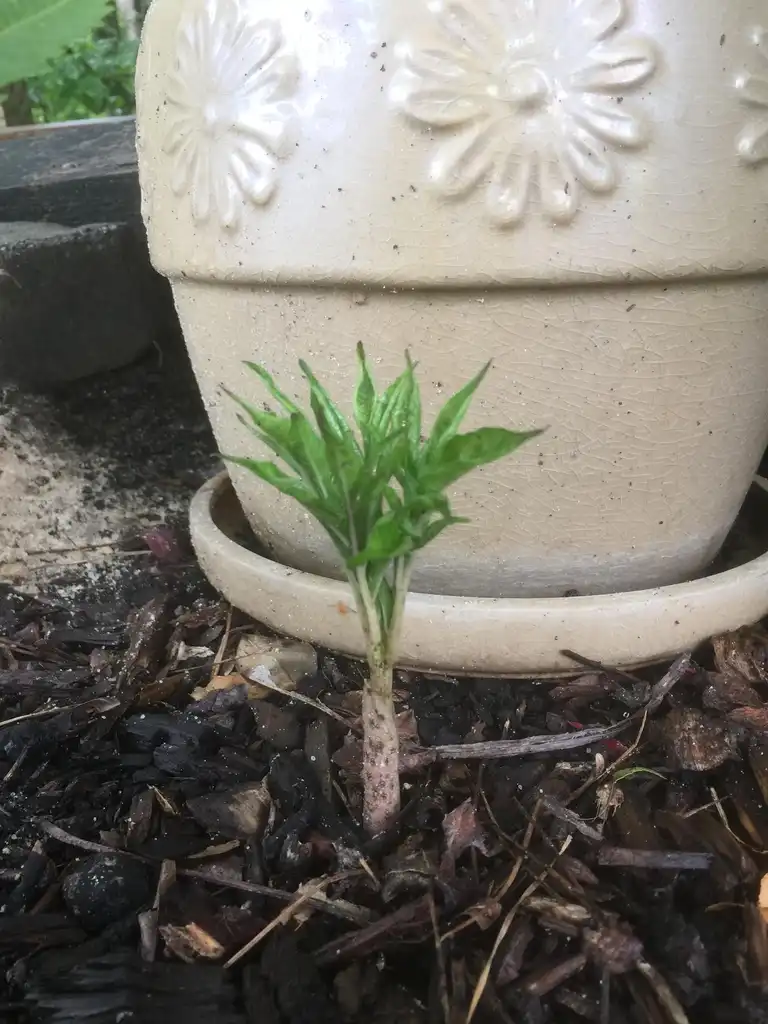
Cultivating the 'Voodoo Lily' is relatively straightforward. To plant, position the tuber in moist, organic, well-draining soil at a depth of about 4 inches during late winter or early spring. It is crucial for the tuber to be buried sufficiently deep to support the lengthy leaf and flower structure. The plant requires minimal fertilization—once a month or even less—and can withstand occasional overwatering and neglect. The health of the plant is indicated by the growth of the tuber. If grown in a pot, ensure the container is at least twice the tuber's diameter and deep enough to accommodate the tuber and its roots. Insufficient depth can lead to deformities and waterlogging, resulting in rot. The tuber can be lifted during its dormant phase and stored in a dry environment.
The 'Voodoo Lily' is self-fertile and generates offsets on the tuber that can be replanted. Seeds should be kept in semi-moist peat moss at around 45 degrees Fahrenheit. Before planting, rinse off the outer flesh with water. Maintain a temperature in the mid-70s and keep the soil moist. Patience is key, as germination can take six months or longer.
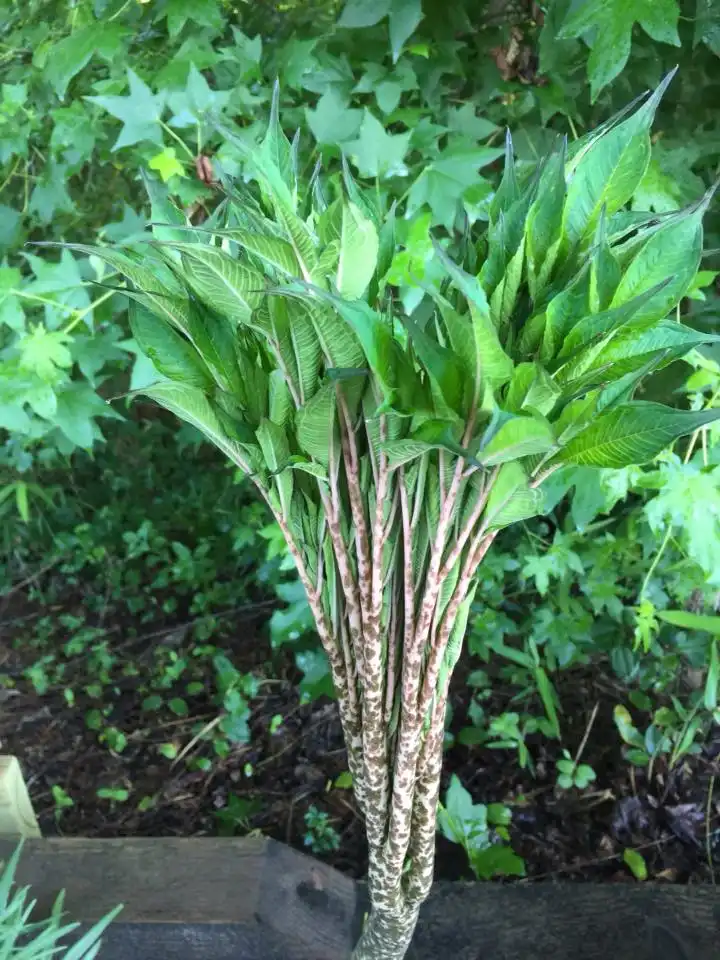
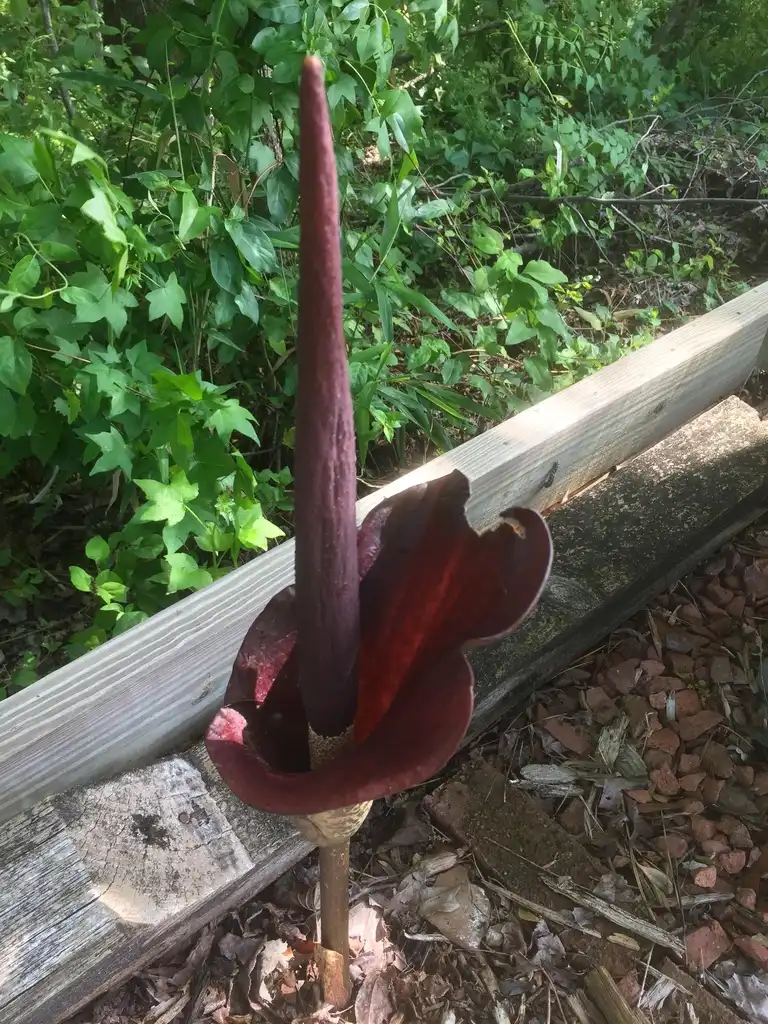
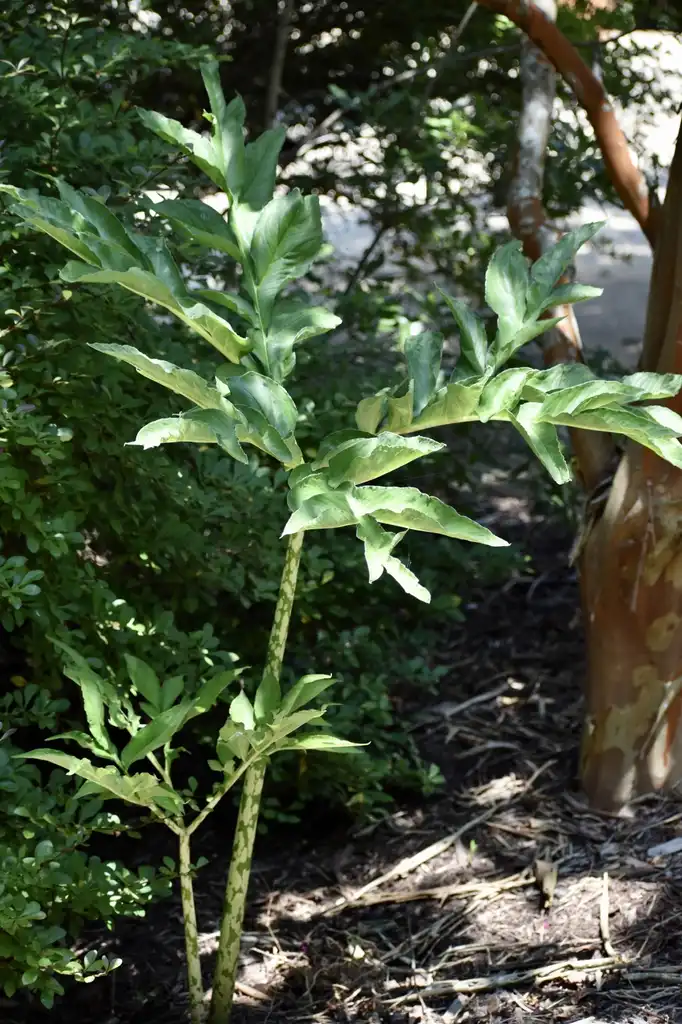
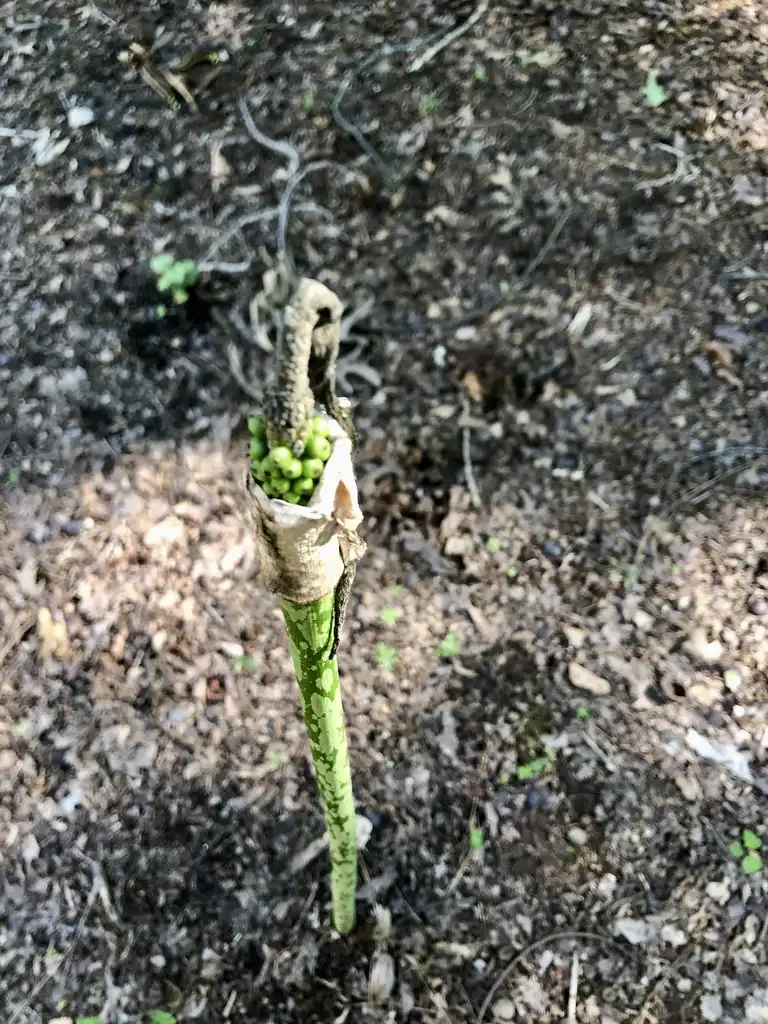
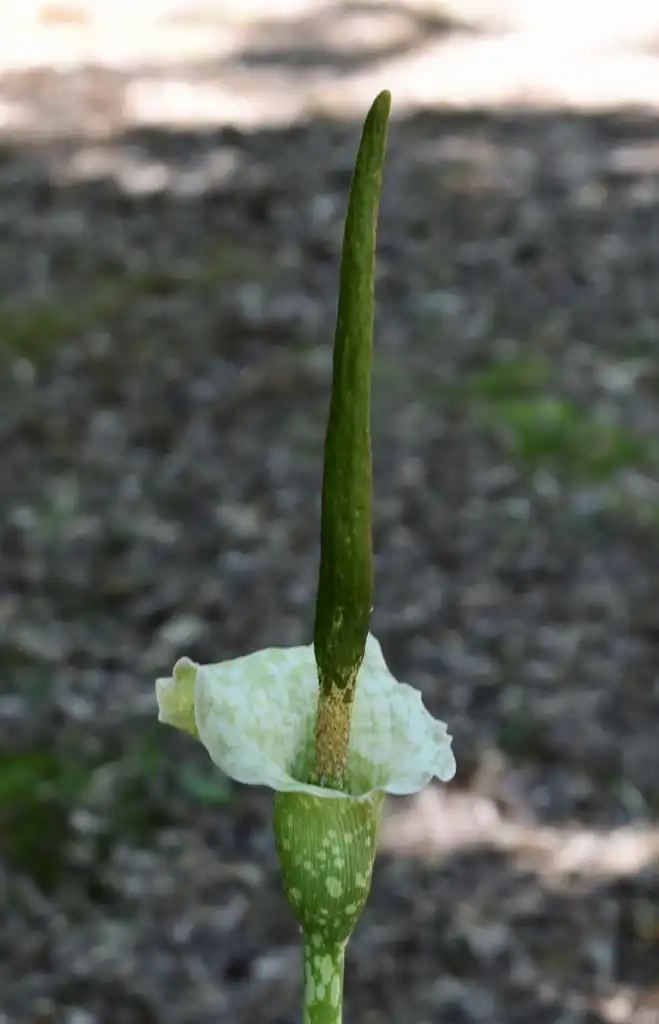
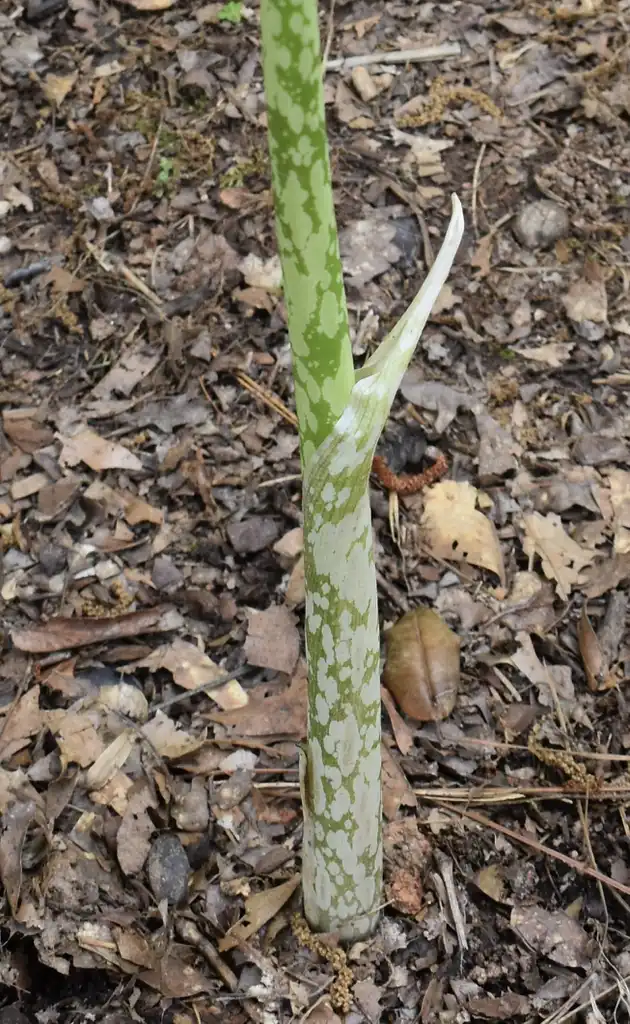
In spring, the 'Voodoo Lily' produces a single, mottled olive-green and white flower stalk, which bears a vase-shaped spathe resembling a calla lily, encasing a spear-like spadix with a purple tip. Inside the spathe, warts act as traps for insects, aiding in pollination. After a year of dormancy, a tall, speckled green and white stem emerges, topped with a large, shredded umbrella-like leaf composed of multiple leaflets. This leaf may wither when temperatures rise above 70 degrees Fahrenheit. As the plant matures, its resting period can shorten to as little as a month before it produces new foliage.
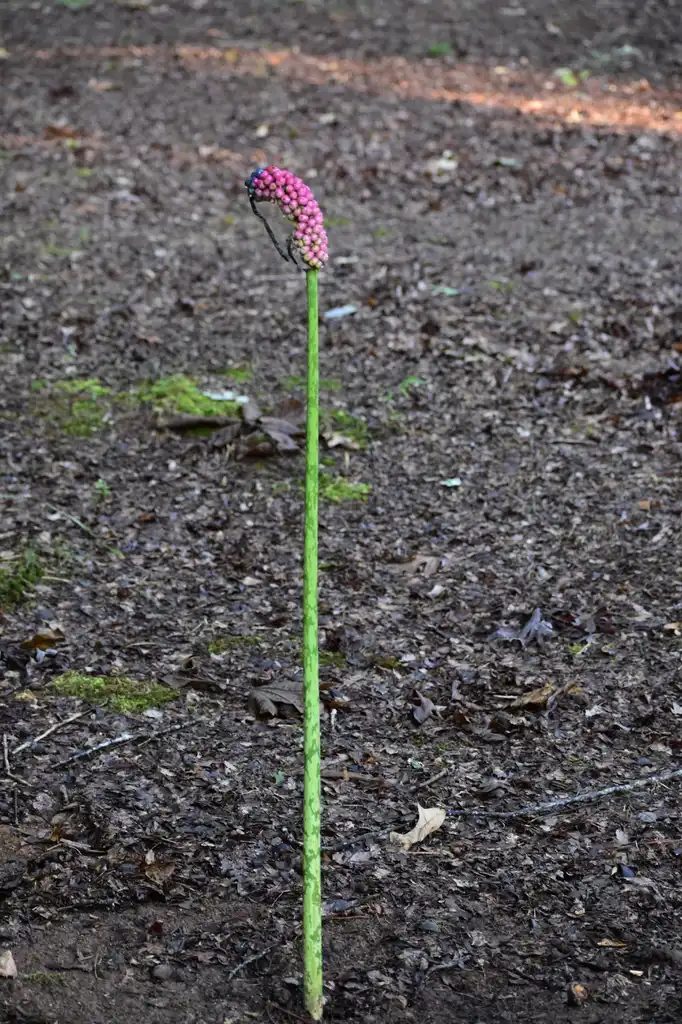
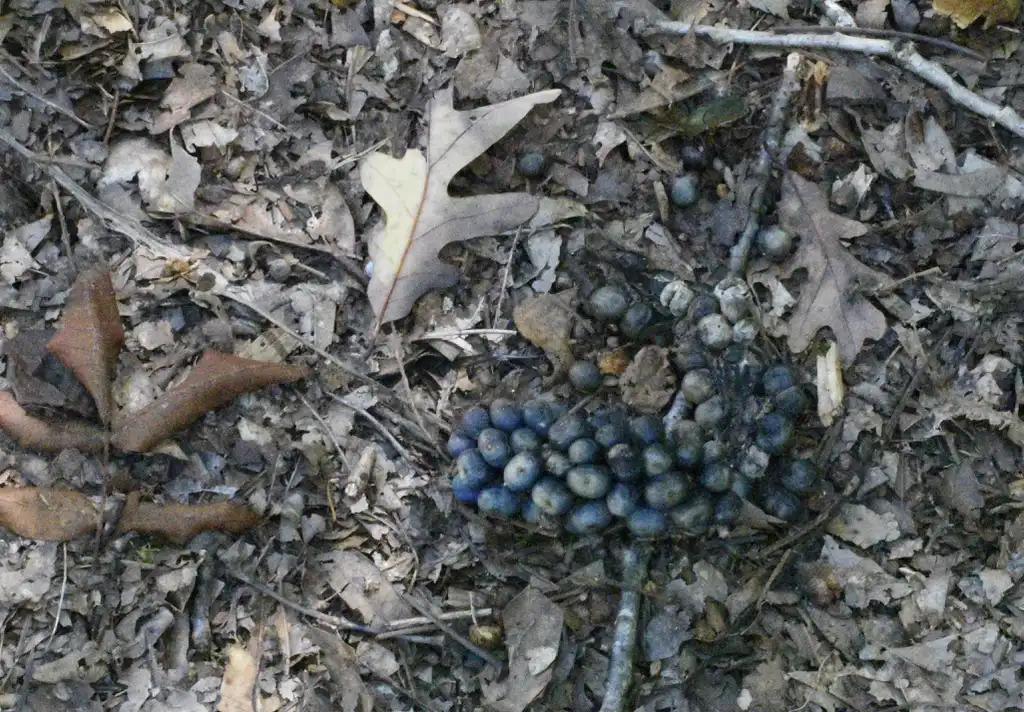
Despite having both male and female flowers, 'Voodoo Lilies' cannot self-pollinate. They are capable of pollination for just one day, during which they emit a scent often likened to “decaying flesh” or “roadkill,” attracting pollinators. Once inside, insects pollinate the female flowers and, the following day, become dusted with pollen from the male flowers before being released to continue their pollination journey. The fertilized flowers subsequently develop clusters of vibrant fruit that transition in color from bright pink to blue as they ripen.
The species Amorphophallus titanum holds the title for the largest unbranched inflorescence in the world, reaching heights of up to 8 feet 2 inches and widths of 4 feet 9 inches. In September 2015, a 4-foot flower bloomed at the Chicago Botanical Gardens, drawing thousands of visitors eager to see and smell it, with the event streamed live via webcam.
In terms of pests and diseases, the plant can be affected by nematodes and root mealybugs. It is not suitable for indoor cultivation.
Amorphophallus kiusianus Feature Summary
Amorphophallus kiusianus Image Gallery