Anisodontea capensis 'Slightly Strawberry': Country Or Region Of Origin
Cape Province of South Africa
Phonetic Spelling:an-iss-oh-DON-tee-u ka-PEN-sis
Genus:Anisodontea
Species:capensis
Family:Malvaceae
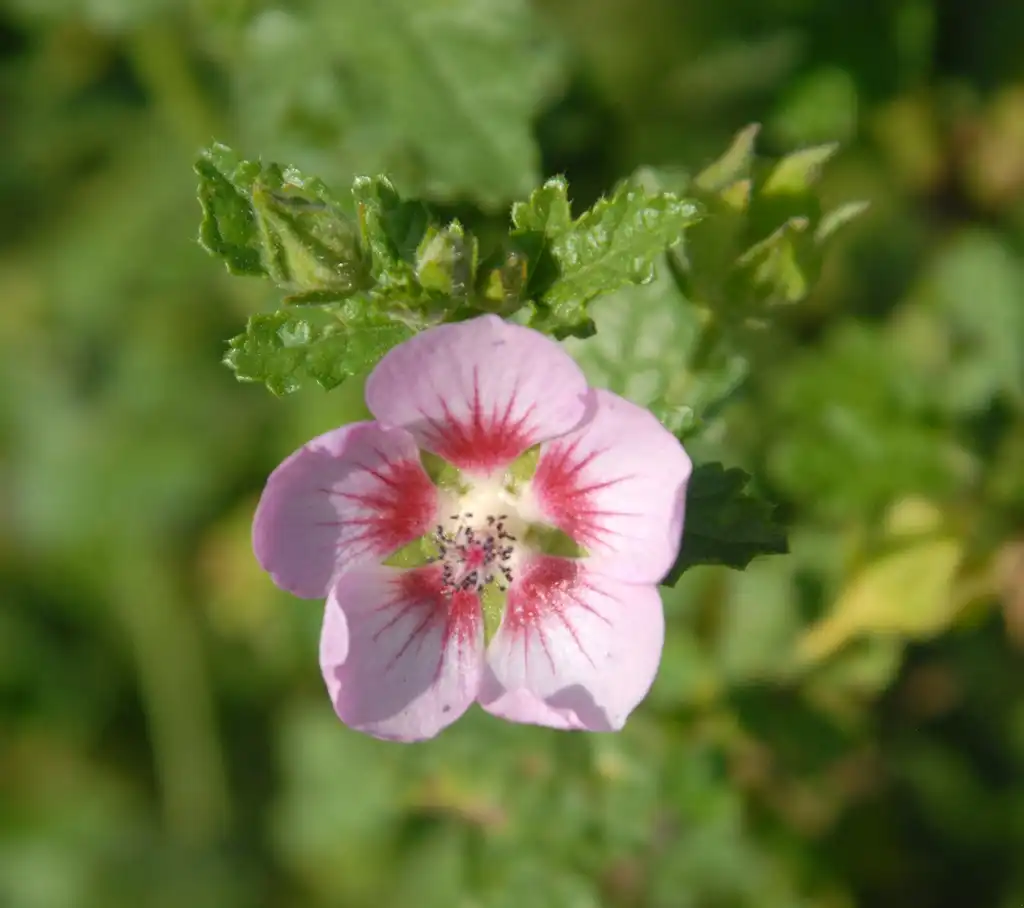
Anisodontea Strawberry, known by its cultivar name 'Nuanilainp', is a stunning upright evergreen subshrub that thrives effortlessly and produces an abundance of blooms throughout the year in temperate regions. Its charming small flowers, reminiscent of a petite hibiscus, showcase a pink hue accented with deep red veins, attracting bees and butterflies alike.
This plant is adaptable to various soil types, though it requires good drainage. Once it is established, it has modest water needs, making it a vibrant choice for drought-resistant gardens. Anisodontea Strawberry flourishes best in cooler summer conditions, enjoying morning sunlight and partial shade during the hotter afternoon hours. While it can tolerate shadier spots, its flowering may diminish, and the stems may become leggy. Light frost can cause the leaves to fall, but the plant typically revives in spring; however, it may struggle to survive harsh winters.
The flowers naturally drop when spent, eliminating the need for deadheading. To promote blooming and maintain a fuller shape, prune the plant at the start of spring. Its lush foliage also lends itself well to being shaped into a tree-form topiary. Dwarf varieties are particularly suitable for container gardening.
In terms of pests and diseases, Anisodontea Strawberry is generally resilient and not often affected by insects. However, it can be vulnerable to Puccinia malvacearum (mallow rust) and may attract aphids, spider mites, and whiteflies.
For further details, refer to information on Anisodontea capensis.
Anisodontea capensis 'Slightly Strawberry' Feature Summary
Anisodontea capensis 'Slightly Strawberry' Image Gallery