Anthericum liliago: Country Or Region Of Origin
Southern Sweden to Southern Europe and Turkey
Phonetic Spelling:an-THER-ih-kum lil-EE-ah-go
Genus:Anthericum
Species:liliago
Family:Asparagaceae
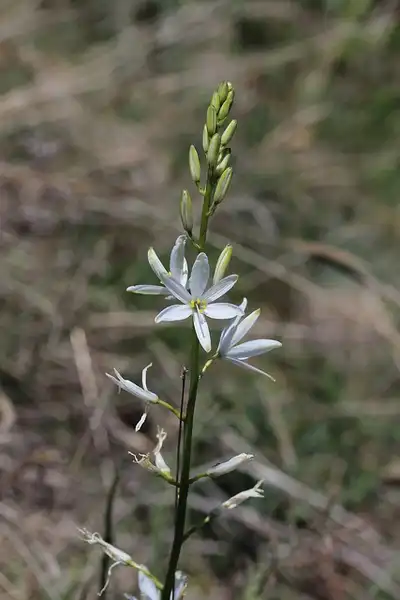
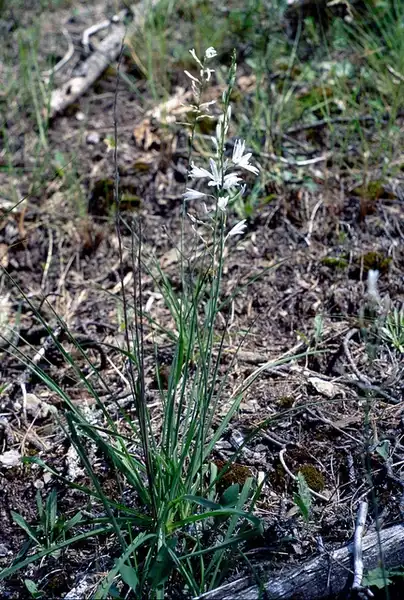
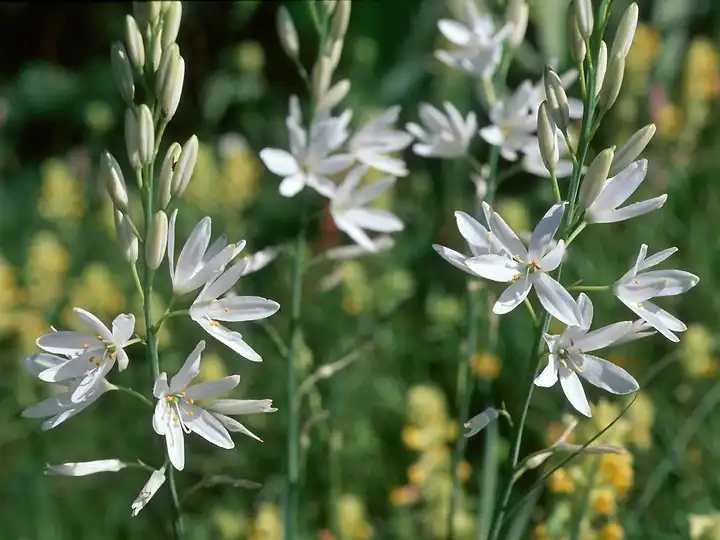
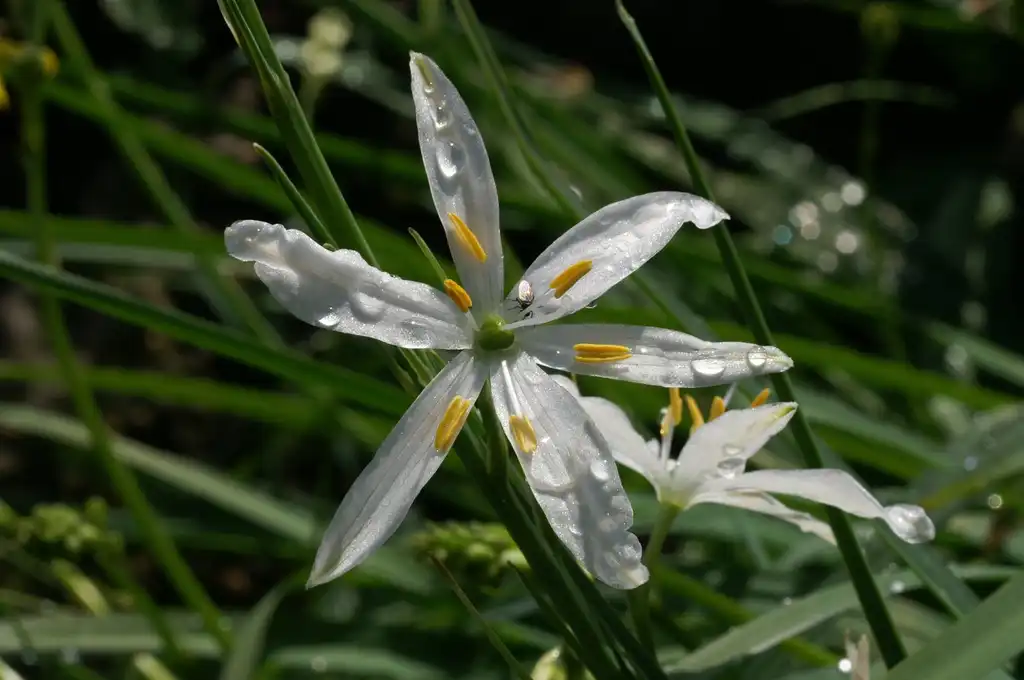
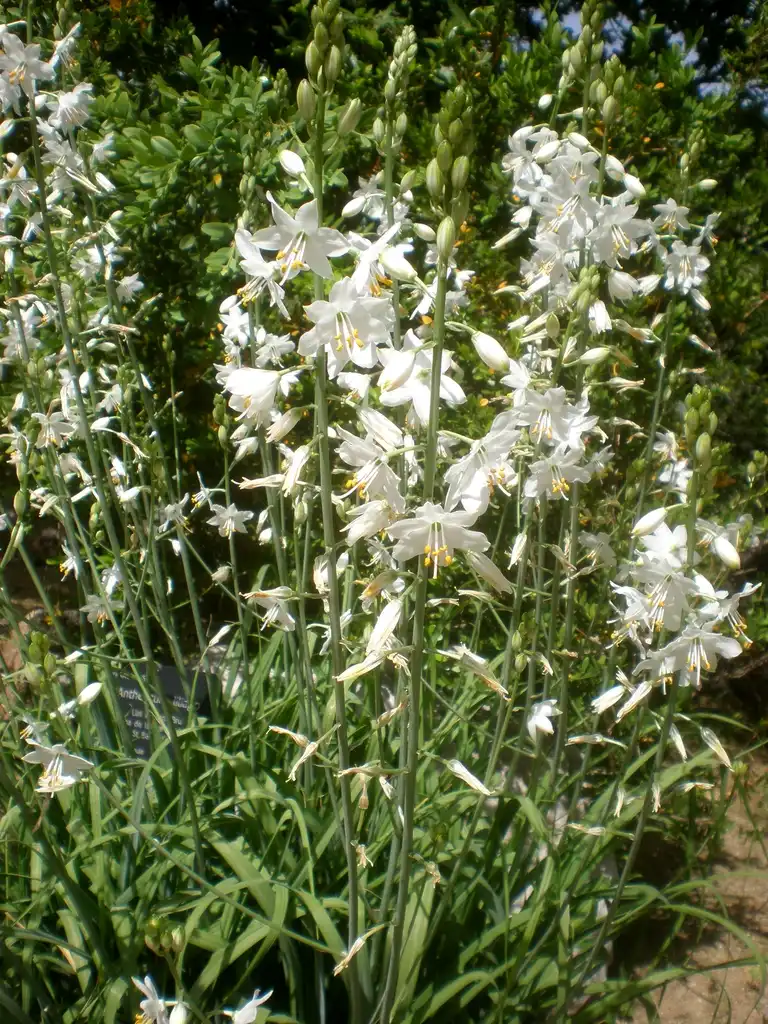
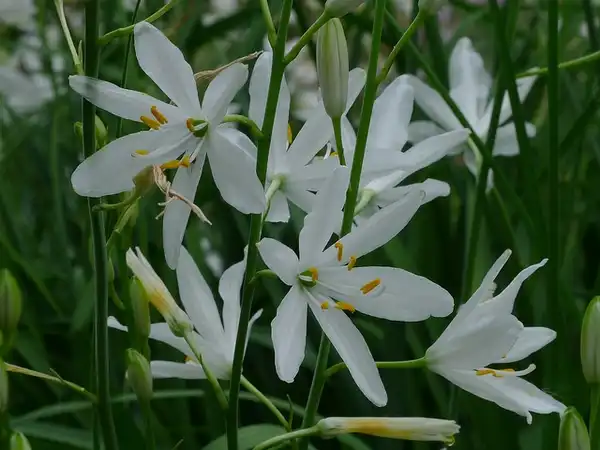
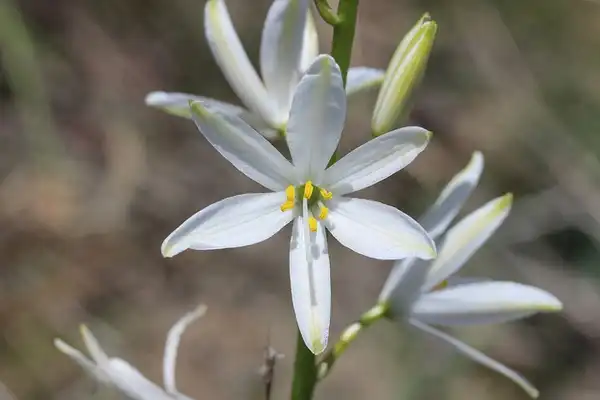
Anthericum liliago, commonly known as St. Bernard's Lily, is a robust herbaceous perennial with tuberous roots, indigenous to Europe and Turkey. This resilient plant typically thrives in wild settings such as dry pastures, rocky areas, and open woodlands. It features striking white, trumpet-shaped flowers, approximately 1.5 inches in length, adorned with prominent yellow anthers, which bloom in spike-like clusters atop stems that can reach 2 feet in height. These stems emerge from a tuft of narrow, grass-like, dark green foliage, and the flowers, reminiscent of lilies, typically blossom from mid to late spring.
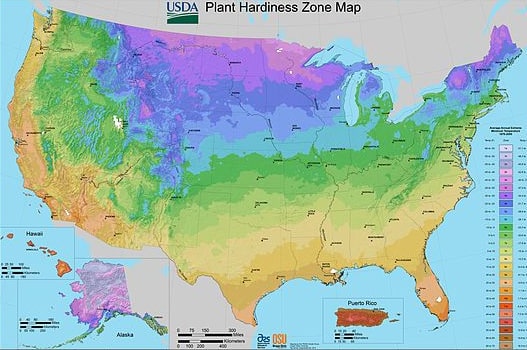
The plant flourishes in average, well-drained soil under full afternoon sunlight, although it can also tolerate light shade. It favors rich, consistently moist environments. Propagation can be achieved through seeds or by dividing the root stock, though division should only be performed every three to four years. When planting, the tuberous roots should be placed 2 inches deep and spaced 12 inches apart, ideally in the fall or early spring, to ensure blooming in early summer. While this summer bulb may take time to establish, it eventually forms substantial clumps and can self-seed under favorable conditions. However, it is not particularly resilient to winter conditions and may suffer damage when temperatures drop below 23 degrees Fahrenheit.
Regarding plant health, there are currently no known diseases or insect pests affecting Anthericum liliago.
Anthericum liliago Feature Summary
Anthericum liliago Image Gallery