Iris x germanica: Country Or Region Of Origin
Yugoslavia
Phonetic Spelling:EYE-riss jer-MAN-ih-kah
Genus:Iris
Species:germanica
Family:Iridaceae
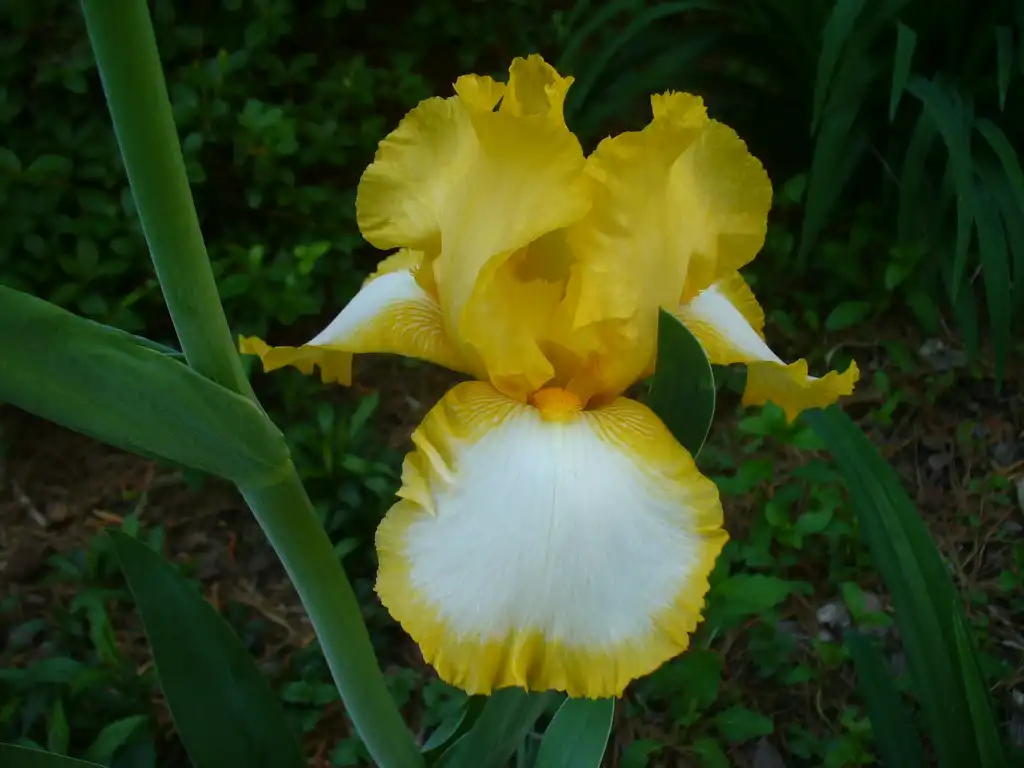
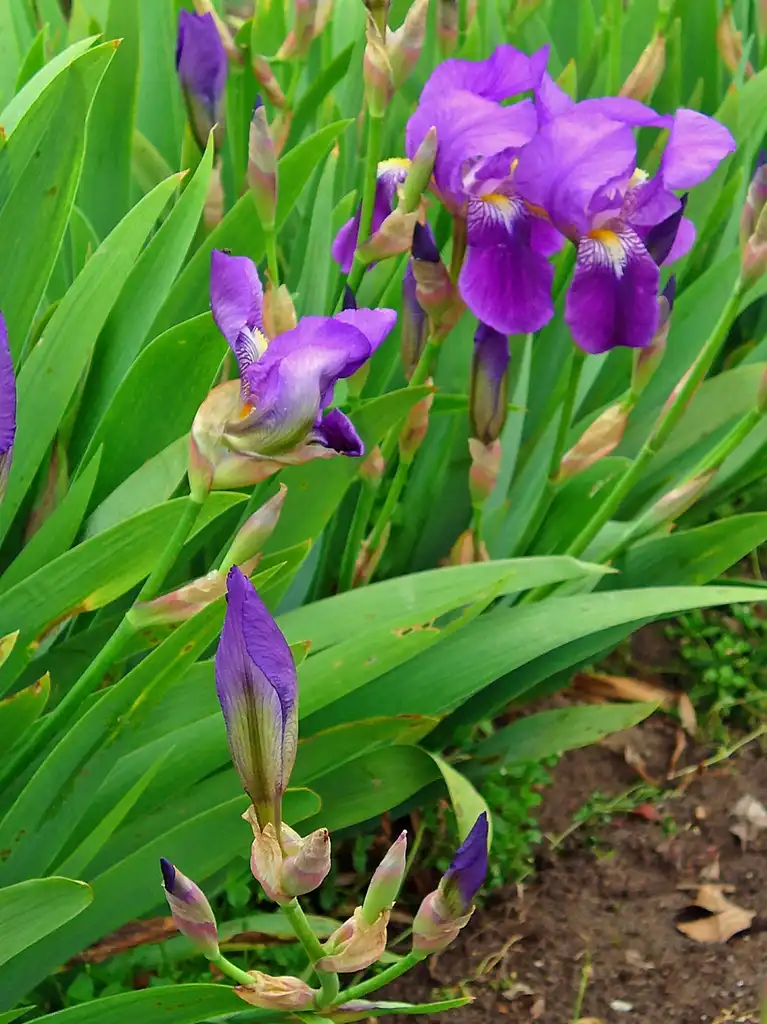
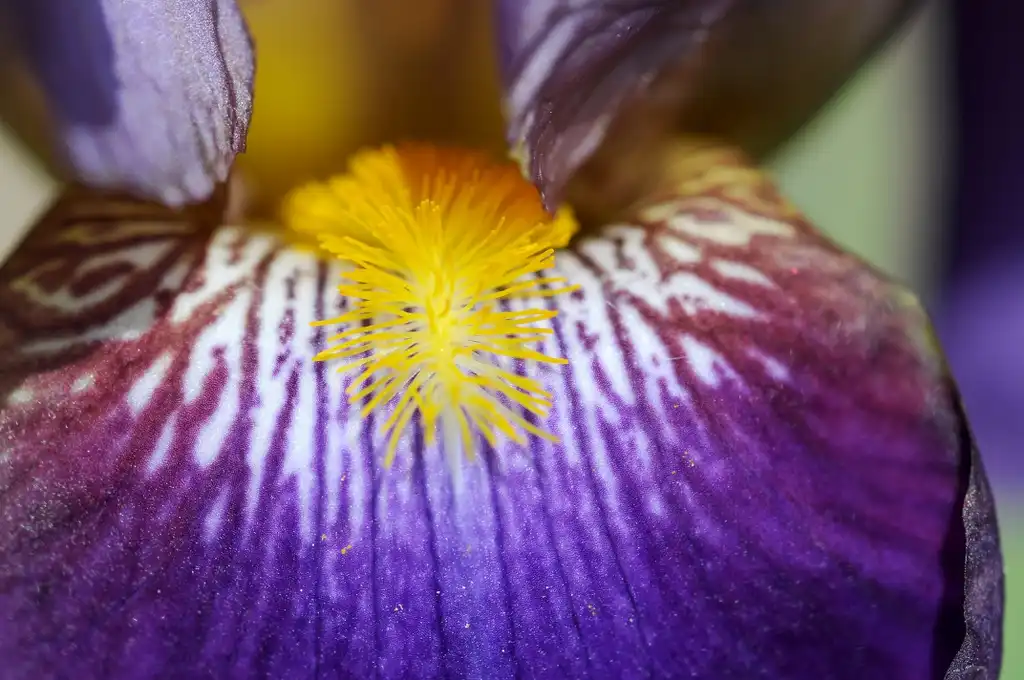
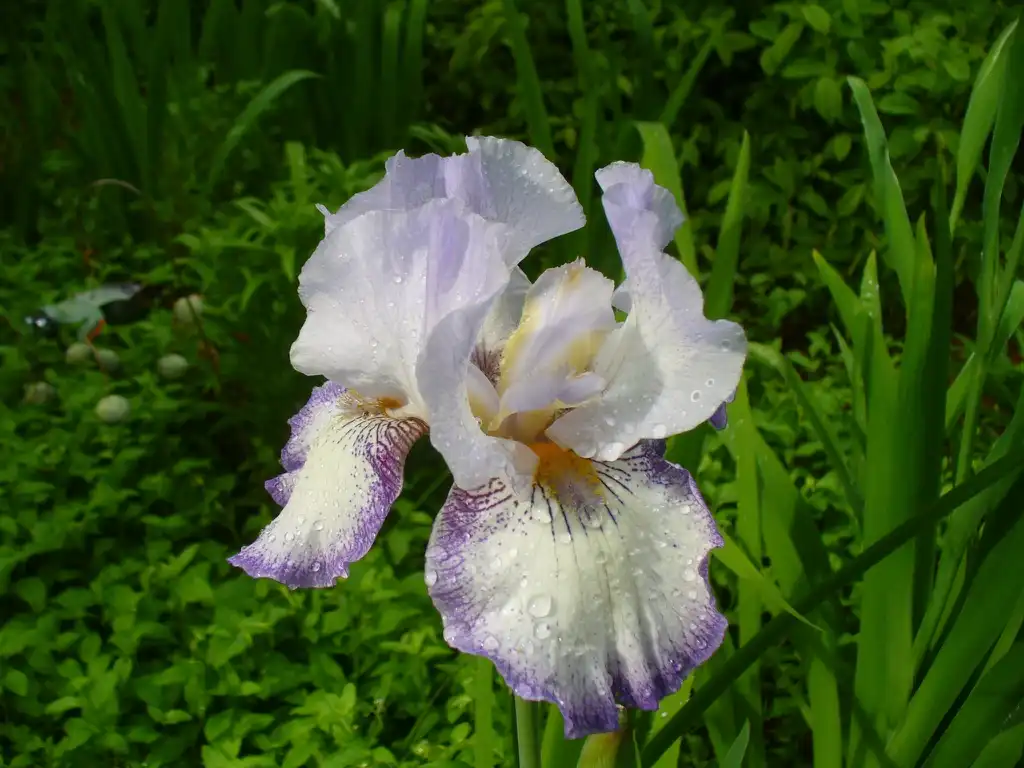
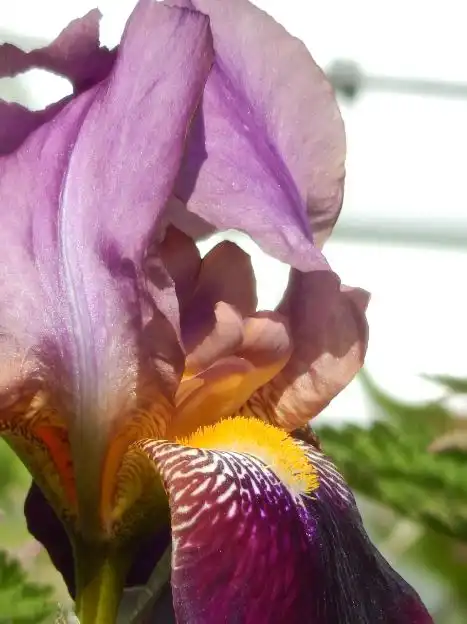
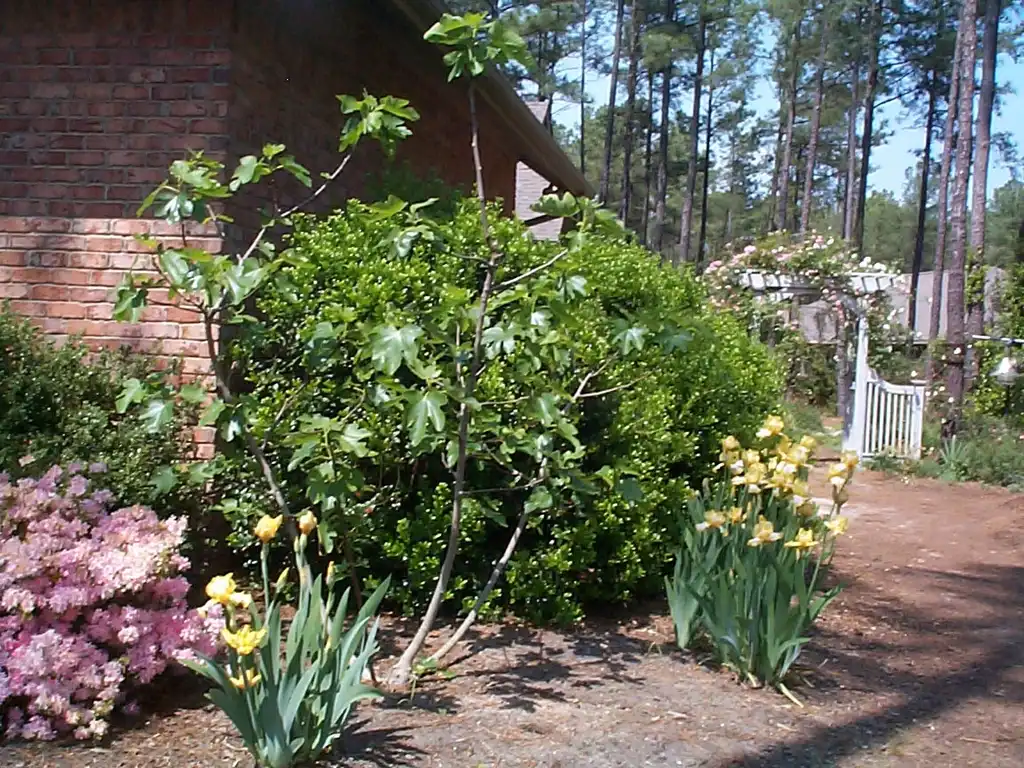
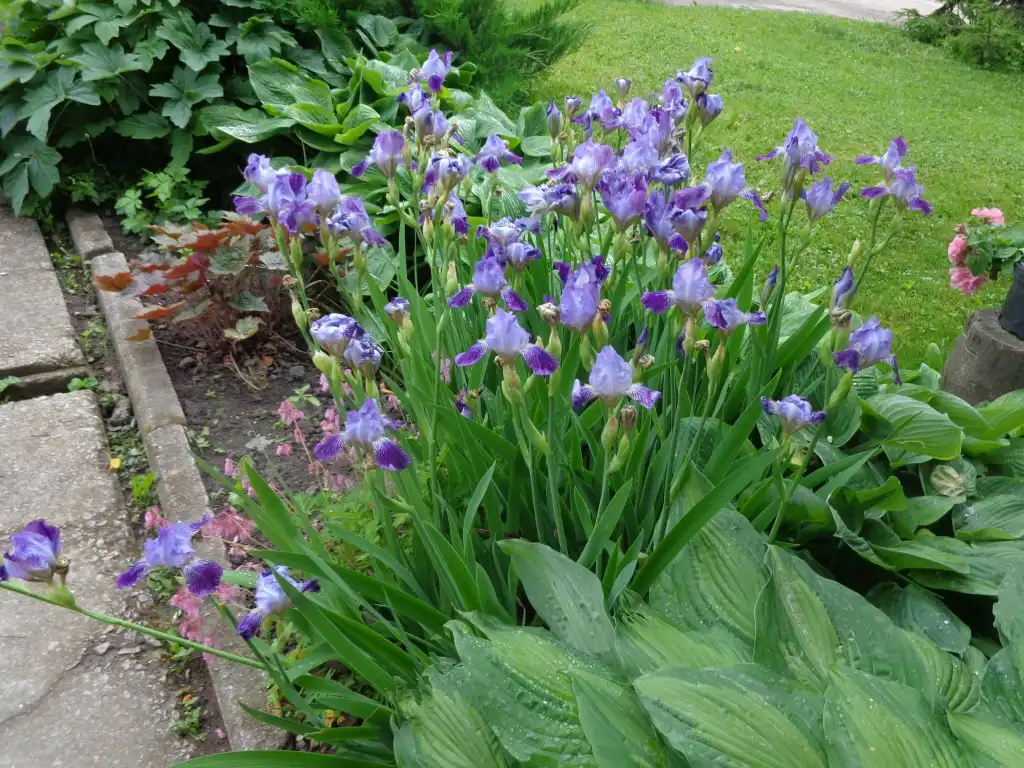
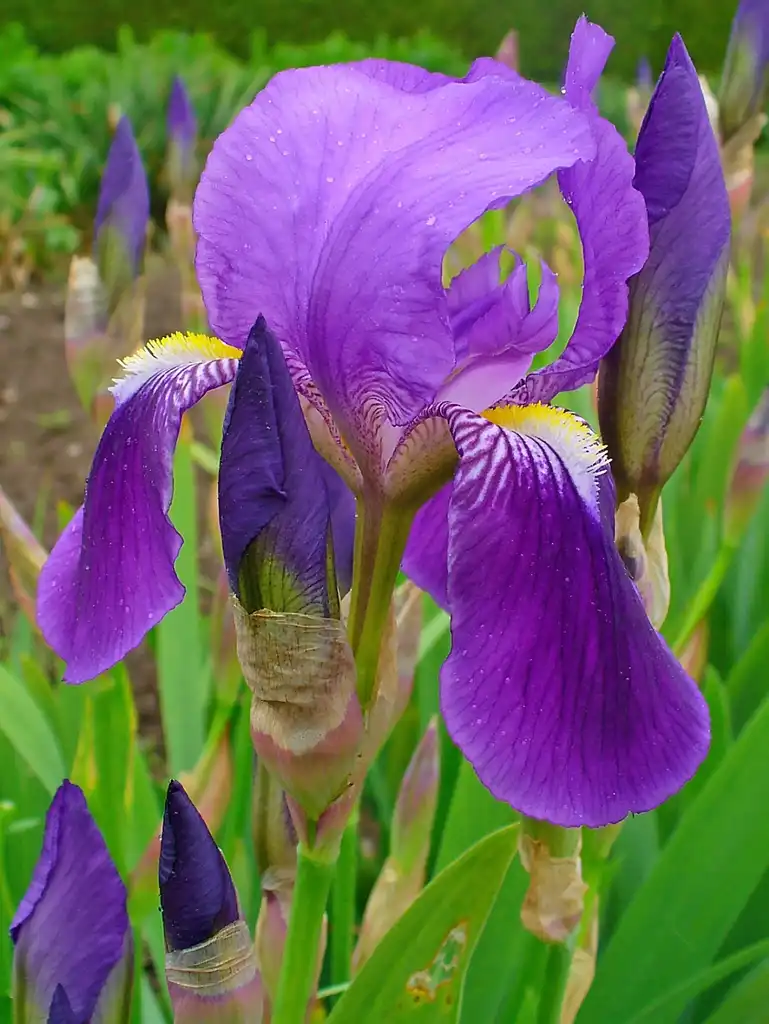
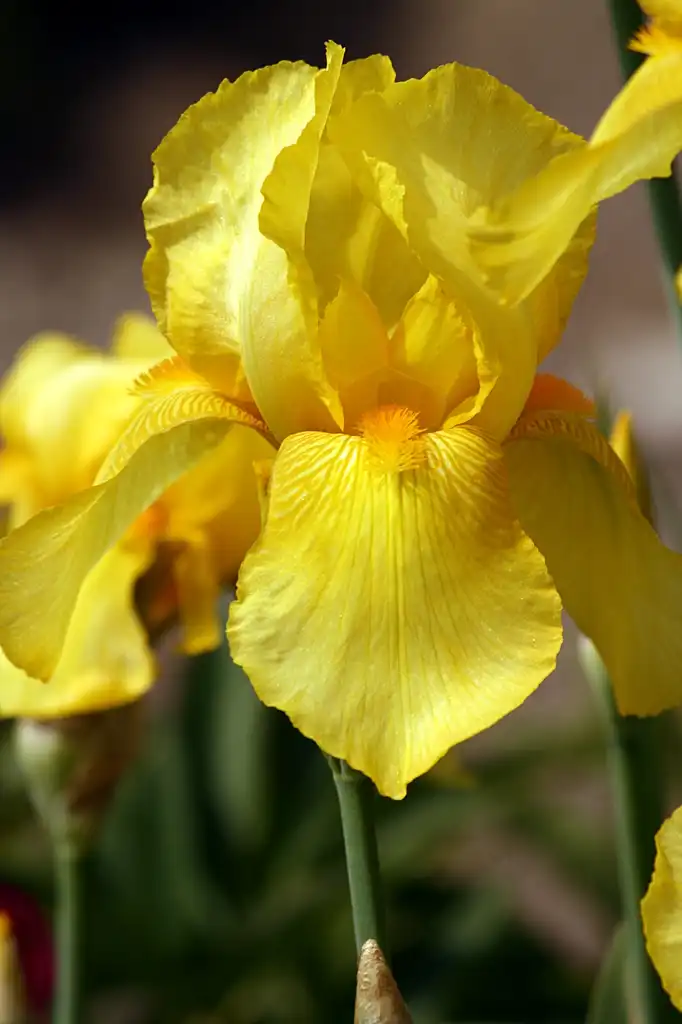
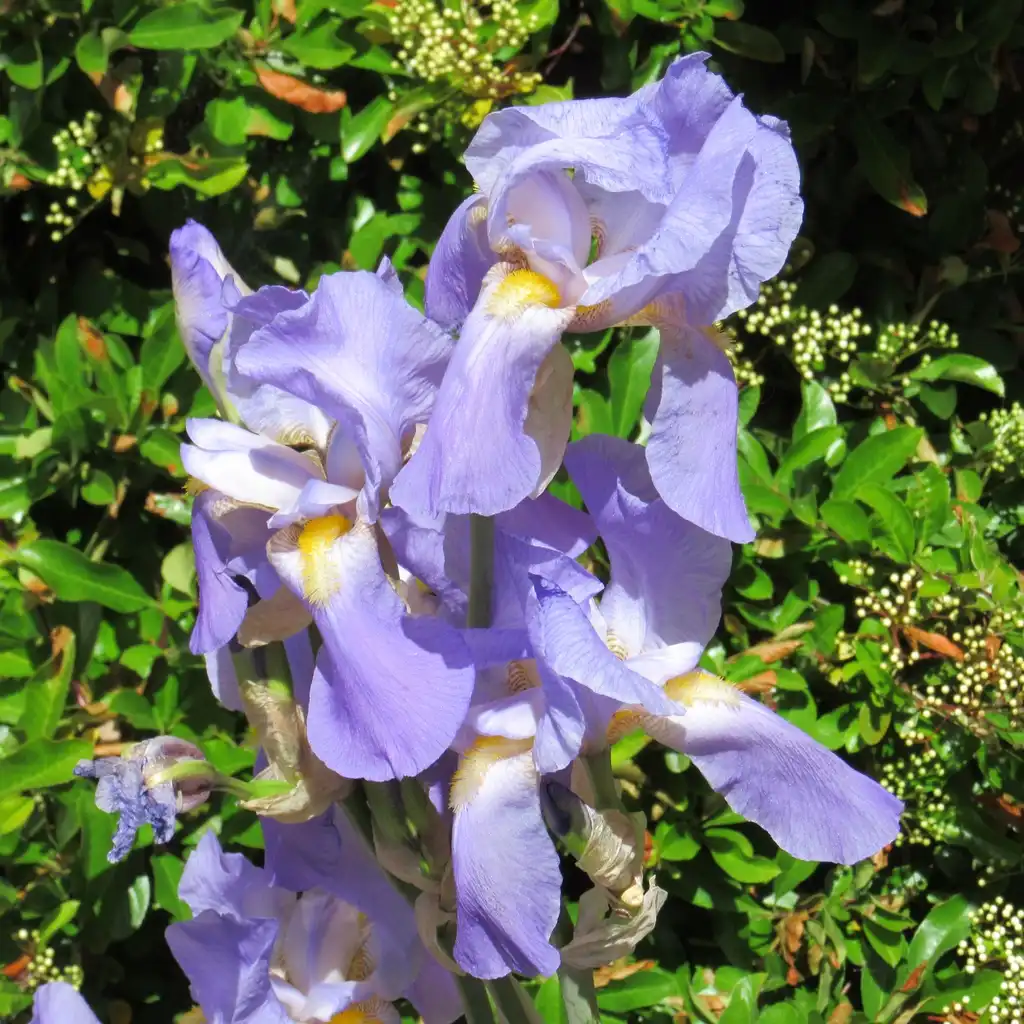
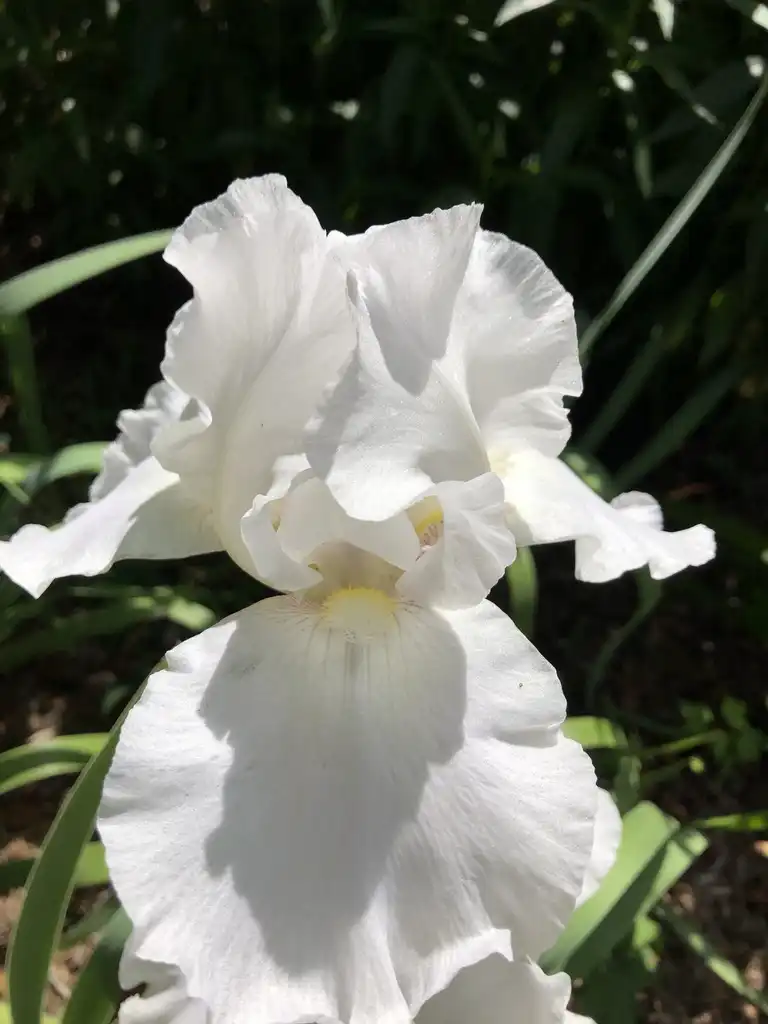
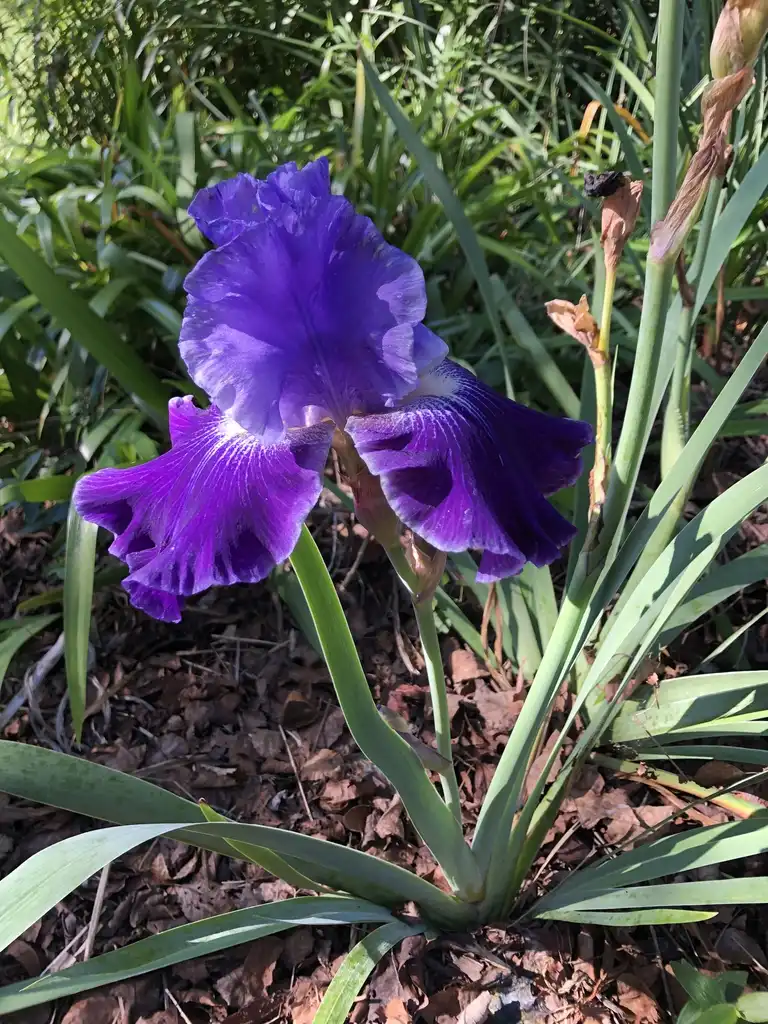
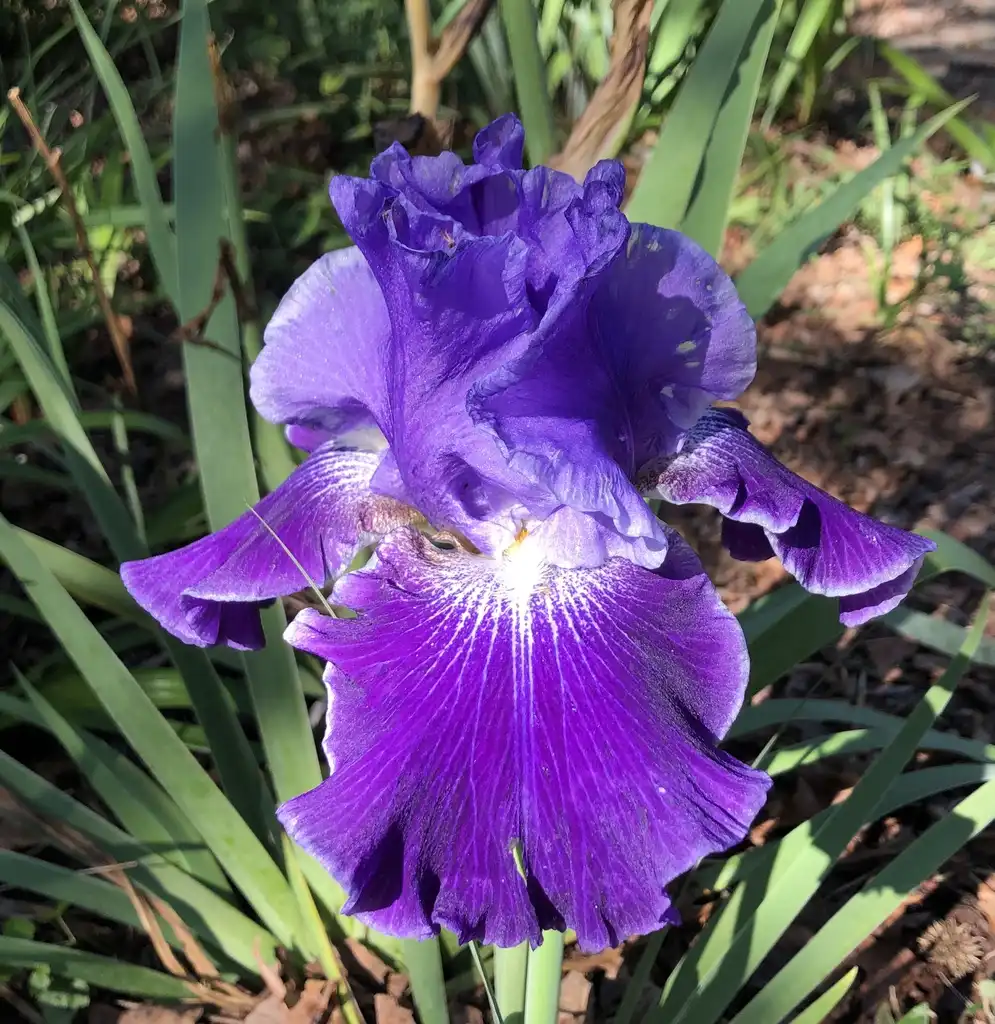
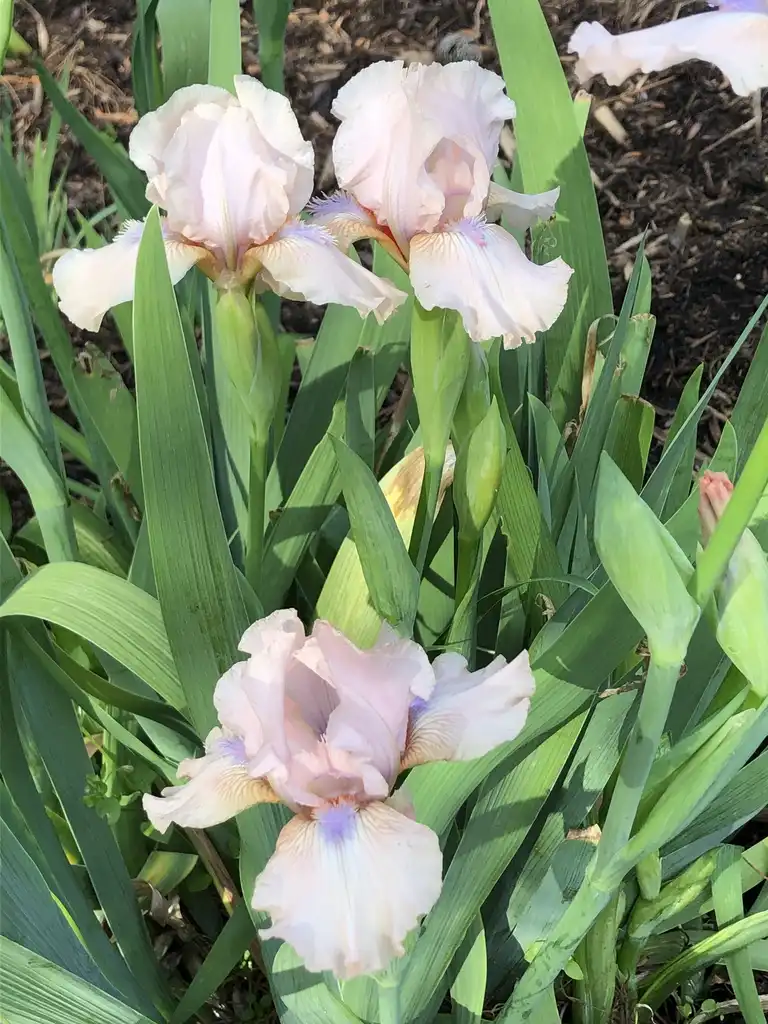
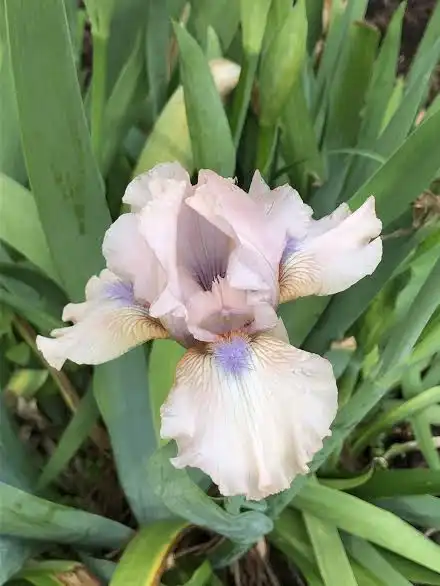
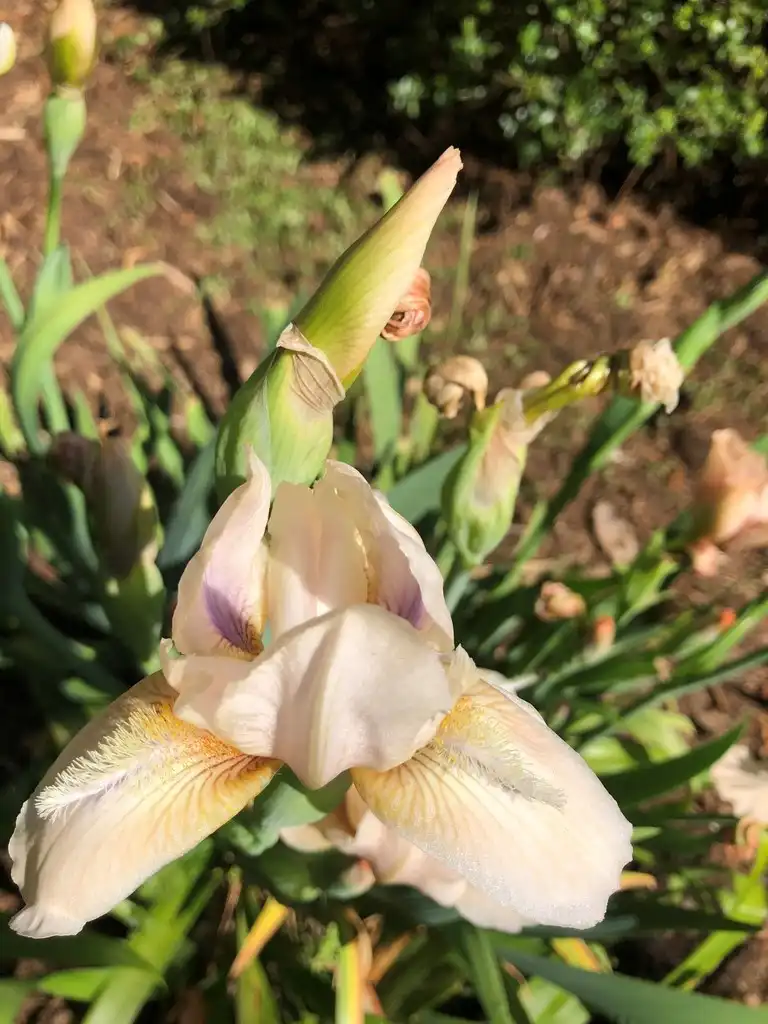
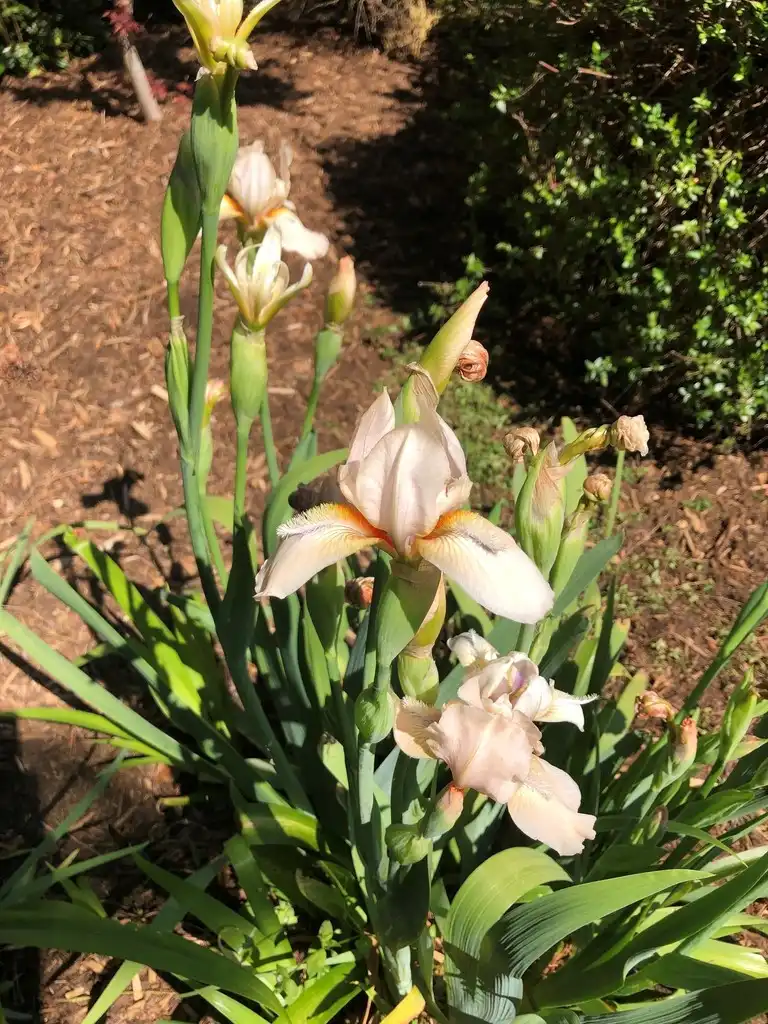
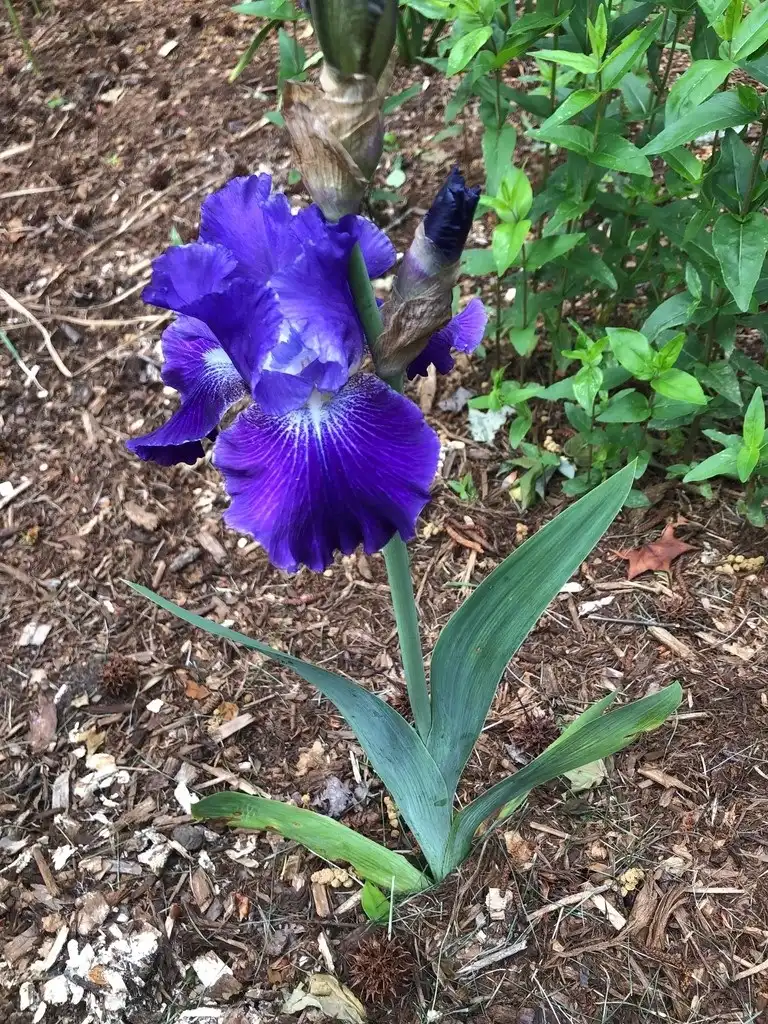
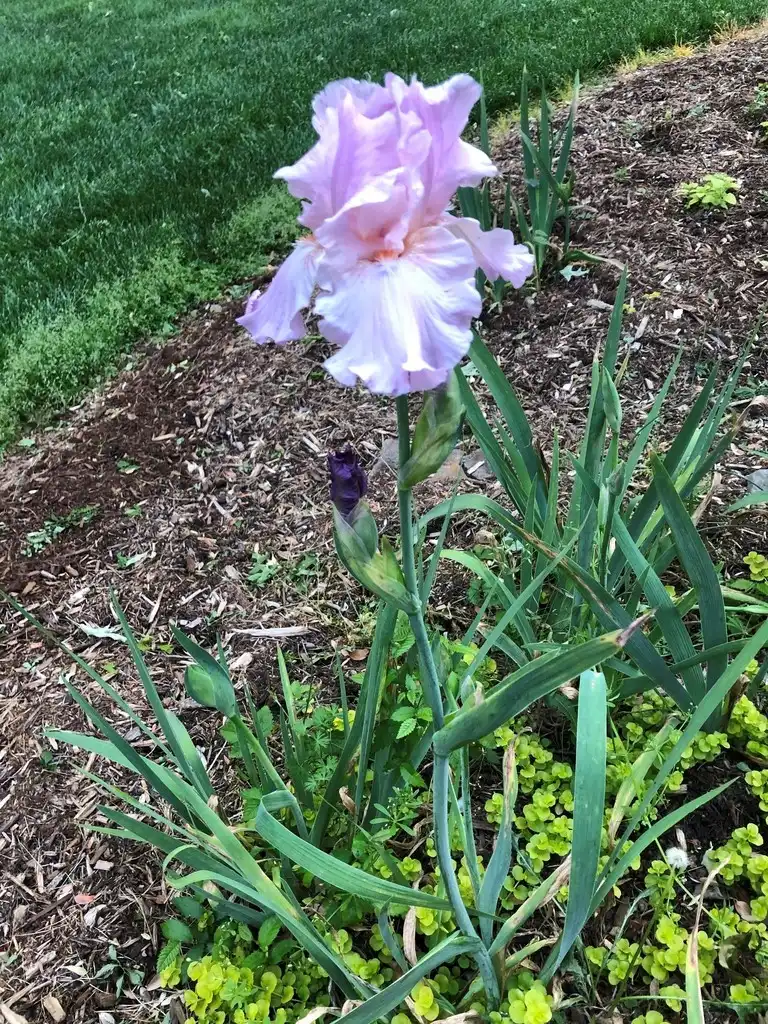
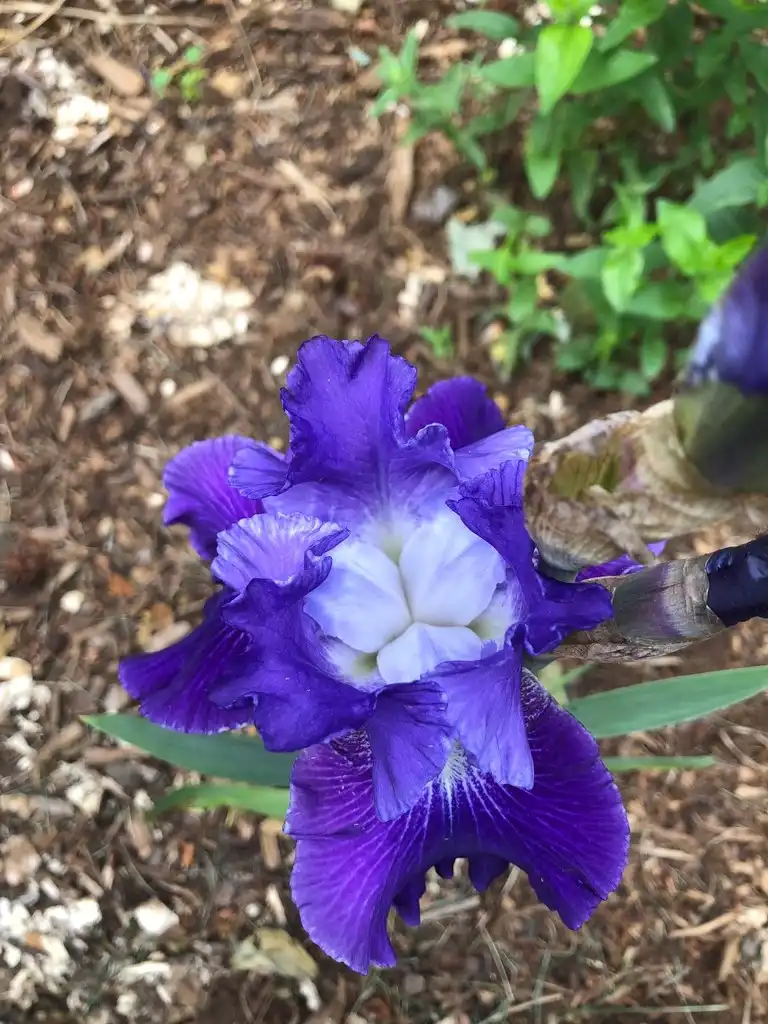
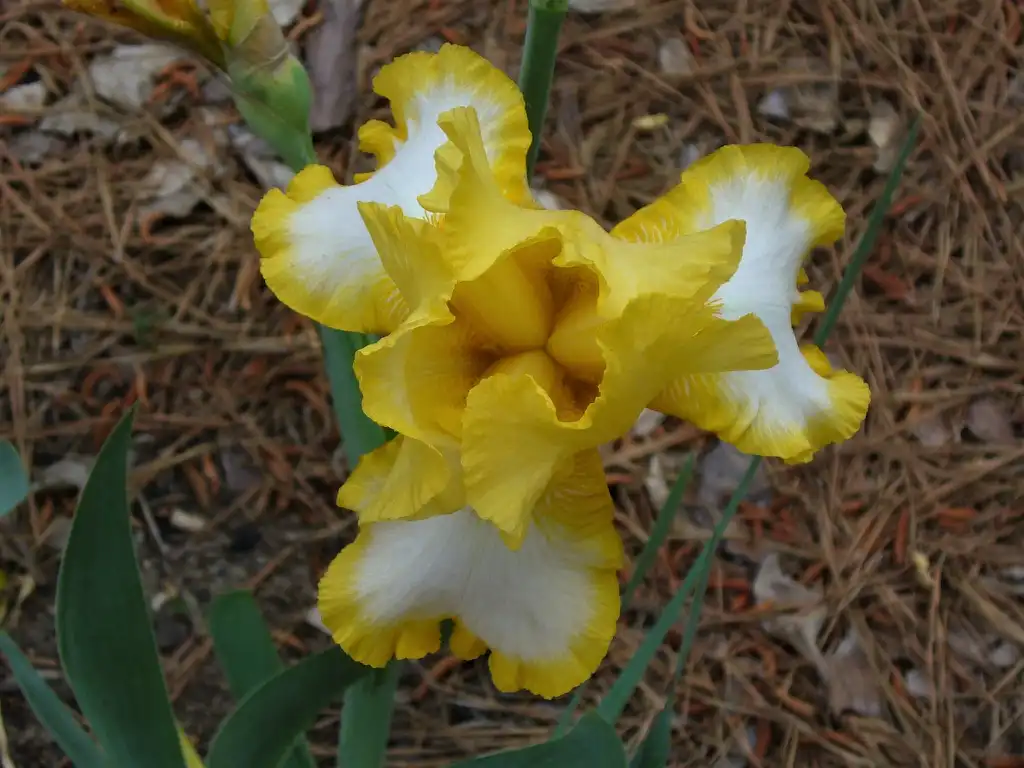
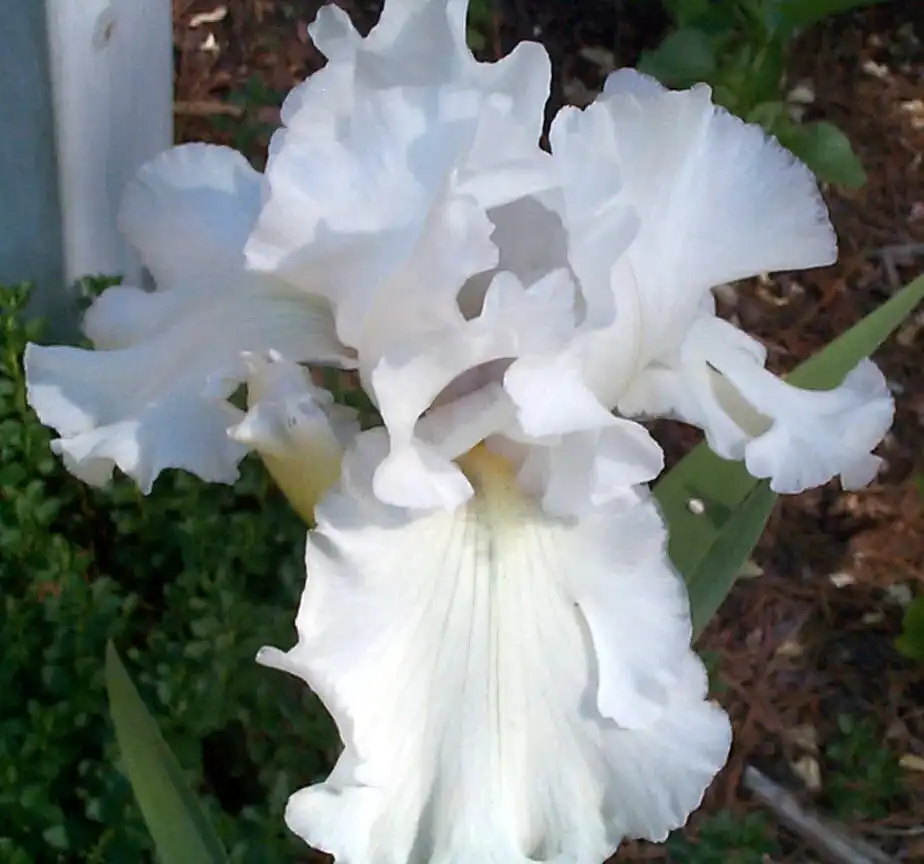
This perennial herbaceous plant, native to the Mediterranean region, flourishes and produces its most vibrant blooms in full sunlight when grown in rich, well-drained soil, although it can tolerate some shade. It does not thrive in heavy clay soils. Typically, these irises are tall and striking, with large blooms that can rise up to 3 feet above the foliage on slender, bare stems. Each flower features six segments: three outer "falls" that are either spreading or drooping, adorned with yellow beards, and three inner "standards" that stand upright. The cultivated varieties showcase a stunning array of colors, including blues, purples, pinks, yellows, oranges, whites, and even blacks. Additionally, they come in various heights, making them suitable for all sections of a perennial border, from dwarf and miniature forms to medium and tall varieties.
When planting, rhizomes should be positioned at soil level or just lightly covered, avoiding mulch to prevent excess moisture that can lead to root rot. These irises prefer drier conditions and should not be overwatered. To promote healthy growth and flowering, it is advisable to fertilize the plants in early spring and divide them after they bloom, typically in mid to late summer. This practice also helps mitigate the risk of fungal diseases, such as crown rot and mosaic virus. Iris borer is a significant pest for these plants; managing it involves promptly removing affected roots and foliage, clearing the garden bed of debris at the end of the season, and dividing the plants when they become overcrowded. Additionally, faded blooms should be removed. The leaves, characteristic of most irises, are strap-like and overlap at the base, forming a clump. The fruit develops as a capsule.
For more information on Iris.
Iris x germanica Feature Summary
Iris x germanica Image Gallery