• Photo of Arachis hypogaea (Arachis hypogaeas)

Plant Profile: Arachis hypogaea

Taxonomy: Arachis hypogaea

Names

Earthnut, Goober, Goober Peas, Groundnut, Monkey Nut, Peanut, Peanuts, Pindar, Pygmy Nut, Virginia Peanut

  • Photo of Arachis hypogaea (Arachis hypogaeas)

Phonetic Spelling:

Genus:Arachis

Species:hypogaea

Family:Fabaceae

Arachis hypogaea, commonly known as the peanut, is a legume indigenous to Central Brazil and is now cultivated globally, primarily for its edible seeds. The term "hypogaea" translates to "under the earth," highlighting the unique characteristic of this plant: its pods, which house the seeds, develop underground. Although peanuts are perennial herbs, they are typically grown as annuals. The plant produces flowers above ground, but the fruit forms below the surface in a process called geocarpy. Like many legumes, peanuts possess roots that harbor nitrogen-fixing bacteria, making them beneficial for soil health. At the end of the growing season, it is advisable to remove only the above-ground parts of the plant, leaving the roots intact to decompose and enrich the soil with nitrogen.

Peanut plants flourish in warm climates with ample sunlight and well-drained, sandy loam soil. They are not resistant to frost and are best suited for regions with extended warm summers. Seeds should be planted in the spring once the soil has warmed, in fertile, light-textured, well-composted soils that receive full sun. Plant the seeds approximately 2 inches deep in rows spaced about 3 feet apart, with 6 to 9 inches between each seed in the row. After the first fall frost, the plants should be dug up, the soil shaken off, and then spread on a dry surface, ensuring they do not touch the ground, to cure before harvesting the pods. Typically, the pods mature 120 to 150 days after planting.

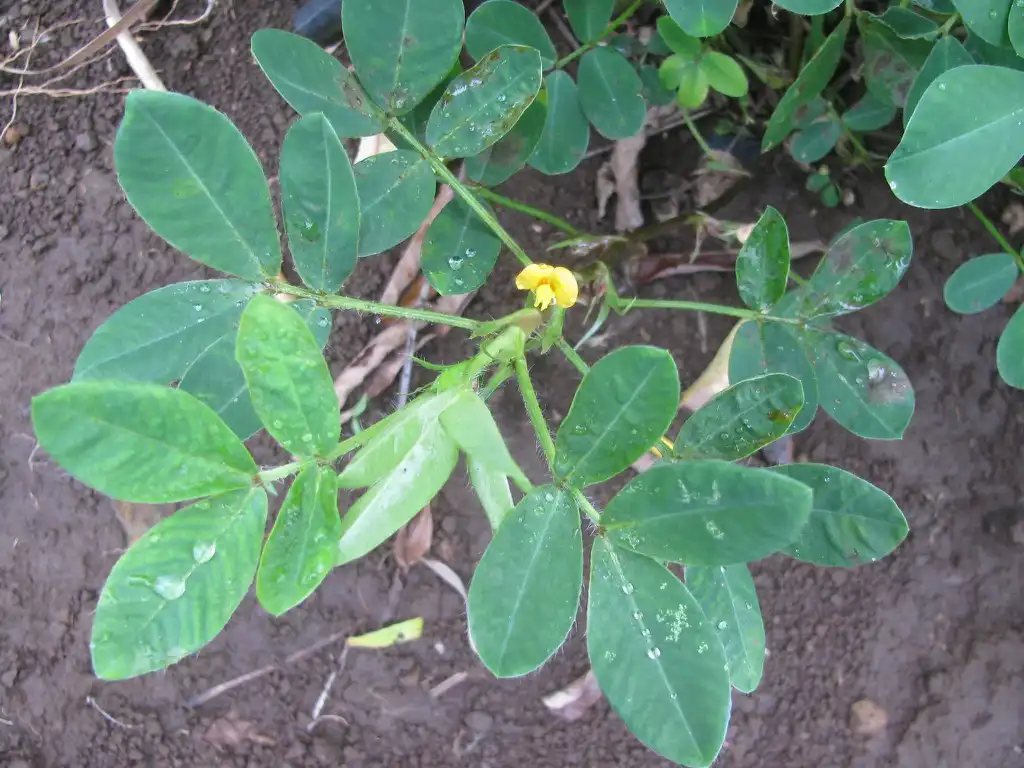
Peanut varieties can either grow in an erect or runner form, with a growth cycle ranging from 4 to 5 months, depending on the specific type. The plant features attractive, low-growing yellow flowers that are self-pollinating, leading to the formation of a ‘peg’ that extends downward into the soil, where the peanut seed pod will develop.

In the United States, four primary types of peanut varieties are cultivated.

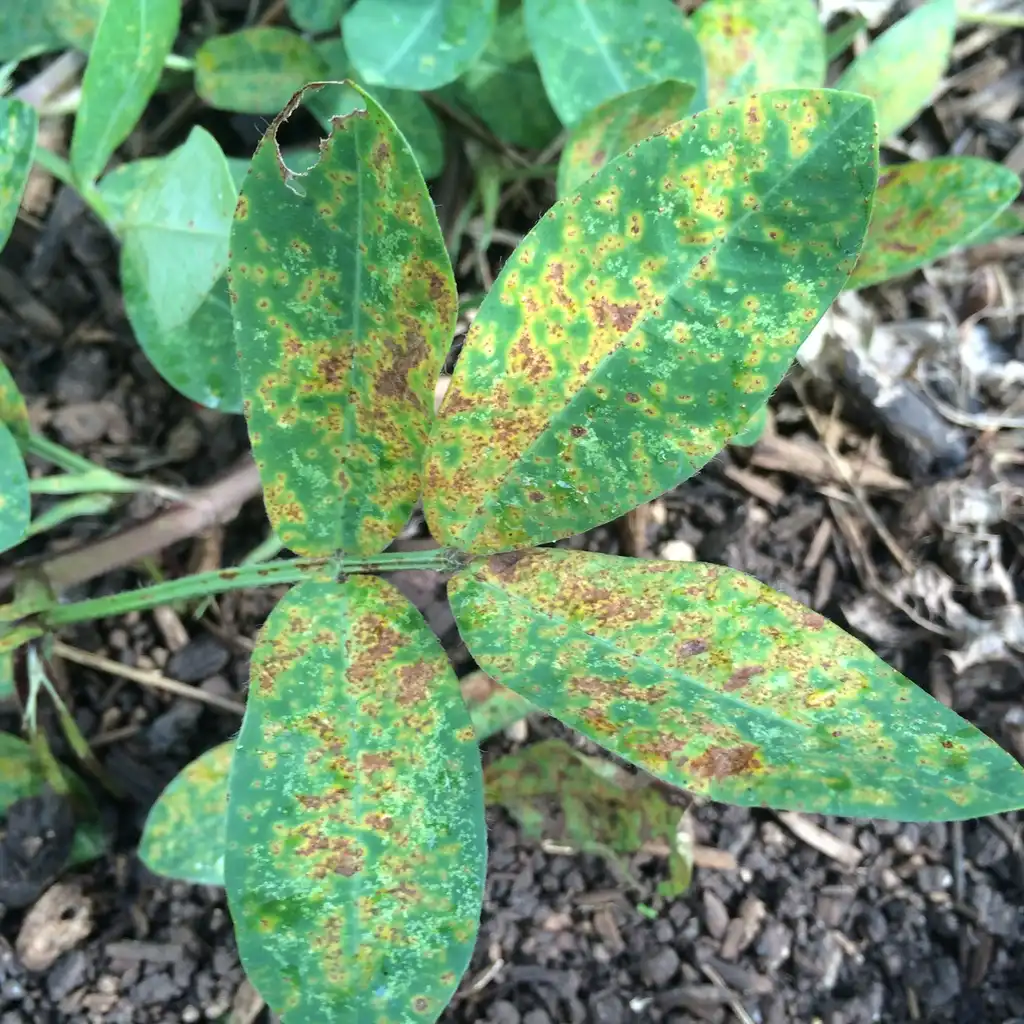
Regarding diseases, peanuts are susceptible to various issues, including leaf spots, southern stem rot, Sclerotinia blight, Cylindrocladium black rot, and Spotted wilt. Additionally, peanuts exhibit allelopathic properties, meaning they can inhibit the growth of other plant species by releasing toxic compounds. It is also important to note that peanut seeds contain proteins that can trigger allergic reactions in some individuals, posing a risk for those with sensitivities.
Arachis hypogaea Feature Summary

Arachis hypogaea Image Gallery

Tags

#annual
#legume
#frost tender
#vegetable garden
#edible seeds
#flowering

Similar Plants

Arachis hypogaea Feature Summary

Attributes
Peanut seeds are edible and high in proteins and other minerals and vitamins. Roots, seed hulls or leaves are used for cosmetics, soaps, plastics, wallboard, livestock feed, fertilizer filler and alternative fuels.
Grown worldwide
Minor or low food source for small mammals and terrestrial birds.
The peanut is the most common edible plant part and is consumed either raw, cooked, made into oils or, with fats removed, ground into flour. Young leaves and tips may be suitable as cooked green vegetables. For those with peanut allergies, exposure to peanuts can cause severe reactions.

Fruit
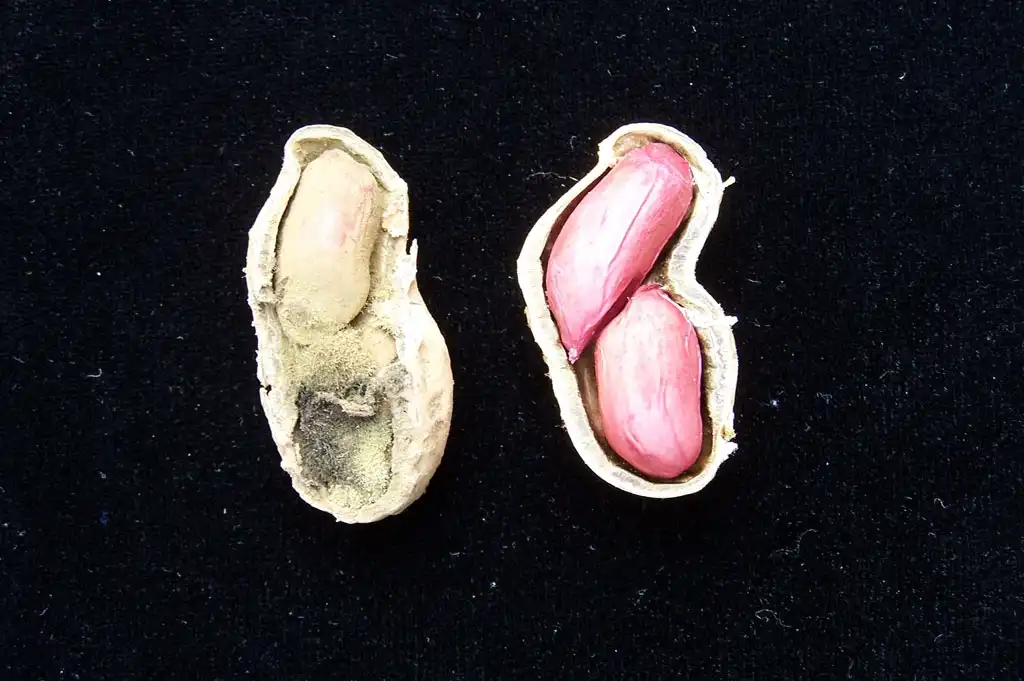
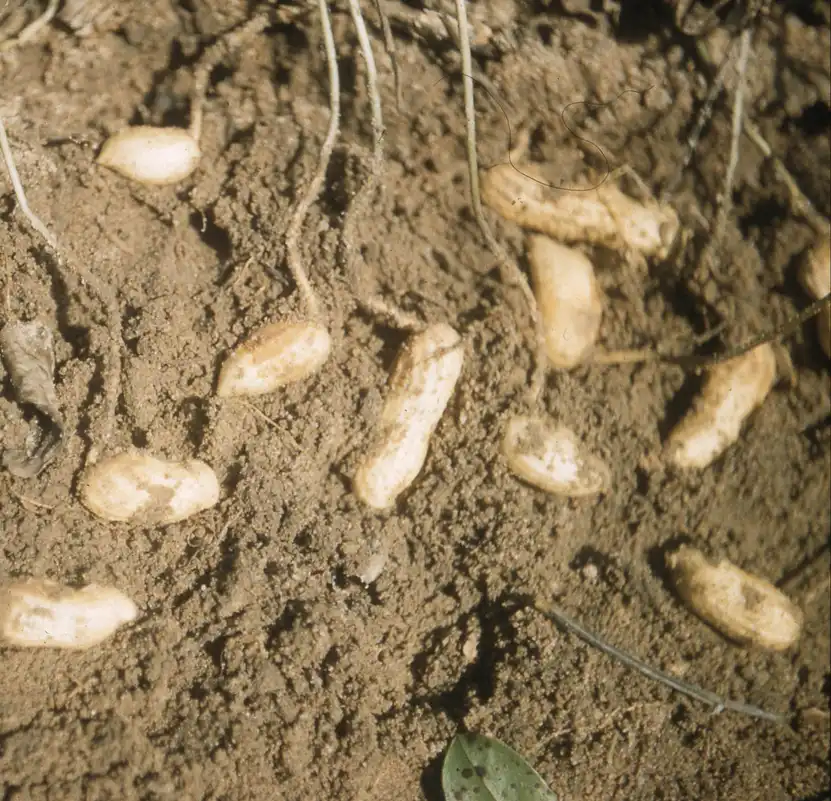
The peanut is a legume, not a true nut. The flower stems, once the flowers are fertilized, begin to grow into the soil where the irregularly ovoid seed pod develops. The seeds vary from oblong to nearly round, surrounded by a papery seed coat.
Brown/Copper
1-3 inches
< 1 inch
Flowers
Orange-veined, yellow, self-polinating flowers are produced near the base of the plant about 40 days after planting and typically bloom July to September.
Gold/Yellow
4-5 petals/rays
1-3 inches
Leaves
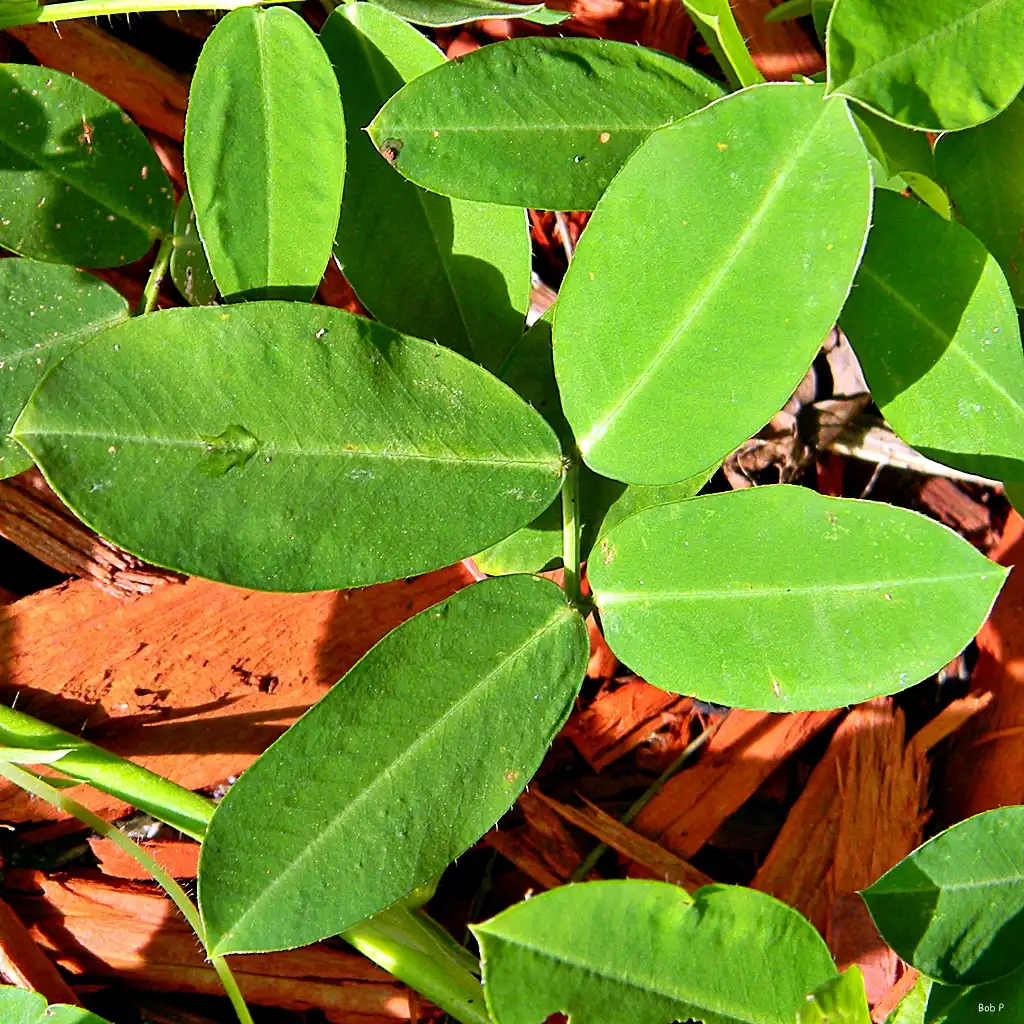
The leaves have an even number of elliptical leaflets each with a prominent mid vein.
Compound (Pinnately , Bipinnately, Palmately)
Elliptical
Ovate
1-3 inches
< 1 inch
Stem
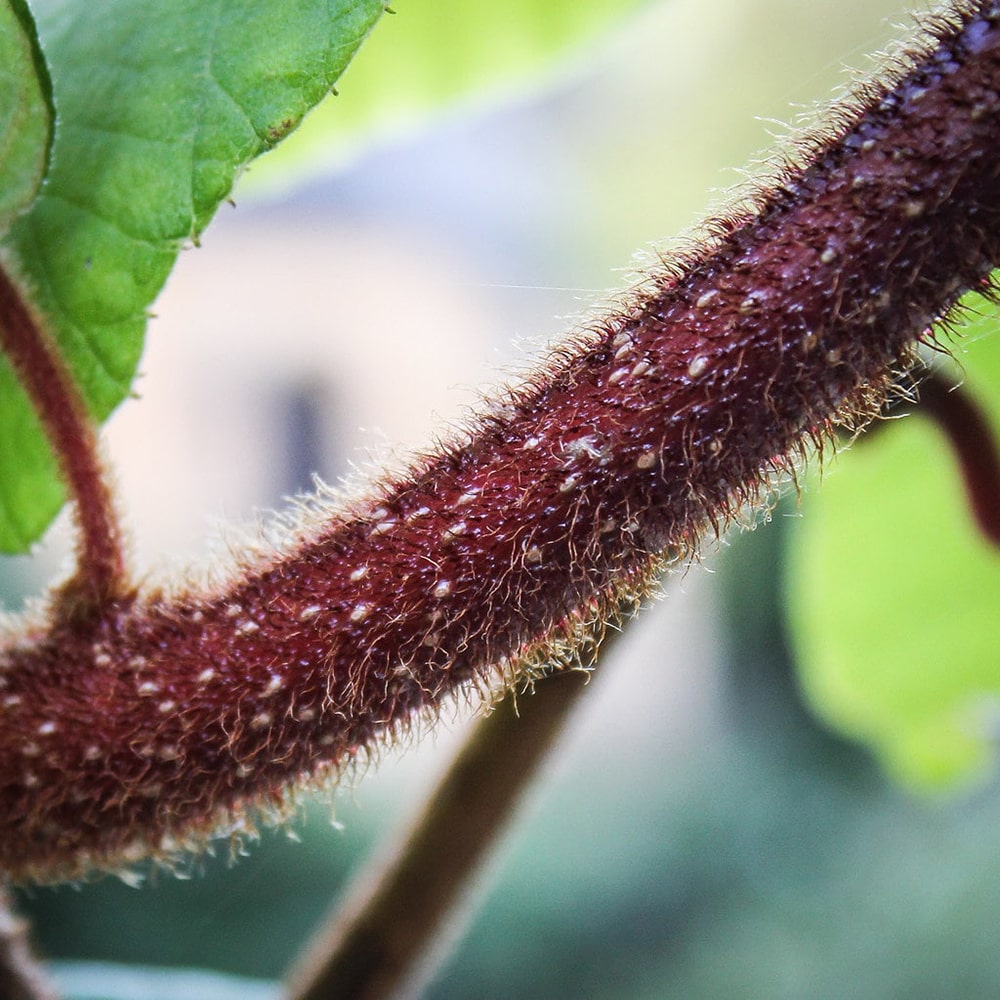
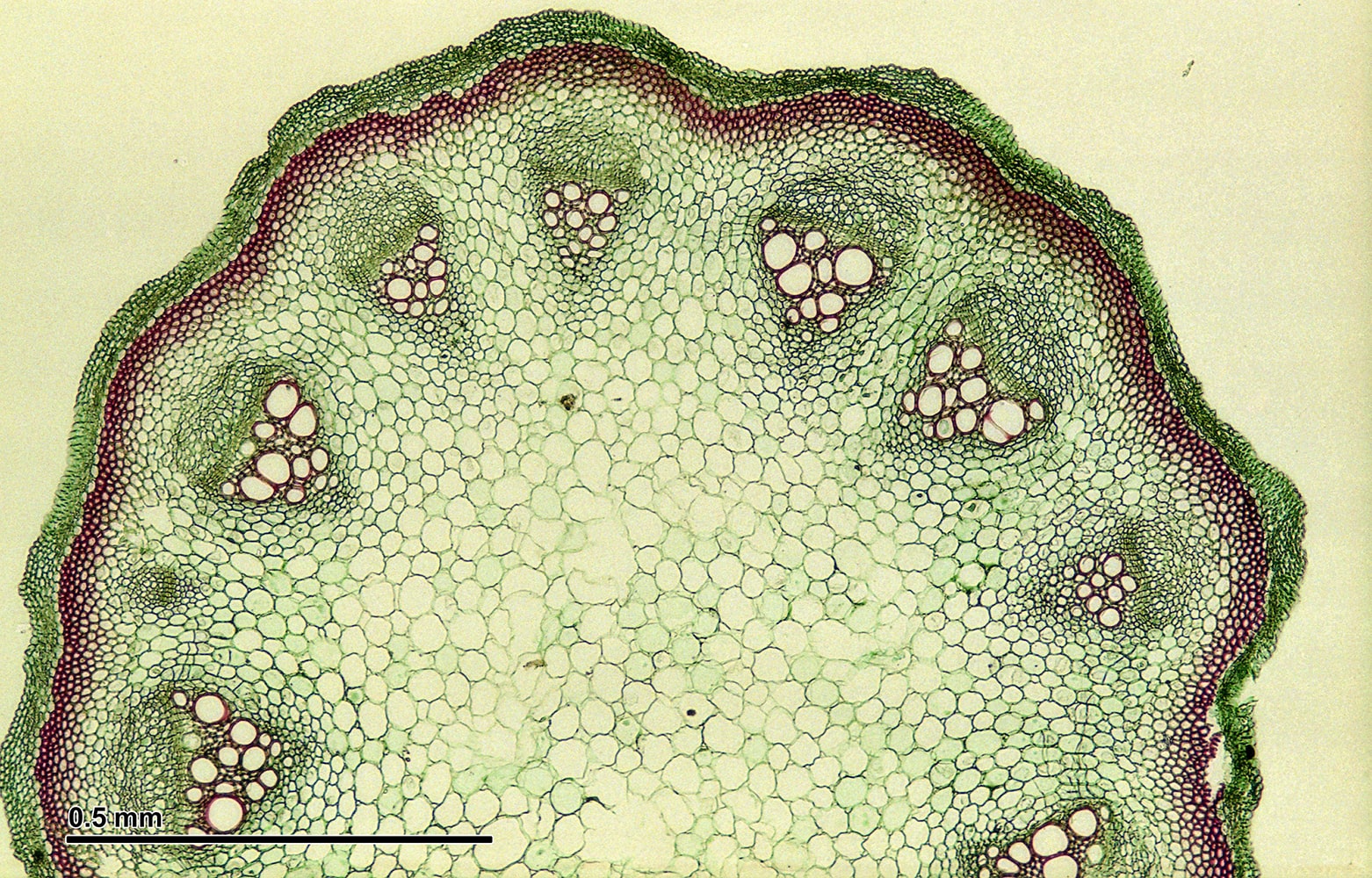
Has a sturdy erect or prostrate stem that is cylindrical and smooth at the base becoming angular and hairy with age.
Hairy (pubescent)
Straight
Poisonous to Humans
Peanut-allergic reactions may involve the skin, the respiratory tract, and the gastrointestinal tract from direct contact, cross contact or inhalation.
Seed storage proteins ARAH1-13
Whole Plant Traits
Annual
Edible
Vegetable
Erect
Spreading
Prostrate
Cultural Conditions
Full sun (6 or more hours of direct sunlight a day)
Acid (<6.0)
Neutral (6.0-8.0)
Good Drainage
Moist
Coastal
Piedmont
4a
4b
5b
5a
6a
6b
7a
7b
8b
8a
2a
2b
3a
3b
9a
9b
10a
10b
11a
11b
Clay
Loam (Silt)
Sand
Landscape
Edible Garden
Mass Planting
Poisonous to Humans
Problem for Children
Allelopathic

Arachis hypogaea Attributes

Arachis hypogaea: Uses (Ethnobotany)

Peanut seeds are edible and high in proteins and other minerals and vitamins. Roots, seed hulls or leaves are used for cosmetics, soaps, plastics, wallboard, livestock feed, fertilizer filler and alternative fuels.

Arachis hypogaea: Country Or Region Of Origin

Central Brazil

Arachis hypogaea: Distribution

Grown worldwide

Arachis hypogaea: Wildlife Value

Minor or low food source for small mammals and terrestrial birds.

Arachis hypogaea: Edibility

The peanut is the most common edible plant part and is consumed either raw, cooked, made into oils or, with fats removed, ground into flour. Young leaves and tips may be suitable as cooked green vegetables. For those with peanut allergies, exposure to peanuts can cause severe reactions.

Arachis hypogaea: Life Cycle

Annual
Biennial
Bulb
Perennial
Woody

Arachis hypogaea: Recommended Propagation Strategy

Division
Grafting
Layering
Leaf Cutting
Root Cutting
Seed
Stem Cutting

Arachis hypogaea Fruit

Arachis hypogaea: Fruit Description

The peanut is a legume, not a true nut. The flower stems, once the flowers are fertilized, begin to grow into the soil where the irregularly ovoid seed pod develops. The seeds vary from oblong to nearly round, surrounded by a papery seed coat.

Arachis hypogaea: Fruit Type

Achene
Aggregate
Berry
Capsule
Caryopsis
Drupe
Follicle
Legume
Nut
Pome
Samara
Schizocarp
Siliqua

Arachis hypogaea: Fruit Color

grass
Brown/Copper

Arachis hypogaea: Fruit Value To Gardener

Edible
Fragrant
Good Cut
Good Dried
Long Bloom Season
Long-lasting
Showy

Arachis hypogaea: Display/Harvest Time

Fall
Spring
Summer
Winter

Arachis hypogaea: Fruit Length

< 1 inch
1-3 inches
> 3 inches

Arachis hypogaea: Fruit Width

< 1 inch
1-3 inches
> 3 inches

Arachis hypogaea Flowers

Arachis hypogaea: Flower Description

Orange-veined, yellow, self-polinating flowers are produced near the base of the plant about 40 days after planting and typically bloom July to September.

Arachis hypogaea: Flower Color

filter_vintage
Gold/Yellow

Arachis hypogaea: Flower Inflorescence

Catkin
Corymb
Cyme
Head
Insignificant
Panicle
Raceme
Solitary
Spadix
Spike
Umbel

Arachis hypogaea: Flower Value To Gardener

Edible
Fragrant
Good Cut
Good Dried
Long Bloom Season
Long-lasting
Showy

Arachis hypogaea: Flower Bloom Time

Winter
Spring
Summer
Fall

Arachis hypogaea: Flower Petals

2-3 rays/petals
4-5 petals/rays
6 petals/rays
7 - 20 petals/rays
asymmetrical petals
Bracts
Colored Sepals
fused petals
more than 20 petals/rays
Tepals

Arachis hypogaea: Flower Size

1-3 inches
3-6 inches
< 1 inch
> 6 inches

Arachis hypogaea Leaves

Arachis hypogaea: Leaf Description

The leaves have an even number of elliptical leaflets each with a prominent mid vein.

Arachis hypogaea: Leaf Color

spa
Green

Arachis hypogaea: Leaf Type

Compound (Pinnately , Bipinnately, Palmately)
Fronds
Needles
Sheath
Simple

Arachis hypogaea: Leaf Arrangement

Alternate
Opposite
Other/more complex
Rosulate
Whorled

Arachis hypogaea: Leaf Shape

Acicular
Auriculate
Cordate
Cuneate
Deltoid
Elliptical
Filiform
Lanceolate
Linear
Oblanceolate
Oblong
Obovate
Obtuse
Orbicular
Ovate
Palmasect
Palmatifid
Peltate
Pinnatifid
Pinnatisect
Reniform
Rhomboidal
Spatulate
Subcordate
Subulate

Arachis hypogaea: Leaf Margin

Crenate
Crenulate
Dentate
Denticulate
Doubly Crenate
Doubly Dentate
Doubly Serrate
Entire
Lobed
Serrate
Sinuate
Undulate

Arachis hypogaea: Hairs Present

No
Yes

Arachis hypogaea: Leaf Length

< 1 inch
1-3 inches
3-6 inches
> 6 inches

Arachis hypogaea: Leaf Width

< 1 inch
1-3 inches
3-6 inches
> 6 inches

Arachis hypogaea Stem

Arachis hypogaea: Stem Description

Has a sturdy erect or prostrate stem that is cylindrical and smooth at the base becoming angular and hairy with age.

Arachis hypogaea: Stem Color

grass
Green

Arachis hypogaea: Stem Is Aromatic

No
Yes

Arachis hypogaea: Stem Cross Section

Angular
Oval
Round
Square

Arachis hypogaea: Stem Surface

Corky Ridges
Covered with a powdery bloom (glaucous)
Dull
Hairy (pubescent)
Polished
Smooth (glabrous)

Arachis hypogaea: Stem Form

Straight
Zig Zags

Arachis hypogaea Poisonous to Humans

Arachis hypogaea: Poison Symptoms

Peanut-allergic reactions may involve the skin, the respiratory tract, and the gastrointestinal tract from direct contact, cross contact or inhalation.

Arachis hypogaea: Poison Toxic Principle

Seed storage proteins ARAH1-13

Arachis hypogaea: Poison Severity

High
Low
Medium

Arachis hypogaea: Causes Contact Dermatitis

No
Yes

Arachis hypogaea: Poison Part

Bark
Flowers
Fruits
Leaves
Roots
Sap/Juice
Seeds
Stems

Arachis hypogaea Whole Plant Traits

Arachis hypogaea: Plant Type

Annual
Bulb
Carnivorous
Edible
Epiphyte
Fern
Ground Cover
Herb
Herbaceous Perennial
Houseplant
Mushroom
Native Plant
Ornamental Grasses and Sedges
Perennial
Poisonous
Rose
Shrub
Succulent
Tree
Turfgrass
Vegetable
Vine
Water Plant
Weed
Wildflower

Arachis hypogaea: Habit/Form

Arching
Ascending
Broad
Cascading
Climbing
Clumping
Columnar
Conical
Creeping
Dense
Erect
Horizontal
Irregular
Mounding
Multi-stemmed
Multi-trunked
Open
Oval
Prostrate
Pyramidal
Rounded
Spreading
Vase
Weeping

Arachis hypogaea: Maintenance

Low
Medium
High

Arachis hypogaea Cultural Conditions

Arachis hypogaea: Light

Dappled Sunlight (Shade through upper canopy all day)
Deep shade (Less than 2 hours to no direct sunlight)
Full sun (6 or more hours of direct sunlight a day)
Partial Shade (Direct sunlight only part of the day, 2-6 hours)

Arachis hypogaea: Soil pH

Acid (<6.0)
Alkaline (>8.0)
Neutral (6.0-8.0)

Arachis hypogaea: Soil Drainage

Frequent Standing Water
Good Drainage
Moist
Occasional Flooding
Occasionally Dry
Occasionally Wet
Very Dry

Arachis hypogaea: Available Space To Plant

12 inches-3 feet
12-24 feet
24-60 feet
3 feet-6 feet
6-feet-12 feet
Less than 12 inches
more than 60 feet

Arachis hypogaea: NC Region

Coastal
Mountains
Piedmont

Arachis hypogaea: USDA Plant Hardiness Zone

thermostat
10a
thermostat
10b
thermostat
11a
thermostat
11b
thermostat
2a
thermostat
2b
thermostat
3a
thermostat
3b
thermostat
4a
thermostat
4b
thermostat
5a
thermostat
5b
thermostat
6a
thermostat
6b
thermostat
7a
thermostat
7b
thermostat
8a
thermostat
8b
thermostat
9a
thermostat
9b

Arachis hypogaea: Soil Texture

Clay
High Organic Matter
Loam (Silt)
Sand
Shallow Rocky

Arachis hypogaea Landscape

Arachis hypogaea: Landscape Theme

Asian Garden
Butterfly Garden
Children's Garden
Cottage Garden
Cutting Garden
Drought Tolerant Garden
Edible Garden
English Garden
Fairy Garden
Garden for the Blind
Native Garden
Nighttime Garden
Pollinator Garden
Rain Garden
Rock Garden
Shade Garden
Water Garden
Winter Garden

Arachis hypogaea: Design Feature

Accent
Barrier
Border
Flowering Tree
Foundation Planting
Hedge
Mass Planting
Screen/Privacy
Security
Shade Tree
Small groups
Small Tree
Specimen
Street Tree
Understory Tree

Arachis hypogaea: Problems

Allelopathic
Contact Dermatitis
Frequent Disease Problems
Frequent Insect Problems
Invasive Species
Malodorous
Messy
Poisonous to Humans
Problem for Cats
Problem for Children
Problem for Dogs
Problem for Horses
Short-lived
Spines/Thorns
Weak Wood
Weedy