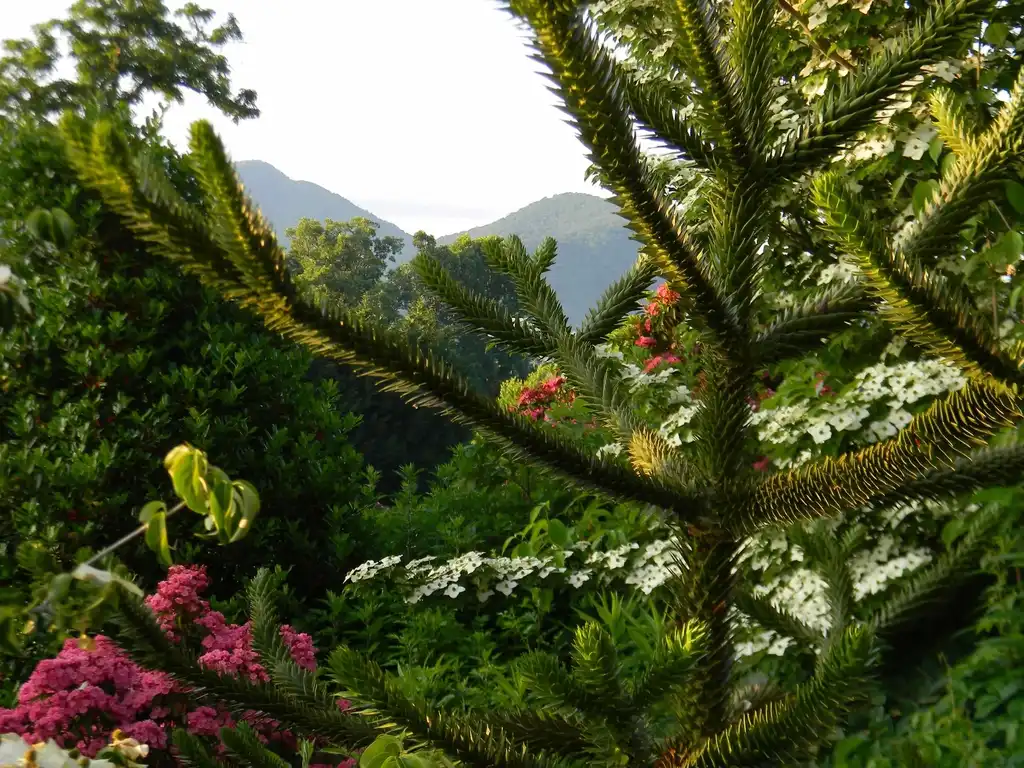
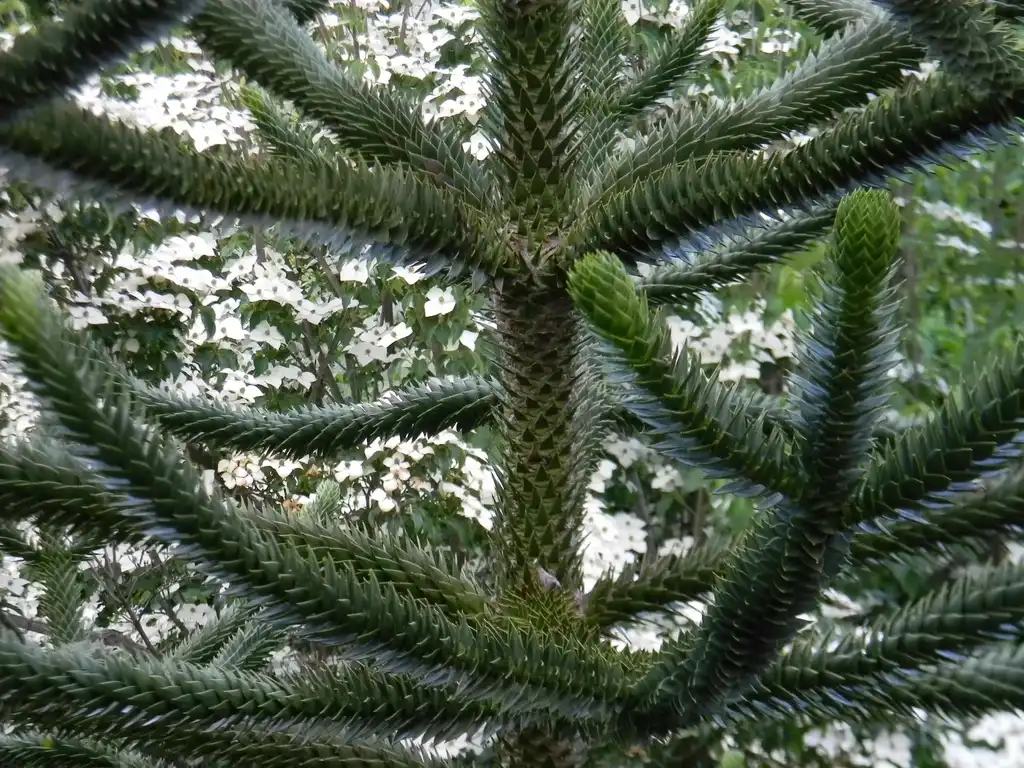
The Araucaria genus consists of around 19 species of conifers that resemble pines and are native to the Southern Hemisphere. Among these, A. araucana, commonly known as the Monkey Puzzle Tree, stands out as the most resilient. This impressive evergreen conifer originates from the volcanic hills of the Andes in southern Chile and western Argentina, where it serves as the national tree of Chile. It flourishes in coastal regions characterized by mild, cool climates and is often referred to as a "living fossil" due to its remarkable longevity and distinctive appearance that resembles ancient fossilized plants.
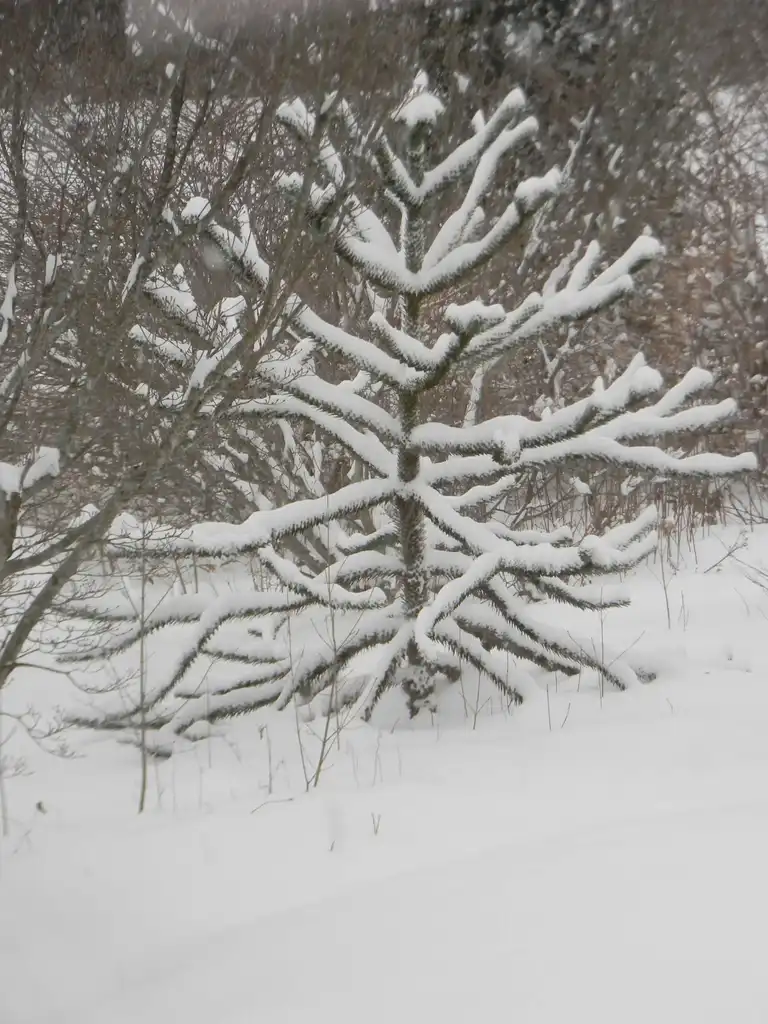
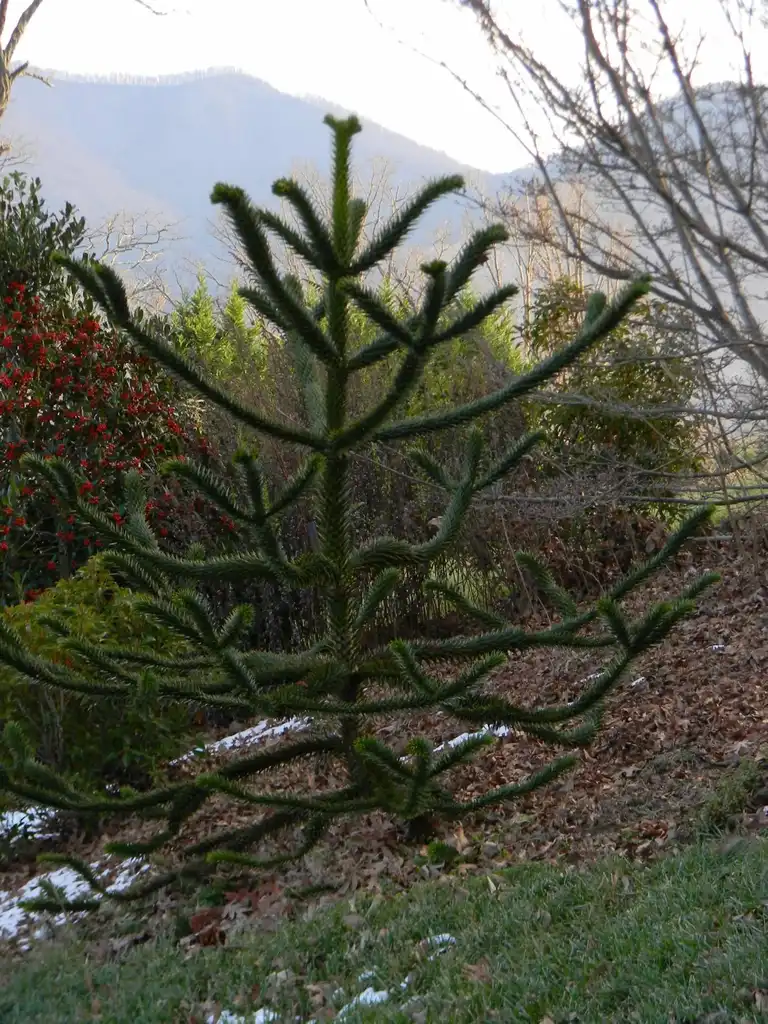
Young trees exhibit a conical or pyramidal shape with sparse, symmetrical branches that create an open growth pattern. As they mature, their crowns expand into a broad, umbrella-like canopy atop a tall, straight trunk with few lower branches. Native specimens can live for over a millennium. In the 18th century, Spanish colonizers collected specimens, introducing them to England and the nursery trade. In their natural habitat, these trees can reach heights of up to 130 feet and have trunks with a diameter of 7 feet, while cultivated varieties are generally smaller, averaging 60 to 70 feet in height and 30 to 35 feet in width.
Although this tree is not established in North America and is limited to USDA zone 7 in terms of cold hardiness, it holds promise as a distinctive garden specimen in certain regions of the southern, southwestern, and western United States. The Monkey Puzzle Tree is relatively free from pests and diseases, thriving best in full sunlight, well-drained soil, and with regular watering. It can adapt to various soil types, including clay, as long as drainage is adequate. Optimal growth occurs in open, sunny areas that provide sufficient space for its large mature size. However, potential site considerations include surface roots that may disrupt lawn maintenance and lift sidewalks, as well as fallen cones that could create litter or pose a nuisance to pedestrians.
In terms of pests and diseases, this tree is not well-suited to urban pollution. While it is generally resistant to pests, it can be vulnerable to issues such as scales, leaf spots, phytophthora, root rot, and sooty molds. Proper siting is essential to accommodate the tree's substantial size at maturity, as its surface roots can cause damage to sidewalks and hinder lawn mowing. Additionally, the large cones that fall may present a litter problem or inconvenience for those walking nearby.